
Our Short List of 3

All 3 Picks at a Glance
| Product | Specs | Action |
|---|---|---|
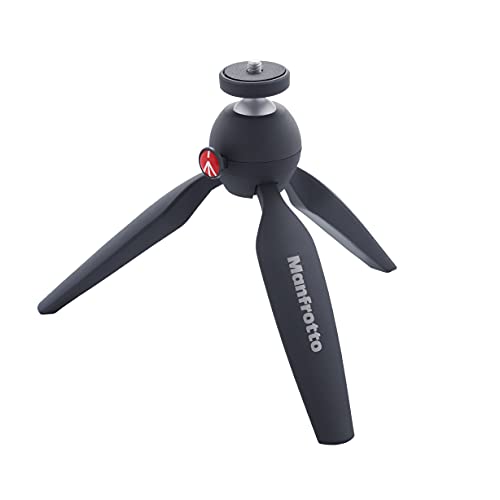 Manfrotto PIXI Mini Tripod, Black (MTPIXI-B) (ASIN: B00D76RNLS) | Check price on Amazon | |
 JOBY GorillaPod 1K Kit (JB01503) (ASIN: B074WFNNKY) | Check price on Amazon | |
| Pedco UltraPod II Lightweight Camera Tripod (P-UP2-BK-STD) (ASIN: B000ANCPNM) | Check price on Amazon |
Key takeaways
- Compare the best tripods for point and shoot cameras: mini, tabletop and flexible tripods with standard 1/4-inch mounts, light bodies and compact loads.
What's inside
As an Amazon Associate I earn from qualifying purchases. This post may contain affiliate links at no extra cost to you.
Disclosure: As an Amazon Associate, we may earn from qualifying purchases made through links on this page, at no additional cost to you.
Best Tripods for Point and Shoot Cameras
A point and shoot camera is built to be carried everywhere, so the tripod that supports it has to follow the same rule: small, light and quick to set up. A full-size tripod designed for a heavy DSLR kit defeats the purpose of a compact camera, adding bulk and weight that a small body simply does not need. The supports that make sense here are mini tripods, tabletop tripods and flexible-leg models sized for cameras that typically weigh between 200 and 500 grams, all using the standard 1/4-inch mounting screw found on the base of nearly every compact camera.
This guide compares three tripods that fit that brief. Each one is a genuine tripod, each one mounts through a standard 1/4-inch thread, and each one keeps the total package light enough to live in the same bag as the camera itself. The picks differ in how they stand: one is a rigid tabletop mini tripod with a push-button ball head, one has flexible legs that wrap around railings and branches, and one folds flat with a strap that fastens it to posts and poles. Reading the load limits, heights and head movements side by side makes it easier to match a support to the way a compact camera actually gets used: group photos on a timer, low-light shots at the long end of the zoom, tabletop video and travel stills.
Quick Picks
- Manfrotto PIXI Mini Tripod (ASIN: B00D76RNLS) — the straightforward tabletop choice: a rigid mini tripod with a push-button ball head, a 1 kg safety payload and legs that close into a handgrip for steadier handheld video.
- JOBY GorillaPod 1K Kit (ASIN: B074WFNNKY) — the flexible choice: wrappable legs and a separate ball head with 360-degree panning, sized by JOBY for devices up to 1 kg and listed by Amazon for point and shoot cameras.
- Pedco UltraPod II (ASIN: B000ANCPNM) — the ultralight folding choice: 119 grams, folds to 7 inches, and uses a hook-and-loop strap to fasten to posts and rails when there is no flat surface at all.
Manfrotto PIXI Mini Tripod, Black (MTPIXI-B) (ASIN: B00D76RNLS)
View the Manfrotto PIXI Mini Tripod on Amazon
The PIXI is Manfrotto’s mini tripod for compact system and compact cameras, and its specification sheet reads like a checklist for point and shoot use. The safety payload is 1 kg (2.2 pounds), which covers any compact camera with room to spare, and Manfrotto’s own guidance for the design sets the working envelope at a camera body of up to 650 grams with a standard lens, well beyond what a point and shoot body weighs. The tripod itself weighs 190 grams and closes to 18 cm, so it adds less weight to a bag than the camera it carries. The top attachment is the standard 1/4-inch screw, which threads directly into the socket on the base of a compact camera with no adapter needed.
The head is where the PIXI separates itself from basic mini tripods. A push-button mechanism unlocks the ball head so the camera can be positioned and locked again in one movement, rather than by twisting a separate knob. The front tilt range runs from -35 degrees to +35 degrees, enough for leveling on a sloped table or angling the camera up at a building or down at a tabletop subject. The legs are fixed in a single splayed position and end in rubber feet, and when they are closed together they form a rounded handgrip that Manfrotto intends for steadier handheld video. Construction mixes technopolymer with stainless steel and aluminum components, and the listing confirms the model is still a current, non-discontinued product.
Highlights
– Push-button ball head locks and releases in one quick movement
– 1 kg safety payload sized for compact and point and shoot bodies
– Only 190 grams, with legs that close into a video handgrip
– Standard 1/4-inch screw mounts directly to the camera base
Considerations
– Fixed working height of about 13 cm, so the camera stays at tabletop level
– Legs do not extend or change angle, which limits use on uneven ground
– Ball head has front tilt but no separate panning base for video sweeps
JOBY GorillaPod 1K Kit (JB01503) (ASIN: B074WFNNKY)
View the JOBY GorillaPod 1K Kit on Amazon
The GorillaPod 1K Kit pairs JOBY’s flexible stand with the BallHead 1K, and Amazon’s own comparison data for the range lists point and shoot cameras among the devices this size is designed for. The capacity is 1 kg (2.2 pounds), which matches the working weight of advanced compact cameras such as large-sensor point and shoot models, and the mount is the universal 1/4-inch-20 thread. The legs are a chain of ball-and-socket joints with rubberized grip rings and foot grips, so instead of needing a flat surface, the tripod can stand on rock or gravel, wrap around a railing, branch or chair back, or be held as a grip. The kit stands roughly 26 cm tall in its standard configuration and weighs about 197 grams.
Unlike the smaller GorillaPod sizes, the 1K Kit uses a separate, removable ball head rather than a fixed socket. The BallHead 1K provides 360-degree panning and tilt to plus or minus 90 degrees, so a compact camera can move from landscape to portrait orientation through the head’s cut-out, and the head can also be removed and used on a larger tripod with a 1/4-inch-20 mount. Materials are premium-grade ABS plastic, stainless steel, TPE and aluminum. For a point and shoot owner, this is the pick that solves the “no flat surface” problem: fences, signposts and tree limbs become the support, which is exactly the situation that arises on hikes and city walks where a tabletop tripod has nowhere to sit.
Highlights
– Flexible legs wrap around railings, branches and posts for support anywhere
– Separate BallHead 1K with 360-degree pan and 90-degree tilt for portrait framing
– 1 kg capacity matched to advanced compact and point and shoot cameras
– Rubberized rings and feet grip uneven surfaces securely
Considerations
– Maximum height is modest, so eye-level shots still need a raised object to wrap or stand on
– Flexible joints need all three legs set carefully on flat ground to avoid slow creep
– The head is a separate piece to keep track of when packing
Pedco UltraPod II Lightweight Camera Tripod (P-UP2-BK-STD) (ASIN: B000ANCPNM)
View the Pedco UltraPod II on Amazon
The UltraPod II takes the opposite approach to the GorillaPod: instead of jointed legs, it uses three folding legs in a rigid frame that packs completely flat. Folded dimensions are 7 x 2 x 2 inches and the weight is 4.2 ounces (119 grams), making it the lightest and slimmest support in this guide, and the folded legs can stay attached to the camera and double as a handle. The frame is molded from 30 percent glass-filled nylon resin with aluminum threaded components and non-slip vinyl feet, and the universal 1/4-inch-20 mounting screw fits the tripod socket of any compact camera directly.
The ball and socket head adjusts through 360 degrees of pan and plus or minus 90 degrees of tilt, with plus or minus 20 degrees of angular adjustment for leveling. Pedco sets the maximum safe load at 6 pounds (2.7 kg), a figure aimed at larger gear, but the tripod’s small footprint and low stance are what suit it to point and shoot cameras: it stands about 6 inches tall in use and keeps a light camera close to the surface for stability. The distinctive feature is the removable hook-and-loop cinch strap, which fastens the folded tripod to a post, tree limb or railing when no table or rock is available. Pedco makes the UltraPod II in the USA and backs it with a lifetime warranty according to the product description.
Highlights
– Lightest pick here at 119 grams, folding flat to 7 inches for a pocket or camera pouch
– Hook-and-loop strap fastens the tripod to posts, rails and branches
– Ball and socket head with full pan and tilt range for framing
– Glass-filled nylon frame with non-slip vinyl feet
Considerations
– Low working height of about 6 inches suits tabletops, rocks and ground level only
– No phone clamp included, so phones need a separate holder on the 1/4-inch screw
– Small footprint means heavier zoom compacts should stay within a sensible, centered balance
How to Choose
Start with the surface problem, because it decides the leg style. If most shots happen on tables, counters, walls and other flat surfaces, a rigid mini tripod like the PIXI gives the fastest setup and the steadiest base. If shooting happens outdoors where flat surfaces are rare, flexible legs or a strap system earn their place, since a railing or branch can substitute for a table. Many compact camera owners eventually keep one of each style, but the first purchase should match the most common shooting situation.
Next, check the payload against the camera’s real weight. Point and shoot cameras range from under 200 grams for basic models to around 500 grams for advanced large-sensor compacts with bright zoom lenses. Every tripod in this guide carries at least 1 kg, which covers that whole range, but the margin matters for balance: a camera mounted off-center on a small head can slowly tilt if it sits near the limit. Staying well under the stated payload keeps the head locked where it was set.
Height is the third decision. None of these supports puts a camera at eye level; they raise it between roughly 13 and 26 cm. That is enough for timer group shots across a table, low-light exposures, macro-style close work and video calls or clips recorded at a desk. Anyone who regularly needs standing height should treat a mini tripod as a companion to, not a replacement for, a full-size travel tripod.
Finally, look at the head. A ball head with a quick lock suits stills, because the camera can be leveled in any direction at once. A head with a separate pan movement is easier for video, since the camera can sweep horizontally without unlocking the tilt. Portrait orientation needs either a 90-degree tilt notch or enough ball movement to flop the camera fully sideways, which is worth confirming for cameras used to shoot vertical video.
Key Specifications Explained
Payload (safety load). The maximum weight the tripod and head are designed to hold, including the camera and anything attached to it. For point and shoot cameras the relevant figures are modest: 1 kg on the PIXI and the GorillaPod 1K, and a higher 6-pound maximum safe load on the UltraPod II, whose small footprint is still best matched to light cameras.
Mounting thread. Compact cameras use a 1/4-inch-20 threaded socket in the base. All three tripods here provide that exact screw, so the camera threads on directly. Larger professional gear sometimes uses a 3/8-inch thread, which is why checking the screw size matters when mixing equipment.
Working height and folded length. Working height is how far the camera sits above the surface; folded length is what has to fit in the bag. The PIXI works at about 13 cm and folds to 18 cm, the GorillaPod 1K stands up to about 26 cm depending on leg position, and the UltraPod II folds to a flat 7 inches, the easiest of the three to carry.
Head movement. Tilt describes forward and backward angle, pan describes rotation to the left and right, and a ball head combines both in a single joint. Portrait shots need a tilt range that reaches 90 degrees or a notch in the head that lets the camera drop fully sideways.
Leg style. Rigid legs are the steadiest on flat ground. Flexible segmented legs trade some of that rigidity for the ability to wrap around objects. Folding flat legs with a strap, as on the UltraPod II, sit between the two: rigid in use, but able to fasten to a post when the ground will not do.
Setup and Use Tips
Thread the camera onto the screw by hand until it is snug, and check that the camera body sits centered over the head rather than hanging off to one side. On a compact camera the tripod socket is not always under the lens centerline, so a slight head adjustment after mounting usually gets the horizon level.
For timer group photos, set the camera’s self-timer or remote release, compose with the screen, and let go of the camera completely before the shot. Touching the tripod during a long exposure in low light is the most common cause of soft images with small cameras, because their light weight makes them easy to nudge.
With flexible legs, wrap at least two full joints around the support object and hang the camera so its weight pulls the wrap tighter rather than unwinding it. With a strap-mounted tripod, pull the strap tight and test with a gentle tug before letting go. On the PIXI, closing the legs into the grip position turns it into a handle for walking video shots, which damps some of the bounce of handheld footage.
In wind, keep the setup as low as possible and shield it with a bag or body. A point and shoot camera presents little surface to the wind, but at maximum zoom even small vibrations show, so retracting the zoom slightly and using a timer or remote release improves sharpness more than any other adjustment.
Common Mistakes to Avoid
The most common mistake is buying a tripod sized for a DSLR to use with a compact camera. The result is a support that weighs more than the camera, stays home, and helps no one. The second is the reverse: putting an advanced zoom compact at the very top of a tiny tripod’s payload and then wondering why the head drifts during long exposures. Match the payload to the camera with margin to spare.
Another frequent error is extending the camera’s zoom to maximum and expecting the same stability as at wide angle. Longer focal lengths magnify vibration along with the subject. Step closer when possible, or shorten the zoom and crop later.
Owners also overlook the socket position. On many point and shoot models the tripod socket sits close to the battery door, and mounting the camera can block the door entirely. Swapping the memory card or battery then means unmounting the camera, so it is worth doing card and battery changes before a long session on the tripod.
Finally, avoid leaving a camera mounted on a mini tripod at the edge of a table or wall. These supports have small footprints by design, and a bumped table can topple the whole setup. Set them back from edges, and keep the camera strap looped around a wrist or object when working at height.
FAQ
Will any of these tripods fit my point and shoot camera?
Almost certainly yes, provided the camera has a standard 1/4-inch tripod socket in its base, which the large majority of compact cameras do. All three tripods in this guide mount through that same 1/4-inch screw, so no adapter is needed.
How much weight should the tripod hold for a compact camera?
Look for a payload comfortably above the camera’s weight. Basic point and shoot models weigh under 300 grams, and advanced models reach roughly 500 grams, so a 1 kg payload gives a sensible margin for stability and head lock.
Can a mini tripod replace a full-size tripod?
For tabletop work, low angles, travel and timer shots, yes. For standing-height portraits or video at head height, no: these supports top out between about 13 and 26 cm, so they need a table, wall or railing to reach higher viewpoints.
Why do my tripod shots still look soft?
The usual causes are touching the camera during the exposure, shooting at maximum zoom in a breeze, or a head that was not fully locked. Use the self-timer or a remote release, lock the head firmly, and keep the setup low and out of the wind.
Is a flexible tripod or a rigid mini tripod better for travel?
Rigid mini tripods are steadier on the flat surfaces found in hotels, cafes and homes. Flexible tripods handle the outdoors better, since they can wrap around rails and branches. The better travel choice depends on where most photos are taken.
Final Verdict
For most point and shoot owners, the Manfrotto PIXI is the simplest place to begin: it is light, rigid, quick to lock, and sized exactly for compact cameras, with the bonus of a closed-leg grip for video. The JOBY GorillaPod 1K Kit is the better pick when shooting happens away from flat surfaces, since its legs wrap around whatever the location offers and its separate ball head handles portrait framing well. The Pedco UltraPod II suits the traveler who counts grams: it folds flat, weighs the least here, and its strap opens up posts and rails as mounting points. All three respect the point of a compact camera: gear light enough to be there when the photo happens.
Related guides
More from Amazon
Programs that pair well with the guide above. Offers and eligibility are set by Amazon and may change.
Free shipping on eligible items, Prime Video and more. Eligible new members can start with a free trial.
Start a Prime free trialAudiobooks and podcasts to listen to on the go. Eligible new members can start with a free trial.
Try Audible freeAd-free music streaming. Eligible new subscribers can start with a free trial.
Try Music Unlimited freeA free business account with business pricing and bulk-buying tools for work, shop or home office.
Create a business accountAs an Amazon Associate we earn from qualifying purchases.










Write Your Review
No reviews yet. Be the first to share your experience!