
Our Short List of 3
All 4 Picks at a Glance
| Product | Specs | Action |
|---|---|---|
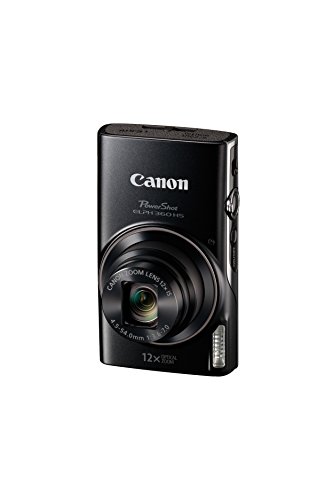 Canon PowerShot ELPH 360 HS (ASIN: B01AA093UW) | Check price on Amazon | |
 Nikon COOLPIX S7000 (ASIN: B00T85PH2Y) | Check price on Amazon | |
 Sony Cyber-shot DSC-W830 (ASIN: B00HNJWUBI) | Check price on Amazon | |
 Canon PowerShot ELPH 180 (ASIN: B019UDHOMO) | Check price on Amazon |
Key takeaways
- Compare the best ultra slim cameras that slip into a shirt pocket: thin Canon, Nikon and Sony compact bodies with real optical zoom, Wi-Fi and HD video.
What's inside
As an Amazon Associate I earn from qualifying purchases. This post may contain affiliate links at no extra cost to you.
Disclosure: As an Amazon Associate, we may earn from qualifying purchases made through links on this page, at no additional cost to you.
Best Ultra Slim Cameras: Pocket-Thin Compacts That Still Zoom
Most compact cameras call themselves pocketable, but very few are genuinely ultra slim. The cameras in this roundup are the card-style compacts built around one idea: a body under an inch thick — roughly 23 mm or less — that slides into a shirt pocket or a small clutch without a bulge, yet still carries a real optical zoom lens rather than relying on digital cropping. That thinness is a deliberate engineering trade. The lens has to collapse almost flat into the body, the battery is a slim lithium pack rather than a chunky cell, and there is no room for a large sensor or a protruding grip.
One honest point up front: the ultra slim category is a mature one. Camera makers have largely stopped releasing new card-style models, so the strongest options still sold new on Amazon US are established designs from Canon, Nikon and Sony that have stayed in catalogs for years because nothing thinner has replaced them. That is not a flaw in itself — these are simple, proven point-and-shoot cameras — but it does mean video tops out at HD rather than 4K, and most use small 1/2.3-inch sensors. What you get in return is a camera that is always with you, starts fast, and asks almost nothing of the person holding it.
Every camera below was chosen on the same criteria: a genuinely slim body at or under about 23 mm thick, an optical zoom lens, a rechargeable slim battery pack, and a listing that is still actively sold. They differ mainly in zoom reach, sensor type, screen size and whether they can send photos to a phone, so the right pick depends on how you plan to carry and use it.
Quick Picks
- Canon PowerShot ELPH 360 HS (ASIN: B01AA093UW) — the most complete slim compact here: 12x zoom, Full HD video and Wi-Fi in a 22.8 mm body.
- Nikon COOLPIX S7000 (ASIN: B00T85PH2Y) — the thinnest body in the group at about 20 mm, with the longest reach: a 20x zoom.
- Sony Cyber-shot DSC-W830 (ASIN: B00HNJWUBI) — the smallest and lightest option, with a Zeiss lens and simple controls.
- Canon PowerShot ELPH 180 (ASIN: B019UDHOMO) — the straightforward value pick: 8x zoom, long battery life and almost no learning curve.
Canon PowerShot ELPH 360 HS (ASIN: B01AA093UW)
See the Canon PowerShot ELPH 360 HS on Amazon
The ELPH 360 HS is the most fully featured camera in this roundup while still measuring just 99.6 x 58.0 x 22.8 mm. Its 20.2 megapixel CMOS sensor is a step up from the CCD chips in the simpler models here, and it feeds a 12x optical zoom lens covering 25–300mm in 35mm-equivalent terms, with Canon’s Intelligent IS stabilization choosing the right correction mode for stills or video. The 3.0-inch rear LCD is the largest screen in this group, which makes composing and checking shots easier than on the 2.7-inch displays of the others.
It is also the only camera here that records Full HD 1080p video, and its built-in Wi-Fi and NFC let you transfer images to a phone or tablet with Canon’s app instead of pulling the memory card. Creative modes such as Hybrid Auto and Creative Shot add variety without menus getting in the way. The trade-offs for the slim body are a modest battery rating of roughly 180 shots per charge and a lens aperture that narrows quickly as you zoom, so low-light work is best kept at the wide end.
Highlights
– Thinnest full-featured option: 22.8 mm body with 12x optical zoom (25–300mm equivalent)
– 20.2MP CMOS sensor and Full HD 1080p video, the strongest video spec in this group
– Built-in Wi-Fi and NFC for phone transfers
– 3.0-inch LCD, larger than the other screens here
Considerations
– Battery life is the shortest of the group at around 180 shots per charge
– Small 1/2.3-inch sensor, so low-light quality is limited like all cameras in this class
– A long-running design; check the listing variant carefully so you get the camera-only package you expect
Nikon COOLPIX S7000 (ASIN: B00T85PH2Y)
See the Nikon COOLPIX S7000 on Amazon
The S7000 is the true card-style outlier here: at roughly 99.5 x 60.0 x 20.0 mm it is the thinnest camera in this roundup, yet Nikon still fitted a 20x optical zoom NIKKOR lens covering 25–500mm equivalent, extendable to 40x with Dynamic Fine Zoom. The 16 megapixel backside-illuminated CMOS sensor pairs with lens-shift Vibration Reduction for stills and a 4-axis hybrid system for video, which matters at the long end of that zoom where small hand movements are magnified.
Video is Full HD 1080p, the rear screen is a 3.0-inch 460k-dot LCD, and built-in Wi-Fi and NFC support Nikon’s SnapBridge-era sharing for sending shots to a phone. Short-movie and time-lapse modes are built in for casual clips. The S7000 is a 2015-era design that Nikon no longer promotes, so it is best understood as a proven slim zoom still sold through remaining retail channels; the slim EN-EL19 battery is rated around 180 shots, so a spare is a sensible companion on travel days.
Highlights
– Thinnest body in the roundup at about 20 mm, with the longest zoom: 20x optical (25–500mm equivalent)
– 16MP CMOS sensor with hybrid Vibration Reduction for steadier telephoto shots and video
– Full HD 1080p video and a 3.0-inch LCD
– Wi-Fi and NFC for transferring images to a phone
Considerations
– Discontinued-era model still sold new through retail listings; confirm the seller and package contents on the listing
– Battery rated around 180 shots per charge, the joint-lowest here
– At full 500mm reach, image quality depends heavily on stabilization and good light
Sony Cyber-shot DSC-W830 (ASIN: B00HNJWUBI)
See the Sony Cyber-shot DSC-W830 on Amazon
The W830 is the smallest camera in this group at 93.1 x 52.3 x 22.5 mm and about 122 g with battery and card, so it disappears into a shirt pocket more completely than any other pick here. Its Carl Zeiss Vario-Tessar lens gives an 8x optical zoom covering 25–200mm equivalent, backed by Optical SteadyShot stabilization. The 20.1 megapixel Super HAD CCD sensor favors bright, punchy daylight images, and the camera keeps operation simple: a 2.7-inch LCD, automatic scene recognition, Sweep Panorama for wide scenes, and a set of Picture Effect and Beauty Effect modes that adjust portraits in-camera.
Video is 720p HD, which is enough for casual clips but a step below the two Full HD models above. There is no Wi-Fi, so files move by cable or card reader. The W830 is a 2014 design that Sony has kept selling for years as its basic slim compact; treat it as exactly that — a durable, simple pocket camera for daylight and indoor snapshots, not a low-light or video specialist.
Highlights
– Smallest and lightest pick: 93.1 mm wide and about 122 g ready to shoot
– 8x Carl Zeiss zoom (25–200mm equivalent) with Optical SteadyShot
– Sweep Panorama and in-camera Beauty Effect modes for portraits
– Very simple controls; a true point-and-shoot
Considerations
– 720p video only, and no wireless transfer
– CCD sensor and a 2014-era design; low-light performance is modest
– 2.7-inch, 230k-dot screen is the least detailed in this group
Canon PowerShot ELPH 180 (ASIN: B019UDHOMO)
See the Canon PowerShot ELPH 180 on Amazon
The ELPH 180 is the minimalist of the Canon slim line: 95.2 x 54.3 x 22.1 mm, about 126 g with battery and card, and a control layout that a first-time camera owner can learn in minutes. Its 20 megapixel CCD sensor sits behind an 8x optical zoom covering 28–224mm equivalent, with optical image stabilization to keep the long end usable. Smart AUTO evaluates the scene and picks from 32 predefined settings, and an Eco mode stretches the NB-11L battery to roughly 220 shots per charge — the best endurance figure in this roundup.
Video is 720p HD, the screen is a 2.7-inch LCD, and there is no Wi-Fi, which keeps both the camera and the workflow simple. Like the W830, this is a long-running 2016 design that is still sold new because it fills the slim, simple, inexpensive-to-run niche well. Choose it when the priority is a thin camera that family members can pick up and use without instruction, and when phone sharing can wait until you are back at a computer.
Highlights
– Slim 22.1 mm body that still fits an 8x stabilized zoom (28–224mm equivalent)
– Best battery life in the group at roughly 220 shots per charge, more in Eco mode
– Smart AUTO with 32 scene types for fully automatic shooting
– Light at about 126 g ready to shoot
Considerations
– 720p video only and no Wi-Fi or NFC
– CCD sensor; images are at their best in decent light
– 28mm wide end is slightly narrower than the 25mm lenses on the other picks
How to Choose
Start with thickness, because that is the point of this category. All four cameras here are between about 20 mm and 23 mm thick with the lens retracted, which is what lets them ride in a shirt pocket. If a listing does not state dimensions, or the body is 30 mm or more, it is a regular compact, not an ultra slim one, and it will carry differently.
Next, balance zoom reach against body size. The Nikon S7000 reaches 500mm equivalent from the thinnest body, which suits travel and distant subjects, but long zooms demand steady hands and good light. The Canon ELPH 360 HS splits the difference with 12x reach and a CMOS sensor, while the 8x lenses on the W830 and ELPH 180 are enough for people, parties and everyday scenes with less to go soft at the far end.
Then decide how photos will leave the camera. If posting from a phone matters, the two Wi-Fi models — the ELPH 360 HS and the S7000 — are the practical picks. If the camera is for a parent, a child, or a glovebox, the simpler ELPH 180 and W830 avoid app setup entirely and just write to a standard SD card. Finally, look at video honestly: only the Canon 360 HS and Nikon S7000 record 1080p; the other two are 720p cameras, fine for clips but not for anyone who shoots video often.
Key Specifications Explained
Body thickness. Measured with the lens retracted, this is the number that defines the category. Around 20–23 mm slides into a shirt pocket; every extra few millimetres is noticeable against your chest and in a small bag.
Sensor type. CMOS sensors, used in the ELPH 360 HS and S7000, generally handle dim light and video better and enable faster shooting. CCD sensors, used in the W830 and ELPH 180, produce pleasing color in good light and keep the camera simple and inexpensive to run, but they are an older technology with weaker low-light results.
Optical zoom range. The figures quoted here are 35mm-equivalent focal lengths. A 25mm wide end fits groups and interiors; 200–300mm frames a person across a room or a sign down the street; 500mm reaches distant wildlife or stage performers, with quality increasingly dependent on stabilization and light.
Stabilization. Optical or lens-shift stabilization physically compensates for hand shake. It matters most at long zoom settings and in video, and every camera here includes some form of it.
Battery rating. CIPA figures here run from about 180 to 220 shots per charge. These slim packs are small by design, so heavy screen use or lots of video will drain them faster; a spare battery is the cheapest insurance for a full day out.
Setup and Use Tips
Charge the battery fully before the first outing and format the memory card in the camera, not on a computer, so the file system matches what the camera expects. Set the clock and date at the same time; slim compacts are often bought for trips, and correct timestamps keep a holiday’s photos in order.
Use the wrist strap. A 20 mm camera is easy to hold loosely, and these bodies are smooth metal or plastic with little grip. In bright sun, shade the rear screen with your hand or raise screen brightness in the menu, since none of these cameras has a viewfinder. For the Wi-Fi models, pair the camera with your phone at home first, where you have time to read the prompts, rather than at the event where you want to share a photo.
Keep zoom discipline: plant your elbows or lean on a wall before using the long end of the zoom, and take one step closer instead of zooming digitally. At night, switch to the camera’s night scene mode and keep the lens near its wide end, where the aperture is brightest.
Common Mistakes to Avoid
The most common mistake is buying on megapixels alone. All four cameras sit between 16 and 20.2 megapixels on the same small sensor size, so the number tells you little; lens range, sensor type and stabilization separate them far more.
Second, do not judge slimness by a product photo. Check the stated depth measurement, and remember that third-party bundles sometimes pair the camera with a bulky case that defeats the purpose. Third, avoid digital zoom: it simply crops the image, and the spec sheets here list optical ranges for a reason. Fourth, do not expect phone-level low-light results — these small sensors and narrow-aperture zoom lenses need decent light, and flash range on slim bodies is short. Finally, with long-running models, confirm on the listing that you are buying the camera body package with battery and charger included, not a bare or import variant with different contents.
FAQ
What counts as an ultra slim camera?
There is no official standard, but the term is generally used for compacts around 23 mm thick or less with the lens retracted — thin enough for a shirt pocket. Every camera in this roundup sits between about 20 mm and 23 mm.
Are ultra slim cameras better than a phone?
They offer things a phone does not: a true optical zoom that does not degrade the image, a physical shutter button and zoom lever, a removable battery and memory card, and no interruptions from calls or notifications. A phone still wins on connectivity and low-light processing, which is why the Wi-Fi models here are a good middle ground.
Why are most ultra slim cameras older models?
Phone cameras absorbed most of the casual market, so makers stopped developing new card-style compacts. The models still sold new today are durable designs that kept selling, which is why this roundup is honest about their era: you are buying proven simplicity, not the newest sensor technology.
Which of these is best for travel?
The Nikon S7000 pairs the thinnest body with a 20x zoom and Full HD video, which covers the widest range of travel subjects. If you would rather share photos to your phone each evening and want a larger screen, the Canon ELPH 360 HS is the alternative.
Do these cameras need a special memory card?
No. All four use standard SD, SDHC or SDXC cards, and none needs a high-speed card for its HD video. A modest card from a known brand is enough; format it in the camera before a trip.
Final Verdict
Ultra slim cameras are a narrow category with a clear purpose: a real camera, with a real zoom, that fits where even a wallet feels bulky. The Canon PowerShot ELPH 360 HS is the most rounded choice, combining a 22.8 mm body with a 12x zoom, the only 3.0-inch screen alongside the Nikon, Full HD video and Wi-Fi. The Nikon COOLPIX S7000 is the pick when thinness and reach come first — it is the slimmest body here and zooms the farthest. The Sony DSC-W830 is the smallest, simplest option for daylight snapshots, and the Canon PowerShot ELPH 180 is the set-and-forget choice with the best battery life. Pick by how you carry and how you share, and any of the four will do the job it was designed for: being there, in your pocket, when the moment happens.
Related guides
More from Amazon
Programs that pair well with the guide above. Offers and eligibility are set by Amazon and may change.
Free shipping on eligible items, Prime Video and more. Eligible new members can start with a free trial.
Start a Prime free trialAudiobooks and podcasts to listen to on the go. Eligible new members can start with a free trial.
Try Audible freeAd-free music streaming. Eligible new subscribers can start with a free trial.
Try Music Unlimited freeA free business account with business pricing and bulk-buying tools for work, shop or home office.
Create a business accountAs an Amazon Associate we earn from qualifying purchases.










Write Your Review
No reviews yet. Be the first to share your experience!