
Our Short List of 3
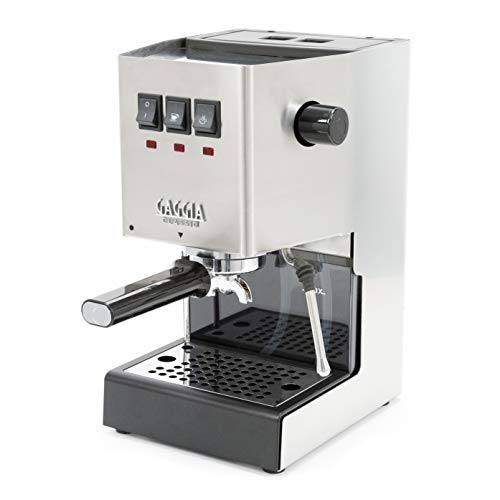
- Best for: A couple who drink the same coffee together and value the largest tank in the set, a commercial-size portafilter and the classic single-boiler routine, waits included.
- Boiler: one boiler serving brew and steam, per the listing copy describing a single-boiler, dual-use design
- Extraction: 9-bar extraction per listing copy
- Portafilter: 58mm commercial size per listing copy
- Valve: three-way solenoid valve per listing copy

- Best for: A couple who accept the brew-then-steam sequence as part of the ritual and want the class stated in the listing’s own words, with both basket sizes included for one-cup and two-cup pulls.
- Class wording, from the listing bullet: the single 12-ounce brass boiler serves both brew and steam temperatures
- Boiler capacity: 0.3 litres per the spec field, the same 12 oz boiler
- Wattage: 1100 watts per the spec field
- Operation mode: semi-automatic per the spec field

- Best for: A couple who want single-boiler brewing without the steam wait, and who are comfortable that the steam side is a thermoblock circuit rather than boiler steam, as the specs state plainly.
- Brew heating: PID-equipped single boiler; the listing’s own comparison table gives Boiler Design: Single Boiler
- Steam circuit: a separate 1000W thermoblock delivers on-demand steam, per the listing-derived bullets — this machine is a hybrid, and the steam side is not boiler steam
- Gauge: brew pressure gauge per the listing bullet
- Group: industry-standard 58mm components and portafilter per the listing bullet
All 3 Picks at a Glance
| Product | Specs | Action |
|---|---|---|
| Gaggia Classic Evo Pro (RI9380/46) |
| Check price on Amazon |
| Rancilio Silvia M V6 |
| Check price on Amazon |
| Diletta Mio |
| Check price on Amazon |
Key takeaways
- Three single boiler espresso machines compared for couples, covering the brew-then-steam routine, tank sizes for two drinkers and one honest hybrid.
What's inside
As an Amazon Associate I earn from qualifying purchases. This post may contain affiliate links at no extra cost to you.
A single boiler machine makes espresso the traditional way: one boiler, two jobs. It brews at coffee temperature, then climbs to steam temperature, then comes back down, and a couple sharing the machine shares that sequence every morning. Choosing one is therefore a decision about rhythm as much as specification: how long the two of you are willing to let the drinks take turns, and how much tank the two of you need. This guide includes three machines only, because the verified class on Amazon US is genuinely this thin, and one of the three is a clearly labelled hybrid.
Two picks are pure single-boiler machines whose listings describe one boiler serving brew and steam; the third keeps a PID single boiler for brewing and adds a separate steam circuit, and its entry says so in plain language. A fourth classic model was excluded because its ASIN could not be resolved between conflicting sources, and it is named in the notes rather than guessed.
Quick Picks
As an Amazon Associate we earn from qualifying purchases.
| Product | Best for | Key spec from title |
|---|---|---|
| Gaggia Classic Evo Pro (RI9380/46) | A couple who drink the same coffee together and value the largest tank in the set, a commercial-size portafilter and the classic single-boiler routine, waits included. | One boiler for brew and steam, 2.1 litre tank |
| Rancilio Silvia M V6 | A couple who accept the brew-then-steam sequence as part of the ritual and want the class stated in the listing’s own words, with both basket sizes included for one-cup and two-cup pulls. | Single 12-ounce brass boiler, per the listing bullet |
| Diletta Mio | A couple who want single-boiler brewing without the steam wait, and who are comfortable that the steam side is a thermoblock circuit rather than boiler steam, as the specs state plainly. | PID single boiler for brewing, separate steam circuit |
How to Choose
The brew-then-steam sequence is the class
On a pure single boiler, the order of operations is fixed: pull both shots first, then switch to steam, wait for the climb, steam both drinks’ milk, then let the boiler come back down before the next shot. Couples who build that order into the morning feel no hardship; couples who each make a complete drink in turn feel the wait twice. Read each listing for how it frames the sequence (one pick’s bullet states it in a single sentence), and choose the machine whose rhythm matches how the two of you actually move around a kitchen.
Tank size, measured in couples
Two drinkers empty a tank at twice the solo rate, and single-boiler machines also spend water on the temperature transitions (purging steam, refilling the boiler’s working volume). The listings here give 2.1 litres on the largest pick and 2 litres on the hybrid, while the classic Italian pick’s captured data does not state a tank figure at all, which is itself information: if tank size decides your purchase, the live page for that ASIN is where the figure must come from, not from a sibling model’s page.
Temperature discipline without a second boiler
What a single boiler gives up in simultaneity it can repay in simplicity: one heating system to descale, one temperature to learn. The listings show the spread of control on offer, from a classic dual-use boiler with no stated electronic control to a PID-equipped boiler that holds brew temperature precisely and recovers quickly between shots. For couples pulling two identical shots back to back, recovery matters more than range: the second shot should taste like the first, and quick intrashot recovery is the listing phrase to look for.
The hybrid question, decided openly
One pick here contains a thermoblock, and pretending otherwise would be the easiest error in this guide to make. Its steam circuit is a 1000W thermoblock; its brew system is a PID single boiler, which is how Amazon’s own comparison table for the listing classifies it. If your definition of a single-boiler machine is about the brew side, it belongs here and it is the strongest couples pick of the three. If your definition excludes a thermoblock anywhere in the box, the honest set is the other two, and this guide would rather lose a product than blur the line.
The 3 Best Options
Gaggia Classic Evo Pro (RI9380/46)
- Best for: A couple who drink the same coffee together and value the largest tank in the set, a commercial-size portafilter and the classic single-boiler routine, waits included.
- Boiler: one boiler serving brew and steam, per the listing copy describing a single-boiler, dual-use design
- Extraction: 9-bar extraction per listing copy
- Portafilter: 58mm commercial size per listing copy
- Valve: three-way solenoid valve per listing copy
A couple who drink the same coffee together and value the largest tank in the set, a commercial-size portafilter and the classic single-boiler routine, waits included.
Do not assert a boiler material for this ASIN: wording varies between variant listings of this machine family (aluminium in the E24 copy, brass in a colour variant’s copy), so confirm on the exact variant page. One aggregator also claims a different ASIN for this model; the listing-quoted spec fields support the ASIN used here.
The Gaggia is the traditionalist’s couples machine, and its listing copy describes the classic arrangement honestly: one boiler serving brew and steam, ready to brew in minutes, with a 58mm commercial portafilter whose dual spouts split a double shot into two cups. For a couple, its standout figure is the 2.1 litre water capacity, the largest tank in this set, which carries two drinkers through a morning and a weekend of guests without a refill. The three-way solenoid valve keeps pucks drier and the routine tidier, a small mercy doubled across two people’s drinks.
Rancilio Silvia M V6
- Best for: A couple who accept the brew-then-steam sequence as part of the ritual and want the class stated in the listing’s own words, with both basket sizes included for one-cup and two-cup pulls.
- Class wording, from the listing bullet: the single 12-ounce brass boiler serves both brew and steam temperatures
- Boiler capacity: 0.3 litres per the spec field, the same 12 oz boiler
- Wattage: 1100 watts per the spec field
- Operation mode: semi-automatic per the spec field
A couple who accept the brew-then-steam sequence as part of the ritual and want the class stated in the listing’s own words, with both basket sizes included for one-cup and two-cup pulls.
The listing data captured does not state a water tank capacity, so none is printed here; check the live page if tank size decides your purchase. One secondary title garbles this model as a heat exchanger machine; the listing’s own bullet says single boiler, and that wording governs.
The Silvia states its class in a single listing bullet: the single 12-ounce brass boiler serves both brew and steam temperatures. That sentence is the whole couples workflow in miniature (two shots pulled, then the boiler climbs to steam temperature for two milk drinks, in sequence), and generations of owners have built a morning routine around exactly that rhythm. The specification is compact and honest: 1100 watts, semi-automatic operation, and a box that includes single and double baskets, a tamper and a blind disc, so a couple can pull one cup or two from day one.
Watch out for: The listing data captured does not state a water tank capacity, so none is printed here; check the live page if tank size decides your purchase. One secondary title garbles this model as a heat exchanger machine; the listing’s own bullet says single boiler, and that wording governs.
Diletta Mio
- Best for: A couple who want single-boiler brewing without the steam wait, and who are comfortable that the steam side is a thermoblock circuit rather than boiler steam, as the specs state plainly.
- Brew heating: PID-equipped single boiler; the listing’s own comparison table gives Boiler Design: Single Boiler
- Steam circuit: a separate 1000W thermoblock delivers on-demand steam, per the listing-derived bullets — this machine is a hybrid, and the steam side is not boiler steam
- Gauge: brew pressure gauge per the listing bullet
- Group: industry-standard 58mm components and portafilter per the listing bullet
A couple who want single-boiler brewing without the steam wait, and who are comfortable that the steam side is a thermoblock circuit rather than boiler steam, as the specs state plainly.
Read the hybrid design before buying: the brew side is a true PID single boiler, but steam comes from a separate thermoblock circuit, not from the boiler. A buyer who wants a purely boiler-based machine should choose one of the other two picks; a buyer who wants no steam wait should choose this one precisely for the hybrid layout.
The Mio is this set’s hybrid, and its specs above label it as one: the listing’s comparison table classifies its boiler design as Single Boiler, its brew side is a PID-equipped single boiler, and its steam comes from a separate 1000W thermoblock circuit. For a couple, that layout removes the single-boiler wait (the second person’s milk drink does not queue behind a temperature change), while the brew side keeps the temperature stability and the brew pressure gauge of the classic design. The 2 litre tank, 58mm group and energy saver mode complete a specification built in Milan for exactly this compromise.
Watch out for: Read the hybrid design before buying: the brew side is a true PID single boiler, but steam comes from a separate thermoblock circuit, not from the boiler. A buyer who wants a purely boiler-based machine should choose one of the other two picks; a buyer who wants no steam wait should choose this one precisely for the hybrid layout.
Which One Fits Your Situation
You drink the same drink, together, every day
Take the Gaggia Classic Evo Pro: split the double shot between two cups, steam once for both drinks, and let the 2.1 litre tank carry the morning without a refill. Making both shots before steaming also keeps the two drinks closer in temperature when they reach the table, a small courtesy the sequence quietly provides.
You like the ritual and the sequence
Take the Rancilio Silvia: its listing states the single-boiler arrangement in one sentence, both basket sizes are in the box, and the routine it asks for is the one its owners describe fondly. Its included blind disc supports the backflushing routine that keeps a shared machine tasting clean, which matters twice as much when two people’s drinks depend on it.
One of you wants no waiting at all
Take the Diletta Mio: the separate steam circuit means milk is ready when the shot is, while the brew side stays a PID single boiler. Read its hybrid note first and choose it with open eyes. That makes it the pick for the couple whose drinks differ most (one straight shot, one cappuccino) at the same minute of the same morning, every morning.
You were set on a Lelit Anna
Check the live Amazon listing carefully before ordering any Anna: the ASIN for the PID model could not be resolved between conflicting sources for this guide, so it was excluded rather than guessed, and the exact listing needs your own verification. Until that verification happens, the three verified picks in this guide are the safer route, and the Anna’s absence here is a statement about evidence, not about the machine.
Common Mistakes
- Buying a single boiler for two milk-drink lovers without rehearsing the sequence: two complete drinks made in turn means two temperature climbs, and the wait lands on the second person every morning.
- Importing a specification from a sibling variant’s page, a live risk in this set where boiler material wording and even model ASINs differ between colour variants of the same machine family.
- Calling the hybrid a pure single boiler, or dismissing it as a thermoblock machine: its listing supports neither shortcut, and the accurate description (boiler for brewing, thermoblock circuit for steam) is the useful one.
- Guessing an ASIN for a model whose listing could not be verified, which is why one famous name in this class is absent here; an unverifiable ASIN in a buying guide helps nobody.
- Judging the class by heat-up alone: a single boiler’s morning cost is the transitions between drinks, not the first heat-up, and couples feel transitions twice as often as solo drinkers.
Frequently Asked Questions
Why are there only three machines in this guide?
Because the verified class is thin on Amazon US: several classic single-boiler models could not be verified with a resolvable ASIN, and one was excluded for exactly that reason. The set publishes at three honest picks rather than borrowing machines from other heating classes.
What is the single-boiler wait, exactly?
After brewing, the boiler must climb from brew temperature to steam temperature before milk can be steamed, and cool back down before the next shot. A couple making two milk drinks in turn meets that wait twice; making both shots first, then steaming, meets it once.
Is the Diletta Mio really a single boiler machine?
For brewing, yes: its listing describes a PID-equipped single boiler, and Amazon’s comparison table for the listing classifies the boiler design as Single Boiler. Its steam, however, comes from a separate thermoblock circuit, which its entry states plainly so you can judge the hybrid for yourself.
Which pick is best if we both drink straight espresso?
The wait barely matters without milk: take the Gaggia for its tank and dual-spout splitting, or the Silvia for its compact classic specification. The Mio’s advantage is aimed at milk drinks, which straight-shot couples do not need to pay for.
Related guides
More from Amazon
Programs that pair well with the guide above. Offers and eligibility are set by Amazon and may change.
Free shipping on eligible items, Prime Video and more. Eligible new members can start with a free trial.
Start a Prime free trialAudiobooks and podcasts to listen to on the go. Eligible new members can start with a free trial.
Try Audible freeAd-free music streaming. Eligible new subscribers can start with a free trial.
Try Music Unlimited freeA free business account with business pricing and bulk-buying tools for work, shop or home office.
Create a business accountAs an Amazon Associate we earn from qualifying purchases.










Write Your Review
No reviews yet. Be the first to share your experience!