
Our Short List of 3
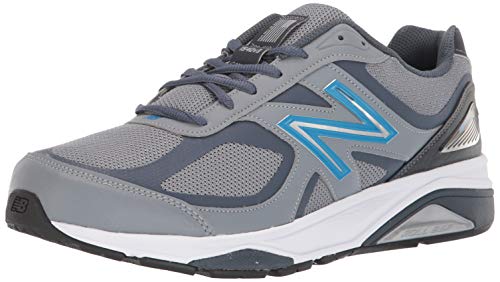
- Best for: Men whose feet roll inward hard and need the strongest motion control on this list.
- Midsole: ENCAP and ROLLBAR technology
- Rear-foot movement control
- Two layers of performance foam
- Built for mile-after-mile stability

- Best for: Daily trainers with flat feet who want guidance in a lighter shoe.
- Lightweight stability with responsive cushioning for daily training
- Weight: 270 g / 9.5 oz (listing comparison chart)
- Drop: not stated in the listing text
- Widths: Wide and X-Wide size charts offered

- Best for: A traditional motion-control fit with a roomy toe box that takes an orthotic.
- GuideRails support technology
- BioMoGo DNA cushioning
- Roomy toe box that accommodates orthotics
- PDAC A5500 certified; APMA Seal of Acceptance
All 3 Picks at a Glance
| Product | Specs | Action |
|---|---|---|
| New Balance Men’s 1540 V3 Running Shoe |
| Check price on Amazon |
| ASICS Men’s GT-2000 14 Running Shoes |
| Check price on Amazon |
| Brooks Men’s Addiction GTS 15 Supportive Running Shoe |
| Check price on Amazon |
Key takeaways
- Five men's running shoes for flat feet, from motion control to cushioned stability, with listing specs, wide-fit notes, and checks before you buy.
What's inside
As an Amazon Associate I earn from qualifying purchases. This post may contain affiliate links at no extra cost to you.
For a man with flat feet, the real decision is not which shoe looks fastest. It is how much guidance your stride actually needs. A foot that rolls inward hard on every step asks for a shoe that holds the rear foot in line, while a milder roll may only need gentle stability under a soft ride. Get that balance wrong and the shoe either feels like a brace or leaves your arch unsupported by mile three.
This guide serves four kinds of buyers: men whose feet roll inward strongly and want motion control, daily trainers who want light guidance in a lighter shoe, long-mile runners who put maximum cushion first, and walkers or runners who need a roomy toe box that takes an orthotic. Every pick below was chosen from the name and specifications on its Amazon product page, so the support features described are the ones the listing itself states.
Quick Picks
As an Amazon Associate we earn from qualifying purchases.
| Product | Best for | Key spec from title |
|---|---|---|
| New Balance Men’s 1540 V3 Running Shoe | Hard inward rollers who need the strongest control | ROLLBAR rear-foot movement control |
| ASICS Men’s GT-2000 14 Running Shoes | Daily trainers who want light, gentle guidance | Lightweight stability at 270 g |
| Hoka Men’s Gaviota 5 | Long-mile runners who put maximum cushion first | Stabilizing H-Frame with maximum cushioning level |
| Saucony Men’s Hurricane 24 | Steady long miles with cushioned stability | PWRRUN PB foam inside a supportive PWRRUN frame |
| Brooks Men’s Addiction GTS 15 Supportive Running Shoe | Orthotic wearers who need a roomy toe box | GuideRails support with an orthotic-friendly fit |
How to Choose
Match Support to How Hard Your Foot Rolls Inward
Support is not one setting. At one end sit motion-control shoes with firm rear-foot devices that actively hold the heel in line; at the other, cushioned stability shoes guide the stride more gently. If your shoes wear down fast on the inner heel and your ankles tire on long runs, lean toward the firmer end. If your roll is mild and mostly shows up as arch fatigue late in a run, a lighter stability shoe usually feels better and less restrictive mile after mile.
Decide Whether Cushion or Control Comes First
Flat feet do not all want the same ride. Some runners feel every step through the arch and want the softest landing they can get, with the support frame working quietly underneath. Others find very soft shoes let the foot wander and prefer a firmer, more deliberate platform. Neither answer is wrong, but it decides which end of this list fits you. Maximum-cushion stability models trade a little precision for comfort on long days, while firmer motion-control shoes trade softness for a locked-in, guided feel on every stride.
Get Width and Toe-Box Fit Right Before Anything Else
A flat foot often spreads wider under load, so a shoe that fits standing still can pinch by the end of a run. Check whether the listing offers Wide or X-Wide versions rather than simply sizing up, because a longer shoe changes where the arch support sits under your foot. If you wear orthotics, look for a roomy toe box and enough depth to seat the insert without lifting your heel out of the collar. Fit decides whether the support features can do their job at all.
Confirm the Exact Variant on the Listing
Stability lines often share one product page across road, trail, and waterproof versions, and across several model years. Before ordering, confirm the page shows the road version of the current model, in the width you chose, and that the size chart matches that width. Trail and GTX variants change the outsole, the upper, and the weight, so they are not the same shoe this guide describes. A minute spent checking the variant saves a return and keeps the support you picked actually under your foot.
The 5 Best Options
New Balance Men’s 1540 V3 Running Shoe
- Best for: Men whose feet roll inward hard and need the strongest motion control on this list.
- Midsole: ENCAP and ROLLBAR technology
- Rear-foot movement control
- Two layers of performance foam
- Built for mile-after-mile stability
Men whose feet roll inward hard and need the strongest motion control on this list.
The listing notes US production of the 1540 V3 ended in April 2021, so check that the featured offer and your size are actually in stock before ordering.
The 1540 V3 is the firm hand on this list. Its listing leads with rear-foot movement control, pairing ENCAP and ROLLBAR midsole technology with two layers of performance foam, and describes the shoe as built for mile-after-mile stability. That makes it the natural first look for men whose flat feet roll inward hard and who feel a regular stability shoe gives up too early in the run. The listing family also sells wide and XX-wide versions, which suits flat feet that spread under load and need the control to come with real forefoot room.
ASICS Men’s GT-2000 14 Running Shoes
- Best for: Daily trainers with flat feet who want guidance in a lighter shoe.
- Lightweight stability with responsive cushioning for daily training
- Weight: 270 g / 9.5 oz (listing comparison chart)
- Drop: not stated in the listing text
- Widths: Wide and X-Wide size charts offered
Daily trainers with flat feet who want guidance in a lighter shoe.
Order the road version of the GT-2000 14, not the Trail or GTX listing, which is a different variant of the shoe.
The GT-2000 14 is the light touch here. The listing describes lightweight stability with responsive cushioning for daily training, and its comparison chart puts the shoe at 270 g, or 9.5 oz, the lightest figure stated anywhere in this guide. For flat feet that roll inward mildly, that combination gives guidance without the heavy, braced feel of a motion-control shoe, which makes it an easy default for weekday miles. Wide and X-Wide size charts are offered, so broader flat feet can get the fit from the width options rather than by sizing up.
Hoka Men’s Gaviota 5
The Gaviota 5 puts cushion first and guidance second. Its listing pairs a stabilizing H-Frame with softer foams and rates the cushioning level at maximum, describing the ride as Bondi-level cushioning, while a breathable creel jacquard upper and an ultra-plush collar keep the top of the shoe as soft as the bottom. For flat feet that ache from impact more than from rolling, that is a sensible order of priorities: the frame steadies the stride, but the lasting impression is a deep, forgiving landing across long, slow miles.
Specs
- Stabilizing H-Frame
- Softer foams with Bondi-level cushioning
- Cushioning level: Maximum
- Breathable creel jacquard upper
- Ultra-plush collar
Best for: Flat feet that want maximum cushion first, with a stabilizing frame for long miles.
Watch out for: Availability on this listing has been patchy, so confirm an orderable offer in your size before planning a purchase around it.
ASIN: B0C9CR3QLM
Saucony Men’s Hurricane 24
The Hurricane 24 is the cushioned-stability middle ground. Its listing classifies the support as Stability and describes a dual-cushioning system that pairs PWRRUN PB foam with a supportive PWRRUN foam frame, plus CenterPath Technology and a broader base with higher sidewalls. At 10.6 oz with a 6 mm offset, it carries real substance, and the breathable engineered mesh upper keeps that substance from feeling stuffy. For flat feet doing longer steady miles, it offers a soft landing that still has a frame around it, rather than guidance alone.
Specs
- Support: Stability (listing manufacturer block)
- Dual cushioning: PWRRUN PB foam with a supportive PWRRUN foam frame
- CenterPath Technology; broader base with higher sidewalls
- Weight: 10.6 oz / 302 g; offset: 6 mm (38 mm / 32 mm)
- Breathable engineered mesh upper
Best for: Cushioned stability for longer, steady miles.
Watch out for: At 10.6 oz it is the joint-heaviest pick here, so it suits steady miles better than speed work.
ASIN: B0D31X5FK7
Brooks Men’s Addiction GTS 15 Supportive Running Shoe
- Best for: A traditional motion-control fit with a roomy toe box that takes an orthotic.
- GuideRails support technology
- BioMoGo DNA cushioning
- Roomy toe box that accommodates orthotics
- PDAC A5500 certified; APMA Seal of Acceptance
A traditional motion-control fit with a roomy toe box that takes an orthotic.
Confirm the listing shows the men’s Addiction GTS 15 in your exact width before ordering, since this model sells in several similar versions.
The Addiction GTS 15 is the traditionalist. The listing describes GuideRails support technology and BioMoGo DNA cushioning in a shoe with a roomy toe box that accommodates orthotics, and it carries the PDAC A5500 certification and the APMA Seal of Acceptance. Sizes run from Narrow through Wide and X-Wide, and the upper uses 3D Fit Print over engineered Air Mesh. For men who already know the Addiction line, or whose flat feet come with a custom insert that needs depth and forefoot room, it is the most familiar fit on this list.
Which One Fits Your Situation
Your Feet Roll Inward Hard on Every Run
Start with the New Balance 1540 V3. Its ROLLBAR rear-foot control and two foam layers are built for exactly this stride, and it is the firmest guidance in the guide. If its weight puts you off, the Brooks Addiction GTS 15 is the softer-stepping motion-control alternative, with GuideRails support and a roomier toe box. Either way, choose control first and let cushioning be the secondary quality, because a soft shoe will not hold a hard roll in line.
You Train Daily and Want Guidance Without the Weight
Pick the ASICS GT-2000 14. At 270 g it is the lightest shoe here, and its listing aims it at daily training with lightweight stability and responsive cushioning. A mild inward roll gets the guidance it needs without a braced, heavy feel, and the Wide and X-Wide size charts mean broader flat feet do not have to size up and lose the fit. It is the easiest shoe on this list to reach for on an ordinary weekday run.
You Run Long Miles and Softness Matters Most
Choose between the Hoka Gaviota 5 and the Saucony Hurricane 24. The Gaviota 5 rates its cushioning at maximum and wraps it around a stabilizing H-Frame, so it suits runners who feel impact first. The Hurricane 24 pairs a soft PWRRUN PB core with a supportive frame and higher sidewalls, which feels a touch more deliberate. Both steady a flat foot; the Gaviota leans softer, the Hurricane leans more structured, and your long-run comfort decides.
You Wear Orthotics and Need Room to Fit Them
Go to the Brooks Addiction GTS 15 first. Its listing states a roomy toe box that accommodates orthotics, and the width run from Narrow to X-Wide lets you match the insert and your foot together. If you want a more cushioned ride with the insert, the New Balance 1540 V3 also sells in wide and XX-wide versions and gives the insert a controlled platform. Bring the orthotic when you try either shoe, because insert fit changes everything.
Common Mistakes
- Buying a neutral cushioned shoe for flat feet and expecting the softness alone to control an inward roll.
- Sizing up for width instead of choosing the Wide or X-Wide version, which moves the support out from under the arch.
- Ordering the trail or waterproof variant of a stability model when the guide describes the road version.
- Assuming a maximum-cushion shoe cannot guide the stride, or that a motion-control shoe must feel harsh.
- Keeping a shoe that pinches the forefoot because the length feels right, when flat feet usually spread under load.
Frequently Asked Questions
Can a running shoe fix flat feet?
No. A shoe cannot change the structure of your foot, and nothing in this guide claims otherwise. What the right shoe can do is support the arch, guide an inward roll, and cushion impact so running feels more comfortable. If pain persists, sharpens, or changes how you walk, see a clinician or podiatrist rather than shopping for a stronger shoe.
How do I know whether I need motion control or regular stability?
Look at your worn shoes and your long runs. Heavy wear on the inner heel, ankles that tire quickly, and arches that ache early point toward firmer motion control. A mild roll that only tires the arch late in a run usually suits regular stability. When in doubt, start with the lighter stability shoe and step up only if the roll still feels unmanaged.
Should I size up, or buy the wide version?
Buy the wide version. Sizing up adds length, which moves the arch support and the flex point away from where your foot needs them, and it rarely adds width where a flat foot spreads. Most picks here list Wide or X-Wide options for exactly this reason. Choose your normal length, pick the width that matches your forefoot, and check the listing’s own size chart for that width.
When should foot pain send me to a clinician or podiatrist?
Go when pain is sharp, one-sided, or getting worse week to week, when it lingers after you stop running, or when numbness, swelling, or a visible change in your foot shows up. Shoes manage comfort and support; they do not diagnose or treat injuries or conditions. A clinician or podiatrist can check whether something beyond footwear is going on and whether an orthotic or treatment plan makes sense.
Related guides
More from Amazon
Programs that pair well with the guide above. Offers and eligibility are set by Amazon and may change.
Free shipping on eligible items, Prime Video and more. Eligible new members can start with a free trial.
Start a Prime free trialAudiobooks and podcasts to listen to on the go. Eligible new members can start with a free trial.
Try Audible freeAd-free music streaming. Eligible new subscribers can start with a free trial.
Try Music Unlimited freeA free business account with business pricing and bulk-buying tools for work, shop or home office.
Create a business accountAs an Amazon Associate we earn from qualifying purchases.
Write Your Review
No reviews yet. Be the first to share your experience!