
Our Short List of 3

- Best for: Nikon Z landscape photographers who compose around strong foregrounds.
- Mount: Nikon Z
- Focal length: 14-24mm zoom
- Maximum aperture: f/2.8 constant
- Filters: 112mm via supplied HB-97 threaded lens hood
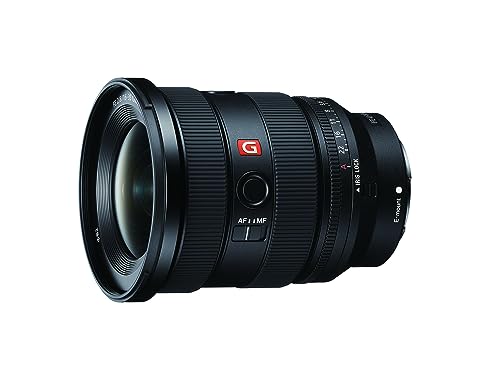
- Best for: Sony full-frame shooters who hike to locations and want one wide zoom that stays on the camera.
- Mount: Sony E
- Focal length: 16-35mm zoom
- Maximum aperture: f/2.8 constant
- Optics: five aspherical elements, including three XA (extreme aspherical) elements

- Best for: Canon RF photographers who split their landscape work between tripod and handheld shooting.
- Mount: Canon RF
- Focal length: 15-35mm zoom
- Maximum aperture: f/2.8 constant
- Image stabilisation: up to 5 stops of shake correction
All 4 Picks at a Glance
| Product | Specs | Action |
|---|---|---|
| Nikon NIKKOR Z 14-24mm f/2.8 S |
| Check price on Amazon |
| Sony FE 16-35mm f/2.8 GM II |
| Check price on Amazon |
| Canon RF 15-35mm f/2.8 L IS USM |
| Check price on Amazon |
 Canon RF 16mm f/2.8 STM |
| Check price on Amazon |
Key takeaways
- Four landscape lenses verified on Amazon US, from a 14-24mm f/2.8 pro zoom to a featherweight 16mm prime, compared on width, filters, weight and sealing.
What's inside
As an Amazon Associate I earn from qualifying purchases. This post may contain affiliate links at no extra cost to you.
Choosing a landscape lens is really a decision about how you work outdoors. The sharpest ultra-wide zoom is wasted if it is too heavy to carry up the ridge before dawn, and the lightest prime is the wrong tool if you need to fine-tune framing from a tripod on a cliff edge. Filter use matters just as much: a lens that cannot take your ND filters changes how you shoot water and skies.
This guide is for full-frame mirrorless shooters who photograph landscapes on foot, from roadside viewpoints to multi-hour hikes. Every pick below is a wide or ultra-wide lens taken from its Amazon US product page: the Nikon NIKKOR Z 14-24mm f/2.8 S, Sony FE 16-35mm f/2.8 GM II, Canon RF 15-35mm f/2.8 L IS USM and Canon RF 16mm f/2.8 STM, covering three mounts and both zoom and prime approaches.
Quick Picks
As an Amazon Associate we earn from qualifying purchases.
| Product | Best for | Key spec from title |
|---|---|---|
| Nikon NIKKOR Z 14-24mm f/2.8 S | Widest framing on Nikon Z bodies | 14-24mm f/2.8 zoom, Nikon Z mount |
| Sony FE 16-35mm f/2.8 GM II | Sony shooters who hike long distances | 16-35mm f/2.8 zoom, Sony E mount |
| Canon RF 15-35mm f/2.8 L IS USM | Canon shooters who handhold at dusk | 15-35mm f/2.8 zoom, Canon RF mount |
| Canon RF 16mm f/2.8 STM | A first ultra-wide on a small budget | 16mm f/2.8 prime, Canon RF mount |
How to Choose
Start with your mount, not the spec sheet
A landscape lens only fits the camera system you already own, so the mount is the first filter on any shortlist. The Nikon and Sony picks here are zooms built for the Z and E mounts, while both Canon options use the RF mount. There is no adapter shortcut worth planning around for regular field use: adapted glass adds bulk, another connection to keep clean, and one more thing to check in the dark. Decide your system first, then compare the lenses inside it on width, filters and weight.
How wide do your landscapes really go?
Fourteen millimetres and sixteen millimetres sound close on paper, but in a canyon or forest they frame very different pictures. A 14-24mm zoom lets you exaggerate foreground rocks and lead the eye deep into the scene, while a 16-35mm range trades a little width for a more useful long end when the composition sits further away. Think about your last twenty landscape shots: if most were taken at the wide end of a kit zoom, go wider; if you often cropped in afterwards, the longer zoom range will serve you better.
Filters: flat front element or bulbous glass?
Landscape photographers lean on polarisers and ND filters, so the front of the lens matters as much as its optics. The Canon RF 15-35mm takes ordinary screw-in filters through its standard front thread, which keeps a filter kit simple. The Nikon 14-24mm has a strongly curved front element, so Nikon supplies the HB-97 hood threaded for large 112mm filters instead. The little Canon 16mm prime uses small 43mm filters. Price up the filter system each lens needs before you buy, because oversized filters and holders add real cost and pack space.
Weight and weather sealing for the trail
Every gramme counts on a climb, and every seal counts when weather closes in on a summit. The Canon RF 16mm prime weighs just 163 grammes according to its listing, so it disappears into a jacket pocket. The three pro zooms are far heavier, but they repay that weight with sealing: Nikon describes extensive sealing against dust and moisture on the 14-24mm, plus a fluorine coating on the front element that wipes clean. Match the lens to your typical outing, not your most extreme one.
The 4 Best Options
Nikon NIKKOR Z 14-24mm f/2.8 S
- Best for: Nikon Z landscape photographers who compose around strong foregrounds.
- Mount: Nikon Z
- Focal length: 14-24mm zoom
- Maximum aperture: f/2.8 constant
- Filters: 112mm via supplied HB-97 threaded lens hood
Nikon Z landscape photographers who compose around strong foregrounds.
standard screw-in filters do not fit the curved front element, so budget for the 112mm hood-thread filters or a rear gel setup.
Nikon Z shooters who want the widest possible framing should start here. The 14mm end opens up foreground-led compositions that a 16mm lens simply cannot reach, and the constant f/2.8 aperture keeps dawn and dusk work comfortable. Nikon built this as an S-line professional zoom, and the listing stresses how compact it is for its class. It suits deliberate tripod work in dramatic locations: slot canyons, mountain lakes with close foreground interest, and night skies where the wide end and fast aperture earn their keep on every frame you plan carefully.
Sony FE 16-35mm f/2.8 GM II
- Best for: Sony full-frame shooters who hike to locations and want one wide zoom that stays on the camera.
- Mount: Sony E
- Focal length: 16-35mm zoom
- Maximum aperture: f/2.8 constant
- Optics: five aspherical elements, including three XA (extreme aspherical) elements
Sony full-frame shooters who hike to locations and want one wide zoom that stays on the camera.
confirm the listing is the standalone lens rather than a seller bundle before ordering, since several bundle versions share similar titles.
Sony’s second-generation G Master wide zoom is the pick for E-mount shooters who walk a long way to their viewpoints. Sony describes it on the listing as the world’s smallest and lightest full-frame f/2.8 16-35mm zoom, and the close minimum focus of 0.22 metres across the zoom range adds foreground flexibility that landscape photographers use constantly. Three XA elements and an 11-blade aperture handle resolution and sunstars, while four XD Linear Motors keep autofocus quick and quiet when you switch to video of the same scene.
Canon RF 15-35mm f/2.8 L IS USM
- Best for: Canon RF photographers who split their landscape work between tripod and handheld shooting.
- Mount: Canon RF
- Focal length: 15-35mm zoom
- Maximum aperture: f/2.8 constant
- Image stabilisation: up to 5 stops of shake correction
Canon RF photographers who split their landscape work between tripod and handheld shooting.
at 1.85 pounds it is noticeably heavier than the Sony zoom, so weigh that against long approaches on foot.
Canon RF shooters get the most handheld-friendly option in this group. The 15-35mm range starts a touch wider than Sony’s zoom, and the built-in image stabilisation, rated by Canon at up to five stops on the listing, helps when the tripod stays in the car and the light drops at a coastal viewpoint. Nano USM focusing is quiet and smooth, and the 0.28 metre minimum focus supports close foreground detail. It is the heaviest lens here, but for photographers who shoot a mix of tripod and handheld landscape work, that trade is often worthwhile.
Canon RF 16mm f/2.8 STM
- Best for: Canon RF owners adding an ultra-wide view for landscapes without rebuilding their kit.
- Mount: Canon RF
- Focal length: 16mm prime
- Maximum aperture: f/2.8
- Angle of view: 108 degrees
Canon RF owners adding an ultra-wide view for landscapes without rebuilding their kit.
the listing rates the lens as not water resistant, so plan protection for wet-weather shooting.
Not every landscape kit needs a professional zoom. This fixed 16mm prime gives Canon RF owners an ultra-wide 108-degree view in a lens small enough to carry as an afterthought, and it is the natural first step into wide landscape work before committing to an L-series zoom. The STM motor focuses quietly for stills and video, close focus reaches 0.26x magnification for foreground-led shots, and the small 43mm filter thread keeps a polariser cheap and pocketable. What you give up is zoom flexibility and weather sealing, both stated plainly on the listing.
Which One Fits Your Situation
You hike several miles to your viewpoints
Weight decides what you actually carry, and a lens left at home takes no photographs. Sony shooters should take the FE 16-35mm f/2.8 GM II, the lightest pro zoom here. Canon users who can accept a fixed focal length should consider the RF 16mm prime, which weighs less than a phone. Nikon Z owners only have the 14-24mm in this list, so save weight elsewhere in the pack instead.
You shoot waterfalls and coasts with ND filters
Filter handling separates these lenses in daily use. The Canon RF 15-35mm accepts standard screw-in filters, so your existing ND set likely carries over. Nikon’s 14-24mm needs the large filters that thread into its HB-97 hood, a workable but bulkier system. The Canon 16mm prime uses tiny 43mm filters that cost little and pack flat, which suits travel kits built around one or two filters.
You are building a first full-frame landscape kit
Start with the lens that teaches you the most per mile walked. Canon RF owners can begin with the RF 16mm f/2.8 STM and learn ultra-wide composition before spending on a zoom. Sony and Nikon shooters have no budget prime in this roundup, so their zooms double as long-term investments: buy the 16-35mm GM II or 14-24mm S once, and it will outlast several camera bodies.
You print large and crop into your frames
Cropping headroom comes from both width and discipline. A 14mm or 15mm starting point lets you shoot slightly loose and straighten horizons later without losing the edges of the scene. Pair the Nikon 14-24mm or Canon RF 15-35mm with careful tripod levelling, and keep the central, sharpest part of the frame for the final crop. The prime cannot reframe after the fact, so compose precisely in the field.
Common Mistakes
- Buying the widest lens available, then discovering most compositions feel empty because nothing anchors the foreground.
- Ignoring filter compatibility until after purchase, when an ultra-wide’s curved front element demands a new, larger filter system.
- Choosing a lens for a different mount and assuming an adapter will be a painless everyday solution.
- Carrying a heavy pro zoom on long hikes for one trip, then quietly leaving it behind on every trip after.
- Forgetting that a fixed prime cannot zoom, and expecting to fix framing with your feet on cliff edges or riverbanks where moving is not safe.
Frequently Asked Questions
Is 14mm or 16mm better for landscapes?
Neither is universally better. Fourteen millimetres exaggerates foregrounds and suits tight spaces like canyons, but it makes distant mountains shrink. Sixteen millimetres balances wide drama with more natural proportions and usually pairs with a longer zoom range. Choose based on whether your scenes are built around close foreground interest or layered distance.
Do I need an f/2.8 lens for landscape photography?
Most tripod-based landscape work happens at narrow apertures, so f/2.8 is not essential for depth of field. It earns its place at dawn, dusk and under night skies, where the extra light helps focusing and exposure. If you only shoot in daylight from a tripod, a slower lens would do, but every lens in this guide happens to offer f/2.8.
Can I use screw-in filters on ultra-wide zooms?
It depends on the front element. The Canon RF 15-35mm in this guide takes standard front filters, and the Canon 16mm prime uses 43mm filters. The Nikon 14-24mm has a bulbous front element, so it uses 112mm filters threaded into its supplied HB-97 hood instead. Always check the filter arrangement on the listing before ordering a lens.
Is a prime lens enough for serious landscape work?
Yes, provided you accept its single framing. A 16mm prime like Canon’s RF 16mm f/2.8 STM is light, simple and forces deliberate composition, which many photographers find improves their hit rate. The real limitation is flexibility: you cannot tighten a composition without moving, and some viewpoints do not allow moving. Many landscape shooters pair one prime with a standard zoom.
Related guides
More from Amazon
Programs that pair well with the guide above. Offers and eligibility are set by Amazon and may change.
Free shipping on eligible items, Prime Video and more. Eligible new members can start with a free trial.
Start a Prime free trialAudiobooks and podcasts to listen to on the go. Eligible new members can start with a free trial.
Try Audible freeAd-free music streaming. Eligible new subscribers can start with a free trial.
Try Music Unlimited freeA free business account with business pricing and bulk-buying tools for work, shop or home office.
Create a business accountAs an Amazon Associate we earn from qualifying purchases.










Write Your Review
No reviews yet. Be the first to share your experience!