
Key takeaways
- Discover the best optical zoom digital cameras for wildlife, travel and sports, with real 40x to 83x zoom ranges, focal lengths and key specs compared.
What's inside
As an Amazon Associate I earn from qualifying purchases. This post may contain affiliate links at no extra cost to you.
The best optical zoom digital cameras close the distance between you and a subject that a phone camera cannot reach. A distant bird, a player on the far side of a field, or the moon on a clear night all sit far beyond a normal lens. Optical zoom solves that problem with glass, not cropping. The lens itself moves to magnify the scene, so detail stays intact at the long end.

That distinction matters more than any other number on a camera box. Digital zoom enlarges the middle of an image after it has been captured, which softens detail. Optical zoom uses the physical lens to bring the subject closer before the sensor records it. When you compare cameras, read the optical zoom figure first, and the focal length range in millimetres second.
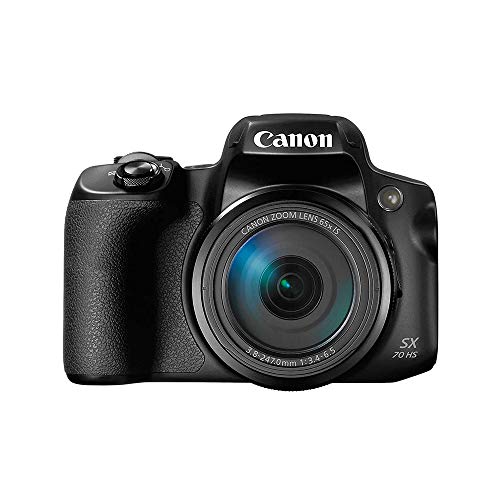
The quick answer is straightforward. For maximum reach, the Nikon COOLPIX P950 leads with an 83x optical zoom covering 24 to 2000mm. The Panasonic LUMIX FZ80D pairs a 60x optical zoom with a 20mm wide end. The Canon PowerShot SX70 HS gives you 65x optical zoom in a lighter bridge body. The KODAK PIXPRO AZ528 delivers 52x optical zoom on a smaller budget. The Canon PowerShot SX740 HS packs 40x optical zoom into a pocketable body. Every camera below is a still digital camera with a real optical zoom lens, not a camcorder.
Quick Picks
Our Short List of 3

All 4 Picks at a Glance
| Product | Specs | Action |
|---|---|---|
| Panasonic LUMIX FZ80D (B0D8239188) — Best for Wide-Angle Landscapes Plus Long Telephoto Reach | Check price on Amazon | |
| Canon PowerShot SX70 HS (B07JLT68VP) — Best for a Lighter Bridge Camera for Travel and Wildlife | Check price on Amazon | |
| KODAK PIXPRO AZ528 (B0B9BLHWB8) — Best for Long Zoom on a Smaller Budget | Check price on Amazon | |
 Canon PowerShot SX740 HS (B07FXXVC74) — Best for a Pocketable Zoom for Everyday Travel | Check price on Amazon |
How to Choose
Read the Optical Zoom Number First
Optical zoom is expressed as a multiple, such as 40x, 52x, 60x, 65x, or 83x, describing how much longer the telephoto end is than the wide end. A higher number usually means more reach, but always read it together with the focal length range. Here the ranges run from 20 to 1200mm on the Panasonic FZ80D to 24 to 2000mm on the Nikon P950. A wider starting point fits more landscape in the frame, and a longer ending point fills the frame with smaller, more distant subjects.
Compare Focal Length Range, Not Just the Multiple
Two cameras can share a similar zoom multiple and still behave very differently. The Canon SX70 HS at 65x covers 21 to 1365mm, while the Panasonic FZ80D at 60x covers 20 to 1200mm. The Canon reaches further at the long end, while the Panasonic starts slightly wider. For wildlife and sports, the long end matters most. For travel, both ends matter. If your subjects are usually far away, favour the longest telephoto end. If you also photograph landscapes and groups, favour a wide starting point of 20mm or 21mm.
Check Image Stabilization at Full Zoom
At 1000mm and beyond, even a tiny hand movement becomes a large movement in the frame. Image stabilization therefore decides whether a long-zoom photograph is sharp or blurred. Nikon calls its system Dual Detect Optical Vibration Reduction on the P950, Panasonic uses POWER O.I.S. on the FZ80D, and Canon and KODAK build optical image stabilization into their zoom lenses as well. Effective stabilization lets you shoot at longer focal lengths without a tripod in good light. Look for optical stabilization in the lens, not only digital stabilization in software.
Look at the Aperture at the Long End
A zoom lens rarely keeps the same aperture across its whole range. The Nikon P950 opens at f/2.8 at 24mm and narrows to f/6.5 at 2000mm. The Panasonic FZ80D runs from f/2.8 to f/5.9 across its 20 to 1200mm range. The Canon SX70 HS runs from f/3.4 to f/6.5. A narrower aperture at full zoom lets in less light, so the camera needs a slower shutter speed or a higher ISO setting in dim conditions. If you photograph mostly in daylight, the aperture at full zoom matters less, and the extra reach matters more.
Consider Size, Weight, and How You Will Carry It
The Canon SX740 HS weighs about 299 grams and fits in a jacket pocket. The Panasonic FZ80D weighs about 640 grams and has a bridge-style body with a grip and an electronic viewfinder. The Nikon P950 weighs about 1005 grams and is the largest camera here. Weight matters because a camera you leave behind takes no photographs. A pocketable camera is the one you carry on every walk, while a bridge camera is the one you carry when photography is the purpose of the outing. Match the body to the way you actually shoot, not only to the zoom number.
The Best Best Optical Zoom Digital Cameras Reviewed
Nikon COOLPIX P950 (B083K41SKC) — Best for Maximum Optical Zoom Reach
The Nikon COOLPIX P950 is the reach leader here. Its NIKKOR lens covers 24 to 2000mm with an 83x optical zoom, the longest reach among the five cameras in this roundup. At 2000mm, a bird across a field or the moon fills far more of the frame than on any other camera here. The 16-megapixel backside-illuminated CMOS sensor records RAW files as well as JPEG files. Video recording reaches 4K UHD, and the vari-angle LCD screen tilts and flips for low and high shooting angles.
Dual Detect Optical Vibration Reduction steadies the view at long focal lengths, and zoom framing assist helps you find a subject again after it slips out of the narrow field of view at 2000mm. The electronic viewfinder gives a clear view in bright light, and Wi-Fi and Bluetooth support a connection to a phone.
Who it suits: birdwatchers, wildlife photographers, and anyone who photographs the moon or distant landscapes and wants the longest optical zoom in a fixed-lens camera.
Who should skip it: anyone who wants a pocketable or light travel camera. At about 1005 grams, the P950 is the heaviest camera here, and it suits daylight better than low light, because the aperture narrows to f/6.5 at the long end.
Panasonic LUMIX FZ80D (B0D8239188) — Best for Wide-Angle Landscapes Plus Long Telephoto Reach
The Panasonic LUMIX FZ80D is the most versatile bridge camera here, because it starts wider than any other pick and still reaches far. Its 60x optical zoom covers 20 to 1200mm, so you can photograph a wide landscape at 20mm and then zoom to 1200mm for a distant detail. The 18.1-megapixel sensor records 4K video, and the 4K Photo feature lets you extract a still image from 4K video footage, which is useful for fast-moving subjects.
POWER O.I.S. steadies the lens at the telephoto end, and Zoom Compose Assist zooms out quickly when you lose a subject, then returns to the previous zoom position. The 2,360K-dot electronic viewfinder is clear in bright sunlight, and the 3-inch touch screen lets you set focus by tapping the subject. Macro shooting works down to 1cm, and USB Type-C charging tops up the battery from a portable charger while travelling.
Who it suits: travellers who want one camera for landscapes, city scenes, and distant subjects, and photographers who want a wide 20mm starting point without giving up long zoom reach.
Who should skip it: anyone who needs the absolute longest reach. The FZ80D stops at 1200mm, while the Nikon P950 reaches 2000mm.
Canon PowerShot SX70 HS (B07JLT68VP) — Best for a Lighter Bridge Camera for Travel and Wildlife
The Canon PowerShot SX70 HS pairs a long 65x optical zoom with a bridge body that is lighter than the Nikon P950. Its lens covers 21 to 1365mm, so it reaches further than the Panasonic FZ80D and the KODAK AZ528, while starting at a wide 21mm for landscapes. The 20.3-megapixel CMOS sensor and DIGIC 8 processor support continuous shooting at up to 10 frames per second, which helps with moving wildlife and sports. Video recording reaches 4K, and the vari-angle LCD screen flips out for low-angle shots.
Optical image stabilization steadies the lens at full zoom, and zoom framing assist helps you relocate a subject after zooming in. The electronic viewfinder helps you frame in bright light and brace the camera for steadier shots. Wi-Fi and Bluetooth support image transfer and remote shooting from a phone.
A note on availability: the SX70 HS is an older model, first released in 2018, and new stock on Amazon US is limited compared with current models such as the Panasonic FZ80D. Check the listing carefully before buying, and confirm that the listing you choose is the camera body you expect, with the accessories listed, rather than a bundle or a different version.
Who it suits: travellers and wildlife photographers who want more reach than a 40x compact camera gives, without carrying the weight of the largest bridge cameras.
Who should skip it: anyone who wants the longest reach should look at the Nikon P950, and anyone who wants a pocketable camera should look at the Canon SX740 HS instead.
KODAK PIXPRO AZ528 (B0B9BLHWB8) — Best for Long Zoom on a Smaller Budget
The KODAK PIXPRO AZ528 is the value pick here. Its 52x optical zoom covers 24 to 1248mm, a long reach for a camera in its class, with straightforward controls that suit beginners. The 16-megapixel BSI CMOS sensor records Full HD 1080p video, and optical image stabilization helps keep the image steady at the long end. Burst shooting at up to 6 frames per second helps with moving subjects, and built-in Wi-Fi supports sharing images to a phone.
The AZ528 is a bridge-style camera, with a grip, a zoom lever, and a 3-inch LCD screen. The lens starts at a useful 24mm wide angle, then extends to 1248mm for birds, sports, and distant details. That range covers the subjects most people buy a superzoom camera for, without the size and weight of the largest models.
Who it suits: beginners, families, and budget-conscious buyers who want genuine 52x optical zoom for wildlife, sports, and travel.
Who should skip it: anyone who needs 4K video, RAW files, a touch screen, or an electronic viewfinder should look elsewhere, because the AZ528 keeps its feature set simple. It suits bright daylight best.
Canon PowerShot SX740 HS (B07FXXVC74) — Best for a Pocketable Zoom for Everyday Travel
The Canon PowerShot SX740 HS is the pocketable pick here. Its 40x optical zoom covers 24 to 960mm, a long reach for a camera that weighs about 299 grams and fits in a jacket pocket. The 20.3-megapixel CMOS sensor and DIGIC 8 processor support 4K video recording. The 3-inch LCD screen tilts up for self-portraits and low-angle shots, and Wi-Fi, NFC, and Bluetooth support a connection to a phone for sharing.
Optical image stabilization steadies the lens at full zoom, and zoom framing assist helps you find a subject again after it moves out of frame. It covers wide street scenes at 24mm, portraits in the middle of the range, and distant details at 960mm, all from a body that slips into a pocket.
A note on availability: the SX740 HS is also an older model, first released in 2018, and new stock on Amazon US is limited. Check the listing carefully before buying, and confirm the colour, the model number, and the included accessories. Its 40x optical zoom is still far beyond what a phone camera can match with optical zoom alone.
Who it suits: travellers, walkers, and everyday photographers who want a camera that is always with them and still reaches far.
Who should skip it: anyone whose main subject is always at extreme distance should look at the Nikon P950 or the Canon SX70 HS, because 960mm is shorter than 1365mm or 2000mm.
What to Check Before You Buy
Start with the optical zoom range, and confirm that the numbers you are reading describe optical zoom, not digital zoom. A listing that mixes the two can make a camera look far more powerful than it is. Look for the phrase optical zoom and the focal length range in millimetres, and ignore any larger digital zoom figure when you compare reach.
Next, check the sensor size and the aperture at the long end. A 1/2.3-inch sensor is normal for a superzoom camera, and it is the reason the lens can be so long in a small body. Accept that low-light shooting will have limits, and plan to shoot in good light at full zoom. An electronic viewfinder helps at full zoom, and a vari-angle screen helps at awkward angles.
Check the battery, the memory card, and the weight together. A superzoom camera uses more battery when you zoom often, so a spare battery is a practical addition for a long day. Finally, check the listing itself on Amazon before you buy. Confirm the model name, the model number, the colour, and the included accessories. Older models here, notably the Canon SX70 HS and the Canon SX740 HS, have limited new stock, and some listings are bundles. Confirm that the listing is the camera you want.
FAQ
What is the difference between optical zoom and digital zoom?
Optical zoom uses the physical lens to magnify the subject before the sensor records the image, so detail is preserved. Digital zoom enlarges the centre of an image after it has been captured, which crops away pixels and softens detail. Use the optical zoom figure and the focal length range to judge reach, and treat any digital zoom figure as a separate feature that does not add real detail.
How much optical zoom do I need for wildlife photography?
For birds and distant wildlife, more reach usually helps. A 40x zoom that reaches 960mm can photograph larger animals at moderate distance, while an 83x zoom that reaches 2000mm can fill the frame with a small bird far away. The trade-off is size, weight, and low-light performance. A camera with 52x to 65x optical zoom covers most wildlife subjects in daylight, while the 83x Nikon P950 is the choice when your subjects are regularly at extreme distance.
Is a superzoom camera better than a phone camera for zoom?
For optical zoom reach, a superzoom camera is far ahead of a phone camera. A phone camera relies on a short lens and digital cropping for long zoom, while a superzoom camera uses a long glass lens to magnify the subject. A phone camera may have better software processing for normal photographs, but it cannot match a 60x or 83x optical zoom lens for distant subjects.
Do I need a tripod for a camera with 83x optical zoom?
A tripod helps at extreme focal lengths, especially in low light or for static subjects such as the moon. In bright daylight, image stabilization and a fast shutter speed often let you shoot handheld at full zoom, particularly if you brace the camera against your face with the viewfinder. For the longest focal lengths, a monopod or a tripod gives you the steadiest results.
Can a compact zoom camera replace a bridge camera?
A compact zoom camera such as the Canon SX740 HS can replace a bridge camera for travel and everyday photography, because it is smaller, lighter, and easier to carry. It cannot match a bridge camera for maximum reach, for viewfinder framing in bright light, or for grip and controls at full zoom. If you carry the camera everywhere, the compact camera wins on portability. If photography is the purpose of the outing and your subjects are far away, the bridge camera wins on reach and handling.
Bottom Line
The best optical zoom digital cameras here all share one strength: a real optical zoom lens that brings distant subjects close without cropping away detail. The Nikon COOLPIX P950 leads on reach with 83x optical zoom to 2000mm, and it is the pick for wildlife, birdwatching, and the moon. The Panasonic LUMIX FZ80D is the most versatile bridge camera here, with a 20mm wide end and 60x optical zoom to 1200mm, plus 4K video and 4K Photo. The Canon PowerShot SX70 HS balances 65x optical zoom with a lighter bridge body. The KODAK PIXPRO AZ528 gives you 52x optical zoom for a smaller budget. The Canon PowerShot SX740 HS packs 40x optical zoom into a pocketable body.
Choose by reach first, then by size and by the features you will actually use. If your subjects are far away, choose the longest telephoto end you can carry comfortably. If you travel light, choose the smallest camera with enough zoom for your subjects. Check the listing carefully, especially for the older Canon models.
Disclosure: As an Amazon Associate, we may earn from qualifying purchases.
Related guides
More from Amazon
Programs that pair well with the guide above. Offers and eligibility are set by Amazon and may change.
Free shipping on eligible items, Prime Video and more. Eligible new members can start with a free trial.
Start a Prime free trialAudiobooks and podcasts to listen to on the go. Eligible new members can start with a free trial.
Try Audible freeAd-free music streaming. Eligible new subscribers can start with a free trial.
Try Music Unlimited freeA free business account with business pricing and bulk-buying tools for work, shop or home office.
Create a business accountAs an Amazon Associate we earn from qualifying purchases.










Write Your Review
No reviews yet. Be the first to share your experience!