
Our Short List of 3
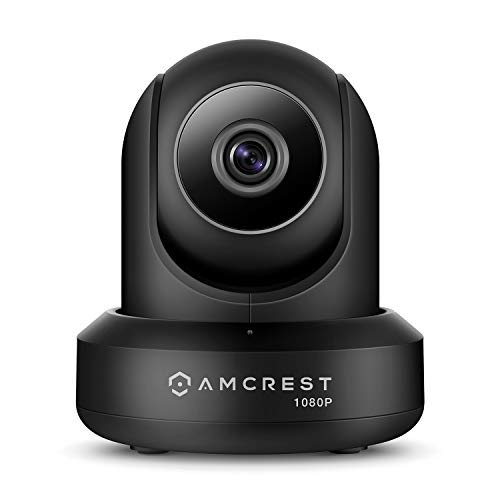
- Best for: Homes with an existing ONVIF NVR that need an indoor camera the recorder can actually ingest.
- Video: 1080P (1920TVL) at 30fps
- Recorder support: record and playback via Amcrest or ONVIF NVR per listing copy
- Also stated: microSD card, FTP upload and Blue Iris recording
- Movement: pan and tilt
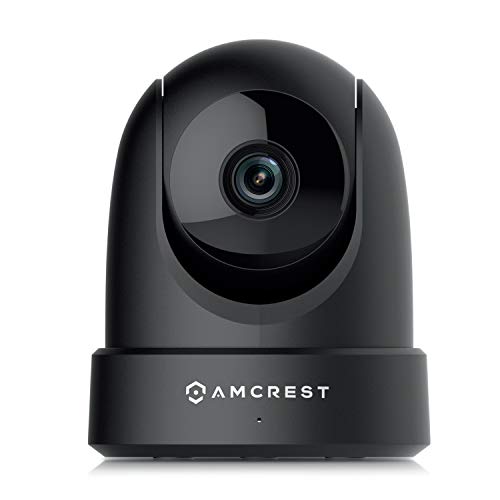
- Best for: Indoor positions where a sharper 4MP picture and dual-band WiFi justify staying inside the Amcrest recorder family.
- Video: 4MP (2688×1520) at about 20fps
- Recorder support: works with Amcrest NVRs per listing copy
- Also stated: microSD (128GB), Synology and QNAP NAS, FTP, Amcrest Cloud
- WiFi: dual-band 5GHz and 2.4GHz

- Best for: Two-room indoor coverage feeding a Reolink NVR or Home Hub, with pet detection for animal households.
- Video: 4MP HD per title
- Recorder support: compatible devices field states Reolink PoE NVR, Reolink WiFi NVR, Reolink Home Hub Pro and Home Hub
- Storage: local microSD card storage per title
- Movement: pan and tilt
All 3 Picks at a Glance
| Product | Specs | Action |
|---|---|---|
| Amcrest ProHD IP2M-841B |
| Check price on Amazon |
| Amcrest IP4M-1051B |
| Check price on Amazon |
| REOLINK E1 (2 Pack) |
| Check price on Amazon |
Key takeaways
- Only three WiFi cameras state DVR or NVR recording in their listings. These three are compared on resolution, pan and tilt and recorder support.
What's inside
As an Amazon Associate I earn from qualifying purchases. This post may contain affiliate links at no extra cost to you.
Most WiFi cameras record to a memory card or to the maker’s cloud, and their listings say exactly that. Cameras whose listings state recording to a DVR or NVR are a much smaller class, and honesty requires saying so up front: after checking listing after listing, only three cameras state recorder support in their own product copy. This guide covers those three rather than padding the set with card-and-cloud cameras that fail the brief.
The three picks below are indoor pan and tilt cameras for homes that already run, or plan to run, a recorder. Every claim about recorder support is quoted from the listing itself, because compatibility promised by a headline and compatibility stated in the copy are different things, and only the second kind protects a purchase.
Quick Picks
As an Amazon Associate we earn from qualifying purchases.
| Product | Best for | Key spec from title |
|---|---|---|
| Amcrest ProHD IP2M-841B | Homes with an existing ONVIF NVR that need an indoor camera the recorder can actually ingest. | 1080P, records via Amcrest or ONVIF NVR per listing |
| Amcrest IP4M-1051B | Indoor positions where a sharper 4MP picture and dual-band WiFi justify staying inside the Amcrest recorder family. | 4MP UltraHD, works with Amcrest NVRs per listing |
| REOLINK E1 (2 Pack) | Two-room indoor coverage feeding a Reolink NVR or Home Hub, with pet detection for animal households. | 4MP, spec table lists Reolink NVR compatibility |
How to Choose
Recorder support must be stated, not implied
The whole point of this category is the sentence in the listing that names a recorder. One pick here states ONVIF NVR recording, another names its maker’s NVRs, and the third lists compatible recorders in its spec table. A camera whose copy mentions only a card and a cloud does not belong in this class, however good it is. Before buying any WiFi camera for a DVR or NVR setup, find the recorder sentence on the live page and match its wording to the recorder you own.
Maker ecosystems versus open standards
Recorder compatibility comes in two flavours. Open wording, such as an ONVIF mention, suggests the camera can feed recorders from several makers. Ecosystem wording names the camera maker’s own NVRs and hubs, which usually means the smoothest setup inside that family and no promise outside it. Neither is wrong, but they serve different homes: an existing mixed-brand recorder needs the open wording, while a new single-brand system can accept the ecosystem route happily. The recorder sentence in each listing here shows which of the two flavours that camera offers, and the distinction is printed in this guide’s specs.
Resolution and frame rate for recorder duty
A camera feeding a recorder is judged on the stream it hands over. The picks here run from 1080p at 30 frames per second to 4MP at about 20, and the trade is visible: the sharper sensor moves a little less smoothly. For a hallway or a nursery, smoothness matters less than detail on a face. Check the stated frame rate beside the resolution figure rather than assuming the headline resolution comes at full motion.
Pan and tilt changes what one camera covers
All three picks pan and tilt, which lets one indoor camera sweep a room instead of staring at one corner. On a recorder, that movement can be scheduled or triggered, and it multiplies the value of a two-pack. The limit is that a panning camera is always looking somewhere else as well: for a fixed critical view, such as a door, a camera that never moves is the safer witness. Use pan and tilt for coverage, not for guarding one exact spot.
The 3 Best Options
Amcrest ProHD IP2M-841B
- Best for: Homes with an existing ONVIF NVR that need an indoor camera the recorder can actually ingest.
- Video: 1080P (1920TVL) at 30fps
- Recorder support: record and playback via Amcrest or ONVIF NVR per listing copy
- Also stated: microSD card, FTP upload and Blue Iris recording
- Movement: pan and tilt
Homes with an existing ONVIF NVR that need an indoor camera the recorder can actually ingest.
This is an older listing; confirm the current live page still states NVR recording and shows a live offer before ordering, and drop the pick if the wording has changed.
The ProHD IP2M-841B is the long-running member of this small class: a 1080p pan and tilt camera whose listing copy states recording and playback via local microSD card, Amcrest or ONVIF NVR, FTP upload and Blue Iris. The ONVIF mention matters, because it points beyond the maker’s own recorders toward standard NVRs. The listing adds a 90-degree viewing angle, night vision up to 32 feet and two-way talk. It is an older design, and its value is precisely the breadth of recording destinations its copy still names. That flexibility has kept this older model in recorder setups long after newer card-only cameras appeared beside it.
Watch out for: This is an older listing; confirm the current live page still states NVR recording and shows a live offer before ordering, and drop the pick if the wording has changed.
Amcrest IP4M-1051B
- Best for: Indoor positions where a sharper 4MP picture and dual-band WiFi justify staying inside the Amcrest recorder family.
- Video: 4MP (2688×1520) at about 20fps
- Recorder support: works with Amcrest NVRs per listing copy
- Also stated: microSD (128GB), Synology and QNAP NAS, FTP, Amcrest Cloud
- WiFi: dual-band 5GHz and 2.4GHz
Indoor positions where a sharper 4MP picture and dual-band WiFi justify staying inside the Amcrest recorder family.
The stated NVR support names Amcrest recorders; if your recorder is another brand, verify compatibility on the live listing rather than assuming ONVIF support that this copy does not claim.
The IP4M-1051B is the sharper Amcrest: a 4MP UltraHD indoor camera at 2688 by 1520 and about 20 frames per second, with pan and tilt, a wide 120-degree field of view and dual-band 5GHz and 2.4GHz WiFi. Its listing copy states that it works with Amcrest NVRs alongside microSD, NAS from Synology and QNAP, FTP and the maker’s cloud. The dual-band radio is a genuine practical edge in crowded wireless homes, and the resolution doubles the older model’s detail for the same shelf position. It treats the recorder as the centre of the system and the camera as a sharp, dual-band eye feeding it.
Watch out for: The stated NVR support names Amcrest recorders; if your recorder is another brand, verify compatibility on the live listing rather than assuming ONVIF support that this copy does not claim.
REOLINK E1 (2 Pack)
- Best for: Two-room indoor coverage feeding a Reolink NVR or Home Hub, with pet detection for animal households.
- Video: 4MP HD per title
- Recorder support: compatible devices field states Reolink PoE NVR, Reolink WiFi NVR, Reolink Home Hub Pro and Home Hub
- Storage: local microSD card storage per title
- Movement: pan and tilt
Two-room indoor coverage feeding a Reolink NVR or Home Hub, with pet detection for animal households.
The E1 is an indoor camera; the maker’s own guidance advises against outdoor use, so do not mount it outside expecting the recorder link to survive the weather.
The Reolink E1 comes as a two-pack of 4MP pan and tilt indoor cameras with human and pet detection, night vision and two-way talk. Its recorder evidence sits in the listing’s own spec table, whose compatible devices field names Reolink PoE NVR, Reolink WiFi NVR and the Reolink Home Hub line, and the copy adds microSD storage alongside NVR recording. Two cameras in the box suit a pair of rooms feeding one recorder. It is an indoor camera through and through, and this guide presents it as exactly that. Matched hardware in both rooms also means one behaviour to learn and one recorder relationship to manage.
Watch out for: The E1 is an indoor camera; the maker’s own guidance advises against outdoor use, so do not mount it outside expecting the recorder link to survive the weather.
Which One Fits Your Situation
You already own an ONVIF NVR with spare channels
Take the Amcrest ProHD IP2M-841B: its listing states ONVIF NVR recording outright, which is the broadest recorder promise in this small set. That breadth is rare in this class, and it is stated in the copy rather than implied by a headline, which is why this older camera leads the set.
You are building an Amcrest-based system indoors
Take the IP4M-1051B for its 4MP picture, dual-band WiFi and stated Amcrest NVR support, and let the recorder handle storage centrally. The dual-band radio also helps in apartment buildings and dense streets where the 2.4GHz band is crowded at the hours cameras matter most.
Two rooms need coverage on a Reolink recorder
Take the E1 two-pack: both cameras feed the Reolink NVR or Home Hub the spec table names, with pet detection for the rooms animals use. The two-pack pricing of effort matters too: one purchase covers both rooms and both cameras arrive matched for the same recorder.
You want a camera for a porch or yard on a recorder
None of these three: all are indoor cameras. A wired PoE camera or a recorder kit serves exterior positions; this class honestly covers indoor duty only. Treating that boundary honestly is part of this guide’s job, since the three verified picks are indoor cameras and nothing in their listings suggests otherwise.
Common Mistakes
- Assuming any WiFi camera can record to a DVR or NVR, when most listings state card and cloud storage only.
- Reading a headline about recording and skipping the listing copy, where the actual recorder sentence lives.
- Mixing ecosystems blindly: a camera that names only its maker’s NVRs may never appear on another brand’s recorder.
- Mounting one of these indoor cameras outside because its recorder link works, ignoring the indoor rating in the listing.
- Padding expectations to a long list: this class genuinely has three verified members, and a fourth pick would have to invent its evidence.
Frequently Asked Questions
Why does this guide list only three cameras?
Because only three WiFi camera listings state DVR or NVR recording in their own copy. Most WiFi cameras state microSD and cloud storage only, and at least one popular line states in its listings that NVR is not supported. Three honest picks beat a padded list.
Can these cameras record without a recorder?
Yes. Each listing also states microSD card storage, so the cameras can record locally on a card with no recorder involved. The recorder support is what earns them a place here; the card is the fallback every one of them shares.
Will these work with any NVR brand?
Only one listing states ONVIF NVR support, the broader promise. The other two name their own makers’ recorders and hubs. Match the camera to the recorder wording on the live listing before buying across brands. When in doubt, keep the camera and recorder inside one maker’s family, where the listing’s compatibility sentence was written to apply.
Are any of these cameras suitable outdoors?
No. All three are indoor pan and tilt cameras, and one maker’s guidance advises against outdoor use for its model. Exterior recorder positions belong to wired outdoor cameras or full outdoor kits. For a recorder-fed outdoor position, the wired kits in this site’s other guides are the honest route, not an indoor camera under an eave.
Related guides
More from Amazon
Programs that pair well with the guide above. Offers and eligibility are set by Amazon and may change.
Free shipping on eligible items, Prime Video and more. Eligible new members can start with a free trial.
Start a Prime free trialAudiobooks and podcasts to listen to on the go. Eligible new members can start with a free trial.
Try Audible freeAd-free music streaming. Eligible new subscribers can start with a free trial.
Try Music Unlimited freeA free business account with business pricing and bulk-buying tools for work, shop or home office.
Create a business accountAs an Amazon Associate we earn from qualifying purchases.










Write Your Review
No reviews yet. Be the first to share your experience!