
Key takeaways
- Five cushioned running shoes chosen for plantar fasciitis and Achilles comfort, with stated heel and support features plus checks to make before buying.
What's inside
As an Amazon Associate I earn from qualifying purchases. This post may contain affiliate links at no extra cost to you.
If your heel aches in the first steps of a run and your Achilles feels tight by the end, the real decision is not which shoe is softest overall. It is where the softness sits. A shoe can feel plush under the heel yet still bend in a way that makes the calf and Achilles work harder with every stride. The five shoes below were picked for stated heel cushioning and ride shapes that keep foot strike gentle, so you can match the shoe to where your discomfort actually shows up.
This guide is for women runners dealing with heel sensitivity linked to the plantar fascia, a tender Achilles, or both at once, whether the goal is easy daily miles or a longer weekend run. Every pick is a women’s neutral, maximum-cushion road shoe, and each one was chosen from the name and specifications on its Amazon product page: the cushioning system the maker names, the upper material, and any stated heel or geometry features.
Quick Picks
As an Amazon Associate we earn from qualifying purchases
| Product | Best for | Key spec from title |
|---|---|---|
| Brooks Women’s Ghost 16 Neutral Running Shoe | Easy daily miles in a smooth, balanced neutral trainer | Nitrogen-infused DNA Loft v3 cushioning |
| ASICS Women’s Gel-Nimbus 26 Running Shoe | Long, slow runs where the heel takes repeated load | PureGEL heel cushioning |
| Brooks Women’s Glycerin 21 Neutral Running Shoe | Maximum cushioning under both heel and forefoot | DNA LOFT v3 max-cushion build |
| HOKA Women’s Clifton 10 Running Shoe | A lighter, rockered ride that rolls forward smoothly | Early-stage MetaRocker geometry |
| Saucony Women’s Triumph 22 Running Shoe | Responsive cushioning for daily and longer runs | PWRRUN PB cushioning |
How to Choose
Match the cushioning to where the discomfort sits
Heel pain and Achilles tightness do not ask for the same thing from a shoe. If your discomfort is concentrated under the heel, look for a model whose listing names dedicated heel cushioning, such as the PureGEL in the Gel-Nimbus 26, because that is where each landing lands. If your whole foot feels beaten up by the end of a run, a maximum-cushion build that spreads softness from heel to forefoot, like the Glycerin 21, suits better. Read the product page for the cushioning system the maker actually names rather than assuming every thick midsole behaves the same way.
Pay attention to ride shape, not just softness
Two shoes with similar cushioning can move your foot through a stride very differently. A rockered geometry, like the early-stage MetaRocker named on the Clifton 10, is shaped to roll the stride forward instead of bending sharply through the forefoot. A flat, bouncy foam, like the PWRRUN PB in the Triumph 22, feels lively but can feel less steady at walking pace. If your Achilles dislikes new movement patterns, change one thing at a time: keep your usual mileage, walk in the new pair indoors first, and only then judge how the ride feels at your normal running pace.
Check the heel collar and upper before you buy
The area around the Achilles is exactly where a shoe can quietly cause trouble. A tall, plush collar, like the one on the Gel-Nimbus 26, feels protective to some runners and rubs the tendon on others, so compare the collar height with the shoes you already tolerate. Uppers matter too: a warp knit, like the Glycerin 21 uses, stretches more than engineered mesh and can let the heel move, while a firmer mesh holds the rearfoot steadier. Whichever you choose, size the shoe for how your feet measure late in the day, when they are at their largest.
Be clear about whether you need support as well
Every shoe in this list is a neutral model, which means none of them adds a support structure to guide a foot that rolls inward. That is a deliberate fit for runners whose main issue is heel or Achilles comfort, not pronation control. If your shoes wear heavily on the inner edge, your ankles roll in noticeably, or a clinician has suggested guidance, a stability shoe will serve you better than any pick here. Mixing both needs into one purchase usually satisfies neither, so decide which problem you are solving before you spend money on cushioning alone.
The 5 Best Options
Brooks Women’s Ghost 16 Neutral Running Shoe

The Ghost 16 is the balanced option in this lineup: a neutral daily trainer whose nitrogen-infused DNA Loft v3 midsole is stated to give soft landings without the tall, tippy feel of a maximum stack. The engineered air mesh upper keeps the fit straightforward and breathable, and the RoadTack rubber outsole is made for paved miles. Choose it if your heel and Achilles feel happiest in a shoe that simply feels smooth and predictable at easy pace, for daily runs, recovery days, and the walking you do around them. It adds no support structure, so it suits a neutral stride best.
Specs
- Version: women’s road running shoe
- Cushioning: nitrogen-infused DNA Loft v3
- Upper: engineered air mesh
- Outsole: RoadTack rubber
- Drop and weight: not stated on the listing
Best for: runners whose heel and Achilles feel best in a smooth, neutral daily trainer with soft landings for easy miles.
Watch out for: the Ghost is neutral with no added support structure, so if you also need guidance for rolling inward, a stability shoe fits that need better than forcing this one.
ASICS Women’s Gel-Nimbus 26 Running Shoe

The Gel-Nimbus 26 is the heel specialist here. Its listing names PureGEL cushioning in the heel on top of FF Blast Plus foam, which is the most explicitly heel-focused cushioning story in this list. That makes it a natural pick for long, slow miles where the heel strikes again and again and the Achilles absorbs the rhythm of each landing. The engineered mesh upper keeps the fit simple, while the tall, plush build feels protective rather than nimble. If your discomfort lives mainly under the heel and your runs are steady rather than fast, start with this one.
Specs
- Version: women’s road running shoe
- Heel cushioning: PureGEL
- Cushioning: FF Blast Plus
- Upper: engineered mesh
- Drop and weight: not stated on the listing
Best for: runners who want the softest stated heel cushioning in this list for long, slow miles where the heel and Achilles take repeated load.
Watch out for: the plush ride runs warm and tall, so check the heel collar fit and make sure the higher, softer collar does not rub the Achilles area.
Brooks Women’s Glycerin 21 Neutral Running Shoe

The Glycerin 21 is Brooks’ maximum-cushion neutral shoe, built on DNA LOFT v3 cushioning that the listing presents as the plushest option in the brand’s range. Where the Nimbus concentrates its softness at the heel, the Glycerin spreads a deep, soft feel under the whole foot, which suits runners whose feet feel generally tired as well as heel-sensitive. The warp knit upper gives a sock-like fit with more give than a mesh trainer. Pick it for rebuilding steady mileage, recovery runs, and long days when you want the ground to feel as distant as possible.
Specs
- Version: women’s road running shoe
- Cushioning: DNA LOFT v3, maximum-cushion build
- Upper: warp knit
- Drop and weight: not stated on the listing
Best for: runners returning to steady mileage who want maximum stated cushioning under both heel and forefoot in one shoe.
Watch out for: the knit upper stretches more than a mesh trainer, so size for afternoon foot swell to keep toes from pressing the front on long runs.
HOKA Women’s Clifton 10 Running Shoe

The Clifton 10 takes a different route to comfort: instead of relying only on softness, its early-stage MetaRocker geometry is shaped to roll each stride forward, so the foot bends less sharply through the forefoot. The cushioned EVA midsole keeps landings soft, and the jacquard knit upper gives a smooth, close fit. It is the lighter-feeling option in this list, which suits runners who find tall, plush shoes clumsy. If your Achilles prefers a smooth, rolling motion over a flexible one, walk in these indoors first, then let the rocker show itself at an easy run.
Specs
- Version: women’s road running shoe
- Midsole: cushioned EVA
- Upper: jacquard knit
- Geometry: early-stage MetaRocker, named by the maker
- Drop and weight: not stated on the listing
Best for: lighter runners who want a soft, rockered ride that rolls forward smoothly instead of flexing hard through the forefoot.
Watch out for: the rocker feel is unusual at first, so walk in them indoors before a full run, especially if your Achilles is sensitive to new movement patterns.
Saucony Women’s Triumph 22 Running Shoe
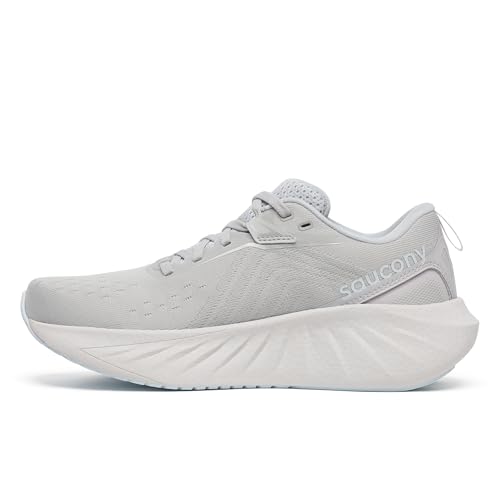
The Triumph 22 pairs maximum cushioning with the liveliest feel in this list, thanks to its PWRRUN PB foam, which the listing presents as a responsive cushioning material. That bounce suits runners who find very soft shoes dull or tiring over longer distances, and it holds up well for daily miles plus a longer weekend run. The engineered mesh upper keeps the fit conventional and secure. Judge this shoe at your real running pace: the energetic foam can feel less settled while walking slowly, then smooths out once you are actually running.
Specs
- Version: women’s road running shoe
- Cushioning: PWRRUN PB
- Upper: engineered mesh
- Drop and weight: not stated on the listing
Best for: runners who want a responsive-feeling max-cushion shoe for daily miles and longer weekend runs.
Watch out for: the bouncier foam feels less stable at slow walking pace, so judge it at your real running pace, not in the first few steps.
Which One Fits Your Situation
Your heel pain is worst in the first steps of a run
Start with the Gel-Nimbus 26, because its listing names PureGEL cushioning in the heel, which is where your discomfort is concentrated. If your whole foot also feels tired by the end of longer outings, the Glycerin 21 spreads maximum cushioning from heel to forefoot instead. Either way, judge the shoe on a full easy run, not on how it feels standing in the store.
Your Achilles feels tight and sore after runs
Look first at the Clifton 10: its MetaRocker geometry rolls the stride forward, so the foot bends less sharply at the front, and many runners find that rolling motion gentler on a sensitive Achilles. The Ghost 16 is the alternative if you prefer a conventional, flexible ride with soft landings. With either shoe, walk indoors first and keep your first runs short while your calves adjust.
You are rebuilding mileage after time off
The Glycerin 21 suits this phase best: its maximum DNA LOFT v3 cushioning keeps both heel and forefoot well padded while your legs regain durability, and the knit upper forgives feet that swell more than they used to. The Triumph 22 is the better pick if deep softness makes you feel sluggish, since its PWRRUN PB foam returns more energy at the same easy effort.
You want one pair for daily miles and a long weekend run
Choose between the Ghost 16 and the Triumph 22. The Ghost is the calmer all-rounder: balanced cushioning, a breathable mesh upper, and a durable rubber outsole for everyday pavement. The Triumph adds a livelier, more responsive foam that feels fresher in the later miles of a long run. Both are neutral, so pick by ride feel rather than by support features neither shoe claims to offer.
Common Mistakes
- Buying the softest shoe in the store without checking whether its heel collar rubs your Achilles on a longer walk.
- Expecting a neutral cushioned shoe to also control inward rolling; none of these five adds a support structure.
- Judging a rockered or bouncy shoe by a few steps around the shop instead of at real running pace.
- Sizing a stretchy knit upper to a snug morning fit, then finding your toes pressed against the front late in a long run.
- Assuming new shoes make it safe to ignore Achilles pain that keeps returning or comes with swelling, instead of getting it checked by a clinician.
Frequently Asked Questions
Can a cushioned shoe cure plantar fasciitis or Achilles tendonitis?
No. The shoes in this list offer cushioning and comfort features only; none of them is a treatment, and no shoe can cure either condition. The right pick can make daily miles feel more comfortable while you manage the problem, but plantar fasciitis and Achilles tendonitis are medical issues. If pain persists, worsens, or limits your walking, see a clinician or podiatrist for a proper assessment.
How do I know if a rockered shoe suits my Achilles?
The Clifton 10 is the rockered option here, and the honest test is gradual: walk in it indoors, then take a short, easy run before committing to longer distances. The rolling shape feels natural to some runners and strange to others. If the new motion makes your Achilles feel worse rather than more comfortable, stop and go back to the ride shape you already tolerate.
Are these shoes a good choice if I also overpronate?
Probably not as your main pair. All five picks are neutral shoes with no added support structure, chosen for heel and Achilles comfort rather than motion control. If your feet roll inward noticeably, your shoe wear shows it, or a clinician has recommended guidance, look at stability models instead and make cushioning the second priority. Forcing one shoe to solve both problems usually leaves the rolling unaddressed.
What if my Achilles pain persists or the tendon swells?
Stop increasing your mileage and get the tendon checked by a clinician or podiatrist. Achilles pain that lingers for weeks, keeps returning, or comes with swelling, warmth, or a thickened tendon needs a professional assessment, not a different shoe. Cushioned footwear can keep you comfortable during daily activity, but it cannot diagnose or resolve a tendon problem, and running through worsening symptoms risks a much longer layoff.
Related guides
More from Amazon
Programs that pair well with the guide above. Offers and eligibility are set by Amazon and may change.
Free shipping on eligible items, Prime Video and more. Eligible new members can start with a free trial.
Start a Prime free trialAudiobooks and podcasts to listen to on the go. Eligible new members can start with a free trial.
Try Audible freeAd-free music streaming. Eligible new subscribers can start with a free trial.
Try Music Unlimited freeA free business account with business pricing and bulk-buying tools for work, shop or home office.
Create a business accountAs an Amazon Associate we earn from qualifying purchases.
Write Your Review
No reviews yet. Be the first to share your experience!