
Our Short List of 3
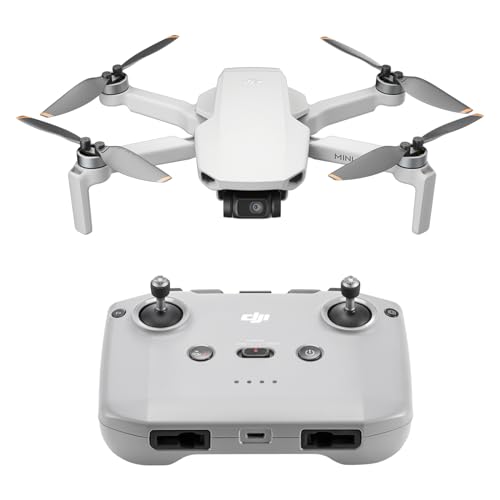
- Best for: First-time aerial shooters who want DJI’s stated 4K camera, gimbal and transmission in the lightest, simplest package.
- Weight: under 249 g per title; item weight 246 g per listing
- Camera: 4K UHD per title
- Gimbal: 3-axis gimbal stabilization per title
- Flight time: 31-minute max with 1 battery per title (longer figures in the listing are multi-battery set totals)

- Best for: Aerial photographers who want the strongest stated camera in the sub-249 g class, with the combo’s controller and extra batteries in the box.
- Weight: under 249 g per listing (Battery Plus pushes it over 249 g, per the listing itself)
- Video: 4K/100fps HDR per listing
- Stills: 48MP photos; 48MP RAW stills per listing
- Flight time: 34 minutes; 45 minutes with Battery Plus, per listing

- Best for: Solo creators who want a follow-me aerial selfie camera that launches from a palm and needs no controller at all.
- Weight: 135 g per listing
- Camera: 4K UHD per listing
- Stills: 12MP per listing
- Operation: palm takeoff and landing; controller-free operation, per listing
All 5 Picks at a Glance
| Product | Specs | Action |
|---|---|---|
| DJI Mini 4K |
| Check price on Amazon |
| DJI Mini 4 Pro Fly More Combo (with DJI RC 2) |
| Check price on Amazon |
| DJI Neo (Three-Battery Combo) |
| Check price on Amazon |
 Potensic ATOM 2 Fly More Combo |
| Check price on Amazon |
 DJI Flip (RC-N3) |
| Check price on Amazon |
Key takeaways
- Five camera drones compared on listing specs: sensors, 4K video, gimbals, flight times, transmission range and the sub-249 g class they share.
What's inside
As an Amazon Associate I earn from qualifying purchases. This post may contain affiliate links at no extra cost to you.
A flying camera is judged in the air and in the file: the gimbal decides whether the footage is smooth, the sensor and video specification decide whether it is worth keeping, and the weight class decides how much regulation travels with it. Every drone in this set sits in the sub-249 gram class its listing states, and the comparison below is argued on camera facts (sensor, resolution, gimbal) rather than on flying novelty.
The five picks are the verified consumer camera-drone pool: four DJI models across the Mini, Neo and Flip lines, and one Potensic rival, each with its listing’s stated camera specification. One naming discipline matters: the Mini 4 Pro here is its Fly More Combo listing, because that is the listing whose ASIN is verified, and it is named as the combo wherever it appears.
Quick Picks
As an Amazon Associate we earn from qualifying purchases.
| Product | Best for | Key spec from title |
|---|---|---|
| DJI Mini 4K | First-time aerial shooters who want DJI’s stated 4K camera, gimbal and transmission in the lightest, simplest package. | 4K UHD camera, 3-axis gimbal, under 249 g |
| DJI Mini 4 Pro Fly More Combo (with DJI RC 2) | Aerial photographers who want the strongest stated camera in the sub-249 g class, with the combo’s controller and extra batteries in the box. | 4K/100fps HDR video, 48MP photos, omnidirectional sensing |
| DJI Neo (Three-Battery Combo) | Solo creators who want a follow-me aerial selfie camera that launches from a palm and needs no controller at all. | 135 g, 4K UHD camera, palm takeoff, propeller guards |
| Potensic ATOM 2 Fly More Combo | Aerial shooters who want a Sony-sensor alternative to the DJI line, with the combo’s three batteries for a full morning of flights. | 1/2-inch Sony CMOS, 4K/30fps HDR, 3-axis gimbal |
| DJI Flip (RC-N3) | Creators who want the largest stated sensor in this class plus palm-launch convenience and guarded propellers for close work. | 1/1.3-inch CMOS, 4K/60fps HDR, 31-min flight time |
How to Choose
The camera specification outranks the drone specification
Strip away the flying and these are cameras: a 4K UHD unit, a 4K/100fps HDR unit with 48MP RAW stills, a 1/2-inch Sony sensor, a 1/1.3-inch sensor with 4K/60fps HDR. For stills-led aerial work the photo figures and RAW support decide; for video, the frame rate at 4K separates slow-motion-capable models from the rest. Every pick here has a 3-axis gimbal, so stabilization is the shared baseline rather than a discriminator, and the sensor and recording facts should carry the decision.
Flight time is quoted three different ways
The listings state a per-battery maximum, a combo total across three batteries, and in one case nothing at all. Comparing them naively crowns whichever marketing figure is largest. Normalise before ranking: divide combo totals by their battery count, treat a missing figure as unknown rather than zero, and remember real flights end early for wind, cold and the return reserve. The honest per-battery numbers here cluster near half an hour, which is the planning figure that matters.
Weight class is a stated fact with legal weight
All five listings state under 249 grams, and one listing itself warns that its larger battery option pushes the same drone over that line. The class matters because registration and operating rules in many places turn on it, though this guide makes no jurisdiction claims: check your local rules. What the listings do settle is the physical fact, including the Battery Plus caveat, and a buyer who needs the class should treat that caveat as part of the specification.
Sensing and guards decide where it can fly
Omnidirectional vision sensing, a 3D infrared braking system, full-coverage propeller guards and plain care are four different safety stories in these listings. Close work around people, boats and buildings argues for the guarded and sensed models; open landscapes forgive the simpler ones. Read the protection facts as literally as the camera facts, because the same listing discipline applies: what is not stated is not promised, and a reserve model held out of this set for weaker verification is not a pick.
The 5 Best Options
DJI Mini 4K
- Best for: First-time aerial shooters who want DJI’s stated 4K camera, gimbal and transmission in the lightest, simplest package.
- Weight: under 249 g per title; item weight 246 g per listing
- Camera: 4K UHD per title
- Gimbal: 3-axis gimbal stabilization per title
- Flight time: 31-minute max with 1 battery per title (longer figures in the listing are multi-battery set totals)
First-time aerial shooters who want DJI’s stated 4K camera, gimbal and transmission in the lightest, simplest package.
Read flight-time figures carefully on the live page: the listing’s larger numbers are totals across battery sets, not what one battery delivers.
The Mini 4K is the entry point of DJI’s flying cameras and the simplest statement of the formula: a 4K UHD camera on a 3-axis gimbal in a body under 249 grams, with 10km video transmission, Auto Return and Level 5 wind resistance stated in its title. The listing gives a 31-minute maximum flight time for the one-battery configuration, and states longer totals for multi-battery sets, which are set totals and never single-battery figures. QuickShots automate the classic aerial moves. For a first flying camera, the stated facts cover the whole learning curve.
Watch out for: Read flight-time figures carefully on the live page: the listing’s larger numbers are totals across battery sets, not what one battery delivers.
DJI Mini 4 Pro Fly More Combo (with DJI RC 2)
- Best for: Aerial photographers who want the strongest stated camera in the sub-249 g class, with the combo’s controller and extra batteries in the box.
- Weight: under 249 g per listing (Battery Plus pushes it over 249 g, per the listing itself)
- Video: 4K/100fps HDR per listing
- Stills: 48MP photos; 48MP RAW stills per listing
- Flight time: 34 minutes; 45 minutes with Battery Plus, per listing
Aerial photographers who want the strongest stated camera in the sub-249 g class, with the combo’s controller and extra batteries in the box.
This ASIN is the Fly More Combo, not the base drone: do not price or plan around a base-model listing, whose US ASIN the research could not capture.
The Mini 4 Pro is the camera-led flagship of the sub-249 gram class, and this listing is its Fly More Combo with the DJI RC 2 controller, named as the combo because the base model’s US ASIN was never captured in the research and is not guessed here. The listing states 4K/100fps HDR video, 48MP photos with 48MP RAW stills, a 34-minute flight time, omnidirectional vision sensing and OcuSync 4 transmission up to 12.4 miles. A Battery Plus option extends flight to 45 minutes, with the listing itself noting it pushes weight over 249 grams.
Watch out for: This ASIN is the Fly More Combo, not the base drone: do not price or plan around a base-model listing, whose US ASIN the research could not capture.
DJI Neo (Three-Battery Combo)
- Best for: Solo creators who want a follow-me aerial selfie camera that launches from a palm and needs no controller at all.
- Weight: 135 g per listing
- Camera: 4K UHD per listing
- Stills: 12MP per listing
- Operation: palm takeoff and landing; controller-free operation, per listing
Solo creators who want a follow-me aerial selfie camera that launches from a palm and needs no controller at all.
This ASIN is the Three-Battery Combo; anomalous ASIN fields appeared in two captures of this model, so confirm the live page’s field shows this corroborated code.
The Neo is the flying camera as a selfie device. At 135 grams it is the lightest body here, with palm takeoff and landing, AI subject tracking, QuickShots, built-in propeller guards and controller-free operation, around a 4K UHD camera with 12MP stills and Level 4 wind resistance. This assigned ASIN is the Three-Battery Combo listing. One figure is deliberately absent from its specs: the Neo’s own captured listing text does not state a per-battery flight time, so this guide prints none for it rather than borrowing a number from another model’s comparison table.
Watch out for: This ASIN is the Three-Battery Combo; anomalous ASIN fields appeared in two captures of this model, so confirm the live page’s field shows this corroborated code.
Potensic ATOM 2 Fly More Combo
- Best for: Aerial shooters who want a Sony-sensor alternative to the DJI line, with the combo’s three batteries for a full morning of flights.
- Weight: under 249 g per listing; item weight 249 g
- Sensor: 1/2-inch Sony CMOS per listing
- Video: 4K/30fps HDR per listing
- Stills: 48MP photos per listing
Aerial shooters who want a Sony-sensor alternative to the DJI line, with the combo’s three batteries for a full morning of flights.
Never read the 96-minute figure as one battery’s endurance: it is the three-battery combo total, and the per-battery figure lives in the Standard Kit listing.
The ATOM 2 is the non-DJI answer in the verified pool, and its listing argues on camera facts: a 1/2-inch Sony CMOS sensor, 4K/30fps HDR video, 48MP photos, a 3-axis gimbal, 10 km transmission over PixSync 4.0, AI Track and an AI Night Shot mode, with QuickShots. This ASIN is the Fly More Combo, whose headline flight figure needs reading correctly: the combo’s 96 minutes is the total across its three batteries, while the Standard Kit listing states 32 minutes per battery. The body sits at the top of the class at 249 grams per the listing’s item weight.
Watch out for: Never read the 96-minute figure as one battery’s endurance: it is the three-battery combo total, and the per-battery figure lives in the Standard Kit listing.
DJI Flip (RC-N3)
- Best for: Creators who want the largest stated sensor in this class plus palm-launch convenience and guarded propellers for close work.
- Weight: under 249 g per title
- Sensor: 1/1.3-inch CMOS per title
- Video: 4K/60fps HDR per title
- Gimbal: 3-axis gimbal stabilization per title
Creators who want the largest stated sensor in this class plus palm-launch convenience and guarded propellers for close work.
The propeller guards fold with the arms, so check them for damage after any knock before flying: they are part of this model’s safety story.
The Flip is DJI’s folding answer to the selfie-drone idea with a bigger camera attached. Its title states a 1/1.3-inch CMOS sensor, the largest sensor in this set, with 4K/60fps HDR video, a 3-axis gimbal, 13 km video transmission and a 31-minute flight time, in a body under 249 grams with foldable full-coverage propeller guards. Palm takeoff and Auto Return are stated, along with AI subject tracking and a 3D Infrared Sensing System for automatic braking. It is the pick where the camera specification, not the form factor, leads.
Watch out for: The propeller guards fold with the arms, so check them for damage after any knock before flying: they are part of this model’s safety story.
Which One Fits Your Situation
A first flying camera for landscapes and travel
Take the DJI Mini 4K: the stated 4K camera, 3-axis gimbal, 10km transmission and 31-minute single-battery figure cover the whole brief simply. Level 5 wind resistance, stated in its listing, is the quiet fact that keeps coastal and hillside flights usable rather than postponed.
An aerial photographer wanting RAW stills and slow motion
Take the DJI Mini 4 Pro Fly More Combo for its stated 48MP RAW stills, 4K/100fps HDR video and omnidirectional sensing. The combo box removes the second order entirely, since the controller, spare batteries and case arrive with the drone itself.
A solo creator filming themselves outdoors
Take the DJI Neo for palm launch and AI subject tracking with no controller, or the DJI Flip if the bigger 1/1.3-inch sensor matters more. The guarded propellers make it the forgiving choice around gardens and people, where a first aerial mistake is a matter of when, not if.
A DJI alternative with a named sensor
Take the Potensic ATOM 2 Fly More Combo, whose listing leads with its 1/2-inch Sony CMOS and 3-axis gimbal. Its 3-axis gimbal and AI Track give it the working tools of the class without the flagship’s price of admission in complexity. in the class DJI otherwise dominates on specification.
Common Mistakes
- Comparing a three-battery combo total against a single-battery maximum and concluding one drone flies three times longer than another.
- Assuming the Mini 4 Pro’s base model shares this listing’s ASIN, when only the Fly More Combo code was verified and the base code was never captured.
- Printing a per-battery flight time for the Neo from another model’s comparison table, when its own listing text does not state one.
- Forgetting the listing’s own warning that a Battery Plus option pushes the Mini 4 Pro over 249 grams, changing its weight class.
- Judging a flying camera by flight features alone and ignoring the sensor and frame-rate facts that decide whether the footage is worth keeping.
Frequently Asked Questions
Are all of these drones under 249 grams?
Yes, on their listings’ own statements, with one caveat printed in the Mini 4 Pro’s listing itself: its Battery Plus option pushes that model over 249 grams. In standard configuration, all five sit in the sub-249 g class. The class is stated per model rather than assumed from the product line, which is why the Battery Plus caveat travels with the Mini 4 Pro’s entry.
Which flying camera has the best camera?
For stills, the DJI Mini 4 Pro states 48MP photos with RAW support. For sensor size, the DJI Flip states a 1/1.3-inch CMOS, the largest here, with 4K/60fps HDR video. The two lead different halves of the camera argument. A stills-led buyer should start from the Mini 4 Pro’s entry, and a video-led buyer from the Flip’s sensor and frame-rate pairing.
Why is the Mini 4 Pro listed as a combo?
Because the Fly More Combo is the listing whose ASIN is verified in the research; the base model’s US ASIN was never captured and is not guessed. The article names the combo wherever the model appears. Buyers should therefore read the combo’s contents as the product being bought, not as a bundle variation of a base listing described elsewhere.
How long do these drones actually fly per battery?
The stated per-battery figures cluster around 31 to 34 minutes where listings give them. Combo totals like 96 minutes span three batteries, and the Neo’s own listing states no per-battery figure, so none is printed for it. Flight planning should use the per-battery figures, with a reserve kept for the return leg in wind.
Related guides
More from Amazon
Programs that pair well with the guide above. Offers and eligibility are set by Amazon and may change.
Free shipping on eligible items, Prime Video and more. Eligible new members can start with a free trial.
Start a Prime free trialAudiobooks and podcasts to listen to on the go. Eligible new members can start with a free trial.
Try Audible freeAd-free music streaming. Eligible new subscribers can start with a free trial.
Try Music Unlimited freeA free business account with business pricing and bulk-buying tools for work, shop or home office.
Create a business accountAs an Amazon Associate we earn from qualifying purchases.










Write Your Review
No reviews yet. Be the first to share your experience!