
Our Short List of 3

- Best for: A main camera on a deer trail where night image clarity matters most.
- Photo resolution: 48MP
- Video: 1296p H.264 with audio, or 1080p at 30fps
- Sensor: Sony Starvis
- Trigger speed: 0.1s, with 0.5s recovery time
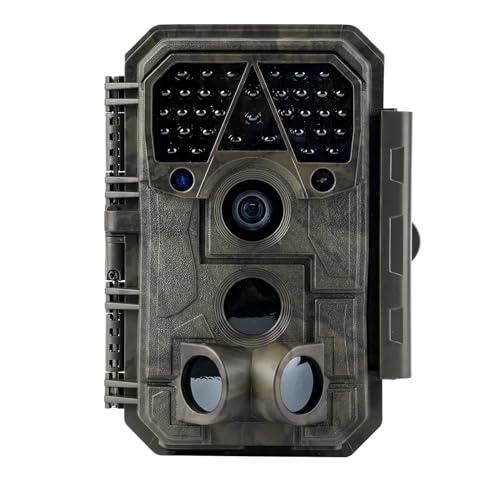
- Best for: Hunters who review photos on the camera screen right at the tree.
- Photo resolution: up to 64MP, with 32MP, 24MP, 16MP, 8MP and 4MP options
- Video: 2304×1296 or 1920×1080
- Lens: f/1.6 aperture
- Trigger speed: 0.1s

- Best for: A first camera you can mount and run the same day it arrives.
- Photo resolution: 48MP
- Video: 4K with audio
- Trigger speed: 0.2s, up to 3 shots per trigger
- Night vision: 32 no-glow 940nm infrared LEDs, 80ft range
All 4 Picks at a Glance
| Product | Specs | Action |
|---|---|---|
| GardePro A3 Trail Camera |
| Check price on Amazon |
| Meidase P70 Trail Camera |
| Check price on Amazon |
| WOSPORTS G600 Trail Camera |
| Check price on Amazon |
 WOSPORTS Mini G100 Trail Camera |
| Check price on Amazon |
Key takeaways
- Compare five budget non-cellular trail cameras on trigger speed, no-glow night vision, video quality, SD card support and battery needs before you buy.
What's inside
As an Amazon Associate I earn from qualifying purchases. This post may contain affiliate links at no extra cost to you.
Buying a cheap trail camera is really a decision about what you can live without. Every model in this price band records to an SD card instead of sending photos to your phone, so the trade-offs are trigger speed, night flash range, and how much extra you will spend on batteries and memory cards many listings leave out of the box. A camera that looks like a bargain can cost more once you add eight AA batteries and a large card, so judge each pick by its total working setup, not its headline photo resolution.
This guide is for first-time buyers putting out a single camera, hunters adding extra angles around a property without paying cellular prices, and homeowners who want to know what visits the yard or feeder at night. Every pick below is a non-cellular trail camera chosen from the name and specifications on its Amazon product page, and the five differ mainly in screen size, flash type, card format, and what is included.
Quick Picks
As an Amazon Associate we earn from qualifying purchases
| Product | Best for | Key spec from title |
|---|---|---|
| GardePro A3 Trail Camera | Night photos on a main deer trail | 48MP stills and 1296p H.264 video |
| Meidase P70 Trail Camera | Reviewing shots on the built-in screen | 64MP stills and 1296p video |
| Vikeri A1 Trail Camera | Wide clearings and crossing angles | 4K video and 130° wide-angle lens |
| WOSPORTS G600 Trail Camera | Starting out with a card in the box | 4K video and 32GB memory card included |
| WOSPORTS Mini G100 Trail Camera | A compact second camera in tight cover | 24MP stills and 1080p HD video |
How to Choose
Trigger Speed Decides Whether You Get the Animal or Its Tail
Trigger speed is the delay between the sensor detecting movement and the camera taking the shot, and it matters most on trails where animals cross quickly rather than linger. The GardePro A3 and Meidase P70 both list a 0.1-second trigger, while the Vikeri A1 claims 0.05 seconds in its title and the WOSPORTS G600 lists 0.2 seconds. At a feeder or mineral site, where deer stand still for minutes, even a slower trigger is fine. On a narrow crossing trail, pick from the faster end of this list and angle the camera down the trail instead of across it, so the animal stays in frame longer.
No-Glow Flash Keeps the Camera Invisible After Dark
Budget cameras use either low-glow LEDs, which show a faint red shimmer when they fire, or no-glow 940nm LEDs, which stay invisible to people and almost all animals. Four of the five picks here use no-glow arrays, and their listed flash ranges run from 80 feet on the WOSPORTS G600 to 100 feet on the GardePro A3, Meidase P70, and Vikeri A1. Treat those ranges as best-case figures for open ground; brush and uneven terrain shorten them. If the camera will watch a gate, driveway, or anywhere a visible flash could draw attention, no-glow is the safer choice even at a shorter range.
Read Photo and Video Numbers With Suspicion
Megapixel figures on inexpensive trail cameras are usually interpolated, meaning the camera enlarges a smaller native image in software. The Vikeri A1 shows why you should read the full listing: its title advertises 48MP photos, yet the same page lists an effective still resolution of 20MP, and its 4K video claim sits beside a lower effective video figure. The Meidase P70 listing also mixes 1296p in its title with a 1080p entry in one spec field. Use the headline numbers to group cameras roughly, then compare the effective resolution, lens angle, and flash range further down the page before deciding.
Budget for Batteries and the Right Card Format
The purchase price is only part of the cost. The GardePro A3 and Meidase P70 each need eight AA batteries and a full-size SD card, neither of which is included, while the Vikeri A1 runs on four AA batteries but takes a micro SD card instead of the full-size format. Only the WOSPORTS G600 includes a memory card, a 32GB card in the box. Card capacity also sets how often you visit the camera: a model that accepts cards up to 512GB can sit for a whole season, while a 32GB ceiling means more trips, and every visit leaves scent and disturbance behind.
The 5 Best Options
GardePro A3 Trail Camera
- Best for: A main camera on a deer trail where night image clarity matters most.
- Photo resolution: 48MP
- Video: 1296p H.264 with audio, or 1080p at 30fps
- Sensor: Sony Starvis
- Trigger speed: 0.1s, with 0.5s recovery time
A main camera on a deer trail where night image clarity matters most.
Batteries and the SD card are both sold separately, so the working setup costs more than the camera alone.
The A3 is the pick for a buyer who wants one dependable camera on a proven trail rather than several throwaway units. Its Sony Starvis sensor and smart illumination are aimed squarely at the weak point of cheap cameras, washed-out or murky night photos, and the 0.1-second trigger with a half-second recovery suits animals that pause only briefly. The built-in 2.4-inch color screen makes setup and aim checks easy in the field, and support for full-size SD cards up to 512GB means long sits between visits. It is the most complete all-rounder here for deer scouting.
Meidase P70 Trail Camera
- Best for: Hunters who review photos on the camera screen right at the tree.
- Photo resolution: up to 64MP, with 32MP, 24MP, 16MP, 8MP and 4MP options
- Video: 2304×1296 or 1920×1080
- Lens: f/1.6 aperture
- Trigger speed: 0.1s
Hunters who review photos on the camera screen right at the tree.
One field in the listing’s spec table gives video capture as 1080p while the title and effective resolution say 1296p, so confirm the video setting in the menu after setup.
The P70 suits buyers who check their camera on foot and want to review photos before walking away. Its 2.4-inch color screen, 0.1-second trigger, and no-glow flash reaching a listed 100 feet cover the basics well, and the f/1.6 aperture lens is a specification rarely spelled out at this level. Photo resolution tops out at a claimed 64MP with several lower settings, and video is listed at 1296p. Because it is non-cellular and non-WiFi, there is nothing to configure beyond the camera itself, which keeps it simple for a first-time owner or a spare unit at a second property.
Vikeri A1 Trail Camera
Choose the Vikeri A1 when the camera overlooks a wide area, such as a food plot edge, clearing, or yard, where animals can enter from either side. Its title claims the widest lens in this group at 130 degrees and the fastest trigger at 0.05 seconds, backed by 48 no-glow infrared LEDs and a listed 100-foot night vision range. It also runs on only four AA batteries, half the count of the GardePro and Meidase models, which trims running costs. The trade-off is that its listing’s fine print is more modest than its headline, as the watch-out below explains.
Specs
- Photo resolution: up to 48MP per the title; effective still resolution listed as 20MP
- Video: 4K per the title
- Trigger speed: 0.05s per the title
- Night vision: 48 no-glow infrared LEDs, 100ft range
- Lens: 130° wide angle per the title
- Screen: 2.4 inches
- Storage: micro SD card
- Power: 4 AA batteries required
- Weather rating: IP66
- Dimensions: 5.39 x 3.42 x 2.36 inches
Best for: Wide clearings and plot edges where animals cross at an angle.
Watch out for: The listing contradicts its own headline: effective still resolution is given as 20MP despite the 48MP title, so judge it as a wide-angle convenience pick rather than a resolution leader. It also takes micro SD, not full-size SD cards.
ASIN: B08DJ5WKVQ
WOSPORTS G600 Trail Camera
- Best for: A first camera you can mount and run the same day it arrives.
- Photo resolution: 48MP
- Video: 4K with audio
- Trigger speed: 0.2s, up to 3 shots per trigger
- Night vision: 32 no-glow 940nm infrared LEDs, 80ft range
A first camera you can mount and run the same day it arrives.
The 80-foot night range is the shortest of the full-size picks here, and the larger body is harder to hide on a thin tree.
The G600 is the easiest starting point in this group because the box includes a 32GB memory card and a USB Type-C cable, removing the most common first-purchase mistake. It records 4K video with audio and stills up to 48MP, fires with a 0.2-second trigger, and can take up to three shots per trigger, which helps on trails where a single frame might catch a deer mid-stride. Its 32 no-glow LEDs reach a listed 80 feet at night, shorter than the GardePro or Meidase, and the body is larger than the mini models, so it fits a main trail or a yard post better than a discreet hide.
WOSPORTS Mini G100 Trail Camera
- Best for: A low-cost second camera for side trails, fence lines, and garden wildlife.
- Photo resolution: 24MP
- Video: 1080p HD, AVI format
- Night vision: infrared night vision
- Weather rating: IP66
A low-cost second camera for side trails, fence lines, and garden wildlife.
The listing does not state a trigger speed or detection range in its product information, and no memory card is listed as included, so expect basic performance and budget for a card.
The G100 is the camera you add when the main spot is already covered and you want a cheap second angle on a side trail, fence line, or garden bed. It is a mini model with 24MP stills and 1080p HD video, an IP66 waterproof rating, and a simple push-button, motion-only setup with local recording to card. Resolution is the lowest in this group, which is a fair trade for a camera whose job is to tell you what passed and when, not to produce prints. It ships from Amazon and is sold by the brand’s official store, a useful detail at this end of the market.
Which One Fits Your Situation
Scouting One Proven Deer Trail All Season
Take the GardePro A3. Its no-glow flash reaches a listed 100 feet, the Starvis sensor is built for cleaner night images, and support for a 512GB full-size card lets it sit for weeks between checks. The eight AA batteries are an added cost on day one, but for a single main camera the A3’s screen and capture modes make it the most capable long-sit option in this group.
Checking a Backyard Feeder Without a Laptop
The Meidase P70 fits best. Its 2.4-inch color screen lets you scroll through last night’s visitors while standing at the tree, and the 0.1-second trigger with no-glow flash handles close-range feeder traffic without a visible flash burst. Because nothing connects to a phone or network, setup is just batteries, a card, and a strap, which suits a camera that gets checked every few days.
Covering a Wide Food Plot or Clearing
Pick the Vikeri A1 for its 130-degree lens, the widest claimed in this group, and its four-battery appetite, which keeps spares cheap. Set it at a corner rather than the middle of an edge so crossing animals stay in the detection zone longer. Go in expecting solid coverage rather than the full detail its headline resolution suggests, since the listing’s effective resolution figure is lower.
Adding Extra Angles Around a Property
Use the WOSPORTS Mini G100 for secondary spots such as a side gate, a crossing fence line, or the far end of a garden. Its 24MP stills and 1080p video answer the only questions a spare camera needs to answer: what came through, and at what time. If one of those spots turns into a main location, step up to the G600, which adds 4K video and includes its first memory card.
Common Mistakes
- Judging a camera by its headline megapixels, when budget models interpolate stills and the effective resolution in the same listing can be far lower.
- Forgetting that most of these cameras ship without batteries or a memory card, so the first setup costs more than the camera itself.
- Mixing up card formats: the Vikeri A1 takes micro SD while the GardePro A3 takes full-size SD, and the wrong card means a wasted trip to the woods.
- Aiming a camera straight across a fast trail, so even a quick trigger catches only part of the animal; angle it along the trail instead.
- Choosing a low-glow or visible-flash model for a spot near a road or gate, where the flash itself can attract attention to the camera.
Frequently Asked Questions
Do inexpensive trail cameras require a subscription?
No. All five cameras in this guide are non-cellular models that save photos and video to a memory card, so there is no plan, app account, or monthly fee involved. The trade-off is that you only see images when you visit the camera and check the card or the built-in screen, rather than receiving them on your phone.
Are the megapixel numbers on budget trail cameras real?
Only partly. Listings in this class often quote an interpolated maximum, and the same page may list a lower effective resolution, as the Vikeri A1 does with its 48MP title and 20MP effective figure. Treat the headline as an upper bound, compare effective resolution and lens quality where they are given, and expect identification-quality images rather than print-quality detail.
What else do I need to buy before the first setup?
For most models here, eight AA batteries and a memory card, and neither is included with the GardePro A3 or Meidase P70. Check the card format before ordering, since this group mixes full-size SD and micro SD. The WOSPORTS G600 is the exception, with a 32GB card in the box, and the Vikeri A1 needs only four AA batteries.
Should I choose no-glow or low-glow flash?
No-glow 940nm flash is invisible when it fires, which suits wary deer and any camera placed where people might notice it, and four of the five picks here use it. Low-glow arrays can reach slightly farther for the money but show a faint red glow at the camera. For a feeder in your own yard either works; for public land or a gate, no-glow is safer.
Related guides
More from Amazon
Programs that pair well with the guide above. Offers and eligibility are set by Amazon and may change.
Free shipping on eligible items, Prime Video and more. Eligible new members can start with a free trial.
Start a Prime free trialAudiobooks and podcasts to listen to on the go. Eligible new members can start with a free trial.
Try Audible freeAd-free music streaming. Eligible new subscribers can start with a free trial.
Try Music Unlimited freeA free business account with business pricing and bulk-buying tools for work, shop or home office.
Create a business accountAs an Amazon Associate we earn from qualifying purchases.










Write Your Review
No reviews yet. Be the first to share your experience!