
Our Short List of 3

- Best for: Beginners setting a first camera in a garden or at a woodland feeding site.
- 48MP photo resolution
- 1296p H.264 HD video
- 100ft no-glow infrared night vision
- 0.1s trigger speed

- Best for: Garden watchers who review video in detail and want to check framing on the built-in screen.
- 4K video recording
- 48MP photo resolution
- 0.05s trigger time
- 130-degree wide-angle lens
- Best for: Woodland owners monitoring wide clearings and tracks who want a complete kit in one box.
- 24MP photo resolution
- Full HD 1080p video with sound, 5 seconds to 2 minutes per clip
- 0.22-second trigger speed
- 120 ft adjustable infrared flash range
All 4 Picks at a Glance
| Product | Specs | Action |
|---|---|---|
| GardePro A3 |
| Check price on Amazon |
| Vikeri 4K Trail Camera |
| Check price on Amazon |
| Browning Strike Force Pro X 1080 |
| Check price on Amazon |
 GardePro A3S |
| Check price on Amazon |
Key takeaways
- Compare the best wildlife cameras for gardens and woodland, from a 4K Vikeri to a fast-trigger GardePro, with specs and ASINs verified on Amazon US today.
What's inside
As an Amazon Associate I earn from qualifying purchases. This post may contain affiliate links at no extra cost to you.
Choosing a wildlife camera is really a decision about distance and darkness. Most animals visit a garden or woodland trail at dawn, dusk or full night, often passing through in seconds, so the specifications that decide success are trigger speed, detection range and how the night flash behaves. Headline megapixels matter far less: a slightly softer photo of the animal beats a sharper photo of an empty trail taken a moment too late.
This guide is for garden watchers logging hedgehogs and foxes, landowners monitoring woodland paths and feeding sites, and beginners putting out their first camera. Every model below is a dedicated trail camera, and each was selected from the specifications on its Amazon product page, favouring fast triggers, no-glow night vision and housings that can live outdoors for weeks.
Quick Picks
As an Amazon Associate we earn from qualifying purchases.
| Product | Best for | Key spec from title |
|---|---|---|
| GardePro A3 | First-time buyers who want fast triggering and clear night shots | 0.1s trigger speed with 100ft no-glow night vision |
| Vikeri 4K Trail Camera | Reviewing detailed footage of garden visitors on a built-in screen | 4K video with a 2.4-inch LCD screen |
| Browning Strike Force Pro X 1080 | Woodland sites where the camera must reach further at night | 120 ft adjustable infrared flash range |
| GardePro A3S | Still-photo watchers who want the highest resolution in this group | 64MP photos with 1296P HD video |
How to Choose
Trigger speed and detection range
A trail camera sleeps until its motion sensor fires, so two numbers decide whether you get the animal or its tail: trigger speed and detection range. A trigger around a tenth of a second catches most of a passing fox or deer in frame, while slower cameras suit stationary subjects at a feeder. Detection range tells you how far away movement can wake the camera, and it should roughly match the flash range, otherwise the camera fires at animals it cannot illuminate. The GardePro A3 lists a 0.1s trigger, while the Browning below pairs its trigger with an 80 ft detection range for wider clearings.
Night vision that does not announce itself
Almost everything worth filming happens after dark, so the infrared flash type shapes your results. No-glow LEDs emit light that is effectively invisible to animals and people, which keeps natural behaviour in front of the lens and avoids drawing attention to the camera in public woodland. Low-glow arrays glow faintly red and usually reach a little further. For garden wildlife and any site where the camera could be spotted, no-glow is the safer default; three of the four cameras here use it, and the Browning instead offers an adjustable infrared flash range you can tune to the site.
Photo and video resolution that actually helps
Manufacturers headline the largest number available, so read resolution in context. Video resolution decides how well you can identify behaviour and individuals in moving footage, which is why the Vikeri’s 4K video is genuinely useful for reviewing clips on a computer. Still-photo figures such as 48MP or 64MP are typically achieved with processing and interpolation, so treat them as a rough guide rather than a promise of detail. What matters more in practice is a wide lens that keeps the subject in frame and a fast trigger that fires before it leaves.
Power, storage and weather sealing
A wildlife camera earns its keep by being ignored for weeks, so check how it is powered and how it stores footage before you buy. Most trail cameras run on AA batteries and record to a removable SD card, which means your running costs and visit schedule depend on card size and how much video you record. Confirm whether a card is included, as the Browning bundle below includes one while others expect you to supply your own. Finally, look for a stated waterproof rating such as the Vikeri’s IP66, because the housing will face months of rain.
The 4 Best Options
GardePro A3
- Best for: Beginners setting a first camera in a garden or at a woodland feeding site.
- 48MP photo resolution
- 1296p H.264 HD video
- 100ft no-glow infrared night vision
- 0.1s trigger speed
Beginners setting a first camera in a garden or at a woodland feeding site.
Check the listing for what is in the box, and confirm the SD card size and battery type it requires before your first outing.
The A3 is the easiest camera here to recommend to a first-time buyer because its headline specifications target the things that actually lose you wildlife: a 0.1s trigger speed for animals crossing the frame, no-glow infrared for night work that does not disturb them, and a 100ft flash range that suits gardens and woodland edges alike. Its 1296p video is recorded in H.264 format, which keeps file sizes manageable on the card, and the waterproof housing is built to stay strapped to a tree through a season of weather.
Vikeri 4K Trail Camera
- Best for: Garden watchers who review video in detail and want to check framing on the built-in screen.
- 4K video recording
- 48MP photo resolution
- 0.05s trigger time
- 130-degree wide-angle lens
Garden watchers who review video in detail and want to check framing on the built-in screen.
Wide lenses make subjects look smaller, so mount it closer to the action than you would a narrower camera, and confirm card requirements on the listing.
Vikeri’s camera suits watchers who review footage carefully rather than glancing at thumbnails. Its 4K video and 130-degree wide lens capture behaviour across a broad scene, the 48 no-glow infrared LEDs cover night work without visible flash, and the 2.4-inch LCD lets you check aim and framing in the field instead of discovering a badly angled camera a week later. The 0.05s trigger time is the fastest listed here, which helps with birds and other quick visitors crossing close to the lens.
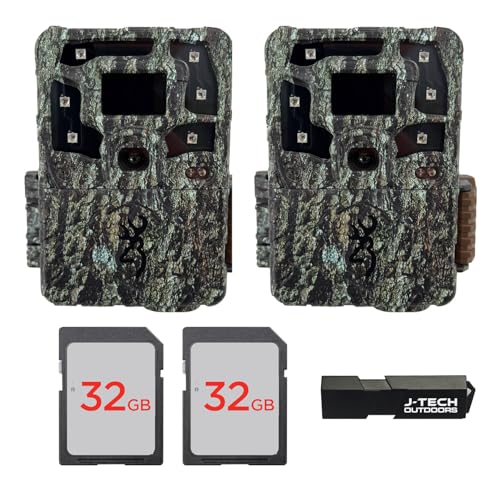
Browning Strike Force Pro X 1080
- Best for: Woodland owners monitoring wide clearings and tracks who want a complete kit in one box.
- 24MP photo resolution
- Full HD 1080p video with sound, 5 seconds to 2 minutes per clip
- 0.22-second trigger speed
- 120 ft adjustable infrared flash range
Woodland owners monitoring wide clearings and tracks who want a complete kit in one box.
This ASIN is a bundle, so check the listing carefully to confirm the card, reader and mounting parts are included in the version you order.
Browning’s Strike Force line is the established-name option here, and this bundle version is built for larger sites: the adjustable infrared flash reaches up to 120 ft and the detection range is 80 ft, so it covers clearings and rides where the GardePro models would be stretched. Still photos are 24MP and video is Full HD 1080p with sound, in clips from 5 seconds to 2 minutes. The bundle includes a 32GB memory card and a card reader, plus a 1.5-inch colour screen for checking the camera in the field.
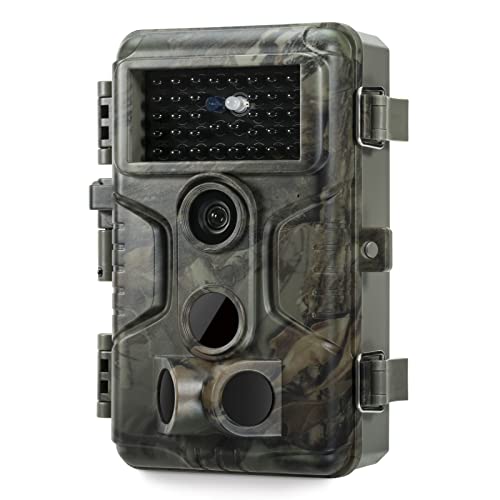
GardePro A3S
- Best for: Photo-led wildlife logging at a fixed site, such as a badger sett or a garden feeding station.
- 64MP photo resolution
- 1296P HD video
- 0.1s trigger speed
- 100ft no-glow night vision
Photo-led wildlife logging at a fixed site, such as a badger sett or a garden feeding station.
With no wireless connection, every check means a visit and a card swap, so confirm you are comfortable with that routine before choosing it over a connected model.
The A3S is the stills-focused sibling of the A3, raising photo resolution to 64MP while keeping the same fast 0.1s trigger and 100ft no-glow night vision. It records 1296P HD video, works entirely without cellular or WiFi connections, and suits watchers who mainly collect photographs for species records and are happy to swap a card on each visit. If your interest is identifying individuals and logging visits rather than watching long video clips, the extra still resolution is the more useful upgrade of the two GardePro models.
Which One Fits Your Situation
You are watching a garden from a few metres away
Choose the Vikeri 4K. At garden distances its wide 130-degree lens covers a feeding station or a hedgehog house in one frame, the fast trigger catches brief visits, and the built-in screen makes it easy to fine-tune the angle after the first night. Its 4K video rewards the close review garden watching invites.
You monitor a woodland trail or a wide clearing
Choose the Browning Strike Force Pro X 1080. The 120 ft flash range and 80 ft detection range are the longest reach in this group, and the included card and reader mean the bundle is ready to deploy on the day it arrives. It is the natural fit for rides, clearings and larger plots.
You are buying your first trail camera
Choose the GardePro A3. Its specification covers the fundamentals without distractions: quick trigger, invisible night flash and video that does not fill a card too fast. It leaves you free to learn placement and settings, which influence results far more than small specification differences at this level.
You mainly want still photographs for species records
Choose the GardePro A3S. The 64MP stills are the sharpest offered here, and its photo-first design matches a routine of scheduled card swaps at a known site. Set it at a sett entrance, a nest box approach or a feeding station where animals pause rather than pass through.
Common Mistakes
- Mounting the camera too high and aiming over the animals instead of setting it near their body height.
- Facing the lens into sunrise or sunset, which triggers false activations and washes out real ones.
- Leaving grass or branches in front of the sensor, so wind movement fills the card with empty clips.
- Choosing a camera by megapixels alone and ignoring trigger speed and flash range.
- Forgetting that a non-cellular camera only reports back when you visit and swap the card.
Frequently Asked Questions
Do these wildlife cameras need a phone signal or subscription?
No. All four cameras here are non-cellular models that record to a removable SD card, so there is nothing to subscribe to and no signal required at the site. The trade-off is that you only see the footage when you visit the camera and swap or read the card.
How far from the animals should I place a trail camera?
Closer than the headline ranges suggest. Detection and flash figures are maximums in ideal conditions, and small animals trigger sensors less reliably than deer-sized ones. For garden mammals and birds, a few metres from a feeding spot or run gives fuller frames and more dependable triggering than stretching the camera to its limits.
Will the infrared flash frighten wildlife at night?
No-glow infrared, used by the GardePro and Vikeri cameras here, produces no visible light that animals or people can see, so behaviour in front of the camera stays natural. Low-glow arrays emit a faint red light that some animals notice. If your subjects are wary, or the site is overlooked, no-glow is the safer choice.
How long will a trail camera run before I need to visit it?
It depends on how much it records: a busy feeding station shooting video fills cards and drains batteries far faster than a quiet trail taking a few photos a night. Cold weather shortens battery life further. Check the listing for the battery type it uses, choose the largest supported card, and plan visits around your site’s activity level.
Related guides
More from Amazon
Programs that pair well with the guide above. Offers and eligibility are set by Amazon and may change.
Free shipping on eligible items, Prime Video and more. Eligible new members can start with a free trial.
Start a Prime free trialAudiobooks and podcasts to listen to on the go. Eligible new members can start with a free trial.
Try Audible freeAd-free music streaming. Eligible new subscribers can start with a free trial.
Try Music Unlimited freeA free business account with business pricing and bulk-buying tools for work, shop or home office.
Create a business accountAs an Amazon Associate we earn from qualifying purchases.










Write Your Review
No reviews yet. Be the first to share your experience!