
Our Short List of 3
All 5 Picks at a Glance
| Product | Specs | Action |
|---|---|---|
 RØDE VideoMic Pro+ (ASIN: B0749GV5L3) | Check price on Amazon | |
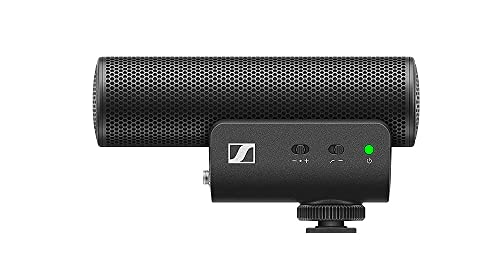 Sennheiser MKE 400 (ASIN: B08YS34YRS) | Check price on Amazon | |
 RØDE VideoMic GO II Helix (ASIN: B0D6X93C58) | Check price on Amazon | |
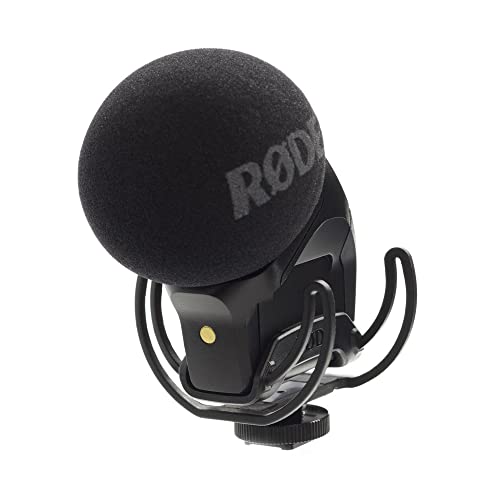 RØDE Stereo VideoMic Pro (ASIN: B01LS9J994) | Check price on Amazon | |
 DJI Mic 2 (2 TX + 1 RX + Charging Case) (ASIN: B0CFZX734J) | Check price on Amazon |
Key takeaways
- Compare the best external microphones for DSLR cameras: on-camera shotguns, a stereo mic and a wireless lav system, all connecting over a 3.5mm TRS input.
What's inside
As an Amazon Associate I earn from qualifying purchases. This post may contain affiliate links at no extra cost to you.
Disclosure: As an Amazon Associate, we may earn from qualifying purchases made through links on this page, at no additional cost to you.
Best External Microphone for DSLR Cameras: Shotgun, Stereo and Wireless Picks
A DSLR’s built-in microphone sits in the worst possible place: next to the lens motors, your fingers on the grip and the camera’s own handling noise. It also hears the whole room equally, so dialogue turns echoey the moment you step back. An external microphone fixes both problems by moving a better capsule closer to the sound and shaping what it picks up. This guide covers five external microphones spanning the main ways DSLR shooters record audio: focused on-camera shotguns for dialogue, a stereo microphone for music and ambience, and a wireless lavalier system for subjects who move.
Every pick here connects to a DSLR the standard way, through the camera’s 3.5mm microphone input with a TRS cable. That detail matters: many microphones aimed at phones use TRRS plugs or USB-only outputs, and either will not work with a DSLR at all or needs adapters that add failure points. Each microphone below ships with a camera-ready TRS cable, and the specifications quoted come from the manufacturer’s product pages for each listing.
One scope note: this article is about microphones you add to a camera. Choosing a DSLR body that accepts an external mic is a separate decision covered elsewhere on this site; here, the camera is the recorder and these microphones feed it.
Quick Picks
- Best overall shotgun: RØDE VideoMic Pro+ — the most complete control set (gain stages, safety channel, high-pass filter) in an on-camera body.
- Best compact shotgun: Sennheiser MKE 400 — tiny, battery-sipping and the only pick here with a headphone jack for monitoring.
- Best lightweight option: RØDE VideoMic GO II Helix — no battery to manage, dual 3.5mm and USB outputs.
- Best for music and ambience: RØDE Stereo VideoMic Pro — a matched XY stereo pair that records the space, not just the subject.
- Best wireless system: DJI Mic 2 (2 TX + 1 RX + Charging Case) — two transmitters and 32-bit float internal backup recording.
The Microphones in Detail
RØDE VideoMic Pro+ (ASIN: B0749GV5L3)
The VideoMic Pro+ is a supercardioid shotgun that mounts in the camera’s hot shoe and connects with a detachable 3.5mm TRS cable. Its capsule and line tube concentrate on sound in front of the camera while rejecting noise from the sides — exactly the behaviour you want for interviews, vlogging and event coverage. The microphone rides in a Rycote Lyre suspension that isolates the capsule from bumps and handling vibration, and power comes from the included LB-1 rechargeable lithium battery, a pair of AA batteries, or continuous micro-USB power.
What separates the Pro+ from cheaper shotguns is the control set on the back panel. A three-stage gain switch offers a -10dB pad for loud environments, 0dB, and a +20dB boost that lets you turn the camera’s own preamp down — the most effective trick for reducing the hiss many DSLR audio circuits add. There is a two-stage high-pass filter (75Hz and 150Hz) for traffic rumble and wind thump, a high-frequency boost for use under the furry windshield, and a safety channel that records the right channel 10dB lower so an unexpected shout does not clip the take. An automatic power function switches the mic on and off with the camera, and the stated frequency response runs from 20Hz to 20kHz.
Highlights
– +20dB gain stage lets the DSLR’s preamp run low and quiet
– Safety channel gives you a lower-level backup track on every take
– Rechargeable LB-1 battery with AA and USB power fallbacks
– Rycote Lyre mount and detachable TRS cable reduce handling noise
Considerations
– The largest body in this roundup; noticeable on small DSLRs
– Battery-powered, so it needs the charging discipline the plug-in-power picks do not
– Furry outdoor windshield is a separate accessory for serious wind
Sennheiser MKE 400 (ASIN: B08YS34YRS)
The second-generation MKE 400 is a compact supercardioid shotgun built around an acoustic interference tube, the principle used in longer broadcast shotguns, folded into a body only 126mm long and 93.5 grams in weight. It isolates in-camera audio: dialogue in front of the lens stays forward while room reflections and off-axis noise fall away. Wind protection is built into the housing, the capsule sits on an internal suspension, and a furry windshield is included for outdoor work.
Sennheiser includes both locking 3.5mm cables in the box — a TRS cable for DSLR and mirrorless cameras and a TRRS cable for phones — so the camera connection is covered out of the box. Controls include a switchable low-cut filter and a three-step sensitivity switch for quiet rooms or loud streets. A feature no other pick here matches is the integrated headphone output with its own volume control: plug in earbuds and you hear what the camera hears while you record, the only reliable way to catch a cable fault or rustling shirt before it ruins a take. Two AAA batteries run it for up to 100 hours; rated frequency response is 50Hz to 20kHz and maximum SPL is 132dB.
Highlights
– Headphone output with volume control for live monitoring at the camera
– Both TRS (camera) and TRRS (phone) locking cables included
– Built-in wind protection plus a furry windshield in the box
– Up to 100 hours from two AAA batteries
Considerations
– No safety channel or internal backup recording if a level is set wrong
– Compact body gives a narrower margin for sloppy mic placement than longer shotguns
RØDE VideoMic GO II Helix (ASIN: B0D6X93C58)
The VideoMic GO II Helix is the simplest microphone in this guide: a small supercardioid shotgun that needs no battery, no charging and almost no setup. It draws plug-in power from the camera through its 3.5mm TRS output, so it wakes up when the camera does and can never die mid-shoot. The Helix version uses RØDE’s Helix isolation mount, a compact shock-mounting system that keeps handling noise down without the tall Lyre frame of the larger models — a better fit for smaller DSLR bodies.
Its second output makes it unusually flexible. Alongside the analogue 3.5mm TRS connection for the DSLR, a USB-C output connects digitally to phones, tablets and computers, where it works with RØDE’s apps for additional processing. On the camera it behaves like any plug-in-power shotgun: directional pickup for the subject in front of the lens, a foam windshield in the box, and a frequency range of 20Hz to 20kHz. There are no gain switches or filters on the body, so level control happens in the camera’s audio menu — a fair trade for a microphone this light and always ready.
Highlights
– No battery or charging; runs on plug-in power from the camera
– Dual outputs: 3.5mm TRS for the DSLR, USB-C for phones and computers
– Helix shock mount keeps the profile low on small camera bodies
– Nothing to configure — mount it, plug in, record
Considerations
– No onboard gain, pad or high-pass filter; everything is set in the camera
– Depends on the camera providing plug-in power, which nearly all DSLRs do but is worth confirming on very old bodies
– Short body has less off-axis rejection than the longer Pro+ or MKE 400
RØDE Stereo VideoMic Pro (ASIN: B01LS9J994)
Not every DSLR recording is dialogue. For concerts, nature ambience, city soundscapes and acoustic instruments, a mono shotgun flattens the scene into a single point. The Stereo VideoMic Pro instead uses a matched pair of half-inch cardioid condenser capsules in a coincident XY pair, capturing a wide, natural stereo image with real depth. It mounts in the hot shoe like the other on-camera picks, outputs over a 3.5mm stereo cable, and the capsules ride in a Rycote Lyre suspension.
The specification sheet supports the role: a frequency range of 40Hz to 20kHz reaches lower than the dialogue shotguns here, the signal-to-noise ratio is rated at 73dB, and the body weighs about 110 grams. A single 9V battery powers it. Controls include a -10dB pad for loud sources such as stage stacks, a +20dB gain position for quiet ambience with the camera preamp turned down, and a 75Hz high-pass filter. If your DSLR work leans toward music, travel atmosphere or environmental sound, this microphone records what the place actually sounded like.
Highlights
– True stereo XY pair for music, ambience and environmental recording
– 40Hz low-end extension captures more body from instruments and scenes
– Pad and gain stages cover both loud stages and quiet nature work
– Light at roughly 110 grams despite the stereo capsule pair
Considerations
– Stereo width is a liability for dialogue: voices pick up more room than with a shotgun
– 9V batteries are less convenient to keep spares of than AA or rechargeable packs
– No headphone output or safety channel
DJI Mic 2 (2 TX + 1 RX + Charging Case) (ASIN: B0CFZX734J)
A shotgun only hears what it points at, so when the subject walks away from the camera, an on-camera mic runs out of reach. The DJI Mic 2 solves distance with radio: two clip-on transmitters with built-in omnidirectional microphones send audio to a receiver that sits on the camera and feeds the DSLR through the included 3.5mm TRS camera cable. The rated range is 250 metres (820 feet) line of sight, the transmitters clip on or attach magnetically, and windscreens are included. Two transmitters mean interviews and two-person scenes are covered without sharing a microphone.
The feature that matters most for DSLR shooters is inside the transmitters: each one records 32-bit float audio internally as a backup. With float recording, a sudden laugh or shout that would clip a camera’s input is preserved in the backup file, and a safety track option is also available on the receiver output. The receiver offers gain adjustment and can record the two transmitters as separate channels or a summed mix. DJI’s intelligent noise cancelling helps in busy environments, and each transmitter runs for about six hours, with the charging case refilling the set on location.
Highlights
– Frees the subject from the camera: clear dialogue at distances no shotgun can reach
– 32-bit float internal recording in each transmitter rescues clipped or quiet takes
– Two transmitters included for interviews and two-person filming
– Receiver feeds the DSLR with the included 3.5mm TRS cable
Considerations
– The most setup of any pick here: pairing, gain staging and remembering to start backups
– Omnidirectional lav capsules hear more room and clothing rustle than a well-placed shotgun
– Everything runs on internal batteries, so the whole kit needs charging before a shoot
How to Choose
Start with where the sound is, not where the camera is. If your subject stands in front of the lens and talks — vlogs, interviews at arm’s length, pieces to camera — a shotgun is the right tool, and the choice is about controls: the VideoMic Pro+ for gain stages and a safety channel, the MKE 400 for monitoring and minimal size, the VideoMic GO II for zero maintenance. If the subject moves, presents or is interviewed across a room, go wireless with the DJI Mic 2. If the sound is the scene itself — music, nature, atmosphere — the Stereo VideoMic Pro is the only pick designed for it.
Then check three practical points. First, confirm your DSLR has a 3.5mm mic input and supplies plug-in power if you choose the GO II. Second, decide how you will monitor: only the MKE 400 offers a headphone jack at the microphone, so with the others you rely on the camera’s headphone output if it has one. Third, think about power discipline: microphones with auto power (the Pro+) or 100-hour runtimes (the MKE 400) forgive forgetfulness; a rechargeable wireless kit does not.
Key Specifications Explained
Pickup pattern. Shotguns use a supercardioid capsule with an interference tube to narrow the field of hearing; the longer the tube, the tighter the focus. Stereo microphones use two cardioid capsules in an XY arrangement to capture width instead. Lavalier capsules are omnidirectional — they hear in all directions, which is fine because they sit centimetres from the mouth.
TRS versus TRRS. DSLR mic inputs expect a TRS (three-contact) plug. TRRS plugs, wired for phones, can produce silence or a dead channel in a camera. Every pick here ships with a TRS camera cable; if you buy a spare, match the connector to the camera, not the phone.
Gain staging and the safety channel. Camera preamps are the weakest link in DSLR audio. A microphone with a +20dB output boost lets you lower the camera’s recording level, lowering the hiss floor with it. A safety channel records a second track at a reduced level, so peaks that clip the main track survive on the spare.
High-pass (low-cut) filter. This removes low-frequency rumble — wind, traffic, air conditioning, handling thumps — before it eats your headroom. 75Hz suits most dialogue; 150Hz is more aggressive and can thin deep voices.
32-bit float recording. A float recorder captures such a wide dynamic range that gain mistakes are largely recoverable in editing. In the DJI Mic 2 it works as an internal backup in each transmitter, independent of the camera.
Setup and Use Tips
Mount the microphone firmly in the hot shoe and make sure the shock mount is not resting against the camera body or a strap lug, which would bypass the isolation. Route the TRS cable with a little slack; a taut cable transmits every tug into the mount. On the camera, switch audio to manual level control if your body offers it, set the level so normal speech peaks well below the top of the meter, and disable automatic gain.
Do a ten-second test recording with headphones before every real take, listening for buzz (a cable problem), rustle (lav placement) and rumble (wind or handling). Outdoors, fit the furry windshield whenever there is moving air. With wireless lavs, place the transmitter high on the chest, keep the capsule clear of necklaces and zips, and start the internal backup recording as a habit.
Common Mistakes to Avoid
The classic error is buying a phone microphone for a camera: USB-only and TRRS models are marketed to “creators” but many DSLRs cannot use them at all. A second is leaving the camera on automatic audio gain and blaming the microphone for the pumping, hissing result. Third, standing the subject beside the camera rather than in front of it — a shotgun’s rejection zone is at the sides, so off-axis subjects sound thin. Fourth, forgetting that a stereo microphone records the room as faithfully as the subject; in a reverberant hall that honesty may not be what you want. Finally, neglecting wind protection: no filter fully rescues a recording made in wind without a furry cover.
FAQ
Will these microphones work with any DSLR?
Any DSLR with a standard 3.5mm microphone input works with the TRS-connected picks here. The VideoMic GO II additionally needs the camera to supply plug-in power on that input, which the large majority of DSLRs with mic sockets do. Bodies with no mic input cannot use an external microphone directly.
What is the difference between a shotgun and a lavalier for DSLR video?
A shotgun sits on the camera and focuses on sound in front of the lens, so the subject must stay near the camera and face it. A lavalier clips to the subject and travels with them, giving consistent dialogue level at any distance, at the cost of more setup and clothing-noise risk.
Do I need a microphone with its own battery?
Not necessarily. Battery models like the VideoMic Pro+ and MKE 400 offer gain controls, filters and monitoring that plug-in-power models cannot, and their runtimes are long. Plug-in-power models like the VideoMic GO II trade those controls for total simplicity.
Can I monitor audio while recording on a DSLR?
Only some DSLR bodies have a headphone output. The MKE 400 sidesteps the question with its own headphone jack and volume control. With the other picks, monitor through the camera if it supports it, and always review a short test recording before the real take.
Is a stereo microphone better than a shotgun?
For music, ambience and atmosphere, yes — the Stereo VideoMic Pro captures width and depth a mono shotgun cannot. For dialogue, no: the shotgun’s narrow pickup rejects room echo and background noise that a stereo pair faithfully records. Match the microphone to the sound you are recording.
Final Verdict
For most DSLR shooters, the RØDE VideoMic Pro+ is the safest single purchase: its gain stages, safety channel and filter set directly attack the weaknesses of camera audio circuits. Choose the Sennheiser MKE 400 if you value compact size and true monitoring, the VideoMic GO II Helix if you want to mount a microphone and forget it exists, the Stereo VideoMic Pro if your subjects are places and performances rather than people talking, and the DJI Mic 2 if your subjects move. Any of the five is a decisive step up from the microphone built into the camera.
Related guides
More from Amazon
Programs that pair well with the guide above. Offers and eligibility are set by Amazon and may change.
Free shipping on eligible items, Prime Video and more. Eligible new members can start with a free trial.
Start a Prime free trialAudiobooks and podcasts to listen to on the go. Eligible new members can start with a free trial.
Try Audible freeAd-free music streaming. Eligible new subscribers can start with a free trial.
Try Music Unlimited freeA free business account with business pricing and bulk-buying tools for work, shop or home office.
Create a business accountAs an Amazon Associate we earn from qualifying purchases.










Write Your Review
No reviews yet. Be the first to share your experience!