
Our Short List of 3

All 4 Picks at a Glance
| Product | Specs | Action |
|---|---|---|
 Canon EOS 90D with EF-S 18-135mm IS USM Lens (ASIN: B07WHV3HXL) | Check price on Amazon | |
| Nikon D7500 with AF-S DX NIKKOR 18-140mm f/3.5-5.6G ED VR Lens (ASIN: B06Y5RTN1T) | Check price on Amazon | |
 Canon EOS Rebel SL3 with EF-S 18-55mm IS STM Lens (ASIN: B07QBD256Y) | Check price on Amazon | |
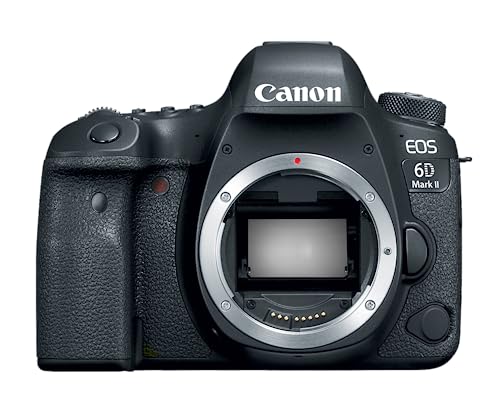 Canon EOS 6D Mark II Digital SLR Camera Body (ASIN: B072MZCJKN) | Check price on Amazon |
Key takeaways
- Compare DSLR cameras with 3.5mm external microphone inputs for cleaner video sound, from the Canon EOS 90D and Nikon D7500 to the compact Rebel SL3 kit.
What's inside
As an Amazon Associate I earn from qualifying purchases. This post may contain affiliate links at no extra cost to you.
Disclosure: As an Amazon Associate, we may earn from qualifying purchases made through links on this page, at no additional cost to you.
Best DSLR Cameras With External Mics: 5 Models With 3.5mm Mic Inputs
A DSLR can record sharp, cinematic video and still disappoint the moment someone starts talking. The built-in microphones on most bodies sit close to the lens, so they pick up autofocus motors, zoom rings, finger taps and room echo along with the voice you actually want. The fix is simple in principle: plug in an external microphone. A shotgun mic, a wireless receiver or a lavalier all depend on one small feature many buyers never check — a 3.5mm external microphone input on the body itself.
That jack is far from universal. Several popular entry-level DSLRs omit it entirely, locking owners into tinny built-in audio or a separate recorder and syncing in post. Every camera in this roundup has a proper external microphone input, confirmed against the manufacturer’s specifications for that model, so any standard 3.5mm camera microphone connects directly and records in sync with the picture. Three of the five also add a headphone jack, so you can monitor audio while recording.
The list spans the realistic DSLR buying range: a high-resolution Canon for hybrid shooters, a fast Nikon built for action, two compact models for travel and family video, and a full-frame Canon body for low-light work. Read the audio notes on each model carefully — the gap between a mic input alone and a mic input plus headphone monitoring is one of the biggest practical differences here.
Quick Picks
- Canon EOS 90D with EF-S 18-135mm IS USM — the most complete video package here: 32.5MP sensor, 4K video, mic input and a headphone jack.
- Nikon D7500 with AF-S DX 18-140mm VR — the action pick, with a 51-point AF system, 8 fps shooting and both mic and headphone connections.
- Canon EOS Rebel SL3 with EF-S 18-55mm IS STM — the smallest, lightest body here, with a mic input and vari-angle screen for self-recording.
- Nikon D5600 with AF-P DX 18-55mm VR — a compact travel body with a mic input, quiet AF-P kit lens and long battery life.
- Canon EOS 6D Mark II (Body Only) — the full-frame option, with mic input, headphone jack and strong high-ISO performance.
Canon EOS 90D with EF-S 18-135mm IS USM Lens (ASIN: B07WHV3HXL)
View the Canon EOS 90D on Amazon
The EOS 90D is the strongest all-round video body in this group because it treats audio as a first-class feature. Canon fits a 3.5mm external microphone input and a separate headphone terminal, so you can plug in a shotgun or wireless mic, set levels manually, and listen through headphones while recording to catch wind rumble or a buzzing cable before it ruins a take. Recording level is adjustable in the menu, and an attenuator helps in loud environments such as concerts.
On the imaging side, the 90D pairs a 32.5 megapixel APS-C CMOS sensor with a DIGIC 8 processor. It records UHD 4K video at up to 30p and Full HD at up to 120p for slow motion, with Dual Pixel CMOS AF keeping focus smooth and quiet during video — important when a microphone is mounted inches from the lens. Through the optical viewfinder you get a 45-point all cross-type AF system and continuous shooting up to 10 fps. The 3.0-inch vari-angle touch LCD flips out for self-recording, there is a single SD slot that accepts fast UHS-II cards, and built-in Wi-Fi and Bluetooth handle remote control and transfers. The paired EF-S 18-135mm IS USM lens covers wide-angle to short telephoto in one barrel.
Highlights
– 3.5mm microphone input plus headphone jack for monitored recording
– 32.5MP APS-C sensor with 4K30p and Full HD 120p video
– Dual Pixel CMOS AF for smooth, quiet focus in video
– Vari-angle touchscreen suited to vlogging and interviews
Considerations
– 4K recording narrows the field of view in some modes
– Single card slot, so there is no in-camera backup while recording
– Larger and heavier than the Rebel SL3 and D5600 below
Nikon D7500 with AF-S DX NIKKOR 18-140mm f/3.5-5.6G ED VR Lens (ASIN: B06Y5RTN1T)
View the Nikon D7500 on Amazon
The D7500 borrows its core hardware from Nikon’s professional D500, and its audio connections follow the same serious approach. A 3.5mm external microphone input sits alongside a headphone output, so dialogue can be monitored as it is recorded, and microphone sensitivity can be adjusted to match different mic types. For interviews, lessons or events where a retake is impossible, that monitoring loop matters more than almost anything else.
The imaging specification is built for speed. A 20.9 megapixel DX-format CMOS sensor and EXPEED 5 processor deliver continuous shooting at 8 fps through a 51-point autofocus system with 15 cross-type sensors and group-area AF. Video runs to 4K UHD at 30p and Full HD at 60p, with power aperture control for smooth exposure changes while filming. The 3.2-inch tilting touchscreen, extensive weather sealing and a battery rated for roughly 950 shots per charge make it a dependable field camera. The bundled AF-S DX 18-140mm VR lens covers wide-angle to telephoto in one barrel.
Highlights
– Microphone input and headphone output, with adjustable mic sensitivity
– 51-point AF system and 8 fps continuous shooting
– 4K UHD 30p and Full HD 60p video with power aperture control
– Weather-sealed body and long battery life for location work
Considerations
– 4K video applies a further crop to the DX sensor area
– Single SD card slot
– The tilting screen does not flip fully forward for self-recording
Canon EOS Rebel SL3 with EF-S 18-55mm IS STM Lens (ASIN: B07QBD256Y)
View the Canon EOS Rebel SL3 on Amazon
The Rebel SL3 is the camera to look at when size is the deciding factor. It is the smallest and lightest EOS DSLR in the range, yet it keeps the feature this roundup is about: a 3.5mm external microphone input on the side of the body. Set it on a small tripod, flip the screen toward you, plug in a shotgun mic, and you have a one-person talking-head kit that fits in a small shoulder bag. There is no headphone jack, so audio cannot be monitored live; recording a short test clip and playing it back is the sensible workaround.
Imaging is handled by a 24.1 megapixel APS-C CMOS sensor and DIGIC 8 processor, with an ISO range of 100–25600. The SL3 records UHD 4K video at 24p and Full HD at 60p, and Dual Pixel CMOS AF provides smooth autofocus in live view and Full HD recording. Through the viewfinder there is a simpler 9-point AF system — adequate for general stills, but basic next to the 90D and D7500. The 3.0-inch vari-angle touch LCD, built-in Wi-Fi and Bluetooth, and the quiet EF-S 18-55mm IS STM kit lens round out a body that weighs only about 449 grams with battery and card.
Highlights
– External microphone input in the smallest body in this roundup
– Vari-angle touchscreen that faces forward for self-recording
– Dual Pixel CMOS AF for smooth Full HD video focus
– Light enough for all-day travel and family use
Considerations
– No headphone jack, so audio levels cannot be monitored while recording
– 4K is limited to 24p, with contrast-detection AF and a cropped frame
– 9-point viewfinder AF system is basic next to the 90D and D7500
Nikon D5600 with AF-P DX NIKKOR 18-55mm f/3.5-5.6G VR Lens (ASIN: B01N4KCC2M)
View the Nikon D5600 on Amazon
The D5600 earns its place here because Nikon included a 3.5mm external microphone input on a body many buyers assume is too basic for one — its smaller sibling lines are exactly where this jack tends to disappear. With a microphone connected, it records proper stereo audio from your chosen mic instead of its built-in pair, and the AF-P kit lens matters more than it might seem: its stepping motor focuses smoothly and near-silently, so the mic picks up far less lens noise than older, buzzier glass. Like the SL3, there is no headphone output, so check levels with a test recording.
The D5600 uses a 24.2 megapixel DX-format CMOS sensor with an EXPEED 4 processor, an ISO range of 100–25600 and a 39-point autofocus system with 9 cross-type sensors. Video tops out at Full HD 1080p at 60p — there is no 4K mode — but the footage is clean, and time-lapse recording is built in. The 3.2-inch vari-angle touchscreen flips out for selfies and video framing, SnapBridge Bluetooth keeps a constant link to a phone for automatic transfers, and the battery is rated at roughly 970 shots per charge. The body weighs about 465 grams.
Highlights
– 3.5mm microphone input on a compact body
– Quiet AF-P kit lens keeps focus noise out of recordings
– Vari-angle touchscreen and SnapBridge phone connection
– Excellent battery life of roughly 970 shots per charge
Considerations
– No headphone jack for monitoring audio while recording
– Video is limited to Full HD; there is no 4K option
– Autofocus in live view is slower than Canon’s Dual Pixel systems
Canon EOS 6D Mark II Digital SLR Camera Body (ASIN: B072MZCJKN)
View the Canon EOS 6D Mark II on Amazon
The 6D Mark II is the full-frame option in this group, and it carries the full audio toolkit: a 3.5mm external microphone input and a headphone terminal for monitoring, with manual recording-level control in the menu. For indoor interviews, evening events and wedding work, being able to hear the audio as it is captured — on a camera that still produces usable footage in dim rooms — is a combination none of the crop-sensor models here match.
The 26.2 megapixel full-frame CMOS sensor and DIGIC 7 processor deliver an ISO range of 100–40000, which keeps video cleaner at the sensitivities receptions and stage events demand. Video is Full HD at up to 60p; there is no 4K mode, the honest trade-off of this generation. A 45-point all cross-type AF system handles viewfinder shooting at up to 6.5 fps, while Dual Pixel CMOS AF covers live view and video focus. The 3.0-inch vari-angle touch LCD, built-in Wi-Fi, NFC and GPS, and a dust- and drip-resistant body complete the package. This listing is body only, so allow for an EF lens.
Highlights
– Microphone input plus headphone jack with manual level control
– Full-frame 26.2MP sensor with ISO up to 40000 for low-light video
– Dual Pixel CMOS AF and a forward-flipping vari-angle screen
– Built-in GPS, Wi-Fi and NFC in a weather-resistant body
Considerations
– No 4K video recording
– Sold as body only; an EF-mount lens is required
– Heavier than the APS-C models once a full-frame lens is fitted
How to Choose
Start with the jack itself. Every camera here has a 3.5mm microphone input, but they split into two camps: the EOS 90D, D7500 and 6D Mark II add a headphone output, while the Rebel SL3 and D5600 do not. If you record anything that cannot be repeated — interviews, ceremonies, client work — headphone monitoring is worth prioritising, because it is the only way to hear a failing cable, dead mic battery or wind overload in time to fix it.
Next, match the video specification to what you publish. The 90D and D7500 record 4K and suit creators who crop or downscale in editing. The SL3 records 4K only at 24p with a cropped frame and slower autofocus, so treat its Full HD mode as the main video tool. The D5600 and 6D Mark II are Full HD cameras; choose them for size, battery life or the full-frame look rather than resolution.
Then consider focus behaviour during video. Canon’s Dual Pixel CMOS AF, in the 90D, SL3 and 6D Mark II, tracks faces smoothly and quietly, which suits solo creators. The D7500 is the stronger stills action camera, while the D5600’s quiet AF-P kit lens is a genuine audio advantage. Finally, remember that Canon EF-S/EF and Nikon DX/FX are both deep, mature lens ranges — and the microphone you buy today will move with you to your next body.
Key Specifications Explained
Microphone input. A 3.5mm stereo jack that accepts an external microphone’s signal and records it in sync with the video. It is the defining feature of this roundup, and it is not the same as a headphone jack — some cameras have one, both, or neither.
Headphone output. A second 3.5mm jack that plays back the audio being recorded, in real time, so you can confirm levels and catch interference during a take rather than after it.
Manual audio level control. The ability to set recording gain yourself instead of relying on automatic gain, which tends to pump background noise up and down during pauses in speech.
Sensor size. The 6D Mark II uses a full-frame sensor; the other four use APS-C (Canon) or DX (Nikon) sensors. Larger sensors generally handle high ISO settings more cleanly, which matters for indoor video, while smaller sensors make for lighter bodies and lenses.
Dual Pixel CMOS AF. Canon’s autofocus system for live view and video, in which each pixel can contribute to phase-detection focusing. In practice it produces the smooth, confident focus pulls that make solo video work practical.
Frame rates. Figures such as 4K30p and 1080/60p describe resolution and frames per second. Higher Full HD rates — 60p, and the 90D’s 120p — allow smooth slow-motion playback.
Setup and Use Tips
Set audio levels manually before an important recording. Aim for speech peaks that stay comfortably below the top of the meter; a slightly quiet recording can be raised in editing, while clipped audio cannot be repaired. Record thirty seconds of test footage in the actual location and listen to it — on headphones, or through playback on the SL3 and D5600 — before the real take.
Position the microphone as close to the speaker as the shot allows. A hot-shoe shotgun mic is a big improvement over the built-in microphones, but a lavalier near the speaker’s chest or a boom-mounted shotgun just out of frame sounds noticeably better. Keep the mic cable off the camera body, where every touch becomes a thump in the recording.
Outdoors, wind protection matters more than microphone price: foam for light air movement, a furry windshield in real wind. Indoors, switch off air conditioning and fans where you can, and record a few seconds of room tone for smoothing edits.
Common Mistakes to Avoid
The most common mistake is assuming every DSLR has a microphone input. Several well-known entry-level models omit it, and no adapter can add one, because the limitation is the body’s recording circuitry. Confirm the jack exists on the exact model — as this roundup does — before building a kit around it.
A second mistake is confusing the headphone and microphone jacks on cameras that have both — plugging a microphone into the headphone output records nothing but silence. A third is leaving automatic gain to handle everything: auto levels raise the gain during pauses, making room noise surge between sentences. Set levels manually for speech.
Finally, never judge a setup by the camera’s rear speaker, which makes everything sound thin. Judge audio through headphones or on your editing computer, and keep a spare battery for powered microphones.
FAQ
Do all DSLRs have an external microphone input?
No. Many entry-level DSLRs leave the jack off entirely, which is why it pays to check the exact model. All five cameras in this roundup have a confirmed 3.5mm microphone input.
What type of microphone plugs into these cameras?
Any microphone with a 3.5mm TRS output designed for cameras: on-camera shotgun mics, wireless systems with a receiver that outputs to 3.5mm, and wired lavaliers. Phone-oriented TRRS plugs may need a TRRS-to-TRS adapter to work correctly.
Is a headphone jack necessary for good audio?
Not necessary, but very useful: the EOS 90D, D7500 and 6D Mark II let you monitor while recording. On the Rebel SL3 and D5600, the substitute is a short test clip played back before the real take.
Will an external microphone eliminate autofocus noise?
It reduces it greatly, because the mic sits away from the lens and is directional. Pairing it with a quiet-focusing lens — an STM lens on Canon or an AF-P lens on Nikon — reduces the remaining noise further, since those motors focus almost silently.
Final Verdict
For most people, the Canon EOS 90D is the right answer: it combines the highest resolution here with 4K video, smooth Dual Pixel autofocus and the microphone-plus-headphone pairing that serious audio work needs. The Nikon D7500 runs it close and is the better choice for action stills, with the same complete audio connections. If size and simplicity lead, the Rebel SL3 and Nikon D5600 both deliver a genuine mic input in bodies you will actually carry — just remember to test-record, since neither offers headphone monitoring. For low-light video with full monitoring, the full-frame Canon EOS 6D Mark II remains a capable, honest tool. Whichever body you choose, the deciding feature is the one in the title: a real external microphone input, confirmed on the camera itself.
Related guides
More from Amazon
Programs that pair well with the guide above. Offers and eligibility are set by Amazon and may change.
Free shipping on eligible items, Prime Video and more. Eligible new members can start with a free trial.
Start a Prime free trialAudiobooks and podcasts to listen to on the go. Eligible new members can start with a free trial.
Try Audible freeAd-free music streaming. Eligible new subscribers can start with a free trial.
Try Music Unlimited freeA free business account with business pricing and bulk-buying tools for work, shop or home office.
Create a business accountAs an Amazon Associate we earn from qualifying purchases.










Write Your Review
No reviews yet. Be the first to share your experience!