
Our Short List of 3
All 3 Picks at a Glance
| Product | Specs | Action |
|---|---|---|
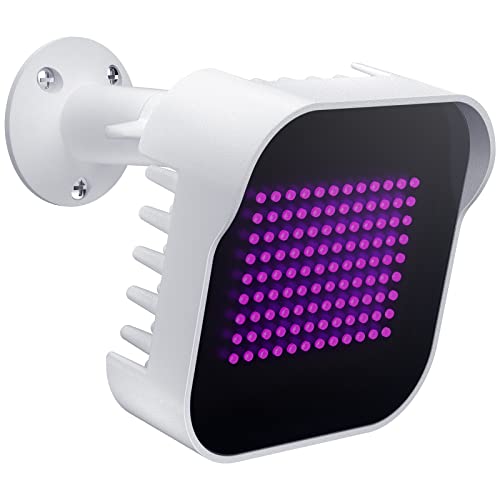 Tendelux DI20 IR Illuminator (ASIN: B09FQB2K78) | Check price on Amazon | |
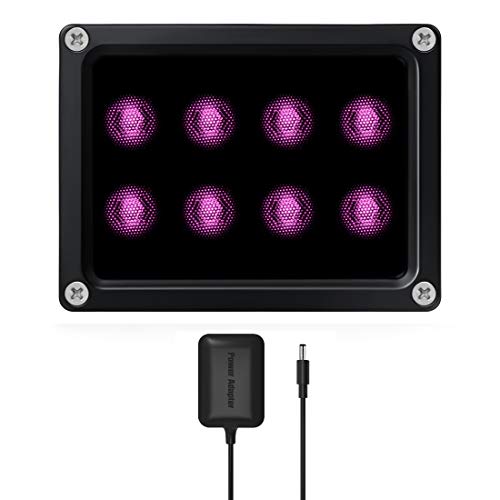 Tendelux 120ft IR Illuminator BI8 (ASIN: B0771GQMPT) | Check price on Amazon | |
 LUTEC 72W LED Security Light (ASIN: B0BBV7GFPL) | Check price on Amazon |
Key takeaways
- Compare the best lighting for security cameras: 850nm and 940nm IR illuminators plus a motion floodlight that keeps night footage clear and detailed today.
What's inside
As an Amazon Associate I earn from qualifying purchases. This post may contain affiliate links at no extra cost to you.
Disclosure: As an Amazon Associate, we may earn from qualifying purchases made through links on this page, at no additional cost to you.
Best Lighting for Security Cameras
Most security cameras can record in the dark, but the footage is often too dim, grainy or short-ranged to identify anyone. The built-in infrared LEDs around a camera lens usually cover a modest area and fade quickly with distance. Adding the right lighting fixes that: an external IR illuminator floods the scene with infrared light the camera can see but people cannot, while a visible floodlight supports color night vision and acts as a deterrent. This guide compares five lighting products that pair with security cameras, covering long-range 850nm infrared, a compact mid-range option, a fully invisible 940nm bulb, and a hardwired motion floodlight. Every pick is a lighting device only, not a camera, so it works alongside the system you already own.
Quick Picks
- Tendelux DI20 IR Illuminator (ASIN: B09FQB2K78) — long-range 850nm infrared flood for large yards and driveways: View on Amazon
- Univivi IR Illuminator U8R (ASIN: B075F7NV56) — wide 90-degree 850nm coverage in a sealed IP67 housing: View on Amazon
- Tendelux 120ft IR Illuminator BI8 (ASIN: B0771GQMPT) — compact 8W infrared light for porches and shorter ranges: View on Amazon
- LUTEC 72W LED Security Light (ASIN: B0BBV7GFPL) — hardwired visible floodlight with motion sensing for color night footage: View on Amazon
- Klgeivb 940nm IR Illuminator Bulb (ASIN: B0C8D563X5) — completely invisible infrared from a standard screw-in bulb for indoor cameras: View on Amazon
The Best Lighting for Security Cameras
Tendelux DI20 IR Illuminator (ASIN: B09FQB2K78)
The DI20 is the long-throw option in this roundup. It is a 20-watt infrared floodlight using SMD infrared LEDs at the 850nm wavelength, with a 90-degree viewing angle and a brand-stated effective range of 150 to 240 feet. That reach suits long driveways, gates and large back yards. An IR pass filter spreads the beam more evenly and shields the emitters from sunlight, and the housing is rated IP65 for outdoor use.
Power and automation are straightforward. The lamp accepts DC 12 to 24 volt input and ships with a 24-volt adapter, chosen so brightness holds up over long cable runs. A built-in photocell switches the light on when ambient light drops below 10 lux and off at dawn. The aluminum body measures about 4 by 4 by 1.5 inches and weighs roughly a pound, on an adjustable bracket. As with every 850nm device, your camera must be sensitive to 850nm infrared, and the beam angle should roughly match your lens field of view.
Highlights:
– 20W output with a brand-stated 150 to 240 ft effective range, the longest in this guide
– 90-degree beam pairs well with common 2.8mm, 3.6mm and 4mm camera lenses
– Photocell auto on/off below 10 lux, no timer or app needed
– 12 to 24V DC input with a 24V adapter included for long cable runs
Considerations:
– 850nm LEDs show a faint red glow at the source, so it is semi-covert rather than invisible
– This listing is the white housing version, which can stand out against dark siding
– The power adapter and DC joints need weather protection outdoors
– Real-world range depends heavily on your camera’s infrared sensitivity
Univivi IR Illuminator U8R (ASIN: B075F7NV56)
The U8R takes a different approach to 850nm lighting: eight high-power EPISTAR LEDs behind a diffused lens, throwing an even 90-degree flood without a bright hot spot in the center of the frame. Hot spots matter more than raw power, because a camera exposed for a bright center crushes the edges of the scene into darkness. The full aluminum body doubles as an enlarged heat sink, and the housing is sealed to IP67, the strongest weather rating among the infrared picks here, suiting exposed mounts that take direct rain.
A photocell sensor turns the illuminator on at night and off in the morning. The package includes the light, a 12V/1A power adapter, mounting screws and a manual, and the bracket adjusts freely so you can aim the beam where the camera watches. Univivi is candid that final viewing distance depends on the camera and lens, which is the right way to read any range claim. At 4.5 by 3.35 by 4.25 inches and 1.19 pounds it is chunky, but the mass is mostly heat sink, supporting long nightly duty cycles.
Highlights:
– Diffused lens design for even illumination with no hot spot
– IP67 sealing, the best weather protection in this roundup
– Photocell automatic switching, set-and-forget operation
– Adapter, screws and manual included in the box
Considerations:
– No fixed range figure from the brand; reach depends on your camera and lens
– The 90-degree beam can waste light and risk overexposure on narrow side yards
– Faint red glow at the LEDs, as with all 850nm lighting
– Larger and heavier than the compact Tendelux BI8 below
Tendelux 120ft IR Illuminator BI8 (ASIN: B0771GQMPT)
The BI8 is the compact sibling in the Tendelux line: an 8-watt, 850nm illuminator with a 90-degree beam and a stated night vision range of up to 120 feet. It fits porches, front door approaches, short driveways and side gates, where the built-in LEDs are almost enough but faces stay murky at the far edge. The aluminum housing measures 4.5 by 3.3 by 3 inches, carries an IP66 rating, and uses the same IR pass filter approach as the DI20 for a more even spread.
Like its bigger sibling, the BI8 runs itself. A photocell turns it on at dusk and off at dawn, it ships with a 12V power adapter, and the bracket allows aiming after installation. The lower wattage also means less heat to manage, suiting enclosed eaves and soffits where a 20-watt lamp would be overkill. It shares the family caveats: your camera needs 850nm sensitivity, its IR cut behavior should not block external infrared at night, and the adapter needs weather protection outdoors.
Highlights:
– Compact 8W design sized for porches, doors and short driveways
– Stated range up to 120 ft with a 90-degree beam
– IP66 weather rating and aluminum housing
– Photocell automation and adapter included
Considerations:
– Roughly half the reach of the DI20, so it is not the pick for large properties
– 850nm red glow at the source remains visible on close inspection
– Power supply and connections need weatherproofing outdoors
– Fixed beam angle, so placement and aiming do most of the work
LUTEC 72W LED Security Light (ASIN: B0BBV7GFPL)
Not every camera problem is an infrared problem. Cameras with color night vision need visible light to stay in color mode, and a bright visible light also deters people in a way invisible infrared never will. The LUTEC 72W is a hardwired LED security floodlight producing 7,500 lumens of 5000K daylight-white light from three adjustable aluminum heads, aimed across a driveway, garage door and walkway. The housing is rated IP65, with a rated lifespan of 50,000 hours.
The control side is what makes it useful next to a camera. A passive infrared motion sensor covers 180 degrees and detects movement up to 69 feet away, with an adjustable timer of 1, 3 or 10 minutes. Four modes cover the main strategies: Test for aiming, Security for full brightness on motion at night, Dusk to Dawn, which holds a low level of light and jumps to full brightness on motion, and Manual Override for constant light from the wall switch. The listing data shows a 3-year manufacturer warranty.
Highlights:
– 7,500 lumens of visible 5000K light across three aimable heads
– 180-degree motion sensing out to 69 ft with 1, 3 or 10 minute timer
– Dusk to Dawn mode pairs naturally with color night vision cameras
– IP65 aluminum fixture rated for 50,000 hours
Considerations:
– Hardwired 120V installation; if you are not comfortable wiring a junction box, budget for an electrician
– Visible light can disturb neighbors if aimed carelessly
– A camera pointed toward the fixture can suffer glare and exposure swings when it triggers
– It does nothing for cameras that record only in black-and-white infrared mode
Klgeivb 940nm IR Illuminator Bulb (ASIN: B0C8D563X5)
Every 850nm light above trades a faint red glow for stronger camera response. The Klgeivb bulb makes the opposite trade. It uses three high-power 3-watt LEDs (9 watts total) emitting at 940nm, a wavelength that produces no visible glow at all, so nothing at the light source reveals that a camera is being fed infrared. The light comes in an A15 bulb form with a standard E26/E27 screw base, so it can screw into an existing indoor fixture and bounce light off the ceiling for soft, shadow-reduced coverage.
A milky polycarbonate diffuser spreads the output over roughly 180 degrees with no spotlight effect, an aluminum fin heat sink handles cooling, and a built-in constant-current driver keeps output steady. The rated average life is 50,000 hours. The trade-offs are real: most camera sensors are noticeably less sensitive at 940nm than at 850nm, so effective range is short — one room rather than a yard — and the bulb is indoor-only. It suits discreet indoor monitoring and any spot where a glowing red lamp would draw attention, provided your camera is 940nm capable.
Highlights:
– True 940nm output with zero visible red glow
– Screws into a standard E26/E27 socket, no separate power supply or bracket
– Diffused roughly 180-degree spread avoids harsh hot spots indoors
– Aluminum fin heat sink and a 50,000-hour rated life
Considerations:
– Indoor use only; not weatherproof
– Short effective range, suited to one room rather than outdoor areas
– Requires a camera genuinely sensitive to 940nm; many cameras respond weakly at this wavelength
– Use it on a plain switch rather than a dimmer circuit
How to Choose Lighting for Your Security Cameras
Start with the recording mode you want at night. If your cameras record black-and-white infrared footage and the problem is range or clarity, add an infrared illuminator. If your cameras have color night vision and keep dropping back to black and white, they need visible light, which means a floodlight like the LUTEC. Some properties benefit from both: infrared for the back yard, and a motion floodlight at the front where visibility is the point.
Next, match the wavelength to the camera. Nearly all cameras with night vision respond well to 850nm. Only choose 940nm when discretion matters more than range and the camera maker confirms 940nm sensitivity, because sensors respond much more weakly at 940nm and the same wattage buys far less distance. Then match beam angle to lens: a 90-degree illuminator suits the common 2.8mm to 4mm wide lenses, while a narrow long-range camera needs its light concentrated rather than spread.
Finally, plan power before you buy. IR illuminators run on low-voltage DC adapters, so there must be an outlet within cable reach and a weatherproof way to protect the supply outdoors. A hardwired floodlight needs an existing junction box or new wiring. Photocell models need no controls, while motion-sensing models need careful aiming of the sensor, not just the light.
Key Specifications Explained
Wavelength (850nm vs 940nm). At 850nm, cameras respond strongly and range is good, but the LED array glows faintly red up close. At 940nm there is no visible glow, yet camera sensitivity drops sharply, so usable range shrinks. Treat 850nm as the default and 940nm as a specialist choice.
Beam angle. The spread of the light, in degrees. It should roughly match the camera’s field of view. Too narrow leaves dark edges; too wide wastes light outside the frame and can bounce off nearby walls into the lens.
Effective range. The distance at which the maker expects usable illumination. Treat headline figures as best cases with a sensitive camera. Lens speed, sensor size, weather and mounting height all move the real number.
IP rating. The first digit covers dust, the second water. IP65 resists rain jets, IP66 heavier water exposure, and IP67 temporary immersion. For a light mounted outdoors year-round, IP65 is a sensible floor.
Photocell vs motion sensor. A photocell turns the light on at dusk and off at dawn, ideal for infrared a camera needs all night. A PIR motion sensor keeps a visible light off until something moves, saving energy and adding a startle effect, but it cannot feed a camera steady light unless it has a dusk-to-dawn low mode like the LUTEC above.
Color temperature. For visible lights, the tint of the white light. Around 5000K is a neutral daylight white that renders colors accurately for color night vision cameras; warmer light looks nicer on a porch but shifts how colors read on camera.
Setup and Use Tips
Mount the illuminator close to the camera, aimed at the same scene, but not touching the housing. A small offset, even a foot or two to the side, reduces the halo of insects and spiders that gather in front of a lens-mounted light source, and softens the washed-out look of faces passing close to the camera.
Keep the power supply and cable joints inside a weatherproof box outdoors, and seal DC connections as the manufacturers direct. A surprising share of early illuminator failures are drowned adapters rather than dead LEDs. After installation, check the live view at night from the camera itself, not from the yard: only the recorded image shows hot spots, dark corners and reflections off walls, fences and parked cars.
Aim floodlights downward and shield them from the camera’s direct view. A camera that can see the fixture will expose for it and darken everything else, and a motion light snapping on can cause a brief exposure swing in the recording. Review your camera’s IR cut, day/night sensitivity and smart infrared settings after adding external light; strong external illumination can make built-in smart IR redundant.
Common Mistakes to Avoid
The most common mistake is buying 940nm for a camera that barely responds to it, then concluding the light is broken. Confirm wavelength compatibility before ordering. The second is over-lighting a small area: a high-power illuminator in a tiny yard bounces off every surface and whites out faces near the camera. Match wattage and range to the space, and consider the smaller model first.
Placement errors come next. Mounting the light far from the camera’s view, pointing it across the scene instead of into it, or letting a wall edge sit inside the beam all create uneven footage. So does ignoring the camera’s IR cut filter: some cameras block external infrared until their own night mode engages, so the illuminator appears to do nothing until the scene is fully dark. Finally, do not judge the result in daylight. Infrared setups can only be evaluated at night, in the camera’s own footage.
FAQ
Do security cameras really need extra lighting?
Only if the built-in lighting is not doing the job. If faces are unrecognizable beyond a short distance, if the frame edges fall into darkness, or if a color night vision camera keeps switching to black and white, external lighting addresses the root cause.
Will an IR illuminator work with any security camera?
It works with cameras that have infrared night vision and a sensor sensitive to the illuminator’s wavelength, which covers most CCTV and many WiFi cameras at 850nm. Cameras without night vision cannot use infrared at all and need a visible light source instead.
Which is better, 850nm or 940nm?
For most homes, 850nm. It reaches farther and works with nearly every night vision camera, at the cost of a faint red glow at the fixture. Choose 940nm only when the light source must stay invisible and the camera is confirmed to respond at 940nm, accepting the shorter range.
Can a floodlight improve security camera footage?
Yes, in two ways. Visible light lets color night vision cameras stay in color mode, preserving details like clothing and vehicle color, and a motion-triggered light can startle and deter. Aim it so the fixture itself is out of the camera’s direct view to avoid glare.
Where should I mount an illuminator relative to the camera?
On the same surface, aimed at the same zone, ideally with a slight sideways or vertical offset from the lens. The offset reduces insect buildup in front of the lens and softens close-range overexposure, while keeping the beam aligned with what the camera records.
Final Verdict
For most properties, the Tendelux DI20 is the strongest single upgrade: its 20-watt 850nm output reaches the far end of driveways and yards that built-in camera LEDs cannot serve, and the photocell makes it maintenance-free once mounted. The Univivi U8R suits exposed positions and anyone bothered by hot spots, thanks to its diffused lens and IP67 sealing, while the Tendelux BI8 covers the everyday porch-and-doorway case in a smaller package. Where color footage and deterrence matter more than invisible range, the hardwired LUTEC 72W is the right tool, and the Klgeivb 940nm bulb fills the narrow niche of completely glow-free indoor infrared. Match the wavelength to your camera, the beam to your lens and the power plan to your wiring, and any of these will show you far more of the night.
Related guides
More from Amazon
Programs that pair well with the guide above. Offers and eligibility are set by Amazon and may change.
Free shipping on eligible items, Prime Video and more. Eligible new members can start with a free trial.
Start a Prime free trialAudiobooks and podcasts to listen to on the go. Eligible new members can start with a free trial.
Try Audible freeAd-free music streaming. Eligible new subscribers can start with a free trial.
Try Music Unlimited freeA free business account with business pricing and bulk-buying tools for work, shop or home office.
Create a business accountAs an Amazon Associate we earn from qualifying purchases.










Write Your Review
No reviews yet. Be the first to share your experience!