
Our Short List of 3

- Best for: riders whose gravel bike is also their commuter, tourer or everyday bike, and beginners who want to practise clipping in with a flat side as a safety net.
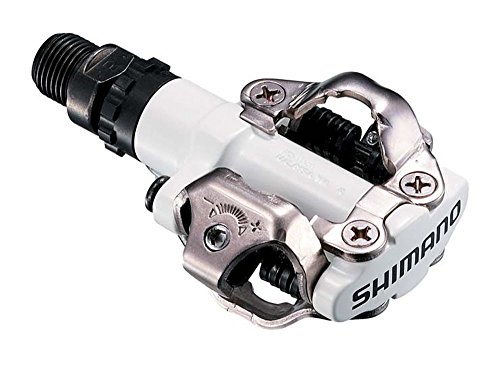
- Best for: first-time clip-in riders, riders building a gravel bike on a sensible budget, and anyone who wants the most widely supported cleat system with the least fuss.

- Best for: racers and fast, committed gravel riders who want a lighter, lower and more positive SPD pedal and already live in two-bolt cycling shoes.
All 4 Picks at a Glance
| Product | Specs | Action |
|---|---|---|
| 1. Shimano PD-EH500 — Best for Mixed Use |
| Check price on Amazon |
| 2. Shimano PD-M520 — Best Value SPD |
| Check price on Amazon |
| 3. Shimano XT PD-M8100 — Best for Racing and Fast Riding |
| Check price on Amazon |
 4. Crankbrothers Candy 1 — Best for Mud and Frequent Clipping In and Out |
| Check price on Amazon |
Key takeaways
- Compare the best gravel bike pedals, from the dual-sided Shimano PD-EH500 and PD-M520 to the XT PD-M8100 and Crankbrothers Candy 1, with cleat, weight and mud-clearance checks.
What's inside
As an Amazon Associate I earn from qualifying purchases. This post may contain affiliate links at no extra cost to you.
As an Amazon Associate we earn from qualifying purchases.
Affiliate Disclosure: This article contains affiliate links. If you buy through a link on this page, we may earn a commission at no extra cost to you. Specifications are taken from manufacturer and retailer product pages, and stock and cleat inclusion should be confirmed on the product page before you order.
Gravel riding asks more of a pedal than either road or trail riding alone. On a single ride you can move from smooth pavement to loose climbs, muddy farm tracks, rocky descents and a cafe stop where you need to walk without skating across the floor. That mix is why most gravel riders end up on two-bolt mountain bike style systems rather than road pedals: the cleats are recessed into the shoe, so you can walk, the mechanisms are built to clear mud, and the shoes are stiff enough for long miles but forgiving enough for a hike-a-bike section.
Within that two-bolt world, the real choices are about entry style, platform support and how you use the bike. A dual-sided clip-in pedal suits riders who are clipped in for almost every mile. A hybrid pedal with a clip on one side and a flat platform on the other suits riders who also use the same bike for errands, commuting or easy family rides in ordinary shoes. A four-sided system suits riders who clip in and out constantly in mud and want engagement from almost any foot angle. And a flat pedal remains a valid gravel choice for riders who prioritise easy bail-outs and ordinary footwear over a mechanical connection, although none of the picks below is a pure flat, because the strongest gravel shortlists are built around these proven clip-in systems.
This guide keeps every pick in the same category — pedals suitable for a gravel bike — and explains the trade-offs in plain terms: cleat system, whether cleats are included, weight per pair as published by the maker or retailer, platform shape, mud behaviour and maintenance. Check cleat inclusion carefully before ordering any pedal, because a pedal without cleats is not rideable as a clip-in system until you add the matching set, and cleats are not interchangeable between the Shimano SPD and Crankbrothers systems covered here.
Quick Picks
- Best for mixed use: Shimano PD-EH500 — SPD clip on one side, flat platform on the other, so one gravel bike works in cycling shoes and in ordinary shoes.
- Best value SPD: Shimano PD-M520 — the classic dual-sided SPD pedal, with included single-release cleats and a sealed, low-maintenance design.
- Best for racing and fast riding: Shimano XT PD-M8100 — a lighter, lower-profile SPD race pedal with a wider contact approach for XC, cyclocross and gravel.
- Best for mud and frequent clipping in and out: Crankbrothers Candy 1 — four-sided entry in a small composite platform, with premium brass cleats included in the maker’s specification.
How to Choose Gravel Bike Pedals
Cleat system comes first
Your pedal choice locks in your shoe and cleat choice. Shimano SPD uses a two-bolt metal cleat, with the common SM-SH51 single-release cleat and the SM-SH56 multi-release cleat as the main options. Single-release cleats come out when you twist your heel outward; multi-release cleats also release with a hard upward pull at an angle, which some newer riders find more forgiving. Crankbrothers uses its own two-bolt brass cleat, which is not compatible with Shimano pedals, and offers float and release behaviour tuned by how the cleat is mounted. Never assume a cleat from one system fits the other. If you already own shoes, that is fine — both systems use the common two-bolt shoe drilling — but you still need the cleat that matches the pedal.
Dual-sided, hybrid or four-sided entry
Dual-sided SPD pedals clip in on both faces, so you never flip a pedal to find the right side at a junction or on a restart on a loose climb. Hybrid pedals give you one clip face and one flat face, which is freedom and compromise in equal measure: freedom to ride in trainers, compromise because half the time the face you want is facing down. Four-sided Crankbrothers mechanisms accept the cleat from more angles and tend to shed mud very well because the mechanism is open, which is why they have a loyal following in cyclocross and wet gravel.
Platform support and long-ride comfort
A bare mechanism with no surrounding platform concentrates pressure through the cleat. On short rides you may never notice. On a four-hour gravel ride, a pedal with more contact area around the cleat — a cage, a small platform or traction pads — can feel noticeably more stable, especially in softer-soled gravel shoes. Riders in stiff carbon-soled shoes feel this difference less. Match the pedal to your shoe: the softer and more walkable the shoe, the more you benefit from platform support.
Weight, stack and clearance
Published weights in this guide are per pair, from maker or retailer listings. Lighter pedals help a race build, but durability, bearing quality and how a pedal handles rock strikes matter more for most gravel riders than a small weight gap. Lower stack height puts your foot closer to the axle and can feel more direct, while generous open space around the mechanism is what keeps a pedal working after a muddy section. All four picks use the standard pedal thread found on virtually all adult cranksets, so fitting is straightforward with a pedal wrench or hex key as the maker specifies.
Bearings and maintenance
Gravel is hard on bearings: pressure washing, river crossings and gritty winter roads all shorten service life. Sealed cartridge designs and low-maintenance bushings are a practical advantage. Whatever you choose, a rinse rather than a jet wash, a occasional check for play in the axle, and fresh grease or bearing service at the maker’s interval will keep a good pedal feeling good for seasons rather than months.
The Picks in Detail
1. Shimano PD-EH500 — Best for Mixed Use
- Best for: riders whose gravel bike is also their commuter, tourer or everyday bike, and beginners who want to practise clipping in with a flat side as a safety net.
riders whose gravel bike is also their commuter, tourer or everyday bike, and beginners who want to practise clipping in with a flat side as a safety net.
The Shimano PD-EH500 is the pedal for the gravel bike that does everything. One side is a genuine Shimano SPD binding; the other side is a flat platform for ordinary shoes. Clip in for a long weekend ride, then ride the same bike to the shops in trainers the next morning without swapping pedals. Shimano lists the model as EPDEH500, with an aluminium body, a stack height of 17.4 mm in retailer specifications and an average weight of 383 g per pair in Shimano’s published data. Retailer specifications also list the included cleat as the SM-SH56 multi-release type, which suits riders who want an easier, more forgiving release while they build confidence.
On gravel, the SPD side behaves like any sound Shimano binding, with adjustable release tension so you can start light and firm it up as your technique settles. The flat side is the honest compromise: it is a usable platform rather than a pinned mountain bike flat, so it works well for easy miles, town riding and short off-road sections in sturdy shoes, but it is not the tool for aggressive descending in flat shoes. Judge it as a two-purpose pedal that does both jobs credibly, not as two specialist pedals in one.
2. Shimano PD-M520 — Best Value SPD
- Best for: first-time clip-in riders, riders building a gravel bike on a sensible budget, and anyone who wants the most widely supported cleat system with the least fuss.
first-time clip-in riders, riders building a gravel bike on a sensible budget, and anyone who wants the most widely supported cleat system with the least fuss.
The Shimano PD-M520 is the pedal that introduced a generation of riders to clipping in, and it remains the straightforward value answer for gravel. It is a compact, dual-sided SPD pedal: clip in on either face, with adjustable entry and release tension, an open binding design that pushes mud and grit out, and a chromoly steel spindle on a sealed cartridge axle unit in retailer and maker descriptions. Published weight is around 380 g per pair, and the pedal is supplied with SM-SH51 single-release cleats for two-bolt shoes, according to retailer listings.
That specification explains its staying power on gravel bikes. Dual-sided entry matters at every restart on a loose surface. The open mechanism keeps working when a ride turns muddy. The sealed design asks little of you between rides. And because SPD is the most common two-bolt system, spare cleats and compatible shoes are easy to find almost anywhere. What you give up compared with the XT pedal below is refinement: the M520 is a little heavier, its body offers less platform around the cleat, and its finish and bearings are built to a simpler brief. For most riders, on most gravel rides, those are acceptable trades for a pedal this proven.
3. Shimano XT PD-M8100 — Best for Racing and Fast Riding
- Best for: racers and fast, committed gravel riders who want a lighter, lower and more positive SPD pedal and already live in two-bolt cycling shoes.
racers and fast, committed gravel riders who want a lighter, lower and more positive SPD pedal and already live in two-bolt cycling shoes.
The Shimano XT PD-M8100 is the step up for riders who race gravel, ride cyclocross, or simply want a crisper, lighter SPD pedal. Amazon’s indexed listing for this model records the ASIN below and the maker part number PDM8100. Maker and retailer material describes a cross-country race SPD pedal of about 340 g per pair, with a lower-profile body, a wider pedal-to-shoe contact approach than basic SPD models, adjustable release tension and an offset binding design intended to improve mud evacuation under the cleat.
In practice, the M8100 suits riders in stiff shoes who clip in for the whole ride and value a positive, repeatable engagement under hard efforts — standing starts, steep loose pitches where a missed clip costs momentum, and fast group rides where you are in and out at junctions without looking down. It uses the same SPD cleat family as the M520 and EH500, so shoes and cleats carry over if you upgrade. What it does not offer is a flat side or any interest in ordinary shoes: this is a dedicated clip-in pedal, and it should be bought as one.
4. Crankbrothers Candy 1 — Best for Mud and Frequent Clipping In and Out
- Best for: riders in muddy conditions, riders who clip in and out constantly, and riders who want the lightest pedal here with a small supportive platform.
riders in muddy conditions, riders who clip in and out constantly, and riders who want the lightest pedal here with a small supportive platform.
The Crankbrothers Candy 1 takes a different approach to the same problem. Its mechanism offers four-sided entry: the open wing design can engage the cleat from more angles than a conventional two-sided binding, and the open structure sheds mud instead of packing with it. Around that mechanism sits a one-piece composite platform. Maker specifications list body dimensions of 67 mm by 74 mm, a weight of 294 g per pair, stamped steel wings, a forged chromoly steel spindle and premium brass cleats included, with float and release set by the cleat setup.
That makes the Candy 1 the lightest pick in this guide and the most appealing for riders whose gravel involves constant stopping, remounting and filthy conditions — cyclocross-style courses, winter lanes, and technical routes where you are off and on the bike all day. The small platform gives more support than a bare mechanism, which helps in walkable gravel shoes. The trade-offs are system commitment and feel: you are in the Crankbrothers cleat ecosystem, not SPD, spares are a little less universal, and the engagement feel is lighter and floatier than Shimano’s, which some riders love and others never warm to. Cleat wear also deserves attention, because brass cleats are a wear item by design.
Setting Up Your Pedals for Gravel
Fit cleats loosely at first, sit on the bike in a doorway, and clip in and out repeatedly on both sides before your first ride. Set release tension light to begin with — especially with single-release SPD cleats — and increase it only when accidental releases, not anxiety, tell you to. Position the cleat under the ball of your foot as a starting point, centred side to side, then adjust in small steps after real rides. On your first gravel outing, choose a quiet lane or a grass field, practise stopping and restarting on a gentle slope, and learn the twist-out motion until it is boring. Boring is the goal: on a loose descent or at a sudden gate, you want release to be a reflex, not a thought.
Maintain the system as a system. Worn cleats release unpredictably, so replace them when engagement feels vague. Keep mechanisms clean and lightly maintained as the maker directs, check pedal axles for play when you clean the bike, and re-check cleat bolts after the first few rides, because new cleats and shoes settle.
Final Verdict
For most gravel riders, the choice is simpler than the catalogues suggest. If your bike doubles as everyday transport, buy the Shimano PD-EH500 and enjoy riding it in any shoes. If you want the proven, widely supported clip-in standard at a sensible level, buy the Shimano PD-M520. If you race or ride hard in stiff shoes, the Shimano XT PD-M8100 is the refined SPD step up. And if mud, remounts and light weight define your riding, the Crankbrothers Candy 1 earns its place. Whichever you choose, match the cleat to the pedal, confirm what is in the box on the product page, and give yourself one easy ride to learn the release before the terrain asks questions.
Related guides
More from Amazon
Programs that pair well with the guide above. Offers and eligibility are set by Amazon and may change.
Free shipping on eligible items, Prime Video and more. Eligible new members can start with a free trial.
Start a Prime free trialAudiobooks and podcasts to listen to on the go. Eligible new members can start with a free trial.
Try Audible freeAd-free music streaming. Eligible new subscribers can start with a free trial.
Try Music Unlimited freeA free business account with business pricing and bulk-buying tools for work, shop or home office.
Create a business accountAs an Amazon Associate we earn from qualifying purchases.


Write Your Review
No reviews yet. Be the first to share your experience!