
Key takeaways
- Three Nike stability running shoes for overpronation: Structure models with midfoot support systems, ReactX and Cushlon cushioning, from Amazon listings.
What's inside
As an Amazon Associate I earn from qualifying purchases. This post may contain affiliate links at no extra cost to you.
If your ankles roll inward after each landing and you want to stay with Nike, the honest starting point is that the choice is narrow. Nike builds its stability runners in one family, the Structure line, so the real decision is not which of many models to buy — it is which generation’s support system and cushioning feel fits your stride, your mileage and your tolerance for hunting down older stock. Get that generation call right and the rest is sizing.
This guide is for three groups: daily trainers who overpronate and want Nike’s current stability shoe, runners replacing an older Structure they already know, and buyers who prefer the firmer feel of earlier generations. Every pick below was chosen from the name and specifications on its Amazon product page — the stated support system, the foam pairing and the version — and only genuine stability models are included, never neutral trainers dressed up as substitutes.
Quick Picks
As an Amazon Associate we earn from qualifying purchases
| Product | Best for | Key spec from title |
|---|---|---|
| Nike Men’s Structure 26 Road Running Shoes | Daily training in the current model | Full-length ReactX foam midsole |
| Nike Men’s Structure 25 Road Running Shoes | A springier forefoot feel | Cushlon 3.0 foam with a forefoot Zoom Air unit |
| Nike Men’s Air Zoom Structure 24 Running Shoes | A firmer, lower ride | Air Zoom unit with a Dynamic Fit System |
How to Choose
Start With the Support System, Not the Foam
Every shoe in this guide comes from the same family, so the support idea is shared: a midfoot support system that wraps the arch and heel area and is designed to steady the stride as the ankle rolls inward. That means your decision is rarely about whether a Nike shoe offers guidance — it is about how each generation builds around that system. Read the listing for the support system first, then compare cushioning. A neutral Nike trainer, however cushioned, does not include this midfoot system, so it is not a substitute for a runner whose stride rolls inward.
Match the Cushioning Pairing to Your Stride
Nike pairs the support system with a different foam recipe in each generation here. The current model uses a full-length ReactX foam midsole, the previous one combines Cushlon 3.0 foam with a Zoom Air unit in the forefoot, and the oldest relies on Cushlon foam with an Air Zoom unit. In practice that is a softness ladder: newer tends to feel plusher under the heel, older tends to feel firmer and closer to the ground. Pick the rung that matches how your feet feel after your longest weekly run, not the one with the longest feature list.
Weigh Generation Age Against Availability
A current-generation shoe is the easiest to buy twice: sizes stay listed longer, and replacing it mid-season is simpler. Previous and older generations can suit you just as well on the run, but their Amazon US listings are thinner, sizes sell through unevenly, and older stock is often sold by third-party sellers rather than through the main listing. If you train to a schedule, factor that in. A shoe you cannot replace in your size when it wears out is a planning problem, however good the first pair feels in the first month.
Confirm the Exact Variant on the Listing
Structure listings multiply fast: men’s and women’s versions, road and lifestyle listings, and a separate page identity for many size and colour combinations. Before ordering, confirm three things on the page in front of you — that it is the men’s version, that it is the running shoe rather than a lifestyle lookalike, and that the size and colour you selected are the variant actually being sold. This matters most with the older generations, where variant codes conflict across sellers. Two minutes on the listing prevents the most common return this family produces.
The 3 Best Options
Nike Men’s Structure 26 Road Running Shoes

The Structure 26 is Nike’s current stability trainer, and it suits the overpronator who trains most days and wants the newest version of the support design rather than a leftover generation. Its full-length ReactX foam midsole gives it a more cushioned ride than the older models below, while the midfoot support system wraps the arch and heel — the part of the shoe that does the guiding work when your ankle rolls inward after landing. If you are coming from a worn-out stability shoe and want the longest-lived listing of the three, this is the natural starting point.
Specs
- Midsole: full-length ReactX foam
- Support: midfoot support system that wraps the arch and heel
- Cushioning position: supportive cushioning
- Drop: not stated on the listing
- Weight: not stated on the listing
- Version: men’s road running shoe
Best for: men who overpronate and want Nike’s current stability trainer with its newest ReactX cushioning.
Watch out for: variant codes differ between sizes and colourways, so confirm the listing in front of you is the men’s road running version of the Structure 26 before ordering.
Nike Men’s Structure 25 Road Running Shoes
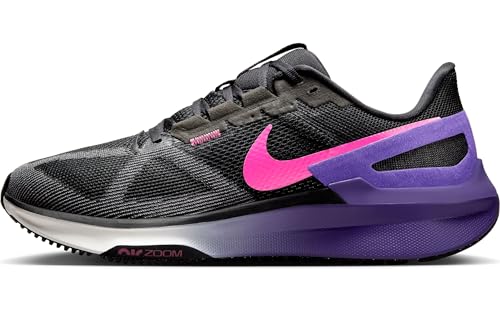
The Structure 25 is the previous generation, built around Cushlon 3.0 foam with a Zoom Air unit in the forefoot, a pairing that feels a touch firmer and more responsive under the front of the foot than the current model’s full-length ReactX. It keeps the same idea that defines the line: a midfoot support system positioned to steady the stride where an inward roll usually starts. Choose it if you ran happily in this generation before, prefer that forefoot feel, or find your size listed when the newer model is not.
Specs
- Midsole: Cushlon 3.0 foam
- Forefoot: Zoom Air unit
- Support: midfoot support system
- Drop: not stated on the listing
- Weight: not stated on the listing
- Version: men’s road running shoe, previous generation
Best for: men who want the previous-generation Structure and its Cushlon and Zoom Air forefoot feel.
Watch out for: as a previous-generation model, size and colour availability on Amazon US comes and goes, so check that your exact size is actually offered before planning around it.
Nike Men’s Air Zoom Structure 24 Running Shoes

The Air Zoom Structure 24 is the oldest shoe here, a 2021-era model with Cushlon foam, an Air Zoom unit and a Dynamic Fit System named on the shoe itself. Its ride is the firmest and lowest of the three, which some long-time Structure wearers still prefer over the softer current generations. Treat it as a deliberate pick rather than a default: it makes sense when you know this model’s fit, want that grounded feel, and can find your size in a live listing from a seller you are comfortable with.
Specs
- Cushioning: Cushlon foam
- Forefoot: Air Zoom unit
- Fit: Dynamic Fit System
- Drop: not stated on the listing
- Weight: not stated on the listing
- Version: men’s running shoe, 2021-era model
Best for: men who prefer the older Structure’s firmer, lower feel and find their size still listed.
Watch out for: this 2021-era model’s stock is third-party and patchy, and variant codes conflict across sellers, so confirm the exact variant and seller on the listing page.
Which One Fits Your Situation
You Train Most Days and Want the Current Model
If you run four or more days a week and your current stability shoes are worn down, start with the Structure 26. It is the generation Nike sells now, so your size is the most likely of the three to be listed and to stay listed when you need a second pair. Its ReactX midsole also gives the softest landing of the group, which suits higher weekly mileage where comfort over long runs matters more than a firm, connected feel.
You Ran Well in the Previous Generation
If your last pair of Structures served you well and you prefer a forefoot that feels springy rather than plush, look at the Structure 25 first. Its Cushlon 3.0 foam and forefoot Zoom Air unit keep the same midfoot support idea with a slightly firmer push-off feel. The trade-off is availability: as a previous-generation model, your size may appear and disappear, so if you find it listed in your size, that is the moment to order rather than wait.
You Prefer a Firmer, Lower Ride
Some runners dislike the tall, soft feel of modern trainers and want the ground closer underfoot. That is the case for the Air Zoom Structure 24: Cushlon foam, an Air Zoom unit and the Dynamic Fit System give it the firmest, lowest ride of the three. Go in with clear eyes: it is a 2021-era shoe with patchy third-party stock, so it suits a buyer who knows this model’s fit and is choosing it deliberately, not a first-time stability buyer.
You Are New to Stability Shoes
If this is your first guided shoe after a neutral trainer started feeling unstable late in runs, keep it simple and choose the Structure 26. It pairs the line’s midfoot support system with the most forgiving cushioning here, and because it is the current model, exchanging a size is straightforward. The older generations reward buyers who already know the family’s fit; the current one is the lowest-risk place to learn it.
Common Mistakes
- Choosing a neutral Nike trainer because it looks similar on the shelf. Neutral models skip the midfoot support system entirely, so a runner whose ankle rolls inward gets cushioning without the guidance they came for. Check that the listing names a support system before anything else.
- Ordering the wrong version of the shoe. Men’s, women’s and lifestyle listings sit side by side in search results, and the names differ by a word or two. Confirm the page in front of you is the men’s road running version before choosing a size.
- Assuming every size and colour is the same product page. Variants of this family carry different listing identities, and older generations have conflicting codes across sellers. The variant you select is the shoe you get, so verify it on the listing itself.
- Expecting the shoe to fix pain. These are comfort and support features, not treatment. A guided shoe can feel steadier, but ongoing heel, arch or ankle pain is a reason to see a clinician or podiatrist, not to keep swapping models.
- Planning a season around the oldest generation. The 2021-era model depends on third-party stock that can vanish between purchases. If you need a guaranteed replacement in three months, build the plan around the current generation instead.
Frequently Asked Questions
Does Nike actually make a stability shoe for overpronation?
Yes — the Structure family is Nike’s stability line. Each generation is built around a midfoot support system that wraps the arch and heel area, which Nike describes as helping to slow the rate of ankle eversion. It is a support feature for comfort and a steadier feel, not a medical device, and it is why this guide covers Structure models only rather than Nike’s neutral trainers.
Which generation of the Structure should I buy?
Start with the Structure 26 if you want the softest cushioning and the easiest replacement path. Choose the Structure 25 if you prefer the Cushlon and Zoom Air forefoot feel of the previous generation and your size is listed. Pick the Structure 24 if you know and like its firmer, lower ride. All three share the same support idea, so comfort preference and availability, not features, should make the call.
Can a stability shoe stop my feet from hurting?
No shoe can promise that, and this guide makes no such claim. A midfoot support system and structured cushioning can make runs feel steadier and more comfortable for many overpronators, but pain has many causes that a product listing cannot diagnose. If you have ongoing heel, arch, ankle or knee pain or worsening pain, see a clinician or podiatrist rather than cycling through shoes hoping one will resolve it.
Why does this guide list only three Nike shoes?
Because Nike sells one stability family, and honesty matters more than a longer list. The three Structure generations are the Nike stability shoes that could be matched to Amazon US listings. Rather than fill the slots with neutral Nike trainers that lack the support system — a different type of shoe — the guide stops at three and tells you what each one is and what to check before buying.
Related guides
More from Amazon
Programs that pair well with the guide above. Offers and eligibility are set by Amazon and may change.
Free shipping on eligible items, Prime Video and more. Eligible new members can start with a free trial.
Start a Prime free trialAudiobooks and podcasts to listen to on the go. Eligible new members can start with a free trial.
Try Audible freeAd-free music streaming. Eligible new subscribers can start with a free trial.
Try Music Unlimited freeA free business account with business pricing and bulk-buying tools for work, shop or home office.
Create a business accountAs an Amazon Associate we earn from qualifying purchases.

Write Your Review
No reviews yet. Be the first to share your experience!