
Key takeaways
- Five supportive running shoes for flat feet and plantar fasciitis comfort, with stated arch support and cushioning plus the fit checks to make first.
What's inside
As an Amazon Associate I earn from qualifying purchases. This post may contain affiliate links at no extra cost to you.
Choosing a running shoe when your arches sit low and your heels ache late in a run is really a decision about support design, not softness alone. A plush neutral trainer can feel kind for the first mile, then let a flat foot roll inward with nothing guiding it, while a structured stability shoe spreads each landing differently. The real choice is which stated support system and cushioning stack suit the way your feet actually move.
This guide is for women who run or walk daily with flat feet, heel discomfort that builds over longer efforts, or both at once, whether you are starting a first training block or replacing a worn stability pair. Every pick below is a women’s stability road shoe chosen from the support and cushioning features named on its Amazon product page, so the stated systems can be compared side by side before ordering.
Quick Picks
As an Amazon Associate we earn from qualifying purchases
| Product | Best for | Key spec from title |
|---|---|---|
| Brooks Women’s Adrenaline GTS 24 | Daily miles with guided support | GuideRails support system |
| ASICS Women’s Gel-Kayano 31 | Longer training distances | 4D Guidance System adaptive stability |
| HOKA Women’s Arahi 7 | Easy runs in a lighter stability shoe | J-Frame support design |
| New Balance Women’s Fresh Foam X 860v14 | Daily training and long walks | Fresh Foam X with Stability Plane |
| ASICS Women’s GT-2000 13 | Shorter weekday runs | 3D Guidance System, 8 mm drop |
How to Choose
Match the Support System to Your Roll
Stability shoes guide a rolling foot in different ways, and the listings name the systems plainly. GuideRails on the Brooks Adrenaline sit on both sides of the heel and engage when your stride drifts, while the HOKA J-Frame wraps the heel in firmer foam. ASICS uses its 4D Guidance System on the Kayano and a 3D version on the GT-2000, and New Balance pairs Fresh Foam X with a Stability Plane. If your feet roll inward mainly at the heel, a heel-focused design may be enough; a stronger roll usually suits the fuller systems.
Weigh Cushioning Against Heel Comfort
Flat feet spread load across more of the foot, so the midsole has to absorb repeated landings without collapsing inward. Look at what the listing actually names: DNA LOFT v3 foam on the Adrenaline, FF Blast Plus with a PureGEL heel insert on both ASICS picks, and a cushioned EVA midsole on the Arahi 7. A stated heel insert matters if your discomfort centers on the heel, while a fuller foam stack matters more for longer runs. Softness alone is not support, so pair the cushioning story with a named guidance system.
Get the Width and Midfoot Fit Right
Support only works when the shoe holds your foot where the system expects it. Several picks here fit snug through the midfoot, which suits some flat feet and crowds others that spread under load. Check the width options on the listing itself: the Kayano 31 family sells a D width version, and the 860v14 lists standard and wide variants side by side. Measure your feet late in the day, compare against the brand’s size chart on the page, and order the width your foot actually needs rather than sizing up in length.
Compare the Drop and Weight Figures the Listing States
Some listings state their numbers and some do not, and that gap is itself useful information. The GT-2000 13 listing states an 8 mm heel drop and a weight of 235 g, and the 860v14 comparison table states an 8 mm drop, while the Adrenaline and Arahi listings leave drop and weight unstated in their text. A moderate stated drop keeps the heel slightly raised, which many flat-footed runners find comfortable on daily miles. Compare only stated figures, and treat an unstated number as unknown rather than guessing from another model.
The 5 Best Options
Brooks Women’s Adrenaline GTS 24 Supportive Running Shoe

The Adrenaline GTS 24 is the guided-support pick for a flat-footed runner whose heels ache most late in longer walks and runs. Its GuideRails system is stated on the listing as the support design, working alongside DNA LOFT v3 cushioning and an engineered mesh upper, so the shoe reads as structured rather than soft and loose. If your current trainer lets your ankles drift inward as you tire, this is the pick built around steadying that motion while keeping daily mileage comfortable.
Specs
- Women’s road running shoe
- GuideRails support system
- DNA LOFT v3 cushioning
- Engineered mesh upper
- Drop and weight: not stated on the listing
Best for: A flat-footed runner who wants guided support on daily miles and feels her heels ache most on longer walks and runs.
Watch out for: Brooks support shoes run structured through the midfoot, so if you prefer a soft, unstructured feel this will feel firm; check the width option on the listing before ordering.
ASICS Women’s Gel-Kayano 31 Running Shoes

The Gel-Kayano 31 carries the longest list of stated stability features in this group, which suits a flat-footed runner building toward longer distances. The listing names a 4D Guidance System for adaptive stability, a PureGEL heel insert, and FF Blast Plus cushioning under an engineered mesh upper. That combination frames it as the maximum-support option here: guidance through the whole stride, a dedicated heel element where plantar discomfort often centers, and enough cushioning for long training days on the road.
Specs
- Women’s road running shoe
- 4D Guidance System adaptive stability
- PureGEL heel insert
- FF Blast Plus cushioning
- Engineered mesh upper
- Also sold in a D (wide) width version on the same listing family
Best for: A flat-footed runner training for longer distances who wants the most stated stability features in one shoe.
Watch out for: The Kayano fits snug through the midfoot, so flat feet that spread under load may need the D width on the same listing; confirm the width before checkout.
HOKA Women’s Arahi 7 Running Shoe
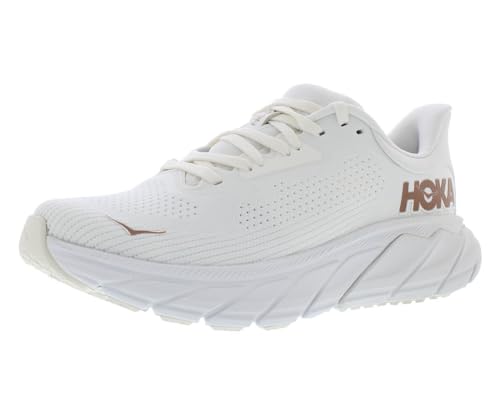
The Arahi 7 is the lighter-feeling stability option for a runner with flat feet who finds firm motion-control shoes tiring on easy days. Its listing names a J-Frame support design paired with a cushioned EVA midsole and a flat-knit upper, a combination aimed at guidance with a softer step-in feel. Choose it for relaxed daily runs and recovery miles where you still want a stated support structure underfoot, but prefer the ride to stay gentle rather than firm.
Specs
- Women’s road running shoe
- J-Frame support design
- Cushioned EVA midsole
- Flat-knit upper
- Drop and weight: not stated on the listing
Best for: A runner with flat feet who wants a lighter, softer-feeling stability shoe for easy daily runs rather than a firm motion-control feel.
Watch out for: The J-Frame guides mainly at the heel, so runners who roll in heavily at the forefoot may want the firmer GuideRails or 4D Guidance picks above instead.
New Balance Women’s Fresh Foam X 860v14 Running Shoe

The Fresh Foam X 860v14 is the traditional stability trainer of the group, built around a Fresh Foam X midsole with a Stability Plane for support. Its listing also notes an APMA Seal of Acceptance and states an 8 mm drop in its comparison table, two concrete details the other listings here do not all provide. A wide size range makes it a practical choice for flat-footed runners who train daily, walk long distances in the same shoe, and need their real width rather than a compromise.
Specs
- Women’s road running shoe
- Fresh Foam X midsole with Stability Plane support
- APMA Seal of Acceptance noted on the listing
- 8 mm heel-to-toe drop, stated in the listing comparison table
Best for: A flat-footed runner who wants a traditional stability trainer with a wide size range for daily training and long walks.
Watch out for: Standard and wide variants sit on the same listing, so confirm the width code on the size you pick; the support feel depends on getting your real width.
ASICS Women’s GT-2000 13 Running Shoes

The GT-2000 13 is the lighter daily trainer in this stability group, and the only pick whose listing states both its drop and its weight: 8 mm and 235 g. It pairs a 3D Guidance System with a PureGEL heel insert and FF Blast Plus cushioning, so the stated support story is complete but milder than the Kayano 31 above. For shorter weekday runs, that lighter build keeps things simple while still giving a flat foot a guided, cushioned platform.
Specs
- Women’s road running shoe
- 3D Guidance System support
- PureGEL heel insert
- FF Blast Plus cushioning
- Heel drop 8 mm and weight 235 g / 8.3 oz, stated on the listing
Best for: A flat-footed runner who wants a lighter daily trainer for shorter weekday runs within the stability class.
Watch out for: Support is milder than the Kayano 31, so if you know you overpronate strongly, treat this as the lighter-day option and the Kayano as the long-run option.
Which One Fits Your Situation
Your Heels Ache Most on Longer Walks and Runs
If heel discomfort is what cuts your outings short, start with the Adrenaline GTS 24 or the Gel-Kayano 31. Both pair a named guidance system with a cushioned midsole, and the Kayano adds a stated PureGEL heel insert. Pick the Brooks for a firmer, structured feel through the midfoot, or the ASICS when you want the longest list of stated stability features for building distance.
You Want Support Without a Firm, Heavy Feel
Choose the Arahi 7. Its J-Frame design guides at the heel while the cushioned EVA midsole and flat-knit upper keep the ride softer and lighter in feel than the structured picks. It suits easy daily runs and recovery days for flat feet that still roll inward, as long as your roll is not strongest at the forefoot, where its guidance is lightest.
Your Feet Spread and Standard Widths Feel Tight
Look at the 860v14 first, since its listing lays out standard and wide variants side by side, and keep the Kayano 31’s D width version as the alternative. Order the width your foot measures at the end of the day rather than a longer size: a stability system can only guide a foot that sits correctly inside the shoe, and extra length just lets the foot slide.
Most of Your Running Is Short Weekday Sessions
The GT-2000 13 fits this pattern best. Its stated 8 mm drop and 235 g weight make it the lightest-feeling documented option here, and its 3D Guidance System still gives a flat foot a guided platform for thirty to sixty minute runs. Save the heavier-support Kayano 31 for weekend distance, and let the GT-2000 handle the regular weekday miles.
Common Mistakes
- Choosing a soft neutral trainer because it feels kind on a short store try-on, then finding it offers no guidance once your flat feet tire late in a run.
- Sizing up in length to gain width, which lets the foot slide forward and puts the support system in the wrong place under your arch.
- Assuming the model name alone guarantees support, without checking which guidance system the listing actually states for that version.
- Expecting a new shoe to settle ongoing heel pain by itself, instead of treating persistent pain as a reason to see a clinician or podiatrist.
- Keeping a worn stability pair long after the midsole feels flat, then blaming the replacement model for discomfort the old shoe caused.
Frequently Asked Questions
Can a running shoe correct flat feet or plantar fasciitis?
No. A shoe cannot change the structure of your foot or resolve a medical condition. What the picks here offer is stated support and cushioning designed to keep daily miles more comfortable: guidance systems that steady an inward roll and midsoles that absorb repeated landings. If heel or arch pain persists, sharpens, or changes how you walk, see a clinician or podiatrist rather than shopping for another pair.
How do I know whether I need a stability shoe at all?
Check the wear pattern on your current trainers and how your ankles behave late in a run. Flat feet that roll inward, wear concentrated on the inner edge of the sole, and a tired, aching arch point toward a stated guidance system like the ones listed here. If your wear stays centered and your stride feels steady, a neutral cushioned shoe may be enough.
Should I order a wide width or just a longer size?
Order the width. Flat feet often spread under load, and a longer shoe only adds empty space at the toes while the midfoot stays crowded. Listings here make it manageable: the Kayano 31 family includes a D width, and the 860v14 shows its width variants on one page. Measure both feet late in the day and match the width code to the roomier foot.
When should heel pain send me to a clinician instead of a new shoe?
Go when the pain is sharp, appears suddenly, follows an injury, or keeps returning despite rest and a supportive shoe. Pain that changes your stride, numbness, swelling, or discomfort that is still present first thing every morning after several weeks also deserves an in-person assessment. A clinician or podiatrist can check for causes a shoe cannot address and advise on next steps.
Related guides
More from Amazon
Programs that pair well with the guide above. Offers and eligibility are set by Amazon and may change.
Free shipping on eligible items, Prime Video and more. Eligible new members can start with a free trial.
Start a Prime free trialAudiobooks and podcasts to listen to on the go. Eligible new members can start with a free trial.
Try Audible freeAd-free music streaming. Eligible new subscribers can start with a free trial.
Try Music Unlimited freeA free business account with business pricing and bulk-buying tools for work, shop or home office.
Create a business accountAs an Amazon Associate we earn from qualifying purchases.


Write Your Review
No reviews yet. Be the first to share your experience!