
Our Short List of 3

- Specs:
- Sensor: 30.4 MP full-frame CMOS
- Processor: DIGIC 6+
- ISO: 100–32000, expandable 50–102400

- Specs:
- Sensor: 45.7 MP full-frame BSI CMOS
- Optical low-pass filter: none
- Mount: Nikon F

- Specs:
- Sensor: 24.5 MP full-frame BSI CMOS
- Processor: EXPEED 6
- ISO: 100–51200
All 4 Picks at a Glance
| Product | Specs | Action |
|---|---|---|
| Canon EOS 5D Mark IV |
| Check price on Amazon |
| Nikon D850 |
| Check price on Amazon |
| Nikon D780 with AF-S NIKKOR 24-120mm f/4G ED VR |
| Check price on Amazon |
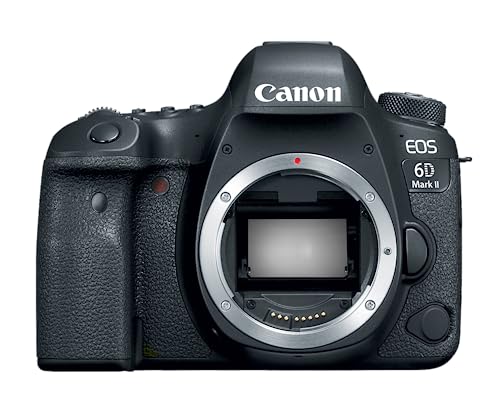 Canon EOS 6D Mark II |
| Check price on Amazon |
Key takeaways
- Four professional DSLR cameras compared on sensor resolution, autofocus, card slots and video, from the high-resolution Nikon D850 to the Canon 5D Mark IV.
What's inside
As an Amazon Associate I earn from qualifying purchases. This post may contain affiliate links at no extra cost to you.
Choosing a DSLR for professional work in 2026 is a decision about trust: the body has to deliver client-grade files, focus without fuss in bad light, and work with the lenses already in your bag. Mirrorless may dominate the headlines, but working photographers still rely on DSLRs for their optical viewfinders, battery endurance, and deep lens systems. The real question is which of these proven full-frame bodies matches your assignments, from high-resolution commercial work to weddings and hybrid video.
This guide is for working professionals replacing an ageing body, studio and portrait photographers who print large, wedding and event shooters who need dependable autofocus, and videographers who want a DSLR that also records strong 4K footage. Every camera below is a DSLR body or DSLR kit, chosen from the names and specifications on its Amazon product page. Specs, not reputation, drove the shortlist, and each pick serves a different kind of professional workload.
Quick Picks
As an Amazon Associate we earn from qualifying purchases
| Product | Best for | Key spec from title |
|---|---|---|
| Nikon D850 | Maximum resolution for commercial and landscape work | 45.7 MP full-frame BSI sensor |
| Canon EOS 5D Mark IV | All-round client work in the Canon EF system | 30.4 MP full-frame |
| Nikon D780 with 24-120mm Lens | Hybrid stills and video with a lens included | 24.5 MP full-frame kit |
| Canon EOS 6D Mark II | A lighter full-frame Canon body for events | 26.2 MP full-frame |
How to Choose
Start with the resolution your work actually needs
Resolution decides how large you can print and how hard you can crop. The Nikon D850’s 45.7 MP sensor serves commercial, landscape, and studio work where files are examined closely. The Canon 5D Mark IV’s 30.4 MP is a balanced middle ground for weddings and editorial work, while the 24.5 MP D780 and 26.2 MP 6D Mark II produce smaller files that move faster through a busy workflow. Match the sensor to your deliverables rather than buying the biggest number by default.
Check autofocus for the way you shoot
Through the viewfinder, these bodies rely on phase-detect systems like the 5D Mark IV’s 61-point array and the 6D Mark II’s 45-point all cross-type system, both proven for moving subjects and low light. Live view is where the D780 pulls ahead, with a 273-point hybrid system and eye-detection autofocus that suits portrait sessions and video. Think about which mode you actually work in: viewfinder shooters can prioritise the classic systems, while anyone who composes on the rear screen should weigh live-view autofocus heavily.
Look at card slots and file safety
Professional work cannot be reshot, so storage matters. The D850 pairs a UHS-II SD slot with a CFexpress Type B and XQD slot, giving fast cards and a second location for overflow or backup. The D780 takes dual UHS-II SD cards, the simplest arrangement for writing a backup copy of every frame. Before a paid assignment, decide how you will protect files: dual-slot bodies make in-camera backup easy, while single-slot habits demand a disciplined download routine after every job.
Confirm the mount protects your lens investment
A professional body is rarely bought alone; it anchors a lens collection. Canon’s EF mount covers the 5D Mark IV and 6D Mark II, while Nikon’s F mount covers the D850 and D780, and both systems offer decades of professional glass, including used bargains. Switching systems means replacing lenses, flashes, and accessories at once, which dwarfs the price difference between bodies. Unless you are deliberately migrating, the sensible professional choice is usually the strongest body that mounts the lenses you already own.
The 4 Best Options
Canon EOS 5D Mark IV
- Specs:
- Sensor: 30.4 MP full-frame CMOS
- Processor: DIGIC 6+
- ISO: 100–32000, expandable 50–102400
The 5D Mark IV remains the default all-rounder for Canon professionals: a 30.4 MP full-frame sensor, a 61-point autofocus system, and up to 7 fps continuous shooting cover weddings, portraits, and editorial assignments without specialisation gaps. Its ISO range of 100 to 32000, expandable to 102400, handles dim reception rooms, and built-in Wi-Fi and GPS support location work and quick file delivery. The 3.2-inch touch LCD and 4K video recording add flexibility for hybrid jobs. For EF shooters who want one body that does everything competently, this is still the benchmark in this group.
Nikon D850
- Specs:
- Sensor: 45.7 MP full-frame BSI CMOS
- Optical low-pass filter: none
- Mount: Nikon F
The D850 is the resolution pick, built around a 45.7 MP full-frame BSI sensor with no optical low-pass filter, which squeezes maximum sharpness from good lenses. That specification targets studio, commercial, landscape, and architecture work where files are printed large or examined at full size. Dual card slots, one UHS-II SD and one CFexpress Type B or XQD, give fast storage and a backup path on paid shoots. The 3.2-inch LCD and F mount access to Nikon’s professional lens range complete a body that still anchors serious Nikon kits. For detail above all else, nothing else here matches it.
Nikon D780 with AF-S NIKKOR 24-120mm f/4G ED VR
- Specs:
- Sensor: 24.5 MP full-frame BSI CMOS
- Processor: EXPEED 6
- ISO: 100–51200
The D780 kit is the hybrid choice, pairing a 24.5 MP full-frame BSI sensor with the most modern feature set of any DSLR here. Through the viewfinder it shoots at 7 fps; in live view it reaches 12 fps with a 273-point hybrid autofocus system and eye-detection, which transforms portrait sessions and video work. It records 4K UHD at 30p and Full HD up to 120p, and dual UHS-II SD slots protect client files. The included 24-120mm f/4G ED VR lens covers events and travel assignments immediately, making this the only pick here that is ready to work straight from the box.
Canon EOS 6D Mark II
- Specs:
- Sensor: 26.2 MP full-frame CMOS
- Processor: DIGIC 7
- ISO: 100–40000
The 6D Mark II is the lighter route into Canon full-frame professional work. Its 26.2 MP sensor and DIGIC 7 processor deliver clean files for weddings, events, and portrait work, while Dual Pixel CMOS AF makes live view and video focusing smooth and dependable. Full HD video reaches 60p, and the 45-point all cross-type autofocus system handles viewfinder shooting with confidence. The vari-angle touch LCD helps at awkward angles, and Wi-Fi, NFC, Bluetooth, and GPS cover connectivity thoroughly. For Canon shooters who find the 5D Mark IV more body than they need, this is the practical full-frame step.
Which One Fits Your Situation
You shoot commercial work that gets printed large
Take the Nikon D850. The 45.7 MP BSI sensor with no optical low-pass filter records the finest detail of any body here, and dual slots with CFexpress support keep big files moving safely. If clients examine your work closely or crop aggressively, this is the DSLR built for that scrutiny.
You shoot weddings inside the Canon EF system
Choose the Canon EOS 5D Mark IV. Its 61-point autofocus, 7 fps burst, and wide ISO range cover a full wedding day from bright exteriors to dim receptions, and the 30.4 MP files balance quality against workflow speed. It is the safest pair of hands in this group for Canon professionals.
You split your work between stills and video
Pick the Nikon D780 kit. The 273-point hybrid live-view autofocus with eye detection, 4K UHD video, and Full HD at up to 120p make it the strongest hybrid DSLR here, and the included 24-120mm lens means the kit earns money from the first assignment without extra purchases.
You want full frame without the bulk or cost of a flagship
Go with the Canon EOS 6D Mark II. It delivers the full-frame look, a vari-angle touchscreen, and complete wireless connectivity in the most manageable body here. For event, travel, and portrait work that does not demand 4K video or maximum resolution, it covers professional needs sensibly.
Common Mistakes
- Buying a high-resolution body without the lenses, storage, and computer power its files demand.
- Switching systems for a body upgrade and underestimating the cost of replacing every lens.
- Ignoring card-slot arrangements until a card failure threatens a paid assignment.
- Assuming a DSLR cannot shoot professional video, when the D780 records 4K UHD with eye-detection autofocus.
- Choosing by headline specs instead of the assignments you actually shoot each month.
Frequently Asked Questions
Are DSLRs still suitable for professional work?
Yes. These bodies offer mature autofocus systems, optical viewfinders that never black out or lag, long battery life, and enormous lens catalogues at falling prices. Many working photographers keep DSLRs as primary or backup bodies because clients care about the delivered files, not the camera category, and these sensors still produce professional results.
Which of these is best for weddings?
The Canon EOS 5D Mark IV and the Nikon D780 are the strongest wedding picks here, for dependable autofocus, good high-ISO performance, and file protection. The D780 adds eye-detection in live view and 4K video, while the 5D Mark IV offers Canon’s 61-point system and 30.4 MP files. Your existing lens system should make the final call.
How much resolution does a professional really need?
For weddings, events, and editorial work, 24 to 30 MP is ample for large prints and reasonable cropping, which covers the D780, 6D Mark II, and 5D Mark IV. Commercial, landscape, and studio photographers who print very large or retouch in detail benefit from the D850’s 45.7 MP, at the cost of bigger files.
Should I buy a body only or a kit?
Body only makes sense when you already own lenses for that mount, as most professionals do. A kit like the D780 with its 24-120mm lens suits photographers entering a system or adding a versatile workhorse zoom. Either way, confirm the mount matches your glass before ordering, because that decision outlasts any single body.
Related guides
More from Amazon
Programs that pair well with the guide above. Offers and eligibility are set by Amazon and may change.
Free shipping on eligible items, Prime Video and more. Eligible new members can start with a free trial.
Start a Prime free trialAudiobooks and podcasts to listen to on the go. Eligible new members can start with a free trial.
Try Audible freeAd-free music streaming. Eligible new subscribers can start with a free trial.
Try Music Unlimited freeA free business account with business pricing and bulk-buying tools for work, shop or home office.
Create a business accountAs an Amazon Associate we earn from qualifying purchases.










Write Your Review
No reviews yet. Be the first to share your experience!