
Our Short List of 3

- Best for: Collectors and experienced film shooters who want the definitive German TLR.
- Brand: Rollei (Franke & Heidecke)
- Camera type: Twin-lens reflex (TLR)
- Taking lens: 75mm f/3.5
- Film format: 120 roll film

- Best for: Film shooters who want a metered TLR they can use every week.
- Brand: Yashica
- Camera type: Twin-lens reflex (TLR)
- Taking lens: Yashinon 80mm f/3.5
- Film format: 120 roll film
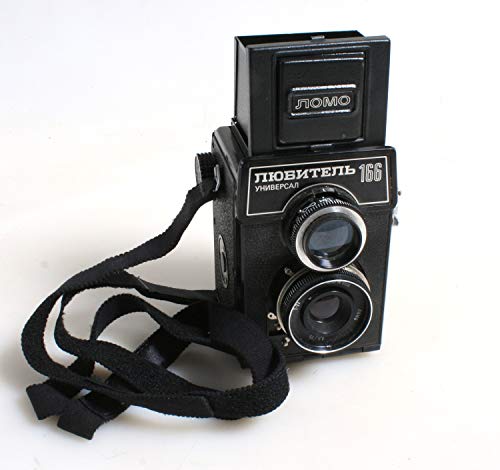
- Best for: Beginners who want to learn manual exposure and try two frame formats.
- Brand: LOMO (Lubitel)
- Camera type: Twin-lens reflex (TLR), medium format
- Film format: 120 roll film
- Frame sizes: 6 x 6 cm and 6 x 4.5 cm with mask
All 4 Picks at a Glance
| Product | Specs | Action |
|---|---|---|
| Rollei Rolleiflex 3.5 |
| Check price on Amazon |
| Yashica Mat 124G |
| Check price on Amazon |
| Lubitel 166 Universal |
| Check price on Amazon |
 LOMO Lubitel-166B |
| Check price on Amazon |
Key takeaways
- Compare four genuine TLR film cameras listed on Amazon, from the Rolleiflex 3.5 and Yashica Mat 124G to two Lubitel models, plus checks for used listings.
What's inside
As an Amazon Associate I earn from qualifying purchases. This post may contain affiliate links at no extra cost to you.
Buying a twin-lens reflex today is less about picking a famous model name and more about judging one specific used camera from one specific seller. Every TLR on the market is decades old, so two cameras with identical badges can differ enormously: one has a clean lens and accurate shutter speeds, the other has fungus, a dim focusing screen, and a meter that died years ago. The real decision is which listing describes its camera honestly enough that you can shoot with it the week it arrives.
This guide is for first-time medium format shooters, collectors filling a gap on the shelf, and film photographers who want the slow, waist-level way of working that only a TLR gives. Every camera below was chosen from the names and specifications on its Amazon product page, and all four are genuine twin-lens reflex cameras that shoot 120 roll film.
Quick Picks
As an Amazon Associate we earn from qualifying purchases
| Product | Best for | Key spec from title |
|---|---|---|
| Rollei Rolleiflex 3.5 | Collectors who want the benchmark German TLR | 75mm lens |
| Yashica Mat 124G | Regular shooters who want a built-in meter | Yashinon 80mm lens |
| Lubitel 166 Universal | Trying both square and 6×4.5 framing | Dual-format 120 TLR |
| LOMO Lubitel-166B | The lowest-commitment entry into TLR shooting | 6×6 medium format |
How to Choose
Judge the individual camera, not the model name
A model name tells you what a camera was when it left the factory, not what it is now. With used TLRs, the listing description matters more than the badge: look for explicit statements about shutter speeds firing correctly, the taking lens being free of fungus and separation, and the film transport advancing evenly. A cheaper, well-described example from a careful seller is usually a safer buy than a famous name sold with three blurry photos and no functional notes at all.
Decide whether you need a built-in meter
Most TLRs were built before reliable in-camera metering, so many have no meter at all and expect you to use a handheld meter or a phone app. The Yashica Mat 124G is the exception in this guide, with a built-in CdS meter powered by a small cell. If you shoot changing light and dislike extra steps, a working meter is a genuine convenience. If you mostly shoot in steady daylight or already meter by habit, a meterless Lubitel loses nothing that matters.
Check both lenses and the focusing screen
A TLR focuses through its upper viewing lens but exposes film through the lower taking lens, so both need scrutiny. Haze or fungus in the taking lens softens every frame, while a scratched or dim focusing screen makes the whole camera unpleasant to use. Ask whether the viewing and taking lenses are both clear, and whether the focus knob moves the lens board smoothly without grinding. On cameras this old, light seals and mirror condition also affect how bright the finder looks.
Confirm what is included and how returns work
Listings for the same model vary in what ships in the box: one includes a lens cap, strap, and case, another is body only. Small missing pieces, such as a take-up spool or the 6×4.5 mask on the Lubitel 166 Universal, can stop you shooting on day one. Read the listing’s condition notes and return terms before ordering, and message the seller about anything unclear. A seller who answers specific questions about shutter and glass is a good sign.
The 4 Best Options
Rollei Rolleiflex 3.5
- Best for: Collectors and experienced film shooters who want the definitive German TLR.
- Brand: Rollei (Franke & Heidecke)
- Camera type: Twin-lens reflex (TLR)
- Taking lens: 75mm f/3.5
- Film format: 120 roll film
Collectors and experienced film shooters who want the definitive German TLR.
Condition varies widely by seller on used listings, so confirm the shutter speeds, lens glass, and meter (where fitted) are described as working before you order.
The Rolleiflex 3.5 is the camera most other TLRs are measured against, built by Franke & Heidecke with a 75mm taking lens and a waist-level finder that made the format famous. It suits collectors who want the reference design and shooters who value smooth focus travel and a bright screen. Because each Amazon listing is a single used example, the individual camera matters more than the badge: a clean, honestly described 3.5 is the one to buy, whatever the cosmetic grade.
Yashica Mat 124G
- Best for: Film shooters who want a metered TLR they can use every week.
- Brand: Yashica
- Camera type: Twin-lens reflex (TLR)
- Taking lens: Yashinon 80mm f/3.5
- Film format: 120 roll film
Film shooters who want a metered TLR they can use every week.
Condition varies by seller on used listings, and the meter depends on an aging cell and circuitry, so check the listing states the meter responds and the shutter fires across its range.
The Mat 124G was Yashica’s last and most refined TLR, pairing a Yashinon 80mm taking lens with a built-in CdS light meter, something none of the other cameras here offer. That meter, plus the crank advance and clear waist-level screen, makes it the easiest of these cameras to live with as a regular shooter rather than a shelf piece. It is the natural pick if you plan to put a roll through your TLR most weekends instead of occasionally.
Lubitel 166 Universal
- Best for: Beginners who want to learn manual exposure and try two frame formats.
- Brand: LOMO (Lubitel)
- Camera type: Twin-lens reflex (TLR), medium format
- Film format: 120 roll film
- Frame sizes: 6 x 6 cm and 6 x 4.5 cm with mask
Beginners who want to learn manual exposure and try two frame formats.
Condition varies by seller on used listings, and the 6×4.5 mask and take-up spool are small parts that go missing, so confirm both are included before ordering.
The Soviet-era Lubitel 166 Universal takes a different route from the German and Japanese cameras here: a light, fully mechanical body with no battery and no meter to fail. Its party trick is format flexibility, shooting square 6×6 frames or, with the mask fitted, 6×4.5 frames on the same 120 roll. It suits patient beginners who want to learn exposure and focus by hand, and anyone curious how much of the TLR experience survives at the simplest end of the market.
LOMO Lubitel-166B
- Best for: Cautious first-time buyers who want the TLR experience at the lowest commitment.
- Brand: LOMO (Lubitel)
- Camera type: Twin-lens reflex (TLR), medium format
- Film format: 120 roll film
- Frame size: 6 x 6 cm
Cautious first-time buyers who want the TLR experience at the lowest commitment.
Condition varies by seller on used listings, and plastic-bodied examples can develop light leaks, so check the listing for test-roll results or a clear statement that the camera is light-tight.
The Lubitel-166B is the simplest camera in this guide: a Soviet medium format TLR that shoots 6×6 frames on 120 film with a mechanical shutter and fully manual exposure. There is no meter, no battery, and very little to go wrong electronically, because there are no electronics. It fits first-time buyers who want to find out whether waist-level shooting suits them before spending seriously, and its soft, characterful rendering is exactly what some photographers are looking for in portraits and quiet street scenes.
Which One Fits Your Situation
You want one TLR to keep for decades
Choose the Rolleiflex 3.5. It is the design the whole category is judged by, parts and service knowledge remain widely available, and a good example holds its appeal for collectors and shooters alike. Spend your effort on finding the cleanest, best-described listing rather than the cheapest one, because condition is what you will live with.
You plan to shoot a roll most weekends
Choose the Yashica Mat 124G. The built-in meter removes the slowest step in TLR shooting, the crank advance keeps a steady rhythm, and the Yashinon lens is sharp enough that the camera will not be the limiting factor in your results. It is the most practical everyday camera in this guide.
You are curious about TLRs but not ready to spend much
Choose the Lubitel-166B. It teaches the whole waist-level workflow, reversed finder image, manual exposure, and twelve deliberate frames, at the lowest commitment here. If the process hooks you, you can move up later with a clear idea of what you want; if it does not, you have lost very little.
You want to experiment with framing
Choose the Lubitel 166 Universal. Its mask lets you switch between square 6×6 and rectangular 6×4.5 frames on 120 film, which changes how you compose and how many frames you get from a roll. No other camera in this guide offers that choice, and it makes the Universal a genuinely useful second TLR as well.
Common Mistakes
- Buying the model name instead of the individual camera, ignoring vague condition notes and listings with no functional description.
- Assuming a built-in meter still works after forty years without checking the listing or asking the seller.
- Forgetting that TLRs shoot 120 roll film, then being surprised by film and processing costs per twelve-frame roll.
- Overlooking small missing parts such as lens caps, take-up spools, straps, or the Lubitel’s 6×4.5 mask.
- Expecting the finder image to move the way it does on other cameras; the waist-level image is reversed left to right and takes practice.
Frequently Asked Questions
What film does a TLR camera use?
All four cameras in this guide use 120 roll film, the standard medium format roll that is still widely produced and processed. Most TLRs expose twelve square 6×6 frames per roll. The Lubitel 166 Universal can also shoot 6×4.5 frames with its mask fitted, which yields more frames from the same roll.
Do TLR cameras need batteries?
Most do not. The Lubitel models here are fully mechanical and need no power at all, and the Rolleiflex fires its shutter without a battery. Only a built-in meter needs power, as on the Yashica Mat 124G, which uses a small cell for its CdS meter. A dead meter cell never stops the camera itself from taking pictures.
Why does the image in the finder move backwards?
A waist-level TLR finder shows the scene reflected in a mirror, so it is reversed left to right, though not upside down. Moving the camera left makes the image appear to move right, which feels strange for the first roll or two. Most shooters adapt quickly, and the large, bright screen makes composition feel calm and deliberate.
What should I check first when a used TLR arrives?
Before loading film, fire the shutter at every speed and listen for obviously slow or sticking times, check both lenses against a bright light for fungus or heavy haze, and confirm the focus knob moves smoothly. Then shoot a test roll promptly, while the seller’s return terms still apply, and inspect the negatives for light leaks and uneven frame spacing.
Related guides
More from Amazon
Programs that pair well with the guide above. Offers and eligibility are set by Amazon and may change.
Free shipping on eligible items, Prime Video and more. Eligible new members can start with a free trial.
Start a Prime free trialAudiobooks and podcasts to listen to on the go. Eligible new members can start with a free trial.
Try Audible freeAd-free music streaming. Eligible new subscribers can start with a free trial.
Try Music Unlimited freeA free business account with business pricing and bulk-buying tools for work, shop or home office.
Create a business accountAs an Amazon Associate we earn from qualifying purchases.










Write Your Review
No reviews yet. Be the first to share your experience!