
Our Short List of 3

- Best for: traditional hunters and high-volume shooters who want one deep leather quiver for the whole day.
- Material: genuine cow leather outer, hard leather middle layer, black tarpaulin lining
- Height: 52 cm
- Capacity: up to 50 arrows
- Carry: three-point adjustable shoulder strap, buckle closure

- Best for: hunters who already run MOLLE pouches and want a light sleeve that adapts to their kit.
- Material: 600D high-stretch PVC Oxford fabric
- Dimensions: 50 x 14 x 8 cm (19.6 x 5.5 x 3.1 in)
- Capacity: 24 to 30 arrows
- Weight: 8.48 oz

- Best for: recurve and longbow hunters who want a light, quiet leather quiver with nothing extra to adjust.
- Material: 100 percent two-tone leather
- Depth: 18 inches
- Harness: adjustable buckle-style harness
- Hand: ambidextrous, left or right hand
All 5 Picks at a Glance
| Product | Specs | Action |
|---|---|---|
| TOPARCHERY Traditional Shoulder Back Quiver |
| Check price on Amazon |
| PSKOOK Archery Lightweight Back Arrow Quiver |
| Check price on Amazon |
| Bear Archery Superlite Back Quiver (AT100BQ) |
| Check price on Amazon |
 KRATARC Multi-Function Heavy Duty Back Arrow Quiver |
| Check price on Amazon |
 NJOY THE ARCHERY Handmade Leather Back Quiver |
| Check price on Amazon |
Key takeaways
- Five back quivers for hunting compared on capacity, depth, leather or fabric builds, strap fit and storage, using the specs printed on each Amazon listing.
What's inside
As an Amazon Associate I earn from qualifying purchases. This post may contain affiliate links at no extra cost to you.
The real decision with a back quiver is not the logo on the leather. It is whether your arrows stay quiet, protected and easy to reach while you climb, crouch and push through brush with a bow in one hand. A body that is too short lets long shafts poke out and rattle. A strap that slides forces you to shrug the whole load back into place every few minutes. Hunters also have to decide between a traditional leather tube that swallows broadheads without a sound and a lighter fabric sleeve with pockets for the small tools a hunt actually needs.
This roundup is for traditional bowhunters, 3D shooters who walk a course, and compound or recurve hunters who want the bow itself kept free of extra weight. Every pick below is a true back quiver, and each one was chosen from the names, dimensions, capacities and materials printed on its Amazon listing rather than from brand reputation.
Quick Picks
As an Amazon Associate we earn from qualifying purchases.
| Product | Best for | Key spec from title |
|---|---|---|
| TOPARCHERY Traditional Shoulder Back Quiver | Traditional hunters carrying many arrows | 52 cm leather body, holds up to 50 arrows |
| PSKOOK Archery Lightweight Back Arrow Quiver | Hunters who add pouches to MOLLE webbing | 600D Oxford sleeve, holds 24 to 30 arrows |
| Bear Archery Superlite Back Quiver (AT100BQ) | Recurve and longbow hunters wanting light leather | 18-inch depth, two-tone leather |
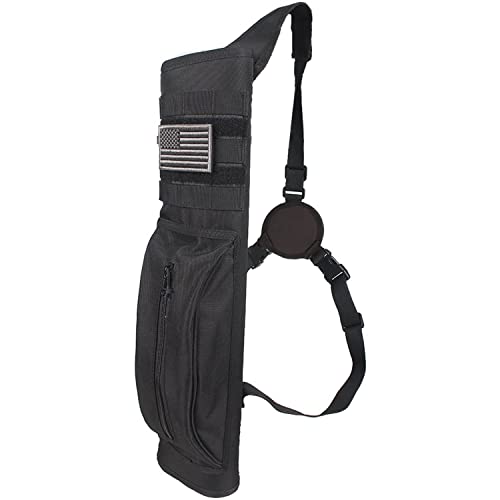
| KRATARC Multi-Function Heavy Duty Back Arrow Quiver | Shooters who want one large storage pocket | MOLLE panels, holds up to 24 arrows |
| NJOY THE ARCHERY Handmade Leather Back Quiver | Hunters who prefer a compact handmade build | 18 in tall, holds at least 20 arrows |
How to Choose
Match the Depth and Capacity to Your Arrows
Start with two numbers from the listing: the depth of the body and the stated arrow capacity. A hunter shooting 31-inch shafts needs a body deep enough that the fletching sits below the rim, or the arrows will catch on branches and chatter against each other. Capacity works the same way. A sleeve listed for 24 to 30 arrows suits a full day on a 3D course, while a compact tube holding around 20 arrows is plenty for a morning in a stand where only a handful of shots are realistic. Buying the biggest tube by default just adds swing and bulk you will feel by midday.
Decide Between Leather and Fabric Builds
Leather is the quiet option. A cow leather body flexes against your back, makes almost no noise when it brushes a branch, and molds to your shape over a season of use. The trade-offs are weight and weather: leather is heavier than fabric and at least one listing below states plainly that the build is not water resistant. Fabric quivers in 600D Oxford cloth weigh far less, shrug off damp mornings, and usually add MOLLE webbing and pockets. They can feel stiff when new and the shell is soft rather than rigid, so check how the listing says arrows are held before you commit.
Check the Strap System and How It Carries
How a back quiver hangs decides whether you keep wearing it. A single shoulder strap is the classic setup and draws fast, but the quiver can rotate around your torso when you bend. Three-point systems add a second anchor so the body stays flat against your back while you climb or crawl, which matters on spot-and-stalk hunts. Look for an adjustable strap with a buckle you can work with gloves on, and confirm the listing states the quiver suits your draw hand. At least one model below is sold in a right-handed version only, so handedness is a real filter, not a detail.
Weigh Storage Against a Slim Profile
Pockets are the dividing line between a pure arrow tube and a small hunting pack. A large front pouch swallows an arm guard, a spare string, a puller and a snack, which can mean leaving a daypack behind on short hunts. MOLLE panels go further and let you clip on the pouches you already own. The cost is width: every added pocket makes the quiver more likely to snag in thick cover and harder to hang neatly beside a stand. Decide honestly how much you carry. If your hunts are short walks from the truck, a plain leather tube with one pouch is usually the calmer choice.
The 5 Best Options
TOPARCHERY Traditional Shoulder Back Quiver
- Best for: traditional hunters and high-volume shooters who want one deep leather quiver for the whole day.
- Material: genuine cow leather outer, hard leather middle layer, black tarpaulin lining
- Height: 52 cm
- Capacity: up to 50 arrows
- Carry: three-point adjustable shoulder strap, buckle closure
traditional hunters and high-volume shooters who want one deep leather quiver for the whole day.
the listing states the leather is not water resistant, so plan on drying and conditioning it after wet hunts.
This is the high-capacity traditional pick. The body stands 52 cm tall and the listing gives a capacity of up to 50 arrows, so a full day of stump shooting or a long 3D round never means rationing shafts. The build is layered rather than decorative: genuine cow leather outside, a harder leather layer in the middle and a black tarpaulin lining inside. A three-point strap with a buckle closure keeps that tall body from swinging, and the large front pocket takes the small gear that usually ends up in a jacket. It suits left- and right-handed shooters alike.
PSKOOK Archery Lightweight Back Arrow Quiver
- Best for: hunters who already run MOLLE pouches and want a light sleeve that adapts to their kit.
- Material: 600D high-stretch PVC Oxford fabric
- Dimensions: 50 x 14 x 8 cm (19.6 x 5.5 x 3.1 in)
- Capacity: 24 to 30 arrows
- Weight: 8.48 oz
hunters who already run MOLLE pouches and want a light sleeve that adapts to their kit.
the shell is soft with a single open sleeve, so broadheads share space with field points unless you add your own covers.
Fabric quivers earn their place on weight, and this one is listed at 8.48 ounces while still holding 24 to 30 arrows. The 600D high-stretch PVC Oxford sleeve measures 50 x 14 x 8 cm, and the outside is working space rather than decoration: MOLLE webbing for clip-on pouches and a hook-and-loop panel for patches. A clasp pocket keeps an arm guard, arrow puller or spare string from vanishing into the main sleeve. The three-point carry system is the detail hunters over a jacket will appreciate, since the listing says it adjusts to fit over thick clothing layers without riding up.
Bear Archery Superlite Back Quiver (AT100BQ)
- Best for: recurve and longbow hunters who want a light, quiet leather quiver with nothing extra to adjust.
- Material: 100 percent two-tone leather
- Depth: 18 inches
- Harness: adjustable buckle-style harness
- Hand: ambidextrous, left or right hand
recurve and longbow hunters who want a light, quiet leather quiver with nothing extra to adjust.
the 18-inch depth is on the short side, so measure extra-long arrows before ordering.
Bear keeps this design close to the classic Fred Bear pattern: a simple leather tube, a buckle harness and one useful pouch. The body is 100 percent two-tone leather and 18 inches deep, which covers most hunting arrow lengths while keeping the profile short enough to duck under limbs without the top catching. The adjustable buckle-style harness works for both left- and right-hand archers, so a household with mixed shooters can share it. There are no tubes, dividers or panels to configure, which is exactly the appeal for hunters who find modern modular quivers fussy and loud.
KRATARC Multi-Function Heavy Duty Back Arrow Quiver
- Best for: organized hunters who want MOLLE attachment points and a real pocket in a foldable fabric body.
- Capacity: up to 24 arrows
- Shell type: soft shell
- Strap: padded shoulder strap
- Storage: large storage pocket
organized hunters who want MOLLE attachment points and a real pocket in a foldable fabric body.
this listing is the right-handed version, so left-handed shooters should confirm the variant before ordering.
KRATARC builds this model around organization rather than tradition. The listing describes a soft-shell back quiver with MOLLE webbing across the body, a padded shoulder strap and one large storage pocket, with room for up to 24 arrows. That layout suits the hunter who carries a release, rangefinder and tools alongside the arrows and wants each item clipped or pocketed instead of loose in a single tube. Because the shell is soft, the whole quiver folds down flat in a gear bag, which makes it a sensible second quiver for travel or a shared club kit.
NJOY THE ARCHERY Handmade Leather Back Quiver
- Best for: still-hunters and traditional shooters who want a slim handmade leather quiver that stays out of the way.
- Material: handmade leather
- Dimensions: 18 in tall x 3 in wide
- Capacity: at least 20 arrows
still-hunters and traditional shooters who want a slim handmade leather quiver that stays out of the way.
the 3-inch width is narrow, so count your arrows and check broadhead clearance before relying on the full capacity.
This is the compact handmade option. The leather body stands 18 inches tall and 3 inches wide, and the listing says it holds at least 20 arrows, which covers a typical hunting load without the wide, swinging profile of a high-capacity tube. A narrow body rides close between the shoulder blades and slips through brush with fewer snags, a real advantage for still-hunters who move more than they sit. Being handmade leather, it will stiffen and shine with use rather than wear out, and it pairs naturally with wooden arrows and a traditional bow setup.
Which One Fits Your Situation
You Still-Hunt Through Thick Cover
Pick a leather body that rides close and stays silent. The Bear Superlite and the NJOY THE ARCHERY quiver both keep a slim profile between your shoulder blades, and leather flexes instead of crackling when it brushes a branch. The TOPARCHERY is the better call only if you genuinely carry a large arrow count, since its taller body can catch on low limbs.
You Hunt in Wet Weather Most of the Season
Go fabric. The PSKOOK sleeve in 600D PVC Oxford cloth handles damp mornings without the drying and conditioning routine leather demands, and the listing for the TOPARCHERY states outright that its leather is not water resistant. The KRATARC soft shell is the other wet-weather option, with the bonus that it folds flat for storage between hunts.
You Walk a 3D Course or Shoot Long Practice Days
Capacity and organization matter more than silence here. The PSKOOK holds 24 to 30 arrows and adds a clasp pocket plus MOLLE space for a puller and spare string, while the KRATARC holds up to 24 with a large pocket of its own. Either keeps a full round of shafts and tools on your back instead of in a separate bag.
You Want One Quiver Shared Across the Household
Choose an ambidextrous model with a simple harness. The Bear Superlite fits left- and right-hand archers with a buckle harness anyone can adjust in seconds, and the TOPARCHERY also suits both hands. Avoid handed-specific listings like the right-handed KRATARC variant if the quiver will pass between shooters with different draw hands.
Common Mistakes
- Buying the largest capacity available, then hunting with a wide, half-empty tube that swings and snags on every branch.
- Ignoring body depth, so arrows longer than the quiver poke out above the rim and rattle against each other.
- Ordering a handed-specific listing, such as a right-handed variant, without checking it against your draw hand.
- Dropping bare broadheads into a soft single sleeve with no covers, where the edges cut stitching and dull against other shafts.
- Treating leather as waterproof when the listing says otherwise, then storing the quiver damp until the hide stiffens and cracks.
Frequently Asked Questions
How Many Arrows Should a Hunting Back Quiver Hold?
Most hunters carry far fewer than a full sleeve. A capacity around 20 arrows covers a morning hunt with spares, while the 24 to 30 arrow fabric models suit long practice days. Match the listing capacity to your longest realistic outing rather than your biggest imaginable one, because an oversized tube adds bulk you feel on every step.
Can I Carry Broadheads in a Back Quiver?
Yes, with the right setup. Deep leather tubes like the TOPARCHERY and Bear Superlite swallow broadhead-tipped arrows fully, which keeps the edges off your back and clothing. In soft fabric sleeves, add broadhead covers before loading, since the points share one open space with your other shafts and can cut the lining over time.
Is a Back Quiver Quieter Than a Bow-Mounted Quiver?
It removes one noise source entirely: nothing is bolted to the bow, so there is no hood to buzz at the shot. Leather bodies are the quietest against brush and clothing. Fabric sleeves can rustle slightly, and loose arrows will rattle in any design, so a snug load matters more than the carry style alone.
How Should a Back Quiver Sit on My Back?
High and flat, with the top of the body near your shoulder blade so the arrows clear your head when you reach back. The strap should be snug enough that the quiver does not rotate when you bend or climb. Three-point systems hold that position best; with a single strap, shorten it until the body stops swinging before you judge the fit.
Related guides
More from Amazon
Programs that pair well with the guide above. Offers and eligibility are set by Amazon and may change.
Free shipping on eligible items, Prime Video and more. Eligible new members can start with a free trial.
Start a Prime free trialAudiobooks and podcasts to listen to on the go. Eligible new members can start with a free trial.
Try Audible freeAd-free music streaming. Eligible new subscribers can start with a free trial.
Try Music Unlimited freeA free business account with business pricing and bulk-buying tools for work, shop or home office.
Create a business accountAs an Amazon Associate we earn from qualifying purchases.


Write Your Review
No reviews yet. Be the first to share your experience!