
Key takeaways
- Compare compact bean-to-cup espresso machines for a small coffee corner, with listed dimensions, grinders and milk systems checked on Amazon.
What's inside
As an Amazon Associate I earn from qualifying purchases. This post may contain affiliate links at no extra cost to you.
A coffee corner fails or succeeds on centimetres, not on drink menus. The real decision is whether a machine that grinds, brews and froths in one body can sit on a short stretch of worktop, slide far enough back under a wall cabinet, and still leave room in front for a cup, a milk jug and your hands. Depth matters as much as width here, because a deep machine pushes the cups into the walkway, while a tall one blocks the cabinet door above it.

This shortlist suits renters carving a coffee spot out of a shared kitchen, flat-dwellers working with one narrow counter run, and anyone turning a sideboard or desk alcove into a drinks station. Both machines below were picked from the product names and specification blocks on their own Amazon listings, and every dimension, capacity and feature quoted comes from those listings rather than from brand pages or roundups.
Quick Picks
As an Amazon Associate we earn from qualifying purchases.
| Product | Best for | Key spec from title |
|---|---|---|
| Philips 3200 Series Fully Automatic Espresso Machine, LatteGo Milk Frother, Black (EP3241/54) | A corner where milk drinks are daily and the milk system must rinse fast between uses | LatteGo Milk Frother, 5 Coffee Varieties, Intuitive Touch Display |
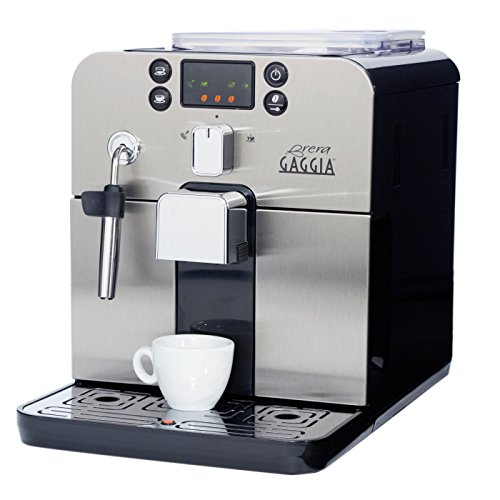
| Gaggia Brera Super-Automatic Espresso Machine, Small, Black | The tightest corner, where the water tank and grounds box must pull out from the front | Small, 40 fl oz |
How to Choose
Measure depth and cabinet clearance, not just width
A corner machine lives or dies by its full footprint, so measure the worktop from the wall to the front edge and the gap from the worktop to the underside of the wall cabinet before you look at any drink menu. A machine listed at 17 inches deep leaves almost no landing space for a cup on a shallow counter, and a tall body can stop an overhead cabinet door from opening at all. Write both measurements down, keep them beside the listing dimensions while you compare, and reject any model that only fits when pushed diagonally.
Check which side the water tank and grounds box open from
In a corner, the wall on one side and the splashback behind remove two directions of access, so a machine that loads its tank from the top or the side can become awkward within a week. Front access changes daily life: the reservoir slides towards you, the grounds box follows the same route, and the machine itself never has to move. Look for listings that state front loading or a removable tank plainly, and picture the refill motion in your actual corner, including where the tap is and how far you will carry a full tank.
Match the milk system to the space around the sink
Milk hardware decides how much extra room your corner needs beyond the machine itself. A carafe system keeps frothing inside the footprint, yet the carafe then needs fridge space and a rinse after use. A steam wand needs elbow room at the side of the machine plus space for a separate jug, which a corner may not give you. Decide where the jug, the carafe and the cloth will live before you buy, because a milk system that fights your layout gets skipped, and skipped milk hardware gathers residue fast.
Count the corner jobs the machine replaces
A bean-to-cup machine earns its corner by removing other objects from it: the separate grinder, the canister of ground coffee, the tamper and the knock box all disappear when grinding and brewing happen inside one body. That saving only holds if the built-in hopper and tank are big enough for your routine, so compare the bean and water capacities in the listing against how many drinks the corner serves each day. A small tank on a busy corner means constant refills at the least convenient spot in the kitchen.
The 2 Best Options
Philips 3200 Series Fully Automatic Espresso Machine, LatteGo Milk Frother, Black (EP3241/54)
At 10 inches deep in its listing dimensions, this Philips is the easier of the two to push back against a splashback while keeping cup space in front of it, although its 17-inch width needs a clear run of counter. The LatteGo carafe keeps milk drinks inside that footprint, with no separate jug station beside the machine, and the touch display keeps the front panel flat and simple. It suits a corner that serves cappuccino or latte macchiato most days, where the milk system rinses quickly and the machine stays put.
Specs
- Product Dimensions: 10″D x 17″W x 15″H, from the listing specification block
- Item Weight: 21.1 Pounds
- Wattage: 1500 watts
- Special Feature: Integrated Coffee Grinder, Milk Frother, Removable Tank, Water Filter
- Drinks stated on the listing: espresso, coffee, americano, cappuccino and latte macchiato, described as 5 Coffee Varieties
- Milk system: LatteGo, described as a 2 parts, no tubes milk system that can be cleaned under the tap or in the dishwasher
- Filter: AquaClean Filter, with the listing stating no descaling for up to 5,000 cups when the filter is changed as prompted
- Model: EP3241/54, Black
Best for: A corner with a full-width counter run that serves milk drinks daily and has no spare surface for a separate frothing jug.
Watch out for: The 17-inch width and 15-inch height are the largest figures in this shortlist, so a short corner run or a low wall cabinet can rule it out even though the depth is modest.
ASIN: B07VFY4MXM
Gaggia Brera Super-Automatic Espresso Machine, Small, Black
The Brera is built around the problem a corner creates: its listing describes a compact super-automatic machine with a front loading dreg drawer and water reservoir, and says it can slide under kitchen cabinets while leaving counter space to spare. That front access means refills and emptying happen towards the room, not from above, which suits a machine tucked beneath a cabinet. Its Pannarello wand keeps the body narrow by leaving milk in a jug you supply, and the ceramic burr grinder also accepts pre-ground coffee through a bypass doser.
Specs
- Product Dimensions: 10″D x 15.5″W x 11.5″H, from the listing Product information block
- Reservoir Capacity: 40 oz, with the water reservoir loading from the front
- Hopper Capacity: 8.8 oz
- Grind Settings: 5, from the listing comparison table
- Grinder: ceramic burr grinder with bypass doser for pre-ground coffee, from the listing manufacturer section
- Milk: Pannarello Steam Wand
- Brew group: removable, described as removable for regular rinsing and maintenance
- Item Weight: 18 pounds
- Operation Mode: Fully Automatic
Best for: The smallest corner in this shortlist, especially one under a wall cabinet where top-loading access would be blocked.
Watch out for: Milk drinks are a two-step job with a wand and your own jug, and the 40 oz reservoir is the smaller tank here, so a busy corner will refill it more often.
ASIN: B003XV3U82
Which One Fits Your Situation
Your corner sits under a low wall cabinet
Choose the Gaggia Brera. Its listing leads with front loading for both the water reservoir and the dreg drawer, and describes the machine sliding under kitchen cabinets, which is exactly the access pattern a low cabinet forces on you. The Philips is taller in its listing dimensions and loads its effort into a carafe instead, so the Brera is the one shaped for a machine that rarely moves and is serviced entirely from the front.
Your corner is a sideboard or desk alcove away from the sink
Choose the Philips 3200 with LatteGo. A corner away from the tap punishes any routine that needs a jug rinsed and a wand wiped after every drink, while the LatteGo system is two parts with no tubes and a listing-stated clean under the tap or in the dishwasher. The removable tank also travels to the sink on its own, so the machine can live on furniture that was never plumbed or tiled for coffee making.
Two or three people share one narrow counter run
Choose the Philips 3200. Five coffee varieties on a touch display means each person taps their own drink without learning a dial routine, and the AquaClean arrangement stretches the gap between descaling jobs, which matters when the corner belongs to everyone and to no one. The Brera serves a shared counter well too, but its wand work and smaller reservoir ask more of each user across a busy morning.
You want the corner to disappear back into a normal kitchen
Choose the Gaggia Brera. It is the lighter machine here at 18 pounds, its maker section talks about leaving plenty of counter space to spare, and its black body with stainless steel front panels reads as one small appliance rather than a coffee station. When guests arrive, the jug goes back in a cupboard and the corner returns to ordinary worktop, with no carafe or milk hardware left standing beside the machine.
Common Mistakes
- Measuring only the width of the corner and forgetting depth and height, then discovering the machine blocks a cabinet door or leaves no room for a cup in front of the spouts.
- Buying a top-loading machine for a spot under a wall cabinet, so every refill means dragging the whole machine forward on the worktop and pushing it back afterwards.
- Leaving no landing space beside the machine for a milk jug, a spoon and the cup waiting to be filled, which turns a small corner into a daily juggling act.
- Ignoring where the drip tray and grounds box come out, and placing the machine so a drawer, a bin or a stool blocks the one direction those parts need to travel.
- Filling the corner with extras the machine was meant to replace, such as a separate grinder and canisters, until the bean-to-cup machine saves no space at all.
Frequently Asked Questions
How much worktop does a bean-to-cup machine really need?
Plan for the full listing footprint plus working room in front. The machines here are listed at 10 inches deep, yet you still need space for a cup under the spouts, a hand reaching the controls and the drip tray sliding out. Measure your corner, compare it with the dimensions on the listing, and treat any model that only fits at an angle as one that does not fit.
Can a bean-to-cup machine go in a corner under wall cabinets?
Yes, if the height clears the cabinet and the daily access points face the room. The Gaggia Brera is the clearer fit for that spot in this shortlist, because its listing describes front loading for the water reservoir and dreg drawer and talks about sliding under kitchen cabinets. A machine that needs its lid lifted or its tank raised vertically will fight a low cabinet every single day.
Does a corner machine still need a separate grinder?
No. Both machines here grind inside the body: the Philips lists an Integrated Coffee Grinder among its special features, and the Gaggia Brera listing describes a ceramic burr grinder with a bypass doser for pre-ground coffee. That is the main space saving of the format, since the grinder, its grounds mess and its power cord all leave the corner at once.
Which milk system suits a very small corner better?
A carafe system suits a corner with no spare side room, because frothing happens inside the machine footprint and the Philips LatteGo carafe is two parts with no tubes to store. A wand suits a corner where counter depth is tight but you own a jug and have sink access nearby. The deciding factor is where the milk hardware lives between drinks, not the drink itself.
Related guides
More from Amazon
Programs that pair well with the guide above. Offers and eligibility are set by Amazon and may change.
Free shipping on eligible items, Prime Video and more. Eligible new members can start with a free trial.
Start a Prime free trialAudiobooks and podcasts to listen to on the go. Eligible new members can start with a free trial.
Try Audible freeAd-free music streaming. Eligible new subscribers can start with a free trial.
Try Music Unlimited freeA free business account with business pricing and bulk-buying tools for work, shop or home office.
Create a business accountAs an Amazon Associate we earn from qualifying purchases.










Write Your Review
No reviews yet. Be the first to share your experience!