
Our Short List of 3

- Best for: All-round skate filming, where one camera must handle every mount and every trick.
- 5.3K video capture resolution, 27MP stills, CMOS sensor
- HyperSmooth 6.0 stabilization
- HB-Series lens compatibility with auto detection
- Waterproof to 33ft / 10m

- Best for: Long sessions and evening skating, where battery life and low light matter most.
- 1/1.3-inch CMOS sensor, 4K/120fps video, 40MP stills
- RockSteady / RockSteady+ / HorizonBalancing / HorizonSteady stabilization
- Dual OLED touchscreens, 47GB built-in storage
- 1,950mAh battery, up to 4 hours / 240 minutes battery life
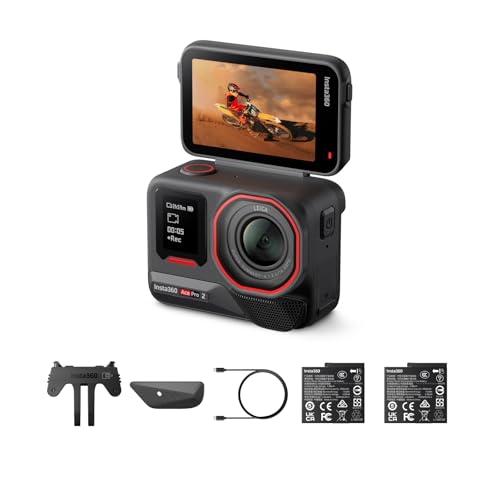
- Best for: Night sessions and high-detail edits, where low light and 8K matter.
- 8K30fps video, 4K60fps Active HDR, 1/1.3-inch sensor co-engineered with Leica
- Dual AI Chip (Pro Imaging Chip + 5nm AI Chip), FlowState Stabilization
- 157-degree wide-angle lens, waterproof to 39ft / 12m
- 1,800mAh battery, 2.5-inch flip-up touchscreen
All 5 Picks at a Glance
| Product | Specs | Action |
|---|---|---|
| GoPro HERO13 Black |
| Check price on Amazon |
| DJI Osmo Action 5 Pro Essential Combo |
| Check price on Amazon |
| Insta360 Ace Pro 2 Dual Battery Bundle |
| Check price on Amazon |
 DJI Osmo Action 4 Essential Combo |
| Check price on Amazon |
 GoPro HERO12 Black |
| Check price on Amazon |
Key takeaways
- Compare the best cameras for skateboarding, from 5.3K GoPro and DJI action cameras to an 8K Insta360, and pick the one that survives your next session.
What's inside
As an Amazon Associate I earn from qualifying purchases. This post may contain affiliate links at no extra cost to you.
A skateboarding camera gets dropped, kicked, rained on, and pointed at a fast-moving rider in harsh light, all in the same session. That makes durability and stabilisation the real buying criteria, ahead of resolution on a spec sheet. A camera that shoots smooth 4K while mounted to a board or a helmet is worth more than one that shoots sharper footage nobody can watch without feeling seasick.
This guide is for skaters filming lines and tricks, friends shooting follow-cam footage, and creators cutting skate edits for social media at the park. Every pick below was chosen from the names and specifications on its Amazon page, with stabilisation, mounting, battery life, and survival after a slam kept at the front of the decision.
Quick Picks
As an Amazon Associate we earn from qualifying purchases.
| Product | Best for | Key spec from title |
|---|---|---|
| GoPro HERO13 Black | All-round skate filming | 5.3K60 video, 27MP photo |
| DJI Osmo Action 5 Pro | Long sessions and low light | 4K/120fps video, 1/1.3-inch sensor |
| Insta360 Ace Pro 2 | Night sessions and 8K detail | 8K waterproof action camera, Leica lens |
| DJI Osmo Action 4 | Strong value with 10-bit colour | 4K/120fps waterproof action camera |
| GoPro HERO12 Black | Reliable 5.3K on a budget | 5.3K60 Ultra HD video, 27MP photos |
How to Choose
Put stabilisation ahead of resolution
Skate footage is shaky by nature: the camera moves with the rider, the ground is rough, and follow-cam runs add footsteps to every frame. HyperSmooth 6.0 on the GoPro models, RockSteady on the DJI models, and FlowState on the Insta360 all smooth that movement electronically, and the difference between them is smaller than the difference between any of them and an unstabilised camera. Resolution matters, but a smooth 4K clip beats a shaky 5.3K clip every time, so check the stabilisation system before the pixel count.
Check waterproofing, drop resistance, and the mount
A skate camera lives on the ground, on a board, or on a helmet, and it will meet concrete sooner or later. The HERO13 and HERO12 are waterproof to 33 feet, the Action 5 Pro to 20 metres, and the Ace Pro 2 to 39 feet, which also means rain and puddles are not a problem. Mounting matters just as much: a camera that bolts firmly to a standard mount stays put through a slam, while a loose mount ruins the shot and risks the camera. Look for a solid mounting system and a lens cover you can replace cheaply.
Match frame rate to the trick you are filming
Slow motion turns a kickflip into a study of timing, but only if the camera records enough frames to slow down cleanly. The Action 5 Pro and Action 4 record 4K at 120 frames per second, the Pocket-class cameras aside, and the HERO13 records 5.3K at 60 frames per second. For slow-motion edits, 120 frames per second at 4K is the sweet spot, because it slows to a quarter speed without stutter. For normal-speed lines, 60 frames per second is enough, and higher resolution gives more room to crop and reframe.
Count battery life in sessions, not minutes
A skate session runs for hours, and a camera that dies after one hour of filming misses the best tricks. The Action 5 Pro lists up to four hours from its 1,950 mAh battery, the Action 4 lists up to 160 minutes, and the HERO12 claims twice the recording time of its predecessor at 5.3K60. Cold weather, high frame rates, and Wi-Fi all shorten those figures, so carry a spare battery or a power bank. The Ace Pro 2 bundle includes two batteries, which is a genuine advantage for a long day at the park.
The 5 Best Options
GoPro HERO13 Black
- Best for: All-round skate filming, where one camera must handle every mount and every trick.
- 5.3K video capture resolution, 27MP stills, CMOS sensor
- HyperSmooth 6.0 stabilization
- HB-Series lens compatibility with auto detection
- Waterproof to 33ft / 10m
All-round skate filming, where one camera must handle every mount and every trick.
Confirm the live listing is the standalone camera, since bundle ASINs exist for the same model.
The HERO13 Black is the default skate camera for a reason: 5.3K60 video, 27 MP stills, HyperSmooth 6.0 stabilisation, and a waterproof body that survives rain and concrete. Its HB-Series lens compatibility with auto detection lets you swap lenses for different looks, and the 1,900 mAh Enduro battery is built for long sessions. It is the most versatile action camera here, equally happy on a helmet, a board, or a tripod at the edge of a bowl.
DJI Osmo Action 5 Pro Essential Combo
- Best for: Long sessions and evening skating, where battery life and low light matter most.
- 1/1.3-inch CMOS sensor, 4K/120fps video, 40MP stills
- RockSteady / RockSteady+ / HorizonBalancing / HorizonSteady stabilization
- Dual OLED touchscreens, 47GB built-in storage
- 1,950mAh battery, up to 4 hours / 240 minutes battery life
Long sessions and evening skating, where battery life and low light matter most.
One crawl showed a marketplace seller rather than Amazon, so check the seller on the live listing before buying.
The Action 5 Pro is the long-session pick, with a 1/1.3-inch sensor that holds up in low light, 4K at 120 frames per second for slow motion, and a battery rated up to four hours. Dual OLED touchscreens make framing easy from either side, 47 GB of built-in storage covers a session when the card fills, and direct connection to DJI Mic transmitters helps when a line needs commentary. Its low-light performance is the best in this set after the Ace Pro 2.
Insta360 Ace Pro 2 Dual Battery Bundle
- Best for: Night sessions and high-detail edits, where low light and 8K matter.
- 8K30fps video, 4K60fps Active HDR, 1/1.3-inch sensor co-engineered with Leica
- Dual AI Chip (Pro Imaging Chip + 5nm AI Chip), FlowState Stabilization
- 157-degree wide-angle lens, waterproof to 39ft / 12m
- 1,800mAh battery, 2.5-inch flip-up touchscreen
Night sessions and high-detail edits, where low light and 8K matter.
8K files are large and demanding to edit, so check storage and editing capacity before choosing this model.
The Ace Pro 2 is the image-quality pick, co-engineered with Leica and built around a 1/1.3-inch sensor with a dual AI chip for low light. It records 8K at 30 frames per second and 4K60 with Active HDR, its FlowState stabilisation keeps follow-cam footage smooth, and the flip-up touchscreen makes self-framing easy. Two batteries in the bundle mean a full day of filming without hunting for a charger at the skatepark.
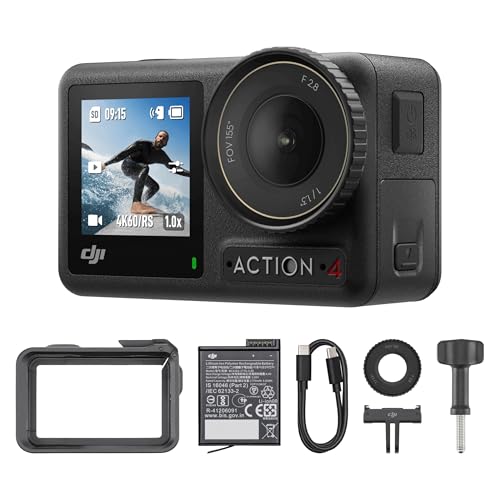
DJI Osmo Action 4 Essential Combo
- Best for: Strong value with 10-bit colour, for skaters who grade their edits.
- 1/1.3-inch CMOS sensor, 4K/120fps video, 155-degree ultra-wide field of view
- 10-bit colour and D-Log M
- 1,770mAh battery, up to 160 minutes battery life
- Waterproof to 18m / IP68, dual touchscreens
Strong value with 10-bit colour, for skaters who grade their edits.
The Amazon search crawl for this ASIN is older, so check live stock before publishing or buying.
The Action 4 is the value pick in this set, providing the same 1/1.3-inch sensor and 4K at 120 frames per second as its successor, with 10-bit colour and D-Log M for grading. Its battery runs up to 160 minutes, it is waterproof to 18 metres, and it connects directly to DJI Mic transmitters for clean audio. For skaters who want strong slow motion and colour flexibility without the newest model’s cost, it is the sensible buy.
GoPro HERO12 Black
- Best for: Reliable 5.3K filming at a lower cost than the newest GoPro.
- 5.3K60 video, 27MP photos, 1/1.9-inch CMOS sensor
- HDR for video (5.3K and 4K) and photos, HyperSmooth 6.0 stabilization
- Waterproof to 33ft / 10m, Enduro battery
- 2x longer continuous recording at 5.3K60, 70 minutes
Reliable 5.3K filming at a lower cost than the newest GoPro.
No explicit in-stock line appeared in the retrieved Amazon snippet for this ASIN, so check live stock before buying.
The HERO12 Black remains a solid skate camera, with 5.3K60 video, 27 MP photos, HyperSmooth 6.0, and an Enduro battery that doubles continuous recording time at 5.3K60 to 70 minutes. HDR works across 5.3K and 4K video as well as photos, and webcam and live streaming modes make it useful off the board too. It is the pick when the HERO13 is more camera than the budget allows for most skaters.
Which One Fits Your Situation
One camera for every skate session
Choose the GoPro HERO13 Black. Its 5.3K60 video, HyperSmooth 6.0, waterproof body, and lens options cover helmet mounts, board mounts, and tripod shots alike, and the Enduro battery lasts through a long session. It is the safest single-camera choice in this guide for skaters.
Long days and evening sessions
Choose the DJI Osmo Action 5 Pro. Its battery runs up to four hours, its 1/1.3-inch sensor holds up as the light fades, and 47 GB of built-in storage covers the moment the card fills. It is the pick when the session outlasts every other camera.
The best-looking footage, day or night
Choose the Insta360 Ace Pro 2. The Leica-co-engineered lens and dual AI chip produce the cleanest low-light image here, 8K gives room to crop, and two batteries keep it filming. It is the pick for creators whose edits live or die on image quality.
Strong slow motion without the top cost
Choose the DJI Osmo Action 4 or the GoPro HERO12 Black. The Action 4 adds 10-bit colour and D-Log M for grading, while the HERO12 adds 5.3K60 and HDR. Either covers slow motion and daily filming well below the newest models in this guide.
Common Mistakes
- Filming everything at the highest resolution. 8K and 5.3K files fill cards and slow editing, so match resolution to where the video will be watched.
- Forgetting a spare battery. High frame rates and cold weather drain batteries fast, and the best trick of the day always happens after the camera dies.
- Mounting loosely. A wobbly mount ruins stabilisation and risks the camera, so tighten every mount and check it before the first run.
- Ignoring the lens cover. Concrete scratches lenses, and a replaceable cover is cheaper than a new camera, so keep a spare in the bag.
- Shooting into the sun without a plan. Harsh backlight blows out the rider, so position the camera with the sun behind it when the trick allows.
Frequently Asked Questions
What is the best camera for filming skateboarding?
The GoPro HERO13 Black is the strongest all-round pick, with 5.3K60 video, HyperSmooth 6.0 stabilisation, a waterproof body, and lens options for different looks. The DJI Osmo Action 5 Pro suits longer sessions and low light, while the Insta360 Ace Pro 2 leads on image quality and night filming.
Do I need 120 frames per second for skate videos?
It helps a lot for slow motion. At 120 frames per second, a kickflip slows to a quarter speed without stutter, which shows timing and board control clearly. The DJI Action 5 Pro and Action 4 both record 4K at 120 frames per second, while the GoPro models record 5.3K at 60 frames per second for normal-speed lines.
How do I mount an action camera for skateboarding?
Use a helmet mount for a rider’s view, a board mount for low rolling shots, and a tripod or grip at the edge of a bowl for follow-cam lines. Tighten every mount before the first run, and use a tether where a fall could send the camera across concrete. A chest mount gives a stable middle ground between helmet and board.
Will an action camera survive a fall onto concrete?
These cameras are built for impacts and water, with waterproof bodies and replaceable lens covers, but no camera is indestructible. A direct hit on the lens can still scratch glass, so a protective cover and a secure mount are the best insurance. Check the lens and the mount after any hard slam before filming again.
Related guides
More from Amazon
Programs that pair well with the guide above. Offers and eligibility are set by Amazon and may change.
Free shipping on eligible items, Prime Video and more. Eligible new members can start with a free trial.
Start a Prime free trialAudiobooks and podcasts to listen to on the go. Eligible new members can start with a free trial.
Try Audible freeAd-free music streaming. Eligible new subscribers can start with a free trial.
Try Music Unlimited freeA free business account with business pricing and bulk-buying tools for work, shop or home office.
Create a business accountAs an Amazon Associate we earn from qualifying purchases.










Write Your Review
No reviews yet. Be the first to share your experience!