
Our Short List of 3
All 4 Picks at a Glance
| Product | Specs | Action |
|---|---|---|
 Fujifilm X100VI (ASIN: B0CW17YXLS) | Check price on Amazon | |
 Canon PowerShot G7 X Mark III (ASIN: B07TKNCQZL) | Check price on Amazon | |
 Leica D-Lux 8 (ASIN: B0DGWHH21F) | Check price on Amazon | |
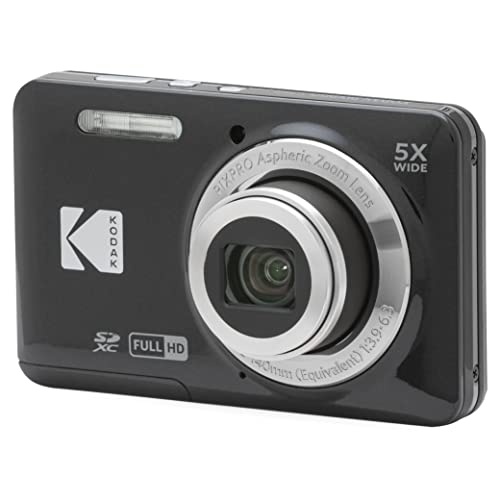 KODAK PIXPRO FZ55 (ASIN: B09ZRN1N3Z) | Check price on Amazon |
Key takeaways
- Easy compact digital cameras built around the classic 35mm view, with smart auto modes, pocketable bodies and sharp lenses for relaxed everyday shooting.
What's inside
As an Amazon Associate I earn from qualifying purchases. This post may contain affiliate links at no extra cost to you.
Disclosure: As an Amazon Associate, we may earn from qualifying purchases made through links on this page, at no additional cost to you.
Best Easy Compact Digital 35mm Cameras: Simple Shooting Around the Classic 35mm View
A quick note on what “35mm” means in this guide, because it decides everything that follows. These are digital compact cameras, not film cameras, and none of them uses a roll of 35mm film. Here, 35mm refers to the classic 35mm-equivalent field of view — the focal length generations of photographers used for street scenes, family moments, travel and everyday life because it sees roughly the way your own eyes take in a room or a street corner. So every camera below either carries a fixed lens sitting right at 35mm equivalent, or a zoom that starts wide and passes straight through 35mm, so the classic view is always one small zoom step away.
The second half of the brief is “easy.” Each pick leans on a strong intelligent auto mode, face and eye detection, and a short control layout, so the normal way to use it is: switch on, point, half-press, shoot. Manual controls exist on the larger models for later, but nothing here forces you to learn exposure theory before your first good photo. Sensor sizes range from a simple 1/2.3-inch chip in the budget pick up to APS-C and Four Thirds in the premium ones, and that spread is deliberate — ease of use matters more in this category than spec-sheet bragging rights.
Quick Picks
- Fujifilm X100VI — the purest match: a fixed 23mm f/2 lens that is exactly 35mm equivalent, a 40.2MP APS-C sensor and film simulations that make auto shooting fun.
- Sony RX100 VII — the do-everything pocket zoom: 24–200mm ZEISS lens, blink-fast autofocus and real-time Eye AF in a body that disappears into a jacket pocket.
- Canon PowerShot G7 X Mark III — the bright-lens all-rounder: 24–100mm f/1.8–2.8 zoom, a flip-up screen and easy live streaming for everyday clips.
- Leica D-Lux 8 — the large-sensor simplifier: a Four Thirds sensor, a fast 24–75mm equivalent lens and a clean, uncluttered control layout.
- KODAK PIXPRO FZ55 — the true point-and-shoot: a 28–140mm zoom, a handful of buttons and almost nothing to set up.
Fujifilm X100VI (ASIN: B0CW17YXLS)
See the Fujifilm X100VI on Amazon
The X100VI is the only camera here whose lens sits exactly on the brief: a fixed 23mm f/2 lens on an APS-C sensor works out to 35mm equivalent, the classic everyday view, with no zoom ring to think about at all. Behind it sits Fujifilm’s 40.2MP X-Trans CMOS 5 HR sensor and X-Processor 5, backed by in-body image stabilization rated up to 6 stops, a 425-point intelligent hybrid autofocus system and a built-in 4-stop ND filter for bright days. Twenty Film Simulation modes, including REALA ACE, are the real ease feature: leave the camera on auto exposure, pick a film look you like, and the JPEGs come out finished, with no editing step waiting for you at home.
The hybrid viewfinder flips between an optical window and a 3.69-million-dot electronic panel, the rear screen tilts for waist-level shooting, and the whole body weighs about 521 g. Video runs to 6.2K/30p, and 1.4x and 2x digital teleconverters crop in from the 35mm view when you need a tighter frame. One honest caution: this model has been chronically hard to find since launch, and Amazon listings are typically fulfilled by third-party camera sellers rather than Amazon itself, so check the seller and the exact color variant on the listing before ordering.
Highlights
– Fixed 23mm f/2 lens — exactly 35mm equivalent, zero zoom decisions
– 40.2MP APS-C sensor with 6-stop in-body stabilization
– 20 Film Simulation modes for finished-looking JPEGs straight from auto mode
Considerations
– Fixed lens means framing is done with your feet
– Availability is scarce and mostly through third-party sellers
Sony RX100 VII (ASIN: B07VPQV7BY)
See the Sony RX100 VII on Amazon
Sony’s RX100 VII packs a ZEISS Vario-Sonnar T* 24–200mm f/2.8–4.5 zoom into a pocket body, and the range starts wide enough that the 35mm view sits near the beginning of the zoom travel — set it once and shoot all day, or keep zooming for portraits and distant details. The 20.1MP 1.0-type stacked CMOS sensor pairs with autofocus that locks on in 0.02 seconds, real-time Tracking and real-time Eye AF for people and animals, and blackout-free continuous shooting at up to 20 fps. For an “easy” camera, that AF system is the headline: it quietly handles the focusing work that ruins casual photos on slower compacts.
The body weighs roughly 302 g with battery and card, yet still finds room for a pop-up electronic viewfinder, a tilting touchscreen, a microphone jack and 4K HDR (HLG) video with Active mode stabilization. Touch focus and touch shutter keep operation phone-simple, and the single-burst 90 fps mode exists for split-second moments. This is the pick for someone who wants one small camera that covers a whole trip without a bag of lenses.
Highlights
– 24–200mm zoom passes right through the 35mm view and far beyond
– Real-time Eye AF for people and animals does the focusing for you
– Pocket-size body with pop-up viewfinder and 4K HDR video
Considerations
– Small body means small controls; big hands may find it fiddly
– No weather sealing, so rainy-day shooting needs care
Canon PowerShot G7 X Mark III (ASIN: B07TKNCQZL)
See the Canon PowerShot G7 X Mark III on Amazon
The G7 X Mark III combines a 20.1MP 1.0-inch stacked CMOS sensor and DIGIC 8 processor with a 4.2x zoom covering 24–100mm equivalent — again, the 35mm view is a short step in from the wide end. The lens is the bright part: f/1.8 at the wide end and f/2.8 at full zoom, with optical image stabilization, which makes indoor and evening auto shooting far more forgiving than on slower compacts. Canon’s interface is one of the friendliest in this class, with a touchscreen that tilts up 180 degrees for selfies and vlogging.
Video is a genuine strength rather than an afterthought: 4K recording, Full HD at high frame rates, vertical video support, live streaming capability and an external microphone input. Wi-Fi and Bluetooth handle phone transfers through Canon’s app. Note that this model is sold on Amazon in both US and international versions under different listings — the ASIN above is the US model (3637C001), which is the one to choose for US warranty coverage.
Highlights
– Bright f/1.8–2.8 lens covering 24–100mm, ideal for indoor auto shooting
– 180-degree tilting touchscreen and simple, friendly menus
– 4K video, microphone input and live streaming built in
Considerations
– No viewfinder — all framing is on the rear screen
– Make sure you are looking at the US model listing, not the international one
Leica D-Lux 8 (ASIN: B0DGWHH21F)
See the Leica D-Lux 8 on Amazon
The D-Lux 8 takes a different route to easy: a larger Four Thirds CMOS sensor (21MP total, 17MP effective) behind a fixed DC Vario-Summilux 10.9–34mm f/1.7–2.8 ASPH. lens, which works out to 24–75mm equivalent. The 35mm view sits comfortably in the middle of that range, and the very bright maximum aperture plus the bigger sensor give it the best low-light margin of any zoom camera in this roundup. The interface is deliberately spare — Leica stripped the rear controls down to a simple directional pad and a short menu, and the camera shoots DNG raw files alongside JPEGs if you ever want to edit later.
A 2.36-million-dot OLED viewfinder, a 3.0-inch touchscreen, a built-in flash and USB-C charging round out a body built from die-cast magnesium. Video is 4K/30p. Stock of this model tends to run thin and listings can shift between standalone and bundle configurations, so confirm on the product page that you are looking at the standalone camera (model 19191) rather than a third-party accessory bundle.
Highlights
– Four Thirds sensor — the largest of any zoom pick here
– Fast 24–75mm equivalent f/1.7–2.8 lens, strong in low light
– Minimal control layout and DNG raw support
Considerations
– Shorter zoom reach than the Sony or Canon picks
– Listings alternate between standalone and bundles; verify the configuration
KODAK PIXPRO FZ55 (ASIN: B09ZRN1N3Z)
See the KODAK PIXPRO FZ55 on Amazon
The FZ55 is what “easy compact” looks like with everything non-essential removed. A 16MP CMOS sensor sits behind a 5x optical zoom that starts at 28mm wide angle and reaches 140mm equivalent, so it opens a little wider than the classic view and zooms a little past it in both directions. The control layout is a mode dial’s worth of choices reduced to a handful of buttons, scene modes handle the thinking, and 1080p Full HD video is there for clips. A 2.7-inch LCD, a rechargeable lithium-ion battery and a slim body you can carry in any pocket finish the package.
There are honest trade-offs: the small 1/2.3-inch sensor cannot match the low-light quality or fine detail of the 1-inch and larger sensors above, there is no viewfinder or Wi-Fi, and the screen is fixed. But as a first digital camera, a glovebox camera, or a gift for someone who finds modern menus intimidating, its simplicity is the entire point — and it is the only camera here that a complete beginner can master in an afternoon.
Highlights
– 28–140mm zoom brackets the 35mm view on both sides
– Extremely simple controls and scene modes
– Slim, light body with rechargeable battery
Considerations
– Small 1/2.3-inch sensor limits low-light quality
– No Wi-Fi, no viewfinder, fixed rear screen
How to Choose
Start with the lens question, because it defines the experience. A fixed 35mm equivalent lens like the X100VI’s removes a decision from every single photo and tends to produce a consistent, natural-looking set of images; a zoom that passes through 35mm, like the other four picks, trades a little of that purity for framing flexibility. Neither is wrong — think about whether you enjoy zooming or prefer to move.
Sensor size is the second decision. The FZ55’s 1/2.3-inch sensor is fine in daylight and for sharing online. The 1.0-inch sensors in the Sony and Canon are the sweet spot for most people, noticeably better after dark. The Four Thirds sensor in the Leica and the APS-C sensor in the Fujifilm are for buyers who know they will print or shoot in dim rooms often.
Finally, judge the auto system, not the spec sheet. Eye detection, face priority and reliable auto white balance are what make an “easy” camera easy in practice. Every pick here has them in some form; the Sony’s implementation is the most aggressive, the Kodak’s the most basic. Also check the small things: whether the screen tilts, whether charging is over USB-C, and whether the listing in front of you is the standalone camera in the variant you want.
Key Specifications Explained
35mm equivalent focal length. Because these cameras use different sensor sizes, their lenses are described by the full-frame focal length that would give the same angle of view. A 23mm lens on APS-C, a 10.9mm lens on Four Thirds and a 28mm lens on a small sensor can all describe a similar everyday view — the equivalent number is the one to compare.
Sensor size. Bigger sensors collect more light, which means cleaner images at high ISO and shallower depth of field. The ranking in this guide runs 1/2.3-inch, then 1.0-inch, then Four Thirds, then APS-C.
Aperture (f-number). Lower numbers let in more light. An f/1.8 or f/2 lens can keep shutter speeds usable indoors without flash, which matters when your whole brief is shooting on auto.
Image stabilization. Optical or in-body stabilization counteracts hand shake. It helps most at the long end of a zoom and in low light, and it is one reason the bigger cameras here stay sharp on auto.
Intelligent auto and scene modes. The camera analyzes the scene — portrait, landscape, macro, backlight — and sets exposure and focus accordingly. On modern compacts this is genuinely reliable, and it is the mode this category is built around.
Setup and Use Tips
Charge the battery fully and format the memory card in the camera before the first outing; in-camera formatting prevents most card errors. Set the camera to intelligent auto plus JPEG (or JPEG+RAW on the Leica and Fujifilm if you might edit later), turn on face/eye detection, and enable the grid overlay — keeping horizons level is the single fastest way to make everyday photos look intentional.
On the zoom models, find the 35mm position early: it is roughly a quarter of the way through the Sony’s zoom range, a short push on the Canon, and near the middle of the Leica’s. Shooting a whole day locked near that view is a useful exercise and shows why the focal length became a classic. Keep a microfiber cloth in your pocket for the front element, and set the camera’s date, time and copyright fields once so your archive stays organized.
Common Mistakes to Avoid
The most common mistake is buying the wrong listing: several of these models appear on Amazon as international versions, renewed units and third-party bundles alongside the standalone US camera. Check the model number and seller on the product page before ordering. The second mistake is judging a compact by its digital zoom figure — digital zoom just crops the image; only the optical range listed in each section above adds real detail.
Third, do not leave the camera in a full manual mode you do not understand yet; intelligent auto on any of these cameras will out-shoot a beginner’s manual settings. Fourth, remember that compact cameras are not weather sealed unless stated — a rain cover or a zip bag in wet weather is cheap insurance. Finally, with the X100VI in particular, avoid paying for a used unit listed as new; scarce models attract misleading listings, so read the condition field carefully.
FAQ
Does “35mm” in these camera names mean they shoot film?
No. Every camera in this guide is digital. “35mm” here describes the 35mm-equivalent field of view — the classic everyday focal length — which is why the picks either fix the lens at 35mm equivalent or zoom through it.
Which of these is easiest for a complete beginner?
The KODAK PIXPRO FZ55 has the fewest controls and the simplest menus. Among the larger-sensor models, the Canon G7 X Mark III’s touchscreen interface and auto modes are the most approachable.
Is a fixed 35mm lens limiting?
It removes zooming, which some people find freeing and others frustrating. The X100VI softens this with digital teleconverter crops at 50mm and 70mm equivalents, but if you regularly shoot sports or wildlife from a distance, choose one of the zoom models instead.
Can these cameras send photos to a phone?
The Fujifilm, Sony, Canon and Leica all offer Wi-Fi or Bluetooth transfer through their companion apps. The Kodak FZ55 does not — photos move by memory card or USB cable.
Do I need to learn manual settings to get good photos from these?
No. Intelligent auto, face and eye detection and program modes on all five cameras handle exposure and focus reliably. The manual controls are there to grow into, not prerequisites.
Final Verdict
If you want the exact brief — a digital compact built around a true 35mm view with nothing to zoom and nothing to fuss over — the Fujifilm X100VI is the definitive pick, provided you can find one in stock from a reputable seller. For most people, though, the Sony RX100 VII is the safer recommendation: it passes through 35mm on its way to 200mm, focuses faster than anything else here, and still fits in a pocket. The Canon G7 X Mark III is the friendliest all-rounder, the Leica D-Lux 8 the low-light and build-quality choice, and the KODAK PIXPRO FZ55 the honest, simple starter. All five keep the same promise: turn it on, and the classic 35mm view is ready.
Related guides
More from Amazon
Programs that pair well with the guide above. Offers and eligibility are set by Amazon and may change.
Free shipping on eligible items, Prime Video and more. Eligible new members can start with a free trial.
Start a Prime free trialAudiobooks and podcasts to listen to on the go. Eligible new members can start with a free trial.
Try Audible freeAd-free music streaming. Eligible new subscribers can start with a free trial.
Try Music Unlimited freeA free business account with business pricing and bulk-buying tools for work, shop or home office.
Create a business accountAs an Amazon Associate we earn from qualifying purchases.










Write Your Review
No reviews yet. Be the first to share your experience!