
Our Short List of 3

- Best for: A milk drinker who wants manual steam control and intends to practise texturing rather than delegate it.
- Coffee Maker Type: Espresso Machine
- Group: E61 group
- Boiler: 1.8-liter stainless steel HX boiler
- Heat Exchange Boiler: provides steam pressure for milk texturing and simultaneous brewing and steaming

- Best for: A daily latte or cappuccino drinker in a smaller kitchen who wants brewing and frothing to overlap.
- Brand: ROCKET ESPRESSO MILANO
- Model Name: Appartamento
- Special Feature: Heat exchanger boiler design, Vibration pump
- Boiler capacity: 1.80 litres
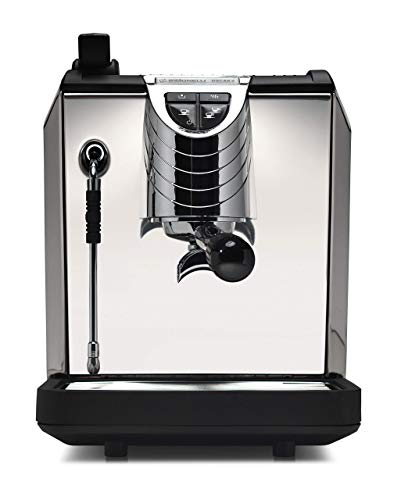
- Best for: A household serving milk drinks to guests, where timed dosing frees attention for steaming each pitcher.
- Brand Name: Nuova Simonelli
- Model Number: MOP1400104
- Boiler Type: Heat Exchange
- Boiler capacity: 2 L
All 3 Picks at a Glance
| Product | Specs | Action |
|---|---|---|
| Diletta Bello Espresso Machine |
| Check price on Amazon |
| Rocket Espresso Appartamento Espresso Machine |
| Check price on Amazon |
| Nuova Simonelli Oscar II Espresso Machine |
| Check price on Amazon |
Key takeaways
- Heat exchanger espresso machines that brew and steam at once for lattes and cappuccinos, chosen from each Amazon listing's own specifications.
What's inside
As an Amazon Associate I earn from qualifying purchases. This post may contain affiliate links at no extra cost to you.
A household that drinks lattes and cappuccinos runs into a specific frustration with lesser machines: the shot finishes, then everything pauses while the boiler changes mood for steam, and the espresso sits cooling while the milk waits. Choosing for milk drinks therefore starts with one practical question, whether extraction and steaming can happen together, in the same moment, without a queue forming on the counter when two or three drinks are wanted at once.
These picks are for home drinkers whose usual order involves steamed milk, from a single morning latte to a round of cappuccinos for guests. Each machine was selected from the name and specifications on its own Amazon listing, and each listing states a heat exchanger design in its own words. Where a listing talks about steam, that wording is reported as written, rather than borrowed from another model in the same range.
Quick Picks
As an Amazon Associate we earn from qualifying purchases
| Product | Best for | Key spec from title |
|---|---|---|
| Diletta Bello Espresso Machine | Milk texturing with fully manual steam control | Heat Exchanger |
| Rocket Espresso Appartamento Espresso Machine | Brewing and frothing milk at the same time in a small kitchen | Heat Exchanger |
| Nuova Simonelli Oscar II Espresso Machine | Repeated milk drinks with timed dosing and a manual steam wand | Heat Exchange boiler type |
How to Choose
Start with simultaneous work, not steam claims alone
Plenty of machines can produce steam eventually; the milk question is whether steam is available while the shot is still running. A heat exchanger keeps one boiler at steam readiness while brew water passes through it, so the pitcher can start before the cup is finished. Read the listing for that simultaneous wording specifically, because a powerful-sounding wand on a machine that must switch modes still forces a wait between espresso and milk, and that wait is what flattens a busy breakfast round. Simultaneous wording on the listing is therefore the first line worth reading carefully.
Consider boiler capacity against your usual round
Count the drinks you normally make in one session, then look at the boiler figure the listing gives. A couple sharing two lattes asks far less of a boiler than a household producing four cappuccinos for visitors, where steam recovery between pitchers becomes the pace of the whole morning. Capacity is not a quality score on its own, yet it shapes how forgiving the machine feels when drinks are back to back. Match the stated size to your real round, not to an imagined cafe service. Your largest ordinary session, not your largest imaginable one, should set the requirement.
Decide how much steam control you actually want
Manual steam puts the texture in your hands: you choose when the pitcher goes in, how much air the milk takes and when to stop. Timed dosing, where a listing offers it, only organises the espresso side and leaves the wand work untouched. Think about who in the household will steam most often. A drinker who enjoys practising latte art benefits from direct control, while a household with several casual users may prefer the fewest possible decisions around the shot itself. Neither preference is wrong, but they point toward different listings in this small group.
Plan for milk, cleaning and cold storage as one routine
Milk drinks add chores that straight espresso never creates, from purging the wand to wiping it immediately and keeping milk cold until the moment of steaming. Check the listing for the wand arrangement it actually describes, and think through where pitchers, cloths and milk will live beside the machine. Counters that cannot support that small routine turn a capable steamer into an occasional one. The best choice is the machine whose daily cleaning loop fits your kitchen habits without negotiation. A tidy routine repeated daily beats an impressive routine attempted only on Sundays.
The 3 Best Options
Diletta Bello Espresso Machine
- Best for: A milk drinker who wants manual steam control and intends to practise texturing rather than delegate it.
- Coffee Maker Type: Espresso Machine
- Group: E61 group
- Boiler: 1.8-liter stainless steel HX boiler
- Heat Exchange Boiler: provides steam pressure for milk texturing and simultaneous brewing and steaming
A milk drinker who wants manual steam control and intends to practise texturing rather than delegate it.
Manual steam rewards attention, so early drinks will vary while the household learns how much air their milk needs.
Milk drinkers who want to learn texture properly should look at the Bello first, because its listing speaks directly to the job: a compact heat exchange boiler provides excellent steam pressure for milk texturing and simultaneous brewing and steaming. Control stays entirely manual for espresso, steam and hot water, so the person holding the pitcher decides the pace of both parts of the drink. For a household moving from pods or cafe visits toward real cappuccinos at home, that direct connection between hand and result is the appeal.
Watch out for: Manual steam rewards attention, so early drinks will vary while the household learns how much air their milk needs.
Rocket Espresso Appartamento Espresso Machine
- Best for: A daily latte or cappuccino drinker in a smaller kitchen who wants brewing and frothing to overlap.
- Brand: ROCKET ESPRESSO MILANO
- Model Name: Appartamento
- Special Feature: Heat exchanger boiler design, Vibration pump
- Boiler capacity: 1.80 litres
A daily latte or cappuccino drinker in a smaller kitchen who wants brewing and frothing to overlap.
The listing’s included microfibre cloth is a reminder that the wand and case need wiping after every milk session, not once a week.
The Appartamento answers the milk question in a single sentence on its listing: a heat exchange steam boiler allows you to brew espresso and froth milk at the same time. That simultaneity, in a machine the listing calls compact and designed for environments where space is at a premium, suits kitchens where lattes are daily but counters are shared. The heated E61 brew group described on the listing also keeps the espresso side ready while milk work happens, instead of treating the shot as an afterthought to the steam.
Watch out for: The listing’s included microfibre cloth is a reminder that the wand and case need wiping after every milk session, not once a week.
Nuova Simonelli Oscar II Espresso Machine
- Best for: A household serving milk drinks to guests, where timed dosing frees attention for steaming each pitcher.
- Brand Name: Nuova Simonelli
- Model Number: MOP1400104
- Boiler Type: Heat Exchange
- Boiler capacity: 2 L
A household serving milk drinks to guests, where timed dosing frees attention for steaming each pitcher.
With one manual steam wand, drinks still happen one pitcher at a time, so a large round takes patience even when brewing overlaps.
Households making milk drinks for several people may prefer the Oscar II, whose listing combines a heat exchange boiler with timed dosing and a single manual steam wand. Timed dosing steadies the espresso side when drinks are queued, leaving attention free for the pitcher, which is where milk drinks are actually won or lost. The listing describes a professional copper boiler and a pour-over water source, so the setup stays within a normal kitchen while still supporting a run of cappuccinos without refilling between every cup.
Watch out for: With one manual steam wand, drinks still happen one pitcher at a time, so a large round takes patience even when brewing overlaps.
Which One Fits Your Situation
Your mornings are two lattes before work
Take the Appartamento, since its listing promises brewing and frothing at the same time inside a compact footprint. On a weekday the overlap shortens the gap between the first and second cup, and neither drink waits long enough to lose its warmth. Speed here is really about freshness. A smaller kitchen also benefits, because the machine earns its place daily instead of dominating a counter that must serve breakfast as well as coffee.
You are learning latte art at home
The Bello gives you the most direct relationship with the milk, with all-manual steam and a listing that names milk texturing as the boiler’s purpose. Progress in pouring comes from repeating the same motions, and manual control keeps those motions yours rather than a program’s. Expect uneven early results, then steadier texture as the routine settles, which is the normal shape of learning this particular skill at home. Repetition, not equipment, closes the gap.
You make cappuccinos when friends visit
Choose the Oscar II for those sessions, because timed dosing keeps each shot consistent while you concentrate on steaming for someone else. Its stated boiler and tank figures suit a sequence of drinks better than a single morning cup. Guests also tend to gather around the machine, and a straightforward pour-over setup avoids turning hospitality into a lesson about plumbing or complicated preparation steps beforehand. Hospitality stays relaxed that way.
Your household mixes straight espresso and milk drinks
Any of the three can serve both, yet the deciding factor becomes who steams most often. If one person handles every milk drink, the Bello’s manual approach builds their skill fastest. If several people share the work with different confidence levels, the Oscar II’s timed dosing narrows the variation between them. The Appartamento sits between those poles, pairing simultaneity with a compact form that suits a mixed routine. Confidence decides more than category labels.
Common Mistakes
- Judging a milk machine by the wand alone, without checking whether the listing says brewing and steaming happen simultaneously.
- Leaving milk residue on the steam wand until later, which makes cleaning harder and the next drink worse.
- Steaming a full large pitcher for one small drink, wasting milk and making texture harder to control.
- Assuming timed dosing also times the milk, when the listings describe steam wands as manual.
- Buying for a large guest round you rarely host, while ignoring the daily cleaning routine you will actually repeat.
Frequently Asked Questions
Why does a heat exchanger help milk drinks specifically?
Because the design keeps steam available while espresso extracts, rather than asking one boiler to finish one job before starting the other. The listings for these machines describe simultaneous brewing and steaming in their own words. For milk drinks that overlap matters constantly, since the shot and the pitcher are both at their best within the same short window of time. That overlap defines the category.
Can I steam milk first and pull the shot afterwards?
You can, although most home drinkers find the reverse order easier, because steamed milk begins separating while it waits and espresso tolerates a brief pause slightly better. With simultaneous capability you barely need to choose: start the shot, steam during it, then combine the two promptly. The routine that matters is the one your household repeats consistently every morning. Consistency protects both flavour and texture.
How many milk drinks can I make in a row?
That depends on the boiler and tank figures on the listing you choose and on how large each drink is. A sequence of small cappuccinos asks less than the same number of large lattes. Refilling the tank and giving the boiler moments between pitchers keeps a longer round steadier. Check the stated capacities against your largest realistic session before deciding. Pitcher size also changes the answer.
Do these machines texture milk automatically?
No. The listings describe manual steam wands and, on the Bello, all-manual controls, so the user positions the pitcher, introduces air and decides when the milk is ready. That involvement is why the texture can improve with practice. If a household wants milk handled without participation, a different kind of machine altogether would be the honest recommendation to consider instead. Manual steam is participation, not automation.
Related guides
More from Amazon
Programs that pair well with the guide above. Offers and eligibility are set by Amazon and may change.
Free shipping on eligible items, Prime Video and more. Eligible new members can start with a free trial.
Start a Prime free trialAudiobooks and podcasts to listen to on the go. Eligible new members can start with a free trial.
Try Audible freeAd-free music streaming. Eligible new subscribers can start with a free trial.
Try Music Unlimited freeA free business account with business pricing and bulk-buying tools for work, shop or home office.
Create a business accountAs an Amazon Associate we earn from qualifying purchases.










Write Your Review
No reviews yet. Be the first to share your experience!