
Key takeaways
- Compare the best low-light video cameras and camcorders for night events, dim venues and indoor shoots, with sensor, lux rating and lens specs for each pick.
What's inside
As an Amazon Associate I earn from qualifying purchases. This post may contain affiliate links at no extra cost to you.
Disclosure: As an Amazon Associate, we may earn from qualifying purchases made through links on this page, at no additional cost to you.
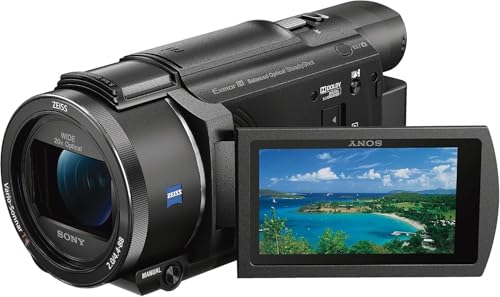

Best Low-Light Video Cameras
Most video is not shot under studio lights. Weddings run into the evening, school concerts happen in dim auditoriums, interviews get recorded in living rooms, and wildlife or event work often continues long after sunset. In those conditions, the difference between usable footage and a noisy, smeared mess comes down to how a camcorder gathers light: the size and design of its sensor, how fast its lens opens, and how honestly the manufacturer rates its minimum illumination in lux.
This guide is about dedicated video cameras — camcorders built to record for long stretches in dim conditions — rather than hybrid stills cameras. Every pick below uses a back-illuminated sensor, a fast zoom lens, or a rated low-lux mode that lets it keep working when the lights go down. We explain the key specifications behind each model, who each one suits, and the trade-offs to expect before you buy.
Quick Picks
- Sony FDR-AX700 — 1.0-type stacked sensor and built-in ND filters for serious low-light event work
- Sony FDR-AX53 — Balanced Optical SteadyShot and infrared NightShot for handheld shooting in the dark
- Canon VIXIA HF G70 — 4K camcorder with dual card slots and a dedicated low-light recording program
- Panasonic HC-VX981K — fast f/1.8 Leica lens and HDR Movie mode in a compact body
Sony FDR-AX700 (ASIN: B075NZYZDG)
See the Sony FDR-AX700 on Amazon
The FDR-AX700 is built around a 1.0-type stacked Exmor RS CMOS sensor with approximately 14.2 effective megapixels for video — a far larger imaging area than the 1/2.3-inch and 1/2.5-inch chips in most consumer camcorders. Bigger photosites capture more light per pixel, which is exactly what you want when a reception hall drops to candlelight levels. Sony rates the camera’s minimum illumination at 1.7 lux in Low Lux mode, and the sensor’s Fast Hybrid autofocus system uses 273 phase-detection points that keep working as light levels fall, so focus hunting in dim scenes is kept to a minimum.
The ZEISS Vario-Sonnar T* lens offers 12x optical zoom (29.0–348mm equivalent) with a maximum aperture of f/2.8 at the wide end, and the camera records 4K UHD in XAVC S, including HDR recording with Hybrid Log-Gamma (HLG) plus S-Log2 and S-Log3 profiles for graded workflows. Three built-in ND filter settings (1/4, 1/16 and 1/64) let you keep the aperture open in mixed lighting without overexposing highlights, dual SD card slots support relay or simultaneous recording, and Super Slow Motion capture reaches up to 960fps in short bursts.
Highlights:
– 1.0-type stacked Exmor RS sensor — the largest in this roundup — for cleaner gain in dim venues
– Rated to 1.7 lux in Low Lux mode, with 273-point phase-detection AF that tracks subjects in poor light
– Built-in ND filters, dual SD slots, S-Log profiles and 4K HDR (HLG) recording
Considerations:
– The lens opens to f/2.8 rather than f/1.8–f/2.0, so it leans on its big sensor rather than glass speed
– No infrared night mode — it is a low-light camera, not a zero-light camera
– Larger and more control-heavy than the palm-sized models below
Sony FDR-AX53 (ASIN: B01950TCEU)
See the Sony FDR-AX53 on Amazon
The FDR-AX53 uses a 1/2.5-type back-illuminated Exmor R CMOS sensor with 8.29 effective megapixels for video, paired with a ZEISS Vario-Sonnar T* 20x optical zoom lens (26.8–536mm equivalent) that opens to f/2.0 at the wide end. Sony’s published ratings put minimum illumination at 6 lux in standard mode and 3 lux in Low Lux mode — and for complete darkness, the NightShot function switches to infrared illumination and records at 0 lux, something none of the other picks here can do. It records 4K XAVC S at up to 100Mbps and can capture 120fps slow motion in HD.
What makes the AX53 especially practical in dim rooms is its Balanced Optical SteadyShot system, which floats the entire lens-and-sensor block to counteract shake. Low light forces slower shutter speeds, and slower shutter speeds punish handheld footage, so effective stabilization matters as much as sensor sensitivity when you are walking through a dark venue. A manual ring, mic input and headphone jack round out a package aimed at enthusiasts who shoot long events handheld.
Highlights:
– NightShot infrared mode records in total darkness (0 lux); Low Lux mode is rated to 3 lux
– Balanced Optical SteadyShot keeps handheld footage steady at the slow shutter speeds dim scenes demand
– Fast f/2.0 wide end and 20x optical zoom cover a whole event from one position
Considerations:
– The 1/2.5-type sensor is much smaller than the AX700’s 1.0-type chip, so high-gain noise appears sooner
– NightShot footage is monochrome infrared video, not natural color
– An older model — check the listing carefully for condition and included accessories
Canon VIXIA HF G70 (ASIN: B0BCLWJMZ1)
See the Canon VIXIA HF G70 on Amazon
The VIXIA HF G70 pairs a 1/2.3-inch 4K CMOS sensor (8.29 effective megapixels) with Canon’s DIGIC DV 6 processor and a 20x optical zoom lens covering 29.3–601mm equivalent. For dim work, Canon includes a dedicated Low Light recording program that slows the shutter and manages gain for poorly lit scenes, alongside an infrared mode for recording in darkness. The Hybrid AF system combines contrast and phase detection methods to hold focus on moving subjects, which is where many small-sensor camcorders struggle once the lights drop.
The G70 records 4K UHD MP4 at up to 150Mbps and Full HD at up to 60p, writes to dual SD card slots for backup or relay recording, and can output a clean signal over HDMI or act as a USB webcam for live streaming — useful for evening services, talks and performances that are streamed from dim halls. An 8-blade circular aperture keeps out-of-focus highlights round when you do have practical lights in frame.
Highlights:
– Dedicated Low Light recording program plus an infrared mode for dark venues
– Dual SD card slots and 4K recording at up to 150Mbps for long, uninterrupted events
– Hybrid AF and USB live-streaming output suit services, talks and performances
Considerations:
– The 1/2.3-inch sensor is the joint-smallest here, so it relies on its recording programs more than raw sensitivity
– Canon lists the model as discontinued on its own store, so remaining stock is mostly marketplace sellers — verify the offer before ordering
– No built-in ND filters, unlike the AX700
Panasonic HC-VX981K (ASIN: B01A60SYRE)
See the Panasonic HC-VX981K on Amazon
The HC-VX981K combines a 1/2.3-inch back-illuminated MOS sensor (18.91 total megapixels) with a Leica Dicomar 20x optical zoom lens that opens to a bright f/1.8 at the wide end (4.08–81.6mm). That fast aperture is the VX981K’s main low-light weapon: at f/1.8 the lens passes roughly twice the light of an f/2.8 lens, which lets the camera hold lower gain — and therefore less noise — in living rooms, restaurants and evening events. Panasonic rates the camcorder down to 1.5 lux in its Low Light scene mode, and a night mode extends shooting into near-darkness.
It records 4K UHD video, offers an HDR Movie mode that protects highlights in high-contrast scenes such as stage performances with spotlights, and uses a 5-Axis Hybrid O.I.S. system to steady handheld shots. Wi-Fi connectivity supports Panasonic’s Wireless Multi Camera feature, which can fold a smartphone’s view into the recording as a picture-in-picture sub-window — handy for capturing a reaction shot during an evening event without a second camcorder.
Highlights:
– f/1.8 Leica Dicomar lens — the fastest glass in this roundup — keeps gain and noise down indoors
– Low Light scene mode rated to 1.5 lux, plus HDR Movie for contrasty stage lighting
– Compact, light body with 5-Axis Hybrid O.I.S. for handheld evening shooting
Considerations:
– Small 1/2.3-inch sensor: fine at f/1.8 in moderate dimness, but deep-dark scenes will still show noise
– No electronic viewfinder, so framing in bright surroundings relies on the LCD
– No infrared illumination of its own for true zero-light recording
How to Choose
Start with the darkest scene you realistically shoot. If you film in dim but visible light — reception halls, theaters, evening services — prioritize sensor size and lens aperture: the AX700’s 1.0-type sensor holds up best as gain rises, while the VX981K’s f/1.8 lens helps its smaller sensor punch above its weight. If you genuinely need to record in total darkness, only the AX53’s infrared NightShot (and the G70’s infrared mode) work at 0 lux, and both produce a different look from normal color footage.
Next, think about how you shoot. Handheld shooters in low light should weigh stabilization heavily, because slow shutter speeds exaggerate every tremor — the AX53’s Balanced Optical SteadyShot is the strongest tool here for moving shots. Tripod-based event work benefits more from dual card slots and long-record reliability, which the AX700 and G70 both provide. Finally, match the camera to your delivery format: all four record 4K, but the AX700 adds HDR and log profiles for grading, while the G70 is the easiest to fold into a live-streamed setup.
Key Specifications Explained
Sensor size and back-illumination. A 1.0-type sensor has roughly four times the area of a 1/2.3-inch sensor, so each pixel can be larger and gather more light. Back-illuminated (BSI) designs move wiring behind the photodiodes, improving sensitivity further. This is the single biggest factor in clean low-light video.
Minimum illumination (lux). This is the least light in which the camera can produce a usable image under stated conditions. Lower is better: 1.7 lux is roughly a dimly lit room. Be aware that ratings are often measured in a special Low Lux mode with a slow shutter, so compare the mode as well as the number.
Maximum aperture. The f-number at the wide end of the zoom (f/1.8, f/2.0, f/2.8) tells you how much light the lens passes. Each full stop doubles or halves the light. Note that most camcorder zooms lose aperture as you zoom in, so telephoto shots in the dark are always harder.
Gain and noise. When light runs out, the camera amplifies the signal (gain/ISO). Amplification raises noise with it. Bigger sensors and faster lenses let you use less gain for the same exposure, which is why they dominate this category.
Stabilization. Optical stabilization counteracts hand shake. In low light, where shutter speeds drop, stabilization is the difference between watchable footage and a blur, especially when walking or zoomed in.
Setup and Use Tips
- Lock in a frame rate and shutter. For a natural look, shoot 24p or 30p and keep the shutter near double the frame rate; dropping to a 1/30 or 1/25 shutter buys extra brightness when motion allows.
- Cap your gain. Most of these camcorders let you set a gain/ISO limit. A slightly dark image with controlled noise usually grades better than a bright image full of grain.
- Use manual focus in very dim scenes. Autofocus hunts when contrast disappears. Focus on a lit edge or face, then switch to manual to hold it.
- Add a small light before adding gain. A compact on-camera LED at low power lifts faces without flattening the scene, and it costs far less image quality than three extra stops of gain.
- Mind white balance. Mixed tungsten, LED and window light confuses auto white balance in dim rooms. Set it manually or use a preset so skin tones stay consistent across a long event.
- Carry spare batteries and fast cards. Gain, stabilization and 4K recording drain batteries quickly, and 100–150Mbps recording needs UHS-I U3-rated SD cards.
Common Mistakes to Avoid
- Trusting the lux number alone. A 0-lux claim refers to infrared mode with monochrome footage, not normal color video. Check which mode each rating belongs to.
- Zooming to the long end in the dark. Aperture narrows as you zoom, so a lens that is f/1.8 wide may be f/3.6 or slower at full telephoto. Move closer instead.
- Leaving everything on auto. Auto exposure will ride the gain up and down visibly during an event. Lock exposure once the scene is set.
- Ignoring audio. Dim venues are often quiet venues. A camcorder with a mic input and headphone monitoring — like the Sonys here — saves recordings that video settings cannot.
- Buying on sensor size alone. A big sensor behind a slow lens can underperform a small sensor behind f/1.8 glass in moderate dimness. Judge the combination, not one spec.
FAQ
What lux rating do I need for indoor events?
For typical indoor venues with house lighting, a camera rated around 3 lux or lower in its low-light mode will cope. For very dark settings such as candlelit receptions, look for ratings near 1.5–1.7 lux or an infrared mode, and expect to manage gain carefully either way.
Is a bigger sensor always better for low-light video?
Generally yes — larger sensors gather more light per pixel and stay cleaner at high gain. But lens aperture matters too: a smaller sensor behind an f/1.8 lens can outperform a larger sensor behind a slow lens in moderate dimness. The AX700 wins on sensor size; the VX981K competes on lens speed.
Can these camcorders record in complete darkness?
Only with infrared. The Sony FDR-AX53’s NightShot mode illuminates the scene with infrared light and records at 0 lux in monochrome, and the Canon G70 offers an infrared mode as well. The AX700 and VX981K need at least some ambient light.
Why does low-light footage look shaky even on a tripod-free shoot with stabilization on?
Low light forces slower shutter speeds, which smear motion and exaggerate shake. Stabilization helps, but bracing the camera, using a monopod, and avoiding long zoom ranges in dark scenes help more.
Should I shoot 4K or 1080p in low light?
4K gives you reframing room and downsamples to a cleaner 1080p image. Some cameras also offer high-frame-rate HD modes that gather light differently. If your delivery is HD, recording 4K and downscaling in editing is usually the safer route for noise control.
Final Verdict
For the cleanest low-light video from a dedicated camcorder, the Sony FDR-AX700 is the standout: its 1.0-type stacked sensor, 1.7-lux Low Lux rating, ND filters and log profiles make it the most capable tool here for dim venues and serious event work. If you shoot handheld — or truly need to record in darkness — the Sony FDR-AX53 answers with Balanced Optical SteadyShot and infrared NightShot. The Canon VIXIA HF G70 suits streamers and event shooters who want dual slots and a low-light program in a current 4K body, while the Panasonic HC-VX981K is the compact, fast-lens option for indoor family and travel video after dark. Match the pick to your darkest typical scene, and any of the four will outperform a phone or a general-purpose camera once the lights go down.
Related guides
More from Amazon
Programs that pair well with the guide above. Offers and eligibility are set by Amazon and may change.
Free shipping on eligible items, Prime Video and more. Eligible new members can start with a free trial.
Start a Prime free trialAudiobooks and podcasts to listen to on the go. Eligible new members can start with a free trial.
Try Audible freeAd-free music streaming. Eligible new subscribers can start with a free trial.
Try Music Unlimited freeA free business account with business pricing and bulk-buying tools for work, shop or home office.
Create a business accountAs an Amazon Associate we earn from qualifying purchases.










Write Your Review
No reviews yet. Be the first to share your experience!