
Our Short List of 3

- Best for: First-time runners who want one proven, forgiving daily trainer for walk-run plans and steady miles.
- Version: Women’s
- Type: Neutral running shoe (per Amazon product name)
- Cushioning: Nitrogen-infused DNA LOFT v3, the maker’s named cushioning for this model
- Model family: 120407

- Best for: Beginners who want a simple Nike road shoe for short runs and gym-to-road use.
- Version: Women’s
- Use: Road running (per Amazon product name)
- Fit options: An Extra Wide variant exists on the same listing family
- Drop and weight: Not stated on the Amazon listing
- Best for: New runners who want a straightforward, supportive-feeling daily shoe for short to mid-length runs.
- Version: Women’s
- Cushioning: GEL, named in the model name
- Style family: 1012B681
- Drop and weight: Not stated on the Amazon listing
All 3 Picks at a Glance
| Product | Specs | Action |
|---|---|---|
| Brooks Women’s Ghost 16 Neutral Running Shoe |
| Check price on Amazon |
| Nike Women’s Revolution 8 Road Running Shoes |
| Check price on Amazon |
| ASICS Women’s Gel-Contend 9 Running Shoes |
| Check price on Amazon |
Key takeaways
- Five beginner-friendly women's running shoes with forgiving cushioning, simple fits and easy road manners for first miles and walk-run plans.
What's inside
As an Amazon Associate I earn from qualifying purchases. This post may contain affiliate links at no extra cost to you.
The first running shoe decision is not about speed. It is about picking a shoe comfortable enough that you keep lacing it up in week three, when the novelty has worn off. A firm, narrow or technical shoe can make short, easy miles feel like work, while a forgiving, well-cushioned trainer lets a walk-run plan feel manageable from the first outing. The real choice is how much softness, guidance and simplicity you want underfoot while your routine is still new.
This guide is for women starting from zero, runners returning after a long break, and gym regulars adding short road runs to a routine. Each pick was chosen from the name and specifications on its Amazon product page: the cushioning system in the model name, the road-running category, and the fit options the listing states. The five shoes cover different starting points, from a proven neutral daily trainer to simple value models, so you can match one to your own starting plan.
Quick Picks
As an Amazon Associate we earn from qualifying purchases.
| Product | Best for | Key spec from title |
|---|---|---|
| Brooks Women’s Ghost 16 Neutral Running Shoe | First walk-run plans and steady daily miles | Neutral shoe with DNA LOFT v3 cushioning |
| Nike Women’s Revolution 8 Road Running Shoes | Short runs and gym-to-road days | Road running design with an Extra Wide option |
| ASICS Women’s Gel-Contend 9 Running Shoes | Short to mid-length daily runs | GEL cushioning named in the model name |
| Saucony Women’s Cohesion 17 Sneaker | Building a routine with a simple purchase | Road Running category on the Amazon listing |
| Under Armour Women’s Charged Assert 10 | Mixing short runs with gym sessions | Charged cushioning named in the model name |
How to Choose
Cushioning that forgives new-runner miles
Beginners land harder and less consistently than experienced runners, so cushioning does more work in your first months. Look for a shoe whose listing names a cushioning system and describes a soft or forgiving ride rather than a firm, responsive one. Thick foam under the heel matters most on walk-run plans, where walking breaks change how your foot strikes the ground. Avoid racing-style shoes with stiff plates at this stage; they are built for speed you are not chasing yet, and their firmer feel can make easy miles discouraging.
A fit you do not have to think about
A beginner shoe should disappear on your foot. Check the listing for the width options it actually sells, because the same model often comes in standard and wide versions under different product codes. If your gym shoes pinch across the toes, start with a model that names a wide option rather than sizing up, which adds length without adding width where you need it. Look for a fit described as roomy or easy rather than snug or locked-in, and leave a thumb of space in front of your longest toe for swelling on warm runs.
Match the shoe to your actual starting plan
Be honest about the next eight weeks. If your plan is three walk-run sessions a week on pavement, one versatile daily trainer covers everything, and durability matters more than a low weight. If most of your exercise happens in the gym with short road runs added, a simpler, sturdier shoe handles both without feeling clumsy on a treadmill. Beginners who already walk long distances can start with a more cushioned model, since their legs are used to time on feet. Buy for the routine you have, not the marathon you might enter next year.
Check the exact variant before you order
Running shoe listings bundle many sizes, colors and widths under one page, and each combination can carry its own product code. Before ordering, confirm that the size and width selected on the page match the version you read about, especially when a model also sells in wide, weatherized or previous-year versions. Check the product name at the top of the listing after selecting your size, since the name sometimes changes with the variant. This one-minute check avoids the most common beginner mistake: training in the wrong version of the right shoe.
The 5 Best Options
Brooks Women’s Ghost 16 Neutral Running Shoe
- Best for: First-time runners who want one proven, forgiving daily trainer for walk-run plans and steady miles.
- Version: Women’s
- Type: Neutral running shoe (per Amazon product name)
- Cushioning: Nitrogen-infused DNA LOFT v3, the maker’s named cushioning for this model
- Model family: 120407
First-time runners who want one proven, forgiving daily trainer for walk-run plans and steady miles.
The Ghost 16 also sells in Wide and Weatherized versions under other codes — confirm the standard version is the one selected.
If you want one shoe that simply works while you learn, the Ghost 16 is the safest starting point here. It is a neutral daily trainer, so it does not push your foot in any direction, and its nitrogen-infused DNA LOFT v3 cushioning is the maker’s named system for a soft, forgiving ride. That suits walk-run plans and steady easy miles, where comfort decides whether you go out again tomorrow. The fit is uncomplicated, the design is a proven daily-trainer formula, and nothing about it asks a new runner to adapt to the shoe.
Nike Women’s Revolution 8 Road Running Shoes
- Best for: Beginners who want a simple Nike road shoe for short runs and gym-to-road use.
- Version: Women’s
- Use: Road running (per Amazon product name)
- Fit options: An Extra Wide variant exists on the same listing family
- Drop and weight: Not stated on the Amazon listing
Beginners who want a simple Nike road shoe for short runs and gym-to-road use.
Codes on this listing are size- and color-specific — confirm the exact variant selected on the page before ordering.
The Revolution 8 is the straightforward Nike option for beginners who run short distances and want a familiar name without a complicated shoe. It is a road running model with a simple design that handles easy miles, treadmill sessions and gym-to-road days without fuss. The listing family also includes an Extra Wide variant, which helps beginners whose gym shoes feel tight across the forefoot. Nothing here is built for racing; the appeal is a light, easy shoe you can put on for a twenty-minute run without thinking about your gear.
ASICS Women’s Gel-Contend 9 Running Shoes
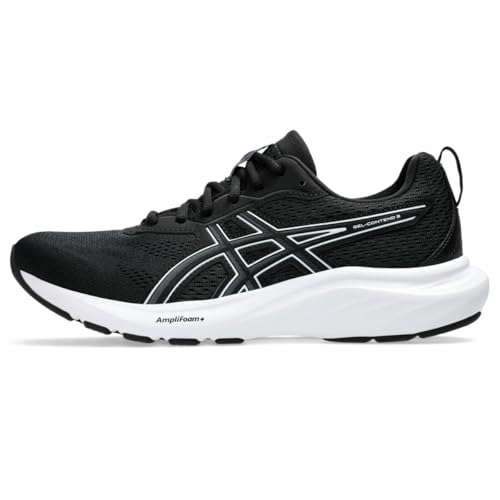
- Best for: New runners who want a straightforward, supportive-feeling daily shoe for short to mid-length runs.
- Version: Women’s
- Cushioning: GEL, named in the model name
- Style family: 1012B681
- Drop and weight: Not stated on the Amazon listing
New runners who want a straightforward, supportive-feeling daily shoe for short to mid-length runs.
Many Contend 9 color and size variant codes exist — verify the selected variant at checkout.
The Gel-Contend 9 is ASICS’ entry point into running, and it suits new runners who want a supportive-feeling shoe for short to mid-length outings. GEL cushioning is named in the model itself, and the design keeps things simple: a straightforward fit, a durable build and none of the stiff, technical feel of the brand’s faster shoes. For a beginner building from two runs a week toward longer weekend miles, it offers a steady, predictable ride at the uncomplicated end of the ASICS range, with a style family that has been around for several generations.
Saucony Women’s Cohesion 17 Sneaker
The Cohesion 17 is Saucony’s entry road-running model, and it is the pick for beginners who want a proper running shoe while keeping the purchase simple. Amazon titles it a sneaker, but the listing places it in Road Running, and that is how it is built: a cushioned trainer for building a routine on pavement. The ride is forgiving rather than springy, which suits new runners whose form is still settling. If your plan is three short runs a week and a pair of shoes that only has one job, this is the uncomplicated choice.
Specs
- Version: Women’s
- Category: Road Running (per Amazon category line)
- Model role: Saucony’s entry road-running model, titled “Sneaker” on Amazon
- Drop and weight: Not stated on the Amazon listing
Best for: Beginners who want a proper road-running shoe for building a routine while keeping the purchase simple.
Watch out for: Amazon titles this model “Sneaker” — check the width option on the listing, since a Wide variant exists.
ASIN: B0D31WXLN8
Under Armour Women’s Charged Assert 10
The Charged Assert 10 suits beginners whose week mixes short runs with gym sessions and who want one durable shoe for both. Charged cushioning is named in the model, and the shoe is built as an easy-fitting road trainer that also holds up to treadmill miles and floor work. The fit is uncomplicated, the build feels sturdy rather than delicate, and the style family has been a steady entry point in Under Armour’s range. For a new runner who trains indoors as much as outdoors, it removes the need for two separate pairs.
Specs
- Version: Women’s
- Category: Road Running
- Cushioning: Charged, named in the model name
- Style: 3026179-402
- Fit options: A “D” (wide) variant line exists under other codes
- Drop and weight: Not stated on the Amazon listing for this variant
Best for: Beginners who mix short runs with gym sessions and want one durable, easy-fitting shoe.
Watch out for: Standard and “D” (wide) listings look nearly identical — confirm which width the selected code represents.
ASIN: B0CN1GTV3J
Which One Fits Your Situation
You are starting a walk-run plan from zero
Start with the Brooks Ghost 16. Its neutral, forgiving cushioning suits the stop-start rhythm of a walk-run plan, and the uncomplicated fit means one less thing to manage while you build the habit. If you prefer a firmer, more supportive feel underfoot, the ASICS Gel-Contend 9 is the alternative in this list, especially for shorter outings on pavement near home.
You train mostly in the gym and run a little
Choose the Under Armour Charged Assert 10 if your week is mostly gym sessions with a couple of short runs. It is built to handle treadmill miles and floor work as well as pavement, so one pair covers the whole routine. The Nike Revolution 8 also works for this pattern if you prefer a lighter shoe and your runs stay short and easy.
You want the simplest, lowest-fuss purchase
Pick the Saucony Cohesion 17 if you want a genuine road-running shoe without a complicated decision. It does one job — cushioned, forgiving miles while you build a routine — and the listing’s Road Running category confirms it is a runner, not a fashion sneaker. Order your normal size, check the width option, and spend your energy on the plan instead of the gear.
Your feet feel squeezed in regular gym shoes
Look first at the models whose listings name a wide option: the Nike Revolution 8 family includes an Extra Wide variant, and the Under Armour Charged Assert 10 has a separate D width line. Choose the wide version of a shoe you like rather than a longer size of a standard shoe, because width, not length, is what relieves pressure across the forefoot.
Common Mistakes
- Buying for speed instead of comfort. Plated racing shoes and firm tempo trainers are built for fast days you are not doing yet. A forgiving daily trainer you enjoy wearing beats a faster shoe that makes easy miles feel like a chore.
- Sizing up to get width. A longer shoe adds space at the toes but not across the forefoot, and your foot slides forward on downhills. If standard fits pinch, choose the model’s named wide version instead.
- Ordering the wrong variant. The same model often sells in standard, wide and weatherized versions under different codes. Check the product name again after selecting your size and width, before you pay.
- Expecting a shoe to fix pain. Cushioning and support features can make running feel more comfortable, but no shoe treats an injury or a condition. Pain that persists, sharpens or changes how you move is a reason to see a clinician or podiatrist, not to buy another pair.
- Running hard every day at the start. Beginners improve on easy, repeatable miles. Alternate run days with rest or walking, keep the pace conversational, and let the shoe do its job while your legs adapt gradually.
Frequently Asked Questions
How much cushioning does a beginner actually need?
Enough that easy miles feel comfortable from the first week. You do not need the thickest shoe available; a mid-to-high cushion daily trainer like the Ghost 16 or Cohesion 17 suits most starters. If you are heavier or mostly on concrete, lean toward the more cushioned end of this list. Comfort you notice on the first run matters more than any specification number.
Should beginners choose a neutral or a stability shoe?
Most beginners do well in a neutral shoe, which lets the foot move naturally while cushioning does the work. A stability model adds guidance features that some runners prefer if their ankles roll inward noticeably or their gym shoes wear unevenly. Without a gait assessment, start neutral, keep the receipt window in mind, and let comfort over several runs — not labels — make the call.
How long should a first pair of running shoes last?
A daily trainer used for three or four short runs a week typically serves a beginner for many months before the foam feels flat and the ride loses its softness. Rotate walking in a different pair if you can, keep the shoes for running only, and replace them when easy miles start feeling harsh or new aches appear after runs that used to feel fine.
Can running shoes fix sore knees or feet?
No shoe can guarantee that. Cushioning and support features can make miles feel more comfortable, and a good fit removes common sources of rubbing and pressure, but soreness has many causes, including doing too much too soon. Build distance gradually, and if pain persists or worsens, see a clinician or podiatrist rather than shopping for another pair.
Related guides
More from Amazon
Programs that pair well with the guide above. Offers and eligibility are set by Amazon and may change.
Free shipping on eligible items, Prime Video and more. Eligible new members can start with a free trial.
Start a Prime free trialAudiobooks and podcasts to listen to on the go. Eligible new members can start with a free trial.
Try Audible freeAd-free music streaming. Eligible new subscribers can start with a free trial.
Try Music Unlimited freeA free business account with business pricing and bulk-buying tools for work, shop or home office.
Create a business accountAs an Amazon Associate we earn from qualifying purchases.



Write Your Review
No reviews yet. Be the first to share your experience!