
Key takeaways
- Looking for the best selling DSLR cameras? Compare popular Canon and Nikon DSLRs for beginners, enthusiasts, and professionals, with specs and buying guidance.
What's inside
As an Amazon Associate I earn from qualifying purchases. This post may contain affiliate links at no extra cost to you.
The best selling DSLR cameras are the models photographers keep choosing year after year. In this guide to the best selling DSLR cameras, you will find proven Canon and Nikon bodies and kits that remain popular because they are easy to learn, comfortable to hold, and compatible with a very large range of lenses. If you want a quick answer, start with the Canon EOS Rebel T7 with the 18-55mm lens for learning and everyday photography, choose the Nikon D7500 for faster action and 4K video, and look at the Nikon D850 when maximum detail matters most.


A DSLR still makes sense for many photographers. The optical viewfinder shows the scene directly through the lens, with no lag and no screen glare in bright light. Battery life is generous, and the lens choices are extensive, because Canon EF and EF-S lenses and Nikon F-mount lenses have been produced in huge numbers for many years. Every product in this guide is a DSLR camera, either as a body only or as a kit with a lens included. No mirrorless camera, point-and-shoot camera, or lens sold on its own is included.
Quick Picks
Our Short List of 3
All 5 Picks at a Glance
| Product | Specs | Action |
|---|---|---|
| Canon EOS Rebel T7 with 18-55mm Lens (B07C2Z21X5) | Check price on Amazon | |
| Nikon D7500 with 18-140mm Lens (B06Y5RTN1T) | Check price on Amazon | |
 Nikon D850 Body (B07524LHMT) | Check price on Amazon | |
 Nikon D780 with 24-120mm Lens (B083K2XW88) | Check price on Amazon | |
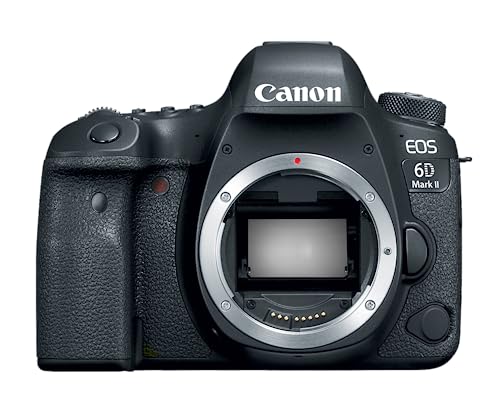 Canon EOS 6D Mark II Body (B072MZCJKN) | Check price on Amazon |
How to Choose
Start With Sensor Size
The Canon EOS Rebel T7 and the Nikon D7500 use APS-C size sensors, often called DX in Nikon language. Those sensors still deliver detailed images for prints, online sharing, and everyday use, and they make the camera and lens combination lighter and more compact. The Nikon D850, Nikon D780, and Canon EOS 6D Mark II use full-frame sensors, the same size as a frame of 35mm film. A full-frame sensor gathers more light, which helps in dim rooms, at dusk, and indoors, and it gives a shallower depth of field for portraits with soft backgrounds. For low-light landscapes, weddings, or portraits, consider full-frame. For lighter travel and learning, APS-C is often more practical.
Match the Camera to Your Experience Level
The Canon EOS Rebel T7 is built for people who are learning. Its controls are clear, its menu includes helpful guidance, and its kit lens covers a useful range from wide-angle to short telephoto. You can start in automatic mode, then move to semi-automatic and manual modes as your confidence grows. The Nikon D7500 sits in the middle, with more direct controls, a faster burst rate, and a more advanced autofocus system, so it suits a photographer who already understands exposure and wants to photograph sports, wildlife, or fast-moving children and pets. The Nikon D850, Nikon D780, and Canon EOS 6D Mark II are aimed at experienced photographers who want full control, higher resolution, and stronger low-light performance.
Check Autofocus and Burst Speed
Autofocus matters most when your subject moves. The Canon EOS Rebel T7 has a 9-point autofocus system, enough for still subjects, portraits, and landscapes, but the simplest system in this guide. The Nikon D7500 has a 51-point system, which tracks moving subjects more reliably. The Canon EOS 6D Mark II has a 45-point system with Dual Pixel autofocus, helpful for live view and video. The Nikon D780 also uses a 51-point system for viewfinder shooting, plus a wider live-view system. The Nikon D850 has a 153-point system, the most advanced here, which is a major reason it remains popular for wildlife and action photography. For burst speed, the Nikon D7500 can shoot at up to 8 frames per second, and the Nikon D850 at up to 7 frames per second at full resolution.
Decide Between a Kit Lens and a Body Only
The Canon EOS Rebel T7 with the 18-55mm lens and the Nikon D7500 with the 18-140mm lens are ready to use out of the box. The 18-55mm lens is a good general-purpose starting point, while the 18-140mm lens covers a wider range, from wide-angle landscapes to moderate telephoto portraits, without changing lenses. The Nikon D850 and the Canon EOS 6D Mark II in this guide are body-only models, so you need to add a lens before you can take a photograph. Body-only is the right choice if you already own compatible lenses or want to choose a specific lens. The Nikon D780 in this guide is a kit with the 24-120mm lens, a versatile full-frame zoom.
Consider Video Needs
All five cameras record video, but their features differ. The Canon EOS Rebel T7 and the Canon EOS 6D Mark II record Full HD video, enough for family videos, online content, and simple clips. The Nikon D7500, Nikon D850, and Nikon D780 record 4K UHD video, which gives more detail and more flexibility when you crop or edit footage. The Canon EOS 6D Mark II has a vari-angle touchscreen, useful for recording yourself or shooting from low angles. The Nikon D7500, Nikon D850, and Nikon D780 have tilting touchscreens. The Canon EOS Rebel T7 has a fixed screen, which is simpler but less flexible for video work.
Think About Lenses and Long-Term Use
A DSLR is a system, not just a body. Canon EF and EF-S lenses fit the Canon models here, while Nikon F-mount lenses fit the Nikon models here. Both systems have a large second-hand market and a wide range of new lenses, from affordable kit zooms to professional primes and telephoto lenses. Battery life is another practical advantage: the models here last for hundreds of shots on a single charge in normal stills use. Also check memory card type, because the Nikon D850 uses XQD and SD cards, while the other models use SD cards. When you buy, confirm whether the listing is for a body only or a kit, which lens is included, the condition, and what is in the box.
The Best Best Selling DSLR Cameras Reviewed
Canon EOS Rebel T7 with 18-55mm Lens (B07C2Z21X5)
The Canon EOS Rebel T7 with the 18-55mm lens is the most approachable camera in this guide, and the model most often named as the top-selling DSLR on Amazon. It pairs a 24.1 megapixel APS-C CMOS sensor with the DIGIC 4+ image processor, built-in Wi-Fi, and Full HD video recording. The 18-55mm kit lens covers wide-angle views for landscapes and group photographs, and short telephoto views for portraits, without needing a second lens on day one. This camera suits a beginner learning photography with a real viewfinder, a new photographer moving up from a phone, a student, or a family photographer who wants better image quality and more control than a phone provides.
Who should skip it: a photographer who needs fast action tracking, 4K video, a tilting or vari-angle screen, or a weather-sealed body for harsh conditions should look at the Nikon D7500 or a full-frame model instead. The 9-point autofocus system and the fixed screen are the main limits here, and they are the trade-offs that keep this camera simple and easy to use.
Nikon D7500 with 18-140mm Lens (B06Y5RTN1T)
The Nikon D7500 with the 18-140mm lens is the enthusiast pick in this guide. It uses a 20.9 megapixel DX-format CMOS sensor, the EXPEED 5 image processor, a 51-point autofocus system, a burst rate of up to 8 frames per second, 4K UHD video, and a 3.2-inch tilting touchscreen. The 18-140mm VR lens is a versatile zoom that covers wide-angle to telephoto in a single lens, which makes this kit a strong choice for travel, where changing lenses is not always convenient. This camera suits an enthusiast who photographs sports, wildlife, events, or active family life, and who wants a faster camera than an entry-level model without moving to full-frame. The weather-sealed body adds confidence outdoors.
Who should skip it: a photographer who wants the highest possible resolution for large prints, or the shallowest depth of field for portraits, should consider the Nikon D850 or the Nikon D780 instead. A complete beginner who wants the simplest possible camera may also prefer the Canon EOS Rebel T7, which has fewer controls to learn at the start.
Nikon D850 Body (B07524LHMT)
The Nikon D850 body is the detail and resolution leader in this guide. It uses a 45.7 megapixel full-frame sensor, the EXPEED 5 image processor, a 153-point autofocus system, a burst rate of up to 7 frames per second, 4K UHD video, and a 3.2-inch tilting touchscreen. This is a body-only listing, so a lens is not included, and you will need an F-mount lens to use it. This camera suits a landscape photographer who wants large, detailed prints, a studio photographer who wants flexibility in editing and cropping, and a wildlife photographer who wants to crop into a distant subject without losing detail.
Who should skip it: a beginner, a casual photographer, or anyone who wants a light, ready-to-use kit should not start here. The file sizes are large, the body is heavier than the entry-level models, and the total cost rises once you add a suitable lens, memory cards, and storage. If you do not need 45.7 megapixels, the Nikon D780 or the Canon EOS 6D Mark II will be easier to live with day to day.
Nikon D780 with 24-120mm Lens (B083K2XW88)
The Nikon D780 with the 24-120mm lens is the balanced full-frame choice in this guide. It pairs a 24.5 megapixel full-frame sensor with the EXPEED 6 image processor, a 51-point autofocus system for viewfinder shooting, a wide live-view autofocus system, 4K UHD video, and a 3.2-inch tilting touchscreen. The 24-120mm f/4G ED VR lens is a versatile full-frame zoom that covers wide-angle landscapes, standard views, and short telephoto portraits in one lens. This camera suits a wedding or event photographer, a hybrid photographer who shoots stills and video in equal measure, and an enthusiast ready to move to full-frame without needing the very high resolution of the D850.
Who should skip it: a photographer who wants the highest resolution available, or the fastest burst rate for wildlife, should look at the Nikon D850 instead. A beginner who wants a lighter and simpler camera should look at the Canon EOS Rebel T7 or the Nikon D7500, which are easier to carry and easier to learn.
Canon EOS 6D Mark II Body (B072MZCJKN)
The Canon EOS 6D Mark II body is the full-frame Canon pick in this guide. It uses a 26.2 megapixel full-frame CMOS sensor, the DIGIC 7 image processor, a 45-point autofocus system with Dual Pixel autofocus, built-in Wi-Fi, GPS, and a 3-inch vari-angle touchscreen. It records Full HD video. This is a body-only listing, so a lens is not included, and you will need a Canon EF lens to use it. This camera suits a Canon photographer who already owns EF lenses and wants to move to full-frame, a portrait photographer who wants soft backgrounds and strong low-light performance, and a travel photographer who wants a lighter full-frame body.
Who should skip it: a photographer who needs 4K video should choose the Nikon D7500, Nikon D850, or Nikon D780 instead, because this Canon model records Full HD video only. A beginner who wants a ready-to-use kit with a lens included should start with the Canon EOS Rebel T7, which is simpler and comes with a lens in the box.
What to Check Before You Buy
Before you buy any of the best selling DSLR cameras in this guide, check the listing type first. Confirm whether it is a body only, a kit with one lens, or a kit with two lenses, and confirm the exact lens model. A body-only listing will not include a lens, and a kit listing with a different lens than you expected will change what you can photograph on day one. Next, check the condition and the seller information. Some listings are new, some are renewed, and some are bundles assembled by a third-party seller with extra accessories. Read the contents list carefully and confirm the warranty and return terms before you commit. Finally, think about your next lens: a fast 50mm prime for portraits, a telephoto zoom for wildlife or sports, or a wide-angle zoom for landscapes.
FAQ
Are DSLRs still worth buying now that mirrorless cameras are popular?
Yes, for many photographers. DSLRs in this guide have optical viewfinders, long battery life, comfortable handling, and access to large, mature lens systems. Mirrorless cameras have newer autofocus and video features in some cases, but a DSLR remains a capable and proven choice for stills photography, learning, travel, and events. The right choice depends on your subjects and whether you already own lenses for one system.
Which best-selling DSLR is best for a beginner?
The Canon EOS Rebel T7 with the 18-55mm lens is the clearest beginner choice in this guide. It is simple to learn, light to carry, and ready to use with its kit lens. It covers everyday photography, portraits, landscapes, and family events, and it lets you learn manual controls gradually. If you want a tilting screen and faster action tracking from the start, the Nikon D7500 is a stronger but more advanced alternative.
Which best-selling DSLR is best for wildlife and sports?
The Nikon D7500 and the Nikon D850 are the strongest choices here for wildlife and sports. The D7500 has a fast burst rate, a 51-point autofocus system, and a lighter DX body that gives extra reach with telephoto lenses. The D850 has a 153-point autofocus system and very high resolution, which helps when you need to crop into a distant subject. Both need a suitable telephoto lens to reach distant subjects.
Do I need a full-frame DSLR, or is APS-C enough?
APS-C is enough for most photographers, including beginners, travel photographers, and enthusiasts. It delivers detailed images, lighter kits, and lower total cost. Full-frame helps most in low light, for portraits with soft backgrounds, and for large prints. If you photograph weddings, events, or landscapes in dim light, full-frame is worth considering. If you are learning or travelling light, APS-C is often the better fit.
What is the difference between a body-only camera and a kit?
A body-only camera includes the camera body, battery, charger, strap, and body cap, but no lens. You need to add a compatible lens before you can take a photograph. A kit includes the body plus one or more lenses, so it is ready to use out of the box. Body-only is the right choice if you already own lenses or want to choose a specific lens. A kit is the right choice if you are starting from scratch and want a complete, ready-to-use camera.
Bottom Line
The best selling DSLR cameras remain popular because they solve real needs clearly. The Canon EOS Rebel T7 with the 18-55mm lens is the best starting point for a beginner. The Nikon D7500 with the 18-140mm lens is the best step up for an enthusiast who wants speed, 4K video, and a versatile zoom. The Nikon D850 is the best choice when detail matters most. The Nikon D780 with the 24-120mm lens is the best balanced full-frame choice for photo and video together. The Canon EOS 6D Mark II is the best way for an existing Canon lens owner to move to full-frame with a vari-angle screen and Dual Pixel autofocus. Choose by your experience level, your subjects, and your lens plans, not by popularity alone. Confirm the exact listing, the lens included, and the condition before you buy.
Disclosure: As an Amazon Associate, we may earn from qualifying purchases.
Related guides
More from Amazon
Programs that pair well with the guide above. Offers and eligibility are set by Amazon and may change.
Free shipping on eligible items, Prime Video and more. Eligible new members can start with a free trial.
Start a Prime free trialAudiobooks and podcasts to listen to on the go. Eligible new members can start with a free trial.
Try Audible freeAd-free music streaming. Eligible new subscribers can start with a free trial.
Try Music Unlimited freeA free business account with business pricing and bulk-buying tools for work, shop or home office.
Create a business accountAs an Amazon Associate we earn from qualifying purchases.










Write Your Review
No reviews yet. Be the first to share your experience!