
Our Short List of 3

- Best for: Aspiring filmmakers building a first cinema rig around E-mount lenses
- 26.1MP APS-C Super 35 back-illuminated CMOS sensor
- 4K recording up to 120p, 10-bit 4:2:2
- S-Log3 and S-Cinetone picture profiles
- Dual native ISO 800/2500 in S-Log3

- Best for: Event and documentary shooters who need unlimited recording and full-frame log
- 24.2MP full-frame sensor
- Phase Hybrid autofocus
- Unlimited 4:2:2 10-bit recording
- 5.8K ProRes recording

- Best for: Narrative filmmakers who grade in DaVinci Resolve and shoot on controlled sets
- Super 35 sensor, 6144 x 3456 resolution
- Blackmagic RAW and ProRes recording
- Built-in motorised ND filters
- Canon EF lens mount
All 5 Picks at a Glance
| Product | Specs | Action |
|---|---|---|
| Sony Cinema Line FX30 |
| Check price on Amazon |
| Panasonic LUMIX S5IIX |
| Check price on Amazon |
| Blackmagic Design Pocket Cinema Camera 6K Pro |
| Check price on Amazon |
 Fujifilm X-H2S |
| Check price on Amazon |
 Canon EOS R5 C |
| Check price on Amazon |
Key takeaways
- Five interchangeable-lens cameras chosen for cinematic video, compared on log profiles, RAW and 10-bit codecs, sensor size and recording limits.
What's inside
As an Amazon Associate I earn from qualifying purchases. This post may contain affiliate links at no extra cost to you.
Cinematic video is less about resolution bragging rights than about how much control a camera hands you in the grade: a flat log profile, a codec that holds up to colour work, and dynamic range that keeps skies and faces in the same shot. The hard decision is which trade-offs you accept to get that control, because a dedicated cinema body, a hybrid mirrorless camera and a RAW-focused pocket camera all reach a filmic image by very different routes, and each route changes what lenses, media and rigging you will need.
This guide is for short-film makers stepping up from a first camera, wedding and music-video shooters who grade their own footage, and small crews choosing a B-camera that can match a larger cinema rig. Every pick below is an interchangeable-lens camera, and each one was chosen from the recording formats, picture profiles and hardware listed on its Amazon product page, so the specifications quoted here are the ones the listing itself states.
Quick Picks
As an Amazon Associate we earn from qualifying purchases
| Product | Best for | Key spec from title |
|---|---|---|
| Sony Cinema Line FX30 | First dedicated cinema body on a lens budget | Super 35 sensor with 4K Super 35 recording |
| Panasonic LUMIX S5IIX | Long takes and livestreamed events | 5.8K ProRes and RAW over HDMI |
| Blackmagic Design Pocket Cinema Camera 6K Pro | Maximum grading control on narrative sets | 6K Super 35 Blackmagic RAW recording |
| Fujifilm X-H2S | Fast-moving subjects and high frame rates | 26.1MP stacked APS-C sensor |
| Canon EOS R5 C | Hybrid shooters who need stills and 8K video | 8K/60P internal RAW recording |
How to Choose
Log Profile and Colour Pipeline
The flat image that makes grading possible comes from the log profile, so check which one each camera records and whether your editing software handles it well. S-Log3, V-Log, F-Log2 and Canon Log 3 all need exposure discipline: log footage shot too dark turns noisy when lifted, while highlights clipped at capture never come back. Cameras that can load your own lookup tables, like the FX30, let you preview the graded look on set instead of guessing. If you deliver mostly ungraded footage to clients, a baked-in cinematic picture profile such as S-Cinetone may serve you better than log.
Codec, Bit Depth and RAW Options
Bit depth and chroma sampling decide how far you can push colour before the image breaks apart. Ten-bit 4:2:2 recording is the practical floor for serious grading, and every camera in this guide reaches it. RAW goes further by letting you change white balance and ISO after the shoot, but file sizes grow fast: Blackmagic RAW and ProRes RAW reward productions with fast drives and a planned backup routine. Compressed long-GOP codecs keep card costs down for weddings and events, while all-intra options suit green-screen and effects work where every frame must stand alone.
Sensor Size and Lens Mount
Sensor size shapes depth of field, low-light behaviour and which lenses you can use. Full-frame bodies like the S5IIX and EOS R5 C give shallower focus and strong high-ISO performance, while Super 35 and APS-C cameras such as the FX30, X-H2S and Pocket 6K Pro match the framing that cinema lenses were designed around. The mount matters just as much: Sony E, L-Mount, Fujifilm X, Canon RF and Canon EF each open a different lens catalogue, and adapting glass across systems can cost you autofocus or electronic aperture control.
Recording Limits, Media and Cooling
A cinematic camera that stops mid-take is useless on a real set, so read the recording-limit details before anything else. The S5IIX lists unlimited recording, and the EOS R5 C uses an internal cooling fan for continuous 8K work, while other bodies depend on ambient temperature and frame rate. Media is the hidden cost: CFexpress cards, CFast 2.0 cards and fast SD media all carry different prices per minute of footage, and RAW formats fill them quickly. Budget for cards, readers and on-set backup drives alongside the body itself.
The 5 Best Options
Sony Cinema Line FX30
- Best for: Aspiring filmmakers building a first cinema rig around E-mount lenses
- 26.1MP APS-C Super 35 back-illuminated CMOS sensor
- 4K recording up to 120p, 10-bit 4:2:2
- S-Log3 and S-Cinetone picture profiles
- Dual native ISO 800/2500 in S-Log3
Aspiring filmmakers building a first cinema rig around E-mount lenses
The listing is for the camera body, and the sensor is APS-C rather than full frame, so frame your lens choices around the Super 35 crop
The FX30 is Sony’s entry point into its Cinema Line, built for shooters who want a true cinema workflow without moving to full frame. Its Super 35 sensor pairs with S-Log3 for grading and S-Cinetone for fast turnarounds, and the E-mount opens a deep catalogue of affordable APS-C and full-frame lenses. Dual native ISO helps in dim interiors, and the body accepts user LUTs so directors can monitor a near-final look. It suits solo filmmakers, film students and B-camera roles on larger Sony sets.
Panasonic LUMIX S5IIX
- Best for: Event and documentary shooters who need unlimited recording and full-frame log
- 24.2MP full-frame sensor
- Phase Hybrid autofocus
- Unlimited 4:2:2 10-bit recording
- 5.8K ProRes recording
Event and documentary shooters who need unlimited recording and full-frame log
Confirm whether the listing you open is the body-only configuration or a lens kit, since both appear under this model name
The S5IIX is the video-leaning half of Panasonic’s full-frame S5II pair, aimed at shooters who record long and grade hard. Its listing highlights unlimited 4:2:2 10-bit recording, which removes the take-length anxiety that dogs event and documentary work, while 5.8K ProRes and RAW output over HDMI serve productions that finish in a colour suite. Phase Hybrid autofocus answers the old Lumix video criticism, and the all-black body with streaming support fits wedding, corporate and livestream crews who need one camera to cover stills, films and broadcasts.
Blackmagic Design Pocket Cinema Camera 6K Pro
- Best for: Narrative filmmakers who grade in DaVinci Resolve and shoot on controlled sets
- Super 35 sensor, 6144 x 3456 resolution
- Blackmagic RAW and ProRes recording
- Built-in motorised ND filters
- Canon EF lens mount
Narrative filmmakers who grade in DaVinci Resolve and shoot on controlled sets
There is no in-body stabilisation or continuous autofocus, and Blackmagic RAW files are large, so plan support gear and storage before buying
No camera here is more single-minded about the graded image than the Pocket 6K Pro. It records Blackmagic RAW internally, giving you post-production control over ISO, white balance and highlight recovery that compressed codecs cannot match, and its built-in motorised ND filters solve the bright-exterior exposure problem without a matte box. The Canon EF mount accepts a huge pool of stills and cinema glass. There is no continuous autofocus or in-body stabilisation, so it rewards deliberate, crewed shooting: tripods, focus pullers, narrative scenes and music videos where the set is controlled.
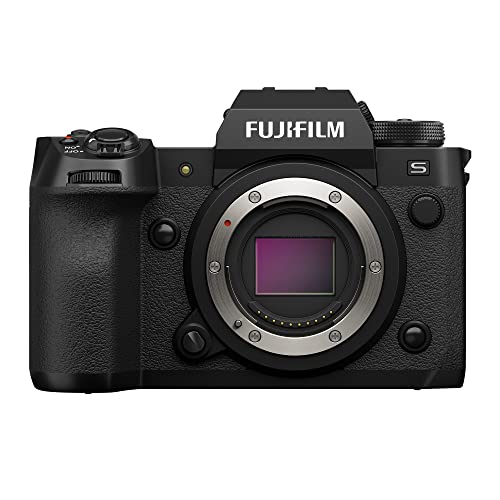
Fujifilm X-H2S
- Best for: Creators who need open-gate flexibility and high frame rates in one body
- 26.1MP APS-C X-Trans CMOS 5 HS stacked sensor
- 6.2K/30p open-gate recording
- 4K recording up to 120p
- Internal ProRes recording
Creators who need open-gate flexibility and high frame rates in one body
The APS-C sensor crops your field of view compared with full frame, and open-gate files are big, so check your card and drive budget
The X-H2S brings Fujifilm’s film-simulation heritage to a fast stacked-sensor body that happens to be a serious cinema tool. It records 6.2K open-gate video, which captures the full sensor height and lets you reframe for vertical and widescreen deliverables from one take, plus 4K at high frame rates for slow motion. F-Log2 preserves a wide dynamic range for grading, internal ProRes removes a transcoding step, and the seven-stop stabilisation keeps handheld footage usable. It fits sports-adjacent filmmakers, wildlife shooters and creators who want one body for rapid action stills and filmic video.
Canon EOS R5 C
- Best for: Hybrid professionals who shoot high-end stills and cinema video on the same job
- 45-megapixel full-frame CMOS sensor
- 8K/60P internal RAW recording
- Canon RF lens mount
- Internal cooling fan for continuous recording
Hybrid professionals who shoot high-end stills and cinema video on the same job
8K RAW recording demands CFexpress media and serious storage, and this is a body-only listing, so lenses and cards are separate purchases
The EOS R5 C is Canon’s answer for shooters who refuse to carry separate stills and cinema bodies. A menu switch flips it between a 45-megapixel photo camera and a Cinema EOS video camera with Canon Log 3, waveform monitoring and 8K RAW recording. The internal cooling fan is the detail that matters on set: it allows continuous high-resolution recording that the stills-focused EOS R5 cannot sustain. RF-mount shooters covering weddings, branded films and commercial work get one body that satisfies both halves of the brief.
Which One Fits Your Situation
You Are Buying Your First Cinema Camera
Start with the Sony FX30. Its Super 35 sensor keeps lens costs manageable, S-Cinetone gives you a pleasing image when a project has no grading time, and S-Log3 is there when you are ready to learn colour work. The Cinema Line body layout also teaches habits that transfer directly to larger Sony cinema cameras later.
You Film Weddings, Events and Long Ceremonies
Choose the Panasonic LUMIX S5IIX. Unlimited recording removes the stress of a ceremony or speech being cut short, full-frame V-Log grades well alongside second cameras, and the stabilisation supports handheld coverage through a long day. Its streaming features also cover the hybrid in-person and online events many clients now request.
You Shoot Short Films With a Small Crew
The Blackmagic Pocket Cinema Camera 6K Pro fits controlled production best. Blackmagic RAW gives your colourist the most to work with, the built-in ND filters speed up exterior setups, and EF-mount cinema glass is widely available to rent. Accept the manual-focus workflow and build your shooting days around it rather than fighting it.
You Need Stills and Video at the Highest Level
Take the Canon EOS R5 C if one body must do both jobs, since its stills mode and cinema mode are each fully featured rather than compromised. If stills are secondary but motion work is fast and unpredictable, the Fujifilm X-H2S counters with open-gate recording, strong stabilisation and high frame rates in a smaller system.
Common Mistakes
- Choosing a camera for its maximum resolution while ignoring codec quality, even though a strong 10-bit log file grades better than a weak 8K one.
- Forgetting media costs: RAW and ProRes formats fill CFexpress and CFast cards quickly, and the cards can rival a lens in total spend.
- Buying into a lens mount without checking the native lenses you actually need, then losing autofocus features through adapters.
- Shooting log footage underexposed because the flat preview looks bright enough on an uncalibrated screen, then finding noise in the grade.
- Ignoring recording limits and cooling until a long take, ceremony or interview gets cut short by an overheating shutdown.
Frequently Asked Questions
Do I Need RAW for Cinematic Video?
No. A well-exposed 10-bit 4:2:2 log file from any camera in this guide grades beautifully and keeps file sizes manageable. RAW earns its storage cost when exposure or white balance must be rescued in post, or when a production’s colour pipeline demands it. Many working filmmakers shoot log for client work and save RAW for passion projects.
Is Full Frame Always Better Than Super 35 for Film?
Not necessarily. Super 35 matches the image circle of most cinema lenses and gives more depth of field at the same aperture, which helps small crews keep focus. Full frame offers shallower focus and cleaner high-ISO images. The better choice depends on your lenses, crew size and how much focus fall-off your style actually needs.
Can These Cameras Record All Day Without Stopping?
Some can, with conditions. The S5IIX lists unlimited recording and the EOS R5 C uses a cooling fan for continuous 8K work. Other bodies may limit long takes depending on frame rate, codec and room temperature. If uninterrupted recording is essential, check the exact mode you plan to use rather than relying on a headline claim.
What Else Should I Budget for Beyond the Camera Body?
Plan for lenses, fast memory cards, a card reader, spare batteries, a tripod with a fluid head and backup drives at minimum. Most listings here are body-only, and cinematic codecs consume storage quickly, so media and backup often become the second-largest cost. A variable ND filter and a basic audio recorder complete a workable starter kit.
Related guides
More from Amazon
Programs that pair well with the guide above. Offers and eligibility are set by Amazon and may change.
Free shipping on eligible items, Prime Video and more. Eligible new members can start with a free trial.
Start a Prime free trialAudiobooks and podcasts to listen to on the go. Eligible new members can start with a free trial.
Try Audible freeAd-free music streaming. Eligible new subscribers can start with a free trial.
Try Music Unlimited freeA free business account with business pricing and bulk-buying tools for work, shop or home office.
Create a business accountAs an Amazon Associate we earn from qualifying purchases.










Write Your Review
No reviews yet. Be the first to share your experience!