
Our Short List of 3

- Best for: Filmmakers building a first dedicated cinema rig around Sony E-mount lenses.
- Sensor: Super 35 (APS-C) Exmor R CMOS, 26.1MP for stills
- Video: UHD 4K up to 120p, 10-bit 4:2:2 internal recording
- Picture profiles: S-Cinetone and S-Log3
- Dual Base ISO: 800 and 2500 when shooting S-Log3

- Best for: Narrative and short-film shooters who grade their own footage and want RAW on a controlled budget.
- Sensor: Four Thirds sensor, 4096 x 2160 resolution
- Video: DCI 4K up to 60p, Blackmagic RAW and ProRes recording
- Dynamic range: 13 stops
- Dual Native ISO: 400 and 3200
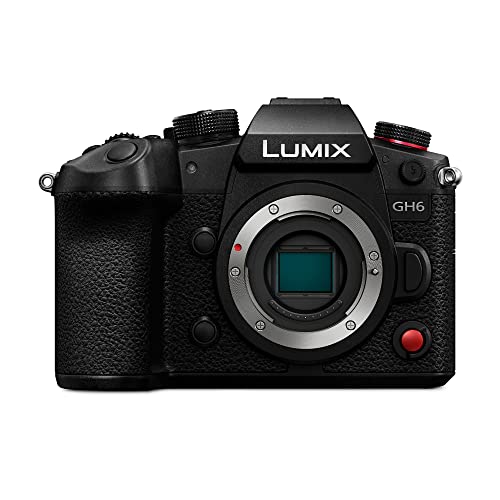
- Best for: Event, documentary and interview filmmakers who need long, uninterrupted 4K takes.
- Sensor: 25.2MP Micro Four Thirds
- Video: Unlimited C4K/4K 4:2:2 10-bit recording, per the listing title
- High frame rates: 5.7K 60p and 4K 120p recording
- Stabilization: 7.5-stop 5-Axis Dual Image Stabilizer
All 5 Picks at a Glance
| Product | Specs | Action |
|---|---|---|
| Sony FX30 |
| Check price on Amazon |
| Blackmagic Design Pocket Cinema Camera 4K |
| Check price on Amazon |
| Panasonic LUMIX GH6 |
| Check price on Amazon |
 Canon EOS R6 Mark II |
| Check price on Amazon |
 Sony Alpha a7S III |
| Check price on Amazon |
Key takeaways
- Compare five 4K cameras built for filmmaking, from the Blackmagic Pocket 4K to the Sony a7S III, with the codec, sensor and recording specs that matter.
What's inside
As an Amazon Associate I earn from qualifying purchases. This post may contain affiliate links at no extra cost to you.
Choosing a camera for filmmaking is really a decision about how your footage will behave in the grade. Two bodies can both say 4K on the box while one records thin 8-bit files that fall apart when you push the colour, and the other captures 10-bit 4:2:2 or RAW that survives a serious edit. Sensor size, codec, recording limits and audio inputs shape your shooting days far more than resolution alone, so those are the details worth comparing first.
This guide is for short-film makers, wedding and event videographers moving into narrative work, and small production teams choosing a main or second body. Every camera below was picked from the names and specifications printed on its Amazon product page, and each one records 4K video internally with a filmmaker-focused feature set.
Quick Picks
As an Amazon Associate we earn from qualifying purchases
| Product | Best for | Key spec from title |
|---|---|---|
| Sony FX30 | First dedicated cinema body on Sony E mount | Super 35 camera |
| Blackmagic Design Pocket Cinema Camera 4K | RAW workflows on a tight equipment budget | Pocket Cinema Camera 4K (CINECAMPOCHDMFT4K) |
| Panasonic LUMIX GH6 | Long takes with no recording time limit | Unlimited C4K/4K 4:2:2 10-bit video recording |
| Canon EOS R6 Mark II | Hybrid shooters filming events and shorts | 24.2 Megapixel CMOS Sensor, full-frame |
| Sony Alpha a7S III | Night scenes and low-light production work | Full-frame mirrorless camera body |
How to Choose
Codec and Bit Depth Decide How Far You Can Grade
A filmmaking camera earns its place in post-production. Footage recorded in 10-bit 4:2:2 holds together when you correct exposure or build a look, while 8-bit 4:2:0 files band in skies and break under heavy colour work. RAW formats go further, letting you set white balance and ISO behaviour after the shoot, at the cost of much larger files and faster media. Check the exact recording formats in the listing rather than the headline resolution: the Panasonic GH6 records C4K/4K in 4:2:2 10-bit, and the Blackmagic Pocket 4K records Blackmagic RAW and ProRes, which are very different editing commitments.
Sensor Size Shapes Lenses, Depth of Field and Low Light
The five cameras here span three sensor formats. Full-frame bodies such as the Canon EOS R6 Mark II and Sony a7S III gather more light and blur backgrounds more easily, which suits night exteriors and shallow-focus narrative work. Super 35, used by the Sony FX30, matches the format most cinema lenses were designed around. Micro Four Thirds bodies, the GH6 and Pocket Cinema Camera 4K, pair with smaller and lighter lenses and give deeper focus, which helps solo shooters keep a moving subject sharp. None is automatically better; the right choice follows the lenses you own and the look you want.
Recording Limits, Media and Heat on Real Shoot Days
A camera that stops at thirty minutes is a poor fit for ceremonies, interviews or stage work, so confirm whether the listing states unlimited recording, as the GH6 does for C4K/4K. Then look at what the footage is written to. The a7S III needs CFexpress Type A cards for its highest bit rates, the Pocket 4K splits recording between CFast 2.0 and SD UHS-II, and high-frame-rate 4K modes generate data quickly on every body here. Budget for the cards the format demands, and check how the body manages heat during long 4K takes before committing.
Audio Inputs and Monitoring Separate Cinema Bodies From Hybrids
Dialogue carries most films, so the path from microphone to file matters. Dedicated cinema bodies such as the FX30 are built to accept professional audio, and the Pocket Cinema Camera 4K includes a mini XLR input on the body. Hybrid mirrorless cameras usually offer a 3.5mm microphone input and headphone jack instead, which works well with compact recorders and on-camera microphones but adds adapters for XLR microphones. Confirm which version a listing describes before ordering, because some cameras are sold both as a plain body and in a configuration with an audio handle included.
The 5 Best Options
Sony FX30
- Best for: Filmmakers building a first dedicated cinema rig around Sony E-mount lenses.
- Sensor: Super 35 (APS-C) Exmor R CMOS, 26.1MP for stills
- Video: UHD 4K up to 120p, 10-bit 4:2:2 internal recording
- Picture profiles: S-Cinetone and S-Log3
- Dual Base ISO: 800 and 2500 when shooting S-Log3
Filmmakers building a first dedicated cinema rig around Sony E-mount lenses.
This body-only listing does not include the XLR handle unit, so professional XLR audio needs that separate version or an external recorder.
The FX30 is Sony’s entry point into its Cinema Line, and it suits filmmakers who want cinema ergonomics without moving to full-frame. Its Super 35 sensor records 4K oversampled from 6K at up to 60p, with 120p available for slow motion, and the body is covered in mounting points so it rigs up without a cage. S-Cinetone gives a finished look straight from the camera, while S-Log3 is there when the project will be graded. Real-time Eye AF and tracking carry over from Sony’s stills bodies, which helps small crews keep actors sharp.
Blackmagic Design Pocket Cinema Camera 4K
- Best for: Narrative and short-film shooters who grade their own footage and want RAW on a controlled budget.
- Sensor: Four Thirds sensor, 4096 x 2160 resolution
- Video: DCI 4K up to 60p, Blackmagic RAW and ProRes recording
- Dynamic range: 13 stops
- Dual Native ISO: 400 and 3200
Narrative and short-film shooters who grade their own footage and want RAW on a controlled budget.
There is no continuous autofocus system for run-and-gun work, and battery life from the internal cell is short, so plan on external power for full shooting days.
This is the camera for filmmakers whose priority is the image pipeline rather than autofocus or stills. It records Blackmagic RAW and ProRes in DCI 4K, giving editors footage that behaves like material from far larger cinema cameras, and it ships within the Blackmagic ecosystem built around DaVinci Resolve. The large rear touchscreen replaces banks of buttons with direct touch control of settings. Dual native ISO helps in dim interiors, and the Micro Four Thirds mount opens up a deep catalogue of compact cine and photo lenses, including many affordable manual options for controlled set work.
Panasonic LUMIX GH6
- Best for: Event, documentary and interview filmmakers who need long, uninterrupted 4K takes.
- Sensor: 25.2MP Micro Four Thirds
- Video: Unlimited C4K/4K 4:2:2 10-bit recording, per the listing title
- High frame rates: 5.7K 60p and 4K 120p recording
- Stabilization: 7.5-stop 5-Axis Dual Image Stabilizer
Event, documentary and interview filmmakers who need long, uninterrupted 4K takes.
The listing is the body only (DC-GH6BODY), so no lens is included, and the Micro Four Thirds sensor crops the field of view of any adapted full-frame lenses.
The GH6 is built for filmmakers who record long and often. Its headline feature is unlimited C4K/4K recording in 4:2:2 10-bit, which removes the take-length anxiety that hangs over ceremonies, interviews and live events. It also reaches 5.7K at 60p and 4K at 120p for slow motion, and the 7.5-stop 5-axis stabilization keeps handheld footage usable when a gimbal is impractical. V-Log is included for grading, and the body pairs a CFexpress Type B slot for the heaviest formats with an SD UHS-II slot for everyday work. It is a workhorse choice for video-led professionals.
Canon EOS R6 Mark II
- Best for: Hybrid shooters who photograph stills and film events or short narratives with one body.
- Sensor: 24.2 Megapixel full-frame CMOS sensor, per the listing title
- Video: 4K up to 60p, oversampled from 6K, 10-bit with Canon Log 3
- Autofocus: Dual Pixel CMOS AF II
- Stabilization: in-body image stabilization, up to 8 stops with compatible lenses
Hybrid shooters who photograph stills and film events or short narratives with one body.
Long 4K 60p sessions generate heat, so check the recording behaviour for your take lengths, and note this is a body-only listing with no lens in the box.
Canon’s R6 Mark II is the hybrid option: a full-frame stills camera whose video specification is strong enough for serious film work. Its 4K footage is oversampled from 6K, which produces a clean, detailed image at up to 60p, and Canon Log 3 preserves highlight detail for grading. Dual Pixel CMOS AF II tracks faces and eyes confidently, which makes it dependable for weddings and events where scenes cannot be repeated. In-body stabilization rated up to 8 stops with compatible lenses steadies handheld shooting, and the RF mount gives access to Canon’s current lens line without adapters.
Sony Alpha a7S III
- Best for: Filmmakers shooting night scenes, concerts and other low-light productions.
- Sensor: 12.1MP full-frame Exmor R sensor, optimized for 4K
- Video: up to 4K 120p, 10-bit 4:2:2, full pixel readout in all recording modes
- Codecs: XAVC S, XAVC HS and XAVC S-I
- Sensitivity: ISO expandable up to 409600
Filmmakers shooting night scenes, concerts and other low-light productions.
The 12.1MP sensor is a deliberate video trade-off, so stills have limited cropping room, and the highest bit rates require CFexpress Type A cards rather than standard SD media.
The a7S III is the low-light specialist of this group. Its 12.1MP full-frame sensor uses large photosites, so 4K footage stays clean at sensitivities where other bodies turn noisy, and it records up to 4K 120p in 10-bit 4:2:2 with full pixel readout. That makes it a natural fit for night exteriors, concerts and dim reception halls. S-Cinetone is included alongside S-Log3, and the dual card slots accept either CFexpress Type A or SD UHS-II media, so a backup copy can be written while filming. It is a video-first body that still handles professional stills duties.
Which One Fits Your Situation
Shooting Your First Short Film on a Controlled Set
Pick the Blackmagic Pocket Cinema Camera 4K if the set is lit and the schedule allows a deliberate pace. Its RAW recording teaches real grading discipline, the touchscreen keeps settings simple, and Micro Four Thirds lenses keep the package manageable. If you already own Sony E-mount glass, the FX30 gives you the same cinema-first layout with autofocus support for a small crew.
Filming Weddings and Events That Cannot Be Repeated
The Panasonic GH6 earns its place here through unlimited 4K recording and strong stabilization, so a ceremony or speech runs without a mid-take restart. The Canon EOS R6 Mark II is the alternative when you also deliver stills all day, since its autofocus and full-frame sensor handle dark venues and photography in one body.
Working at Night or in Dim Venues
Choose the Sony a7S III. Its sensor is designed around sensitivity rather than resolution, so footage from night streets, stage shows and candlelit rooms holds together at high ISO settings. Pair it with a fast prime lens and the 4K 120p mode also covers dramatic slow-motion cutaways without changing bodies.
Building a Small Production Kit That Will Grow
Start with the Sony FX30 if your team plans to add cinema accessories over time, because its mounting points, S-Log3 workflow and E-mount lens path scale from solo shoots to crewed work. Teams already invested in Canon RF lenses should take the R6 Mark II instead and avoid adapting glass across systems.
Common Mistakes
- Buying on resolution alone and ignoring bit depth, then finding the 8-bit footage cannot hold a grade.
- Forgetting the media budget: high-bit-rate 4K modes may need CFexpress or CFast cards that cost real money.
- Ordering a body-only listing and assuming a lens, XLR handle or spare battery is in the box.
- Choosing a sensor format without checking how it crops lenses you already own.
- Overlooking recording time limits and heat behaviour before filming ceremonies or long interviews.
Frequently Asked Questions
Is 10-bit recording worth it for short films?
For most filmmakers, yes. Ten-bit 4:2:2 files, like those from the GH6, FX30 and a7S III, keep gradients smooth and survive exposure corrections that make 8-bit footage band and posterize. If your films receive any deliberate colour grade, the extra data is the difference between adjusting a look and rescuing one.
Which of these cameras is best for a one-person crew?
The Sony FX30 and Canon EOS R6 Mark II are the easiest to run alone, because both offer dependable continuous autofocus with face and eye tracking. The Blackmagic Pocket 4K expects manual focus work, which suits a crewed set. The GH6 sits between them, with strong stabilization helping a solo shooter stay mobile.
Do I need RAW recording for filmmaking?
Not for most projects. RAW from the Pocket Cinema Camera 4K gives maximum control over white balance and exposure in post, but files are large and demand fast storage. A good 10-bit log recording, such as S-Log3 or Canon Log 3, covers the needs of most short films, weddings and online releases comfortably.
Can these cameras record a full wedding ceremony without stopping?
The GH6 is the clearest answer, since its listing specifies unlimited C4K/4K recording. The other bodies can also cover long ceremonies in many modes, but frame rate, codec and card speed affect heat and take length, so confirm the exact mode you plan to use before the day arrives.
Related guides
More from Amazon
Programs that pair well with the guide above. Offers and eligibility are set by Amazon and may change.
Free shipping on eligible items, Prime Video and more. Eligible new members can start with a free trial.
Start a Prime free trialAudiobooks and podcasts to listen to on the go. Eligible new members can start with a free trial.
Try Audible freeAd-free music streaming. Eligible new subscribers can start with a free trial.
Try Music Unlimited freeA free business account with business pricing and bulk-buying tools for work, shop or home office.
Create a business accountAs an Amazon Associate we earn from qualifying purchases.










Write Your Review
No reviews yet. Be the first to share your experience!