
Our Short List of 3

- Best for: Hybrid shooters covering a game in video and stills with one body
- 45MP full-frame back-illuminated stacked CMOS sensor
- DIGIC X processor with DIGIC Accelerator
- 8K 60p RAW and 4K 120p video recording
- Dual Pixel CMOS AF II

- Best for: Graded highlight films that need internal RAW and 4K 120p slow motion
- 45.7MP full-frame stacked CMOS sensor
- EXPEED 7 image processor
- 12-bit 8K/60p and 4K/120p RAW internal video
- 10-bit ProRes 422 HQ internal recording

- Best for: Video-first shooters and night games where low-light sensitivity decides quality
- 10.2MP effective (movies) full-frame BSI Exmor R CMOS sensor
- 4K up to 120p, 10-bit 4:2:2 recording
- ISO expandable up to 409,600
- 627 phase-detection autofocus points with real-time Eye AF
All 4 Picks at a Glance
| Product | Specs | Action |
|---|---|---|
| Canon EOS R5 Mark II |
| Check price on Amazon |
| Nikon Z8 |
| Check price on Amazon |
| Sony FX3 |
| Check price on Amazon |
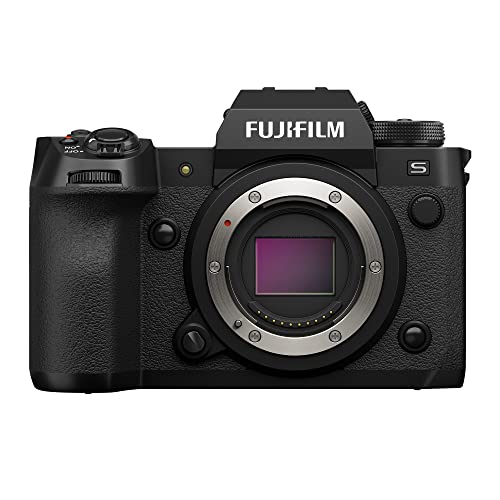 Fujifilm X-H2S |
| Check price on Amazon |
Key takeaways
- Compare five mirrorless cameras for filming sports, with 4K 120p slow motion, stacked sensors and tracking autofocus that keeps moving athletes sharp.
What's inside
As an Amazon Associate I earn from qualifying purchases. This post may contain affiliate links at no extra cost to you.
Filming sport is a tracking problem before it is a resolution problem. A winger changes direction twice in a second, a point guard disappears behind a screen and reappears at the rim, and your camera has to hold focus through all of it while recording clean slow motion you can actually use. The real decision is which body keeps a moving athlete sharp at high frame rates without overheating halfway through the second half.
This guide is for school and club videographers, media teams, and creators who shoot games from the sideline or the stands. Every camera below is an interchangeable-lens mirrorless model picked from the names and specifications on its Amazon product page, with priority given to high-frame-rate video, fast sensor readout, and subject-tracking autofocus built for motion.
Quick Picks
As an Amazon Associate we earn from qualifying purchases
| Product | Best for | Key spec from title |
|---|---|---|
| Canon EOS R5 Mark II | Hybrid shooters who split time between video and stills | 45MP stacked sensor with 8K 60p RAW video |
| Nikon Z8 | Internal RAW video for graded highlight packages | 12-bit 8K/60p and 4K/120p RAW internal recording |
| Sony FX3 | Dedicated video work and night games under lights | 4K 120p 10-bit 4:2:2 with ISO up to 409,600 |
| Fujifilm X-H2S | Fast action where APS-C reach helps from the stands | 26.1MP stacked sensor with 4K/120p high-speed recording |
| Panasonic Lumix GH7 | Full matches and a ProRes editing workflow | Internal ProRes RAW with unlimited 4K 60p recording |
How to Choose
Frame rates decide your slow motion
Slow motion is where sports footage earns its keep, and the frame rate sets the ceiling. Recording at 120 frames per second and playing back at 24 gives you smooth five-times slow motion for goals, dunks, and photo finishes, while 60p only stretches action to two-and-a-half times. Check whether the high frame rate applies at full 4K resolution or only in a cropped mode, because a crop changes your field of view from the same seat. Also confirm the codec at that rate: 10-bit 4:2:2 files hold up far better when you grade a night game than thin 8-bit recordings.
Autofocus must track subjects, not just detect them
A player sprinting toward camera is the hardest focus job in video, and face detection alone will not save you when helmets, caps, and turned heads hide the face. Look for subject-detection autofocus that recognises people and keeps a tracking box on the body, plus a deep phase-detection point layout so focus works at the edges of the frame where plays develop. Continuous AF sensitivity and tracking-speed settings matter too, because they decide whether focus stays glued to your runner or jumps to a closer opponent crossing the shot.
Fast sensor readout keeps motion honest
Rolling shutter is the wobble that bends goalposts during a fast pan and turns a swung bat into rubber. Stacked sensors read the frame far faster than conventional ones, which keeps vertical lines straight while you whip across a court and reduces the skew in high-frame-rate clips. This is one spec you cannot fix in editing, so it deserves weight even if you rarely shoot stills. When a listing quotes readout-driven features such as blackout-free shooting or very high electronic-shutter speeds, that is the same underlying speed showing up in another form.
Recording stamina, cards, and heat
A camera that stops at minute seventy of a match is a highlights camera, not a match camera. Check the listing for stated recording limits at your chosen resolution, and note which modes demand CFexpress cards rather than SD, because the card budget can rival a lens. Bodies with internal fans or heat-dissipating designs hold high frame rates longer in summer tournaments. Dual slots also let you roll a backup copy for paid work, and USB power delivery support means a power bank can carry you through extra time.
The 5 Best Options
Canon EOS R5 Mark II
- Best for: Hybrid shooters covering a game in video and stills with one body
- 45MP full-frame back-illuminated stacked CMOS sensor
- DIGIC X processor with DIGIC Accelerator
- 8K 60p RAW and 4K 120p video recording
- Dual Pixel CMOS AF II
Hybrid shooters covering a game in video and stills with one body
The highest-resolution modes need fast CFexpress media, so budget for cards alongside the body
Canon’s flagship hybrid suits the shooter who films the game and still needs publishable stills from the same body on the same night. Its stacked sensor reads fast enough for clean pans, Dual Pixel autofocus tracks players across the frame, and 4K at 120 frames per second feeds proper slow-motion replays. The 45-megapixel sensor also leaves generous room to punch in on 8K footage when your seat is far from the action. Weather resistance matters here as well, since sideline work rarely pauses for rain.
Nikon Z8
- Best for: Graded highlight films that need internal RAW and 4K 120p slow motion
- 45.7MP full-frame stacked CMOS sensor
- EXPEED 7 image processor
- 12-bit 8K/60p and 4K/120p RAW internal video
- 10-bit ProRes 422 HQ internal recording
Graded highlight films that need internal RAW and 4K 120p slow motion
RAW files at these resolutions are enormous, so storage and card speed become ongoing costs
Think of the Z8 as the pick for videographers who grade their footage and want RAW flexibility without an external recorder. It records 12-bit RAW internally at both 8K 60p and 4K 120p, so a sprint finish can be slowed down and still carry real colour depth into the edit. Nikon’s deep-learning subject detection is built for exactly the erratic movement sport produces, and the all-electronic shutter design keeps readout distortion minimal. It is a substantial body, which steadies long lenses on a monopod nicely.
Sony FX3
- Best for: Video-first shooters and night games where low-light sensitivity decides quality
- 10.2MP effective (movies) full-frame BSI Exmor R CMOS sensor
- 4K up to 120p, 10-bit 4:2:2 recording
- ISO expandable up to 409,600
- 627 phase-detection autofocus points with real-time Eye AF
Video-first shooters and night games where low-light sensitivity decides quality
There is no built-in viewfinder, so bright midday matches mean working from the rear screen or adding a monitor
The FX3 is the dedicated video body in this group, shaped for a solo operator who rigs up and shoots rather than menu-dives. Its sensor is tuned for movie work, pairing 4K recording up to 120p in 10-bit 4:2:2 with sensitivity that keeps night games under floodlights clean at high ISO. Sony’s real-time eye autofocus holds a face through turns and contact, and the included XLR handle sorts professional audio for interviews straight after the whistle. An internal fan supports uninterrupted recording, which suits full fixtures rather than clips.
Fujifilm X-H2S
- Best for: Sideline and grandstand shooting where crop-sensor reach and speed both matter
- 26.1MP APS-C X-Trans CMOS 5 HS stacked sensor
- X-Processor 5
- 6.2K/30p open gate 4:2:2 10-bit internal recording
- 4K/120p high-speed video recording
Sideline and grandstand shooting where crop-sensor reach and speed both matter
The APS-C sensor gathers less light than the full-frame bodies here, so plan faster lenses for indoor arenas
Fujifilm’s speed flagship is the natural choice when you shoot from distance and want the extra reach a crop sensor gives your lenses. The stacked APS-C sensor reads out quickly for a body of its size, 4K/120p supplies the slow motion, and the subject-detection autofocus recognises athletes alongside animals, vehicles, and trains for motorsport days. Its maker quotes up to 240 minutes of 4K/60p recording from the heat-dissipating body design, which is the sort of stamina tournament weekends demand. Stills shooters also get blackout-free bursts up to 40 frames per second.
Panasonic Lumix GH7
The GH7 plays a different game: it is built to record an entire event and hand the editor professional files. Phase-detection autofocus with real-time recognition for people and vehicles addresses the weakness older Lumix bodies had with moving subjects, while internal ProRes RAW recording is rare at this size. Panasonic states unlimited recording time at 4:2:2 10-bit C4K/4K 60p under recommended conditions, which is the headline for anyone filming full matches, races, or tournament days. Micro Four Thirds lenses also keep a long-reach kit smaller and easier to carry.
Specs
- 25.2MP BSI CMOS Micro Four Thirds sensor
- Phase Detection Autofocus with Real-time Recognition AF
- Recognition subjects: human, animal, car, motorcycle, train, airplane
- Internal Apple ProRes RAW recording, 5.7K 30p ProRes RAW HQ
- Unlimited recording at 4:2:2 10-bit C4K/4K 60p
- Open Gate recording and Real-time LUT
- Sensor-shift image stabilization
- Micro Four Thirds mount
Best for: Full-match recording and editors who work in ProRes
Watch out for: The headline 32-bit float audio recording requires the DMW-XLR2 adaptor, which is sold separately
ASIN: B0D613NW2M
Which One Fits Your Situation
You cut slow-motion highlights for social channels
Prioritise 4K 120p and autofocus you can trust at full speed. The Nikon Z8 and Canon EOS R5 Mark II both record 120 frames per second with deep colour options for graded edits, while the Sony FX3 matches the frame rate and adds the cleanest high-ISO performance for evening fixtures. Pick by the lens system you already own or can borrow locally.
You record whole games, not just moments
Recording stamina outranks headline resolution here. The Panasonic Lumix GH7 states unlimited recording at 4K 60p, and the Fujifilm X-H2S quotes up to 240 minutes at that rate, so either can sit on a tripod for a full fixture. The FX3’s internal fan serves the same goal for Sony shooters. Whichever you choose, plan card capacity for hours, not minutes.
One body must shoot the stills too
If the same camera produces the match report photographs, resolution and burst speed join the checklist. The Canon EOS R5 Mark II pairs 45 megapixels with a 30 fps electronic shutter, and the Nikon Z8 offers 45.7 megapixels with stills bursts far beyond video needs. The X-H2S counters with 40 fps bursts in a smaller system that travels lighter between venues.
You shoot from the stands with modest lenses
Reach is your problem, and crop sensors are the cheap answer. The Fujifilm X-H2S makes a mid-range telephoto behave like a much longer lens, and the Lumix GH7 stretches lenses further still while keeping the whole kit compact. Both track moving subjects with dedicated recognition modes, so you give up sensor size rather than autofocus ability.
Common Mistakes
- Buying for 8K headlines when your delivery is 4K, then discovering the high frame rates you actually need sit in a different mode
- Ignoring card requirements and finding your existing SD cards cannot sustain 4K 120p or RAW recording
- Trusting face detection in helmet sports, where subject tracking on the body is what holds focus
- Filming a full match on a body with a short recording limit and losing the final minutes
- Forgetting that slow motion at 120p needs faster shutter speeds and more light, especially indoors
Frequently Asked Questions
Do I need 4K 120p to film sports well?
No, but it changes what your highlights can do. At 120 frames per second you can slow a finish or a strike to one-fifth speed and keep it smooth, which is the look most sports edits aim for. Solid 4K 60p still produces clean half-speed replays, so treat 120p as the upgrade for dedicated slow-motion work rather than an entry requirement.
Is full frame better than APS-C or Micro Four Thirds for sports video?
Full frame gathers more light, which helps in dim arenas, and gives shallower depth of field. Smaller sensors answer with reach: the same lens frames tighter, which matters from the stands, and their kits usually cost and weigh less. Many working sideline shooters pick the sensor that matches the lenses they can actually get to the game.
Why does rolling shutter matter for filming sport?
Fast pans and swinging limbs expose slow sensor readout as bent lines and wobbling shapes. Stacked sensors, like those in the Canon EOS R5 Mark II, Nikon Z8, and Fujifilm X-H2S here, read the frame much faster and keep that distortion small. It cannot be removed in editing, so it is worth prioritising when you compare bodies.
Can one of these cameras record an entire match?
Yes, with the right model and media. The Lumix GH7 lists unlimited recording at 4K 60p under recommended operating conditions, and the X-H2S quotes up to 240 minutes at 4K/60p, while the FX3 uses an internal fan for uninterrupted recording. In every case, card capacity and power, not the record limit, become the planning job.
Related guides
More from Amazon
Programs that pair well with the guide above. Offers and eligibility are set by Amazon and may change.
Free shipping on eligible items, Prime Video and more. Eligible new members can start with a free trial.
Start a Prime free trialAudiobooks and podcasts to listen to on the go. Eligible new members can start with a free trial.
Try Audible freeAd-free music streaming. Eligible new subscribers can start with a free trial.
Try Music Unlimited freeA free business account with business pricing and bulk-buying tools for work, shop or home office.
Create a business accountAs an Amazon Associate we earn from qualifying purchases.










Write Your Review
No reviews yet. Be the first to share your experience!