
Our Short List of 3

- Best for: documentary and corporate interviews where takes routinely pass the half-hour mark
- 24.2MP full-frame CMOS sensor
- Phase Hybrid AF with 779 focus points and subject detection
- Unlimited 4:2:2 10-bit recording; 4K 60p/50p and 6K 30p video
- Built-in fan and heat sink for heat dispersion
- Best for: solo creators filming interviews in homes, offices and other dim, uncontrolled spaces
- 12.1MP full-frame Exmor R CMOS sensor with BIONZ XR processor
- 4K 60p 4:2:2 10-bit internal recording, upgradeable to 4K 120p
- Dedicated AI processing unit with real-time eye autofocus
- 15+ stops of dynamic range; ISO 80 to 102,400 native
- Best for: hybrid shooters who interview on video and shoot stills with the same compact body
- 33.0MP full-frame Exmor R CMOS sensor with BIONZ XR processor
- 4K 60p 4:2:2 10-bit recording; 4K 30p oversampled from 7K
- AI processing unit with real-time eye autofocus; 759 phase-detection points
- 5-axis in-body stabilisation with up to 7 stops of compensation
All 3 Picks at a Glance
| Product | Specs | Action |
|---|---|---|
| Panasonic LUMIX S5 II |
| Check price on Amazon |
| Sony ZV-E1 |
| Check price on Amazon |
| Sony Alpha a7C II |
| Check price on Amazon |
Key takeaways
- Four full-frame mirrorless cameras compared for interview work, each with a microphone input, headphone monitoring, eye autofocus and long 4K recording.
What's inside
As an Amazon Associate I earn from qualifying purchases. This post may contain affiliate links at no extra cost to you.
An interview camera fails in quiet ways: the subject’s voice clips because nobody was monitoring the audio, focus drifts off the eyes during a long answer, or the camera stops recording twenty minutes into a forty-minute conversation. Choosing for interviews means weighing audio connections, autofocus you can trust unattended, and recording stamina before headline resolution.
This guide is for documentary shooters, podcasters adding video, corporate video producers and small production teams who record seated conversations, often with a crew of one and no chance to ask a guest to repeat an answer. Every camera below was picked from the names and specifications on its Amazon product page, and each one is an interchangeable-lens mirrorless model with a microphone input, a headphone jack, eye autofocus and 4K recording suited to long takes.
Quick Picks
As an Amazon Associate we earn from qualifying purchases
| Product | Best for | Key spec from title |
|---|---|---|
| Panasonic LUMIX S5 II | Long interviews that cannot stop mid-answer | Unlimited 4:2:2 10-bit recording |
| Sony ZV-E1 | Dim rooms and shallow depth of field | 12.1MP full-frame sensor, 4K 60p |
| Sony Alpha a7C II | One camera for interviews and stills | 33MP full-frame sensor, 4K 60p |
| Canon EOS R8 | A light kit that travels between locations | 24.2MP full-frame sensor, 4K 60p |
How to Choose
Audio inputs and headphone monitoring
Interview footage lives or dies on its sound, so the camera needs a 3.5mm microphone input for a lavalier or shotgun microphone and a headphone jack so someone can actually listen while recording. Meters on a screen show levels, but only headphones reveal a rustling shirt, a humming air conditioner or a cable crackling mid-answer. All four cameras here have both connections. If a model you are considering offers a digital audio interface through its hot shoe as well, that gives a cleaner path for compatible wireless receivers without extra cables.
Eye autofocus you can leave alone
A solo operator cannot ride focus while also listening to answers and thinking of follow-up questions. Modern eye autofocus solves this: the camera finds the subject’s eye and holds it as they lean, gesture and look away. Look for real-time eye AF in the listing and, on Sony bodies, an AI processing unit that recognises the human form beyond just a face. Phase-detection systems with hundreds of focus points, like the 779-point Phase Hybrid AF on the LUMIX S5 II, also keep working when the subject is framed off-centre or partly turned away.
Recording limits and heat management
A camera that stops at thirty minutes is a liability when a guest is mid-story. Check whether the listing states unlimited recording, as the LUMIX S5 II does thanks to its built-in fan and heat sink, or a time figure per charge and setting. Compact bodies without fans rely on passive cooling, so their 4K 60p endurance shrinks in warm rooms. For interviews, plan around the worst case: the highest resolution you will use, in the warmest room you shoot in, on a battery that is not brand new.
Sensor size, lens mount and low light
Full-frame sensors gather more light and blur backgrounds more easily, which helps a seated subject stand out from a busy room. All four cameras here are full frame, but they split across three mounts: Sony E, Leica L and Canon RF. Your existing lenses may decide the question for you. Resolution matters less than sensitivity for interviews; the 12.1MP ZV-E1 trades stills resolution for large pixels that stay clean at high ISO, while the 33MP a7C II favours shooters who also need detailed photographs from the same body.
The 4 Best Options
Panasonic LUMIX S5 II
- Best for: documentary and corporate interviews where takes routinely pass the half-hour mark
- 24.2MP full-frame CMOS sensor
- Phase Hybrid AF with 779 focus points and subject detection
- Unlimited 4:2:2 10-bit recording; 4K 60p/50p and 6K 30p video
- Built-in fan and heat sink for heat dispersion
documentary and corporate interviews where takes routinely pass the half-hour mark
it is the heaviest option here at 740 grams, and L-mount lenses should be budgeted separately since this listing is body only
If your interviews run long and pausing to restart a recording is not an option, the S5 II is the safest pair of hands here. Panasonic built a small fan and heat sink into the body specifically so recording does not stop, and the listing states unlimited 4:2:2 10-bit recording outright. Phase Hybrid AF with subject detection holds focus on a seated guest, Active I.S. steadies any handheld cutaway work, and V-Log capture gives editors a flat, flexible file. It is the largest body in this group, which matters little on a tripod.
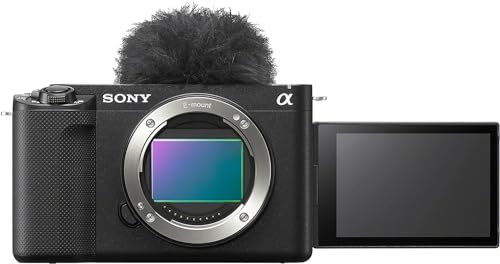
Sony ZV-E1
- Best for: solo creators filming interviews in homes, offices and other dim, uncontrolled spaces
- 12.1MP full-frame Exmor R CMOS sensor with BIONZ XR processor
- 4K 60p 4:2:2 10-bit internal recording, upgradeable to 4K 120p
- Dedicated AI processing unit with real-time eye autofocus
- 15+ stops of dynamic range; ISO 80 to 102,400 native
solo creators filming interviews in homes, offices and other dim, uncontrolled spaces
there is only one card slot, so long sessions have no in-camera backup, and the compact body has no cooling fan for extended 4K 60p takes in hot rooms
The ZV-E1 is built around the interview scenario of one person, one camera and a room that is never as bright as you would like. Its 12.1MP full-frame sensor is optimised for video rather than stills, so low-light footage stays clean and backgrounds fall into a soft blur that keeps attention on the speaker. The dedicated AI processing unit drives real-time eye AF, and the three-capsule internal microphone with variable directivity is a genuine fallback if an external mic fails. A vari-angle screen makes framing yourself straightforward when you sit on the other side of the lens.
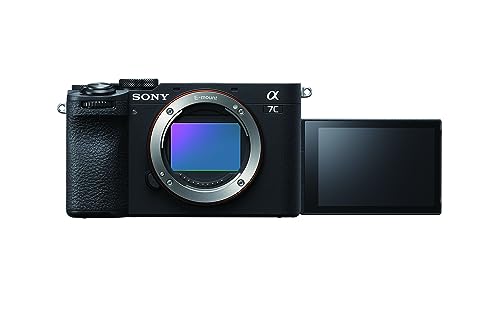
Sony Alpha a7C II
- Best for: hybrid shooters who interview on video and shoot stills with the same compact body
- 33.0MP full-frame Exmor R CMOS sensor with BIONZ XR processor
- 4K 60p 4:2:2 10-bit recording; 4K 30p oversampled from 7K
- AI processing unit with real-time eye autofocus; 759 phase-detection points
- 5-axis in-body stabilisation with up to 7 stops of compensation
hybrid shooters who interview on video and shoot stills with the same compact body
4K 60p recording uses a Super 35 crop rather than the full sensor width, and the single card slot means no simultaneous backup recording
Choose the a7C II when the same camera has to photograph a guest’s portrait after filming them. Its 33MP sensor delivers detailed stills alongside 4K video oversampled from 7K at 30p, and the AI processing unit recognises subjects accurately enough to leave focus unattended during a conversation. It keeps the microphone input and headphone jack that interview work demands, adds a proper electronic viewfinder the ZV-E1 lacks, and packs everything into one of the smallest full-frame bodies sold. Five-axis stabilisation rated at up to seven stops helps with handheld establishing shots between set pieces.
Canon EOS R8
The R8 suits interviewers who carry their kit between offices, studios and subjects’ homes. It is the lightest full-frame body in this guide, yet it keeps the essentials: a microphone input, a headphone jack, and Dual Pixel CMOS AF II with subject detection that tracks eyes, faces and heads through a conversation. Its 4K 60p video is oversampled from 6K, so seated interviews look crisp without enormous files at lower settings. Canon’s colour science also flatters skin tones straight out of camera, which shortens the edit for teams publishing on a schedule.
Specs
- 24.2MP full-frame CMOS sensor with DIGIC X processor
- 4K 60p video oversampled from 6K; 4:2:2 10-bit recording
- Dual Pixel CMOS AF II with people and eye detection
- 3.5mm microphone input and 3.5mm headphone jack
- Vari-angle touchscreen LCD
- Canon RF lens mount; Wi-Fi and Bluetooth connectivity
- Single SD card slot (UHS-II)
- Lightweight body aimed at content creation and hybrid shooting
Best for: small teams and travelling interviewers who want full-frame quality in a minimal bag
Watch out for: the compact body has no in-body stabilisation and uses a smaller battery than Canon’s larger models, so carry spares for a full day of interviews
ASIN: B0BTTTH5G6
Which One Fits Your Situation
You record long-form interviews and cannot risk a stop
Pick the Panasonic LUMIX S5 II. It is the only camera here whose listing promises unlimited recording, backed by an internal fan rather than passive cooling alone. When a conversation runs ninety minutes, that guarantee matters more than a smaller body or a higher stills resolution.
You film alone in people’s homes and offices
Pick the Sony ZV-E1. The low-light sensor, dependable eye AF and directional internal microphone are all aimed at a one-person crew working in rooms they do not control. Its small size also keeps the setup unintimidating for guests who are nervous on camera.
You need photographs from the same session
Pick the Sony Alpha a7C II. With 33 megapixels it is the strongest stills camera in this group, and the viewfinder helps when you step outside for portraits after the interview. Video quality stays high, so nothing about the filming side feels like a compromise.
You travel light between interview locations
Pick the Canon EOS R8. It is the lightest body here, its autofocus handles seated subjects reliably, and its out-of-camera colour reduces editing time when you are publishing quickly. Add a spare battery and a compact prime lens, and it covers a full day of location work without weighing down your bag.
Common Mistakes
- Buying a camera with a microphone input but no headphone jack, then discovering audio problems only in the edit.
- Assuming every camera records indefinitely, when many compact bodies limit high-resolution recording because of heat.
- Relying on a single card slot for an unrepeatable interview without rolling a backup audio recorder.
- Choosing a body before checking lens mount compatibility, then finding your existing lenses need adapters or replacing.
- Judging interview cameras by maximum resolution alone, when autofocus reliability and audio connections decide more sessions.
Frequently Asked Questions
Do I really need a headphone jack for interviews?
Yes, if the conversation cannot be repeated. On-screen audio meters confirm that sound exists, but they cannot tell you a lavalier is rubbing against clothing or that an air conditioner is droning under the dialogue. Monitoring through headphones while recording is the only way to catch those problems while they can still be fixed.
Is 4K necessary for interview videos?
Not strictly, but it earns its place. A 4K frame lets you punch in to a tighter crop in editing, which simulates a second camera angle from one recording and helps reframe when a guest shifts in their seat. All four cameras here record 4K, so the choice comes down to recording limits and autofocus rather than resolution.
How long can these cameras record an interview?
It varies by model and setting. The LUMIX S5 II is rated for unlimited recording thanks to its cooling fan. The compact Sony and Canon bodies can run for extended periods at moderate settings, but high frame rates and warm rooms shorten that, so check the listing figures for the exact mode you plan to use.
Which lens should I use for interviews?
A standard zoom or a fast prime around 35mm to 50mm suits most seated conversations, framing the subject from the waist or chest up with a pleasantly blurred background. Whichever mount you choose, prioritise a quiet autofocus motor, since focusing noise near a microphone can end up on the recording.
Related guides
More from Amazon
Programs that pair well with the guide above. Offers and eligibility are set by Amazon and may change.
Free shipping on eligible items, Prime Video and more. Eligible new members can start with a free trial.
Start a Prime free trialAudiobooks and podcasts to listen to on the go. Eligible new members can start with a free trial.
Try Audible freeAd-free music streaming. Eligible new subscribers can start with a free trial.
Try Music Unlimited freeA free business account with business pricing and bulk-buying tools for work, shop or home office.
Create a business accountAs an Amazon Associate we earn from qualifying purchases.










Write Your Review
No reviews yet. Be the first to share your experience!