
Our Short List of 3

- Best for: A Canon beginner moving up who wants fast burst shooting and reliable subject tracking in a light body.
- 24.2MP APS-C CMOS sensor
- DIGIC X image processor
- Dual Pixel CMOS AF II
- 15 frames per second mechanical shutter, 23 frames per second electronic

- Best for: A progressing Nikon shooter who wants a two-lens kit that covers wide-angle to telephoto on day one.
- 20.9MP DX-format CMOS sensor
- EXPEED 7 image processor
- NIKKOR Z DX 16-50mm f/3.5-6.3 VR and 50-250mm f/4.5-6.3 VR lenses
- 4K video at 60p
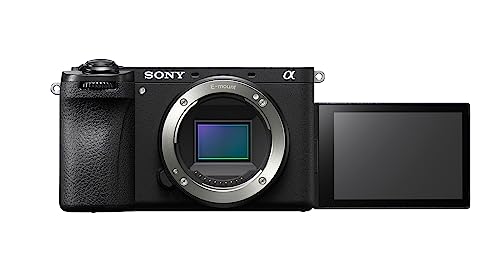
- Best for: A photographer who shoots action, wildlife, or sports and wants the strongest subject tracking at this level.
- 26MP APS-C Exmor R CMOS sensor
- BIONZ XR image processor
- 759-point phase-detection autofocus with AI subject recognition
- 4K video oversampled from 6K
All 5 Picks at a Glance
| Product | Specs | Action |
|---|---|---|
| Canon EOS R10 with RF-S 18-45mm Kit |
| Check price on Amazon |
| Nikon Z50 II with 16-50mm and 50-250mm Kit |
| Check price on Amazon |
| Sony a6700 (Body) |
| Check price on Amazon |
 Fujifilm X-S20 (Body) |
| Check price on Amazon |
 Canon EOS R7 (Body) |
| Check price on Amazon |
Key takeaways
- Find the best cameras for beginning to intermediate photographers, with faster autofocus, dual controls, and room to grow into serious shooting.
What's inside
As an Amazon Associate I earn from qualifying purchases. This post may contain affiliate links at no extra cost to you.
There is a moment in every photographer’s journey when a beginner camera starts to hold them back. The autofocus misses the shot you saw coming, the burst rate is too slow for the action, or the single control dial makes changing settings feel clumsy. That is the beginning-to-intermediate step, and it is not about buying the most expensive body, but about finding a camera whose controls and speed match the skills you have already built.
This guide is for photographers who understand aperture, shutter speed, and ISO, and now want faster subject tracking, dual control dials, and better video. Each camera below was chosen from the name and specifications listed on its Amazon product page, with attention to autofocus, burst speed, and how much headroom the body gives you for the next stage.
Quick Picks
As an Amazon Associate we earn from qualifying purchases
| Product | Best for | Key spec from title |
|---|---|---|
| Canon EOS R10 with RF-S 18-45mm Kit | Step up from a beginner Canon kit | 24.2MP mirrorless with 18-45mm lens |
| Nikon Z50 II with 16-50mm and 50-250mm Kit | Two-lens kit for the progressing shooter | 20.9MP mirrorless with two-lens kit |
| Sony a6700 (Body) | AI autofocus for action and wildlife | 26MP APS-C mirrorless, AI subject recognition |
| Fujifilm X-S20 (Body) | Hybrid stills and video for creators | 26.1MP mirrorless with 6.2K video |
| Canon EOS R7 (Body) | Serious reach for wildlife and sports | 32.5MP mirrorless with Dual Pixel AF II |
How to Choose
Autofocus is the upgrade that changes your keeper rate
At the intermediate stage, the biggest visible improvement comes from autofocus that finds and follows a subject without constant correction. Canon Dual Pixel CMOS AF II, Nikon subject detection with nine subject types, and Sony AI subject recognition all track eyes, animals, and vehicles across the frame. When you compare bodies, look at how many focus points the system uses and whether it recognises the subjects you actually photograph, because a system tuned for birds behaves differently from one tuned for people.
Burst speed and buffer decide whether you catch the moment
A beginner camera that shoots three frames per second will miss the wingbeat or the goal, while a body that manages 11 to 30 frames per second gives you a real choice of moments. Check both the burst rate and how long the camera sustains it before the buffer fills, because a fast rate that stops after a second is less useful than a slightly slower one that keeps going. A camera with a deep buffer and a fast card slot is the practical choice for sports and wildlife.
Controls should keep up with your hands
Intermediate shooting means changing settings without looking, so dual control dials, a joystick for the focus point, and custom buttons matter more than they did at the start. The Canon EOS R7 and Fujifilm X-S20 give you this kind of direct control, while the R10 keeps things simpler for a photographer still building muscle memory. If you shoot in changing light, a body that lets you adjust exposure compensation and ISO by touch will feel like a real step forward.
Video capability is part of the intermediate step
Many photographers who start with stills discover video halfway through their journey, so a camera that records 4K at 60 frames per second or 6.2K open-gate footage keeps that door open. Check whether the camera overheats during long recordings and whether it has a microphone input, because those two details decide whether video is a genuine feature or a checkbox. A camera with strong video and strong stills is the better long-term buy at this level. Check the recording limits and the microphone input before you commit to a body for video work.
The 5 Best Options
Canon EOS R10 with RF-S 18-45mm Kit
- Best for: A Canon beginner moving up who wants fast burst shooting and reliable subject tracking in a light body.
- 24.2MP APS-C CMOS sensor
- DIGIC X image processor
- Dual Pixel CMOS AF II
- 15 frames per second mechanical shutter, 23 frames per second electronic
A Canon beginner moving up who wants fast burst shooting and reliable subject tracking in a light body.
The kit lens is short for action at a distance, and the body has no in-body stabilisation, so stabilised lenses matter more here.
The Canon EOS R10 is the natural next step for a photographer who started on a Rebel or an R100 and wants speed without complexity. Its 24.2 megapixel sensor and DIGIC X processor deliver 15 frames per second with the mechanical shutter and 23 with the electronic shutter, and Dual Pixel CMOS AF II tracks people and animals across the frame. The RF-S 18-45mm kit lens keeps the kit light, and the RF mount gives access to Canon’s telephoto lenses for wildlife and sports.
Watch out for: The kit lens is short for action at a distance, and the body has no in-body stabilisation, so stabilised lenses matter more here.
Nikon Z50 II with 16-50mm and 50-250mm Kit
- Best for: A progressing Nikon shooter who wants a two-lens kit that covers wide-angle to telephoto on day one.
- 20.9MP DX-format CMOS sensor
- EXPEED 7 image processor
- NIKKOR Z DX 16-50mm f/3.5-6.3 VR and 50-250mm f/4.5-6.3 VR lenses
- 4K video at 60p
A progressing Nikon shooter who wants a two-lens kit that covers wide-angle to telephoto on day one.
Two lenses mean more weight in the bag, and the 50-250mm lens is slow in dim light, so indoor action will need a faster lens later.
The Nikon Z50 II two-lens kit is the most complete upgrade package in this list, because it covers wide scenes and distant subjects in one purchase. Its 20.9 megapixel sensor and EXPEED 7 processor bring subject detection for nine subject types, including birds and aeroplanes, and 4K video at 60 frames per second. The 16-50mm lens handles everyday shooting, while the 50-250mm lens opens up wildlife, sports, and travel photography without a second purchase.
Watch out for: Two lenses mean more weight in the bag, and the 50-250mm lens is slow in dim light, so indoor action will need a faster lens later.
Sony a6700 (Body)
- Best for: A photographer who shoots action, wildlife, or sports and wants the strongest subject tracking at this level.
- 26MP APS-C Exmor R CMOS sensor
- BIONZ XR image processor
- 759-point phase-detection autofocus with AI subject recognition
- 4K video oversampled from 6K
A photographer who shoots action, wildlife, or sports and wants the strongest subject tracking at this level.
This is a body-only listing, so a lens is a required extra purchase, and the menu system takes time to learn.
The Sony a6700 is the autofocus leader in this list, and it is the pick for a photographer whose subjects move fast. Its 26 megapixel sensor, 759 autofocus points, and AI subject recognition track people, animals, birds, and vehicles with a confidence that changes how you shoot action. The body records 4K video oversampled from 6K, and the E-mount system offers a wide range of lenses. This listing is for the body only, so you will need to add a lens.
Watch out for: This is a body-only listing, so a lens is a required extra purchase, and the menu system takes time to learn.
Fujifilm X-S20 (Body)
- Best for: A photographer moving into video as well as stills who wants long battery life and strong hybrid features.
- 26.1MP X-Trans CMOS 5 HR sensor
- X-Processor 5
- 6.2K video at 30p, 4K video at 60p
- Up to 20 frames per second electronic shutter
A photographer moving into video as well as stills who wants long battery life and strong hybrid features.
This is a body-only listing with no lens included, and the PASM dials are less tactile than the dedicated dials on other Fujifilm bodies.
The Fujifilm X-S20 is the hybrid pick for a photographer who is getting serious about both stills and video. Its 26.1 megapixel sensor and X-Processor 5 record 6.2K video at 30 frames per second and 4K at 60, while the large NP-W235 battery lasts for around 750 frames, far longer than most mirrorless bodies at this level. The PASM dial layout is familiar to anyone coming from a beginner camera, and Fujifilm film simulations give attractive colour with little editing. This listing is for the body only, so a lens is needed.
Watch out for: This is a body-only listing with no lens included, and the PASM dials are less tactile than the dedicated dials on other Fujifilm bodies.
Canon EOS R7 (Body)
- Best for: A progressing photographer who wants the highest resolution and fastest burst in this list for wildlife and sports.
- 32.5MP APS-C CMOS sensor
- DIGIC X image processor
- Dual Pixel CMOS AF II with 651 autofocus zones
- 15 frames per second mechanical shutter, 30 frames per second electronic
A progressing photographer who wants the highest resolution and fastest burst in this list for wildlife and sports.
This is a body-only listing, so a lens is a required extra purchase, and the 32.5 megapixel files demand faster memory cards and more storage.
The Canon EOS R7 is the most capable body in this list and the right choice for a photographer who is ready for serious wildlife and sports work. Its 32.5 megapixel sensor gives room to crop, its Dual Pixel CMOS AF II system uses 651 focus zones, and it shoots 15 frames per second with the mechanical shutter and 30 with the electronic shutter. Weather sealing and in-body stabilisation add confidence in the field. This listing is for the body only, so you will need to add a lens, and a telephoto zoom is the natural partner.
Watch out for: This is a body-only listing, so a lens is a required extra purchase, and the 32.5 megapixel files demand faster memory cards and more storage.
Which One Fits Your Situation
You are stepping up from a beginner Canon camera
Choose the Canon EOS R10 if you want a gentle step up, or the EOS R7 if you are ready for a serious jump. The R10 keeps the learning curve short with fast burst shooting, while the R7 adds resolution, weather sealing, and stabilisation for demanding subjects. Both share the RF mount, so your lenses carry over.
You want one purchase that covers everything
Choose the Nikon Z50 II two-lens kit. The 16-50mm and 50-250mm lenses together cover landscapes, portraits, wildlife, and sports, and the EXPEED 7 autofocus handles birds and aeroplanes. It is the most complete kit in this list for a photographer who wants to explore every subject. The two lenses together mean no extra purchase is needed to start shooting wildlife or sports.
Fast action is your main subject
Choose the Sony a6700 or the Canon EOS R7. The a6700 has the smartest subject recognition in this list, while the R7 has the fastest burst and the most resolution for cropping. Both need a lens, so plan for a telephoto zoom as part of the purchase. Either one will lift your keeper rate on fast-moving subjects from the first outing.
You are moving into video as well as stills
Choose the Fujifilm X-S20. Its 6.2K recording, long battery life, and film simulations make it the strongest hybrid camera here, and its stills quality is excellent too. Add a fast zoom lens to cover both photo and video work. The X-S20 will serve you for years. Its long battery life also means fewer interruptions on a full day of shooting.
Common Mistakes
- Upgrading the body before the lens, when a better lens on the old body would improve images more.
- Buying the fastest burst rate available and ignoring the buffer, so the camera stalls after a second of action.
- Choosing a body-only listing without budgeting for a lens, then discovering the camera cannot shoot at all.
- Ignoring weather sealing and stabilisation, then struggling in rain or at long focal lengths.
- Staying on full auto after upgrading, which wastes the faster autofocus and dual controls you paid for.
Frequently Asked Questions
When should a beginner move to an intermediate camera?
Move up when you can name the limit that is holding you back, such as autofocus that misses moving subjects or a burst rate that is too slow for action. If you cannot name the limit, practice more with the camera you have, because a new body will not fix composition or exposure. The upgrade pays off when your skills have outgrown the tool.
Is a body-only camera a good buy for an intermediate photographer?
Yes, if you already own lenses or have a clear plan for which lens to buy. Body-only listings let you choose a lens that matches your subjects instead of paying for a kit lens you will not use. If you own no lenses at all, a kit like the Nikon Z50 II two-lens package is usually better value.
How much does autofocus matter at the intermediate level?
It matters a great deal, because intermediate subjects move faster and the moments are shorter. A system that tracks eyes, animals, or vehicles lets you concentrate on composition instead of focus, and the keeper rate rises sharply. Compare subject recognition types, not just the number of focus points, when you choose.
Do I need a full-frame camera to be intermediate?
No, every camera in this guide uses an APS-C sensor, and that format is more than capable for intermediate work. Full-frame gives better low-light performance and shallower depth of field, but it also costs more and the lenses are larger. An APS-C body with a good lens will serve most intermediate photographers for years.
Related guides
More from Amazon
Programs that pair well with the guide above. Offers and eligibility are set by Amazon and may change.
Free shipping on eligible items, Prime Video and more. Eligible new members can start with a free trial.
Start a Prime free trialAudiobooks and podcasts to listen to on the go. Eligible new members can start with a free trial.
Try Audible freeAd-free music streaming. Eligible new subscribers can start with a free trial.
Try Music Unlimited freeA free business account with business pricing and bulk-buying tools for work, shop or home office.
Create a business accountAs an Amazon Associate we earn from qualifying purchases.










Write Your Review
No reviews yet. Be the first to share your experience!