
Our Short List of 3
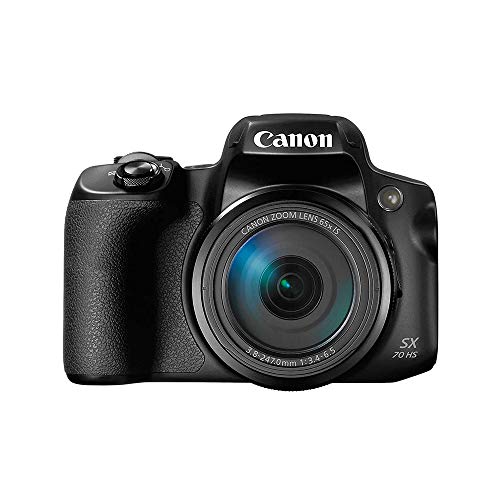
- Best for: All-round safari shooting, where wide landscapes and distant animals share the same day.
- 65x optical zoom, 21 to 1365 mm equivalent; widest wide end in this set
- 20.3 MP CMOS sensor, 1/2.3-inch; DIGIC 8 processor
- 4K video; 4K time-lapse; RAW (.CR3) support
- 5-stop Dual Sensing image stabilisation; 2.36M-dot OLED EVF

- Best for: Balanced zoom and framing, with a viewfinder that works in harsh sunlight.
- 60x optical zoom, 20 to 1200 mm equivalent
- 18.1 MP MOS sensor
- 4K video and 4K Photo recording; Power O.I.S. (Power Optical Image Stabilizer)
- 2,360K-dot OLED electronic viewfinder; 1,840K-dot touch LCD as described in Panasonic material

- Best for: First safaris on a budget, where reach matters more than 4K video.
- 52x optical zoom, 24 to 1248 mm equivalent
- 16 MP CMOS sensor
- 1080p Full HD video
- Wi-Fi connectivity, PIXPRO Remote Viewer app
All 4 Picks at a Glance
| Product | Specs | Action |
|---|---|---|
| Canon PowerShot SX70 HS Digital Camera |
| Check price on Amazon |
| Panasonic LUMIX FZ80D Point and Shoot Digital Camera |
| Check price on Amazon |
| Kodak PIXPRO Astro Zoom AZ528 |
| Check price on Amazon |
 Sony Cyber-Shot RX10 IV |
| Check price on Amazon |
Key takeaways
- Compare the best cameras for safari by zoom reach, autofocus and stabilisation, from 83x superzooms to a 1-inch sensor bridge camera for low light on safari.
What's inside
As an Amazon Associate I earn from qualifying purchases. This post may contain affiliate links at no extra cost to you.
On safari, the animal is rarely close, the light changes by the hour, and the moment lasts about three seconds. That combination makes zoom reach the first decision, autofocus the second, and stabilisation the third, because a long lens without a steady hand and a fast lock is just a heavy tube. A bridge camera with a built-in superzoom solves the problem in one body, while a larger sensor trades some reach for cleaner images at dawn and dusk.
This guide is for travellers booking a first safari, photographers who want one camera instead of a bag of lenses, and anyone who needs to photograph animals at distance without carrying professional gear. Every pick below was chosen from the names and specifications on its Amazon page, with zoom range, focus speed, and handling from a moving vehicle kept firmly in mind.
Quick Picks
As an Amazon Associate we earn from qualifying purchases.
| Product | Best for | Key spec from title |
|---|---|---|
| Nikon COOLPIX P950 | Maximum reach on a budget | 83x optical zoom with image stabilisation |
| Canon PowerShot SX70 HS | Widest wide end and 4K video | 65x optical zoom, 21 to 1365 mm |
| Panasonic LUMIX FZ80D | Balanced zoom with a real viewfinder | 60x optical zoom and 20 to 1200 mm lens |
| Kodak PIXPRO Astro Zoom AZ528 | Lowest cost superzoom | 52x optical zoom, 24 mm wide angle lens |
| Sony Cyber-Shot RX10 IV | Low light and fast autofocus | 25x optical zoom with 0.03 second autofocus |
How to Choose
Put zoom reach first, and read it in millimetres
Marketing counts zoom in multiples, but the number that matters is the longest focal length in millimetres, because that decides how large a distant animal appears. The P950 reaches 2000 mm, the SX70 HS reaches 1365 mm, and the RX10 IV stops at 600 mm, which sounds short until its larger sensor and faster lens are counted. A camera that starts at 20 or 21 mm also frames a whole landscape or a vehicle interior, while one that starts at 24 mm is tighter. Compare the full range, not the multiplier, and match the long end to the distance you expect to shoot from.
Demand autofocus that locks onto a moving animal
Safari animals walk, run, and vanish behind grass, so autofocus speed decides how many shots are sharp. The RX10 IV locks in 0.03 seconds with 315 phase-detection points and tracks at 24 frames per second, which is the strongest focus system here. The SX70 HS shoots ten frames per second with Dual Sensing stabilisation, while the P950 and AZ528 are slower and better suited to animals that pause. If your trip includes moving herds or birds in flight, put focus speed above zoom reach; if it is mostly resting animals, reach matters more.
Treat stabilisation as part of the lens, not an extra
At 1000 mm and beyond, the smallest hand movement becomes a large blur, and a vehicle engine adds vibration that no grip can remove. Every camera here lists image stabilisation, but the systems differ: the SX70 HS uses five-stop Dual Sensing stabilisation, the RX10 IV uses Optical SteadyShot rated at 4.5 stops, and the FZ80D uses Power Optical Image Stabiliser. Longer reach needs stronger stabilisation, so check the stabilisation claim against the longest focal length before choosing. A monopod or a beanbag on the vehicle door helps every camera here, whatever its stabiliser claims.
Check the viewfinder, the battery, and the dust
Bright African sun washes out a rear screen, so an electronic viewfinder is close to essential for framing at long range. The SX70 HS, FZ80D, and RX10 IV all have one, while the AZ528 relies on its LCD alone, which is a real handicap at midday. Battery life matters because charging points are scarce on game drives, and a camera that records RAW gives more room to rescue an exposure taken in harsh light. Dust and moisture resistance is a bonus rather than a given, and the RX10 IV is the only pick here that lists a dust- and moisture-resistant body.
The 5 Best Options
Nikon COOLPIX P950 Superzoom Digital Camera
The P950 is the reach champion of this guide, stretching from 24 mm to 2000 mm in a single fixed lens, which means a lion across a plain fills the frame without a lens change. It records 4K video, supports RAW format, and carries a rotating LCD for awkward angles from a vehicle seat. For a traveller who wants the longest possible reach in one camera, nothing else here comes close.
Specs
- 83x optical zoom, 24 to 2000 mm equivalent
- 16 MP sensor; RAW format support
- 4K Ultra HD video
- Image stabilisation; Wi-Fi connectivity
- Rotating LCD screen
Best for: Maximum zoom reach, when the animal is far away and there is no second chance.
Watch out for: At 2000 mm the image depends heavily on stabilisation and support, so check the listing and plan on a beanbag or monopod.
ASIN: B083K41SKC
Canon PowerShot SX70 HS Digital Camera
- Best for: All-round safari shooting, where wide landscapes and distant animals share the same day.
- 65x optical zoom, 21 to 1365 mm equivalent; widest wide end in this set
- 20.3 MP CMOS sensor, 1/2.3-inch; DIGIC 8 processor
- 4K video; 4K time-lapse; RAW (.CR3) support
- 5-stop Dual Sensing image stabilisation; 2.36M-dot OLED EVF
All-round safari shooting, where wide landscapes and distant animals share the same day.
The small 1/2.3-inch sensor is noisier at dawn and dusk than the larger sensor in the RX10 IV, so check low-light expectations before buying.
The SX70 HS is the most balanced superzoom here, pairing a 65x zoom with 4K video, a fast DIGIC 8 processor, and a viewfinder that stays usable in bright sun. Its wide end starts at 21 mm, the widest in this set, which helps with landscapes and group shots inside a vehicle. Ten frames per second and RAW support give it room for both fast action and careful editing later.
Panasonic LUMIX FZ80D Point and Shoot Digital Camera
- Best for: Balanced zoom and framing, with a viewfinder that works in harsh sunlight.
- 60x optical zoom, 20 to 1200 mm equivalent
- 18.1 MP MOS sensor
- 4K video and 4K Photo recording; Power O.I.S. (Power Optical Image Stabilizer)
- 2,360K-dot OLED electronic viewfinder; 1,840K-dot touch LCD as described in Panasonic material
Balanced zoom and framing, with a viewfinder that works in harsh sunlight.
Confirm the live listing for the DC-FZ80D model, since earlier FZ80 versions share a similar name.
The FZ80D is the steady middle choice, with a 60x zoom from 20 to 1200 mm, 4K video and 4K Photo modes, and a high-resolution OLED viewfinder for bright conditions. Its Post Focus and focus-stacking features help when depth of field is thin at long range, and the touch LCD makes focus selection quick. It is a practical camera for a traveller who wants a viewfinder, a long zoom, and 4K without paying for the fastest autofocus.
Kodak PIXPRO Astro Zoom AZ528
- Best for: First safaris on a budget, where reach matters more than 4K video.
- 52x optical zoom, 24 to 1248 mm equivalent
- 16 MP CMOS sensor
- 1080p Full HD video
- Wi-Fi connectivity, PIXPRO Remote Viewer app
First safaris on a budget, where reach matters more than 4K video.
There is no electronic viewfinder, so framing in bright sun relies on the LCD; also confirm the Black ASIN, since the Midnight Blue variant uses a different ASIN.
The AZ528 is the most affordable way into serious zoom here, with a 52x lens reaching 1248 mm, Wi-Fi for phone transfer, and a simple 3-inch screen. It records 1080p video rather than 4K, and its autofocus is slower than the leaders, so it suits patient shooting of resting animals rather than birds in flight. For a first safari on a tight budget, it puts real reach in the bag without the cost of a premium bridge camera.
Sony Cyber-Shot RX10 IV
- Best for: Fast animals and low light, where autofocus speed and sensor size beat extra zoom.
- 25x optical zoom, ZEISS Vario-Sonnar T* 24 to 600 mm, f/2.4 to 4
- 20.1 MP 1-inch Exmor RS stacked CMOS sensor; BIONZ X processor
- 0.03-second autofocus; 315 phase-detection AF points
- 24 fps continuous shooting with AF/AE tracking
Fast animals and low light, where autofocus speed and sensor size beat extra zoom.
One 2026 source states this model was discontinued in 2025, so check the live listing carefully for new versus used or third-party stock before buying.
The RX10 IV trades zoom reach for speed and image quality, pairing a 1-inch sensor with a 24 to 600 mm f/2.4 to 4 Zeiss lens and autofocus that locks in 0.03 seconds. It shoots 24 frames per second with tracking, records 4K with full pixel readout, and its dust- and moisture-resistant body suits open vehicles. It is the pick for dawn and dusk shooting, moving animals, and anyone who values clean files over extreme reach.
Which One Fits Your Situation
Animals are far away and you get one chance
Choose the Nikon COOLPIX P950. Its 2000 mm reach fills the frame with animals other cameras can barely find, and RAW support gives room to rescue a harsh exposure. Bring a beanbag for the vehicle door, because stabilisation alone cannot tame 2000 mm from a moving truck.
You want one camera for landscapes and animals alike
Choose the Canon PowerShot SX70 HS. Its 21 mm wide end frames a whole scene, its 1365 mm long end reaches across a plain, and 4K video with a proper viewfinder covers the bright middle of the day. It is the most versatile single camera in this set.
You need a viewfinder and a long zoom without the top cost
Choose the Panasonic LUMIX FZ80D. The OLED viewfinder stays readable in sun that defeats a rear screen, the 60x zoom reaches 1200 mm, and 4K Photo mode helps catch a moment that a single still might miss. It is the sensible middle of the range.
Dawn, dusk, or fast-moving animals
Choose the Sony Cyber-Shot RX10 IV. Its 1-inch sensor stays cleaner in low light, its autofocus locks in 0.03 seconds, and 24 frames per second with tracking catches movement the slower cameras miss. Check the live listing for new stock first, given the discontinuation reports.
Common Mistakes
- Judging zoom by the multiplier alone. A 25x zoom on a large-sensor camera can outshoot an 83x zoom in low light, so compare focal lengths in millimetres and sensor size together.
- Shooting at full zoom handheld from a moving vehicle. Long lenses magnify every vibration, so a beanbag or monopod is part of the kit, not an accessory.
- Forgetting the viewfinder. A rear screen washes out in bright sun, and the cameras without a viewfinder are the hardest to aim at midday.
- Filling the card with video and no stills plan. 4K video eats storage quickly, so carry spare cards and decide each morning what you are shooting.
- Ignoring dust and battery. Open vehicles, dust, and long drives punish unsealed bodies and small batteries, so pack spares and a cleaning cloth.
Frequently Asked Questions
How much zoom do I really need for a safari?
It depends on distance, but 600 mm is a useful minimum and 1200 mm or more is comfortable for animals across a plain. The P950 reaches 2000 mm, the SX70 HS reaches 1365 mm, and the RX10 IV reaches 600 mm with a larger sensor. Longer reach helps with shy animals, while a larger sensor helps at dawn and dusk.
Is a bridge camera better than a DSLR for safari?
For most travellers, yes. A bridge camera covers 24 to 2000 mm in one sealed body with no lens changes in dust, while a DSLR needs several lenses and constant swapping. A DSLR wins on sensor size and focus speed, but the bridge camera wins on weight, simplicity, and keeping dust out of the sensor.
Do I need 4K video on a safari camera?
It helps when animals move, because a 4K clip can be paused and a still extracted later, and it records behaviour that a single frame cannot. The P950, SX70 HS, FZ80D, and RX10 IV all record 4K, while the AZ528 records 1080p. If video matters, choose one of the 4K models and carry spare cards.
What should I check before buying a safari camera?
Check the live Amazon listing for new stock and the correct model, especially for the RX10 IV, which has discontinuation reports. Confirm the zoom range in millimetres, the presence of a viewfinder, and the stabilisation rating, then pack spare batteries, spare cards, and a beanbag for the vehicle door.
Related guides
More from Amazon
Programs that pair well with the guide above. Offers and eligibility are set by Amazon and may change.
Free shipping on eligible items, Prime Video and more. Eligible new members can start with a free trial.
Start a Prime free trialAudiobooks and podcasts to listen to on the go. Eligible new members can start with a free trial.
Try Audible freeAd-free music streaming. Eligible new subscribers can start with a free trial.
Try Music Unlimited freeA free business account with business pricing and bulk-buying tools for work, shop or home office.
Create a business accountAs an Amazon Associate we earn from qualifying purchases.










Write Your Review
No reviews yet. Be the first to share your experience!