
Our Short List of 3
All 4 Picks at a Glance
| Product | Specs | Action |
|---|---|---|
 Canon EOS RP (ASIN: B07N9KDCGV) | Check price on Amazon | |
 Nikon Z5 (ASIN: B08DCJNTBX) | Check price on Amazon | |
 Sony a7 III with 28-70mm Lens (ASIN: B07B45D8WV) | Check price on Amazon | |
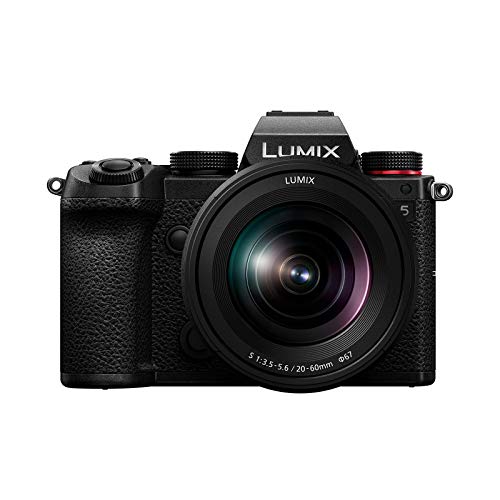 Panasonic Lumix S5 with 20-60mm Lens (ASIN: B08FCYFL42) | Check price on Amazon |
Key takeaways
- Compare the best entry level full sensor (full frame) digital cameras, from the compact Canon EOS RP to the video-ready Lumix S5, with specs and buying tips.
What's inside
As an Amazon Associate I earn from qualifying purchases. This post may contain affiliate links at no extra cost to you.
Disclosure: As an Amazon Associate, we may earn from qualifying purchases made through links on this page, at no additional cost to you.
Best Entry Level Full Sensor Digital Cameras
“Full sensor” is the phrase many shoppers use for a full-frame sensor: a sensor that measures roughly 36 x 24mm, the same size as a frame of 35mm film. Compared with the smaller APS-C and Micro Four Thirds sensors in most beginner cameras, a full-frame sensor collects more light per photo, holds up better at high ISO settings, and makes it easier to blur backgrounds behind portraits. It used to be a format reserved for professionals, but every major brand now sells an entry tier of full-frame bodies designed as a first step up.
This guide covers that entry tier only. These are the most approachable full-frame digital cameras in each system: the Canon EOS RP, Nikon Z5, Sony a7 III and Panasonic Lumix S5. They trade the fastest burst rates and the newest autofocus computers of flagship bodies for simpler controls, lighter weight and a gentler learning curve, while keeping the full-frame image quality that is the whole point of the upgrade. If you are moving up from a phone or a crop-sensor camera and want to know which first full-frame body fits the way you shoot, start here.
Quick Picks
- Canon EOS RP — the lightest, simplest route into full frame, with friendly menus and a fully articulating touchscreen for solo creators.
- Nikon Z5 — the stills-first pick, with in-body stabilisation, dual card slots and weather sealing that the others in this group do not all match.
- Sony a7 III — the proven all-rounder, pairing a fast autofocus system and strong battery life with the deep Sony E lens catalogue.
- Panasonic Lumix S5 — the video-leaning pick, with 10-bit 4K recording, V-Log and a versatile 20-60mm kit zoom in the box.
The Cameras in Detail
Canon EOS RP (ASIN: B07N9KDCGV)
See the Canon EOS RP on Amazon
The EOS RP is built around a 26.2-megapixel full-frame CMOS sensor and Canon’s DIGIC 8 processor. Its Dual Pixel CMOS AF system offers 4,779 selectable autofocus positions, focuses in light as low as EV -5, and includes Eye Detection AF that firmware updates have steadily improved. The body is the smallest and lightest in this group at about 485g with battery and card, and it carries a 2.36-million-dot electronic viewfinder plus a 3.0-inch vari-angle touchscreen that flips forward for self-recording and vlogging.
Video tops out at 4K UHD at 24p, recorded with a 1.7x crop and contrast-detection autofocus rather than Dual Pixel AF, while Full HD 1080p at up to 60p uses the full sensor width. Stills run at up to 5 frames per second, the ISO range spans 100-40,000 (expandable to 50-102,400), and files are written to a single SD card slot with UHS-II support. There is no in-body stabilisation, so stabilised RF lenses or a tripod do the steadying. Wi-Fi and Bluetooth pair with Canon’s Camera Connect app, and the RF mount also accepts EF and EF-S lenses through Canon’s optional mount adapter.
Highlights
– Lightest full-frame body here, easy to carry all day
– Fully articulating touchscreen suits video and self-shooting
– Simple, guided menus that suit first-time system camera owners
– Huge adapted EF lens library available through the mount adapter
Considerations
– 4K video is cropped and lacks Dual Pixel AF
– Single card slot and no in-body stabilisation
– Modest battery capacity, so spare LP-E17 packs are worth packing
Nikon Z5 (ASIN: B08DCJNTBX)
The Nikon Z5 uses a 24.3-megapixel full-frame CMOS sensor with the EXPEED 6 processor and a 273-point hybrid autofocus system with Eye-Detection AF for people and Animal-Detection AF for dogs and cats. Unlike the Canon above, it includes 5-axis in-body image stabilisation rated to about five stops, which steadies any Z-mount lens you attach, including manual glass. Photographers also get two SD card slots, both UHS-II compatible, and a magnesium alloy body with dust and moisture sealing that feels a class above its entry position.
The electronic viewfinder is a sharp 3.69-million-dot OLED, paired with a 3.2-inch tilting touchscreen. Stills shoot at up to 4.5 frames per second with an ISO range of 100-51,200 (expandable to 50-102,400). Video covers 4K UHD at 30p with a 1.7x crop, or uncropped Full HD at up to 60p, which makes the Z5 primarily a stills camera with capable casual video rather than a hybrid flagship. The EN-EL15c battery can charge over USB, handy for travel. Altogether it is the most traditionally “camera-like” body in this roundup, aimed at photographers who plan to grow into the Z system.
Highlights
– In-body stabilisation and dual UHS-II card slots at the entry tier
– Weather-sealed build and an excellent high-resolution viewfinder
– Strong stills image quality with Nikon’s colour science
– USB charging and good battery life for long shooting days
Considerations
– 4K video uses a significant 1.7x crop
– Burst rate of 4.5 fps is the slowest here for action
– Screen tilts rather than fully articulating
Sony a7 III with 28-70mm Lens (ASIN: B07B45D8WV)
See the Sony a7 III kit on Amazon
The a7 III pairs a 24.2-megapixel back-illuminated full-frame Exmor R CMOS sensor with the BIONZ X processor. Its autofocus system is the most ambitious in this group: 693 phase-detection points and 425 contrast-detection points covering about 93 percent of the frame, with Real-time Eye AF for people and continuous shooting at up to 10 frames per second with AF/AE tracking. Five-axis in-body stabilisation, dual SD card slots (one UHS-II), and 14-bit RAW output round out a specification that still reads as current.
Video includes 4K at up to 30p with HDR support, S-Log2 and S-Log3 profiles for grading, and Full HD at up to 120p for slow motion. The NP-FZ100 battery is rated for roughly 610 shots through the viewfinder or 710 with the LCD, the best endurance in this group by a wide margin. This listing bundles the FE 28-70mm f/3.5-5.6 OSS kit zoom, so the camera is ready to shoot out of the box, and it opens the door to the largest native full-frame lens catalogue of any system here. The trade-offs are ergonomic: the 2.36-million-dot viewfinder and 921,600-dot tilting touchscreen feel a generation behind, and the menu system takes longer to learn.
Highlights
– Fast, confident autofocus with effective Eye AF and 10 fps bursts
– Outstanding battery life and dual card slots
– Kit lens included, ready to shoot immediately
– Deepest native lens selection of the four systems
Considerations
– Older screen, viewfinder and menu design
– Touch controls are limited compared with newer bodies
– Kit zoom is a starter lens most owners eventually upgrade
Panasonic Lumix S5 with 20-60mm Lens (ASIN: B08FCYFL42)
See the Panasonic Lumix S5 kit on Amazon
The Lumix S5 is the hybrid of the group, built around a 24.2-megapixel full-frame CMOS sensor in a compact magnesium alloy body with dust and splash resistance. Its 5-axis Dual I.S. 2 stabilisation works with stabilised L-mount lenses for up to 6.5 stops of correction, and the 225-area Depth From Defocus autofocus system is contrast-based, prioritising accuracy over raw tracking speed. Stills shoot at up to 7 frames per second, with an ISO range of 100-51,200 supported by Dual Native ISO for cleaner shadows in low light.
Video is where the S5 pulls ahead of this entry tier: it records 4K at up to 30p in 4:2:2 10-bit colour using the full sensor width, 4K 60p in 4:2:0 10-bit with an APS-C crop, Full HD at up to 180 frames per second for slow motion, and includes the V-Log profile with waveform and vector scope tools normally found on cinema cameras. Two SD card slots (one UHS-II, one UHS-I), a 2.36-million-dot viewfinder and a fully articulating 3.0-inch touchscreen complete the package. The bundled Lumix S 20-60mm f/3.5-5.6 zoom starts noticeably wider than typical kit lenses, which suits travel, interiors and video work, and the L-Mount alliance means lenses from Leica and Sigma fit natively.
Highlights
– Best video specification here, including 10-bit internal recording and V-Log
– Strong stabilisation and a fully articulating screen
– Unusually wide 20-60mm kit zoom included
– Dual card slots and weather-resistant build
Considerations
– Contrast-based autofocus can hunt in busy video scenes
– 4K 60p mode crops to an APS-C image area
– L-mount lens range is smaller than Sony’s or Canon’s, though growing
How to Choose
Start with the lens system, not the body. A first full-frame camera is really a commitment to a lens mount: Canon RF, Nikon Z, Sony E or the L-Mount alliance. Bodies get replaced; lenses stay. Look at the lenses you want in two or three years, especially an affordable fast prime for portraits and a standard zoom, and let that steer the choice.
Match the camera to your stills-to-video balance. Mostly photographs? The Nikon Z5 and Sony a7 III put their budgets into stills hardware like dual slots, stabilisation and battery life. Mostly video, or an even split? The Lumix S5’s 10-bit recording and monitoring tools are a clear step up, and the EOS RP’s flip-forward screen suits solo talking-head work.
Check the handling details you will live with. Card slots (one or two), screen style (tilting versus fully articulating), viewfinder resolution and battery endurance differ more between these bodies than image quality does. Any of the four sensors will produce excellent files; the body you enjoy carrying is the one that gets used.
Plan the real starter budget. Body-only listings such as the EOS RP and Z5 need a lens before you can shoot, while the Sony and Panasonic kits here include a starter zoom. Factor in a memory card, a spare battery and a basic prime lens, and the honest total is clearer.
Key Specifications Explained
Full frame versus crop sensors. A full-frame sensor (about 36 x 24mm) is roughly 2.3 times the area of APS-C. That area gathers more light, which translates into cleaner high-ISO files, wider usable dynamic range and shallower depth of field at the same aperture — the practical reasons photographers step up.
In-body image stabilisation (IBIS). The sensor shifts to counteract handshake, helping with slower shutter speeds and steadier handheld video. The Nikon, Sony and Panasonic here include it; the Canon EOS RP does not, relying on stabilised lenses instead.
Autofocus coverage and Eye AF. More focus points across more of the frame means the camera can lock onto off-centre subjects without recomposing. Eye AF, which finds and holds a subject’s eye, is the single feature portrait shooters feel most when stepping up.
10-bit video and log profiles. Standard video records 8-bit colour; 10-bit recording keeps far more colour information, which survives grading without banding. Log profiles such as Panasonic’s V-Log or Sony’s S-Log record a flat image designed to be colour-graded later.
Dual card slots. Two slots let the camera write a backup copy of every shot, or split stills and video. For paid or once-only events, that redundancy matters; for casual shooting, one fast slot is usually enough.
Setup and Use Tips
- Update the firmware first. Entry bodies like these received meaningful autofocus improvements through firmware — the EOS RP’s Eye Detection AF is a good example — so update before your first real shoot.
- Buy the prime lens early. An affordable 50mm-class f/1.8 prime shows off the full-frame look (soft backgrounds, low-light reach) better than any kit zoom and teaches you to move your feet.
- Set up back-button focus or touch AF in a way that matches your subject; portraits benefit from Eye AF on a half-press, while landscapes are easier with a single movable point.
- Carry a spare battery. Mirrorless full-frame bodies draw more power than the DSLRs many upgraders are used to, and the EOS RP’s smaller battery in particular rewards a spare in the bag.
- Format cards in camera and, on the dual-slot bodies, set the second slot to backup for important shoots and to overflow for everyday ones.
Common Mistakes to Avoid
- Judging by megapixels alone. All four cameras sit between 24 and 26 megapixels, which prints large and crops comfortably. Autofocus, stabilisation and lens choice will change your results more than a few extra pixels.
- Forgetting the 4K crop. On the EOS RP and Z5, 4K video narrows the field of view by about 1.7x, so wide scenes need a wider lens than you expect. Check the crop before planning video work.
- Skipping the lens budget. A body-only purchase that leaves nothing for a decent lens produces worse images than a kit bought as a set. Price the system, not the body.
- Expecting flagship autofocus. These are entry-tier bodies: their subject tracking is good, not magical. For fast sports or birds in flight, technique and lens choice still do most of the work.
- Ignoring used lens compatibility. Canon EF, Nikon F and other legacy lenses adapt well to these mounts and can stretch a starter budget, but confirm adapter behaviour — especially autofocus and stabilisation — for the exact lens you own.
FAQ
What does “full sensor” mean in a camera listing?
It is informal shorthand for a full-frame sensor, the 36 x 24mm format carried over from 35mm film. Every camera in this guide uses one. It is larger than APS-C and Micro Four Thirds sensors, which is why these bodies handle low light and background blur the way they do.
Is full frame worth it for a beginner?
If you shoot portraits, low-light scenes or plan to print large, the difference is visible and these entry bodies are designed to be approachable. If you mostly shoot daylight travel snapshots, a good crop-sensor camera may serve you just as well for less — the format matters most at the extremes of light and lens aperture.
Which of these is best for video?
The Panasonic Lumix S5, thanks to 10-bit internal recording, V-Log and strong stabilisation. The Sony a7 III is a solid second with 4K HDR and S-Log profiles, while the Canon EOS RP and Nikon Z5 treat video as a secondary feature with cropped 4K.
Can I use my old DSLR lenses on these cameras?
Usually, yes, with the manufacturer’s mount adapter: Canon EF lenses adapt to the EOS RP, Nikon F lenses to the Z5, and Sony A-mount and third-party glass have adapter routes on the a7 III. Autofocus and stabilisation support varies by lens, so verify your specific lenses before buying.
How many megapixels do I need for prints?
The 24-26 megapixels offered here are enough for sharp prints at A3 and larger, with room to crop. Technique, lens quality and light affect print quality far more than small differences in sensor resolution at this level.
Final Verdict
There is no wrong sensor in this group — all four deliver genuine full-frame image quality — so the right choice is about emphasis. Pick the Canon EOS RP if you want the lightest body and the friendliest learning curve, especially for stills and casual video. Pick the Nikon Z5 if you are a stills-first photographer who values stabilisation, dual slots and a sealed body. Pick the Sony a7 III kit if you want the strongest all-round autofocus, the best battery life and the widest choice of lenses as you grow. Pick the Panasonic Lumix S5 kit if video matters as much as stills and you want 10-bit colour and monitoring tools from day one. Any of them is a sound first step onto a full-frame system you can build on for years.
Related guides
More from Amazon
Programs that pair well with the guide above. Offers and eligibility are set by Amazon and may change.
Free shipping on eligible items, Prime Video and more. Eligible new members can start with a free trial.
Start a Prime free trialAudiobooks and podcasts to listen to on the go. Eligible new members can start with a free trial.
Try Audible freeAd-free music streaming. Eligible new subscribers can start with a free trial.
Try Music Unlimited freeA free business account with business pricing and bulk-buying tools for work, shop or home office.
Create a business accountAs an Amazon Associate we earn from qualifying purchases.










Write Your Review
No reviews yet. Be the first to share your experience!