
Our Short List of 3
All 3 Picks at a Glance
| Product | Specs | Action |
|---|---|---|
 KODAK PIXPRO FZ45 (ASIN: B0B8PDHRWY) | Check price on Amazon | |
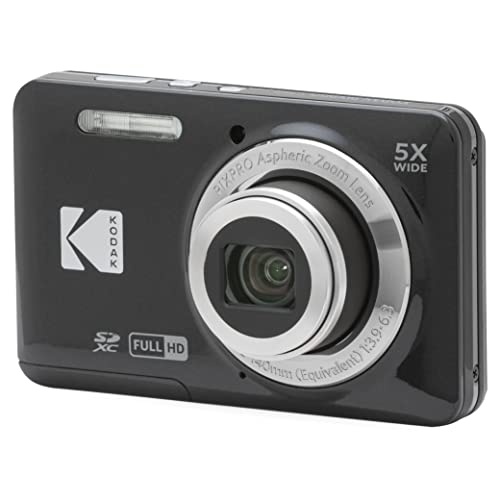 KODAK PIXPRO FZ55 (ASIN: B09ZRN1N3Z) | Check price on Amazon | |
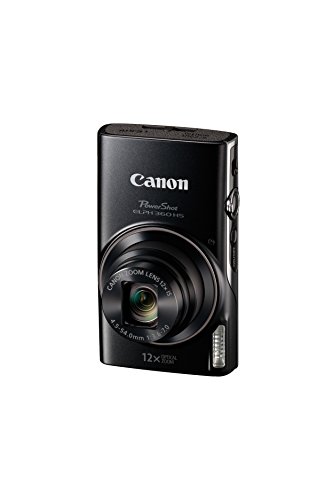 Canon PowerShot ELPH 360 HS (ASIN: B01AA093UW) | Check price on Amazon |
Key takeaways
- Compare the best entry level compact cameras for phone upgraders: simple auto modes, real optical zoom and easy sharing, from Kodak, Canon and Panasonic.
What's inside
As an Amazon Associate I earn from qualifying purchases. This post may contain affiliate links at no extra cost to you.
Disclosure: As an Amazon Associate, we may earn from qualifying purchases made through links on this page, at no additional cost to you.
Best Entry Level Compact Cameras for Beginners Stepping Up From a Phone
A phone is a fine first camera, but it has hard limits: digital zoom that turns distant subjects into watercolor smears, a tiny sensor that struggles after sunset, and a battery that is also your maps, messages and music. An entry level compact camera fixes those specific problems without asking you to learn photography first. The four cameras in this guide are all true point-and-shoot models built around one idea — you turn the camera on, it makes the technical decisions, and you press one button. What separates them is how much real optical zoom you get, how the camera is powered, and how easily photos move to your phone for sharing.
Every pick here uses a proper extending zoom lens rather than a fixed phone-style lens, records to a standard SD card, and works fully in automatic mode from the first shot. They are ranked from the simplest and most forgiving option upward, so the further down the list you go, the more reach and creative headroom you gain in exchange for a slightly larger body and a little more to learn. If you have never owned a dedicated camera before, any of the four will feel familiar within an afternoon; the right choice depends mostly on what you shoot and how you prefer to charge and share.
Quick Picks
- KODAK PIXPRO FZ45 (ASIN: B0B8PDHRWY) — the simplest start: AA batteries, a 4x zoom and almost nothing to configure. See it on Amazon
- KODAK PIXPRO FZ55 (ASIN: B09ZRN1N3Z) — a step up with a rechargeable battery, 5x zoom and a wider 28mm starting point. See it on Amazon
- Canon PowerShot ELPH 360 HS (ASIN: B01AA093UW) — the slim, social option with 12x zoom plus built-in Wi-Fi and NFC for phone transfers. See it on Amazon
- Panasonic LUMIX ZS99 (ASIN: B0DQ9HY4G6) — the long-reach option: a 30x zoom, 4K video and a tilting touchscreen in a still-pocketable body. See it on Amazon
KODAK PIXPRO FZ45 (ASIN: B0B8PDHRWY)
View the KODAK PIXPRO FZ45 on Amazon
The FZ45 is the camera to buy when the goal is zero learning curve. It pairs a 16 megapixel sensor with a 4x optical zoom lens that starts at a 27mm-equivalent wide angle, wide enough for group photos at a dinner table or a whole room at a family gathering, and zooms in modestly for portraits and closer details. Video tops out at 1080p Full HD, which is plenty for casual clips, and the fixed 2.7-inch LCD on the back is where you compose and review everything — there are no dials to knock out of place and no menu depth to get lost in.
The detail that defines the FZ45 is its power source: it runs on AA batteries. That sounds old-fashioned until you are traveling, at a festival, or handing the camera to a kid for the day — when the batteries fade, you swap in a fresh pair from any shop instead of hunting for an outlet and a specific charger. The trade-off is that heavy shooters will cycle through batteries quickly, so rechargeable AAs at home are the sensible setup. As a first dedicated camera for someone who wants better-than-phone results with literally no setup beyond inserting batteries and a card, it is the lowest-friction option in this guide.
Highlights
– Runs on AA batteries — replacements are available anywhere, no proprietary charger to carry
– 16MP sensor with 4x optical zoom starting at a wide 27mm equivalent
– 1080p Full HD video for casual clips
– Minimal controls and automatic exposure keep it genuinely point-and-shoot
Considerations
– The 4x zoom is the shortest reach here; distant subjects stay distant
– AA power gets expensive with disposables — budget for rechargeable AAs
– Fixed 2.7-inch screen is smaller and less detailed than the Panasonic’s display
KODAK PIXPRO FZ55 (ASIN: B09ZRN1N3Z)
View the KODAK PIXPRO FZ55 on Amazon
The FZ55 keeps the same friendly formula as its smaller sibling but fixes its main inconveniences. A 16 megapixel CMOS sensor sits behind a 5x optical zoom lens covering a 28–140mm equivalent range — a useful step more reach than the FZ45, enough to tighten a portrait or pick out a subject across a room without digital zoom. It records 1080p Full HD video, focuses as close as 5cm in macro mode for flowers and small details, and its automatic exposure and scene modes (including Portrait, Landscape and Macro) mean the camera still makes every decision unless you deliberately go looking for settings.
The practical upgrade is power: the FZ55 uses a rechargeable lithium-ion battery that charges over USB with the included cable and adapter, so it tops up from the same chargers and power banks you already carry for a phone. At roughly a quarter of a pound it is light enough to forget in a jacket pocket, and it accepts SD, SDHC and SDXC cards up to 512GB, so storage is effectively unlimited for a beginner. Choose this one if you like the FZ45’s simplicity but know you would resent feeding a camera disposable batteries every few weeks.
Highlights
– Rechargeable Li-ion battery with USB charging — no battery swaps to plan around
– 5x optical zoom (28–140mm equivalent) with a 5cm macro mode
– 16MP CMOS sensor and 1080p Full HD video
– Very light at about 0.23 pounds, with support for SD cards up to 512GB
Considerations
– Stabilization is digital rather than optical, so zoomed shots in low light need a steady hand
– No Wi-Fi — photos move to a computer or phone via the card or a cable
– The fixed 2.7-inch LCD does not tilt for low or high angles
Canon PowerShot ELPH 360 HS (ASIN: B01AA093UW)
View the Canon PowerShot ELPH 360 HS on Amazon
The ELPH 360 HS is the pick for beginners whose photos are destined for a phone anyway. Its built-in Wi-Fi and NFC connect to Canon’s Camera Connect app, so shots can move to your phone for posting without a card reader or computer — the feature that most reduces friction for people stepping up from a phone. Behind that convenience is a 20.2 megapixel CMOS sensor and a DIGIC 4+ processor, a 12x optical zoom lens covering a 25–300mm equivalent range, and Canon’s Intelligent IS optical stabilization, which automatically picks a stabilization mode for the situation, including panning and macro shooting.
Canon also leans into automation that beginners actually use: Hybrid Auto records a few seconds of video before each still to build a highlight reel of your day, Creative Shot generates artistic variations of a photo automatically, and Story Highlights assembles images and clips into a short movie. Video records at 1080p Full HD, the rear screen is a clear 3.0-inch LCD, and the included NB-11LH battery charges in its own compact wall charger. One honest caveat: this is an established model that has been in Canon’s lineup for years, so check the listing carefully for the exact configuration and seller before ordering — the camera itself remains a well-rounded, slim step-up from a phone.
Highlights
– Built-in Wi-Fi and NFC with the Canon Camera Connect app for fast phone transfers
– 12x optical zoom (25–300mm equivalent) with optical Intelligent IS stabilization
– 20.2MP CMOS sensor, DIGIC 4+ processor and 1080p Full HD video
– Beginner-friendly extras like Hybrid Auto, Creative Shot and Story Highlights
Considerations
– A long-running model — verify the seller and what is in the box on the listing
– No touchscreen and no 4K video; the Panasonic below covers both
– The battery is a proprietary pack, so spares must be Canon NB-11LH type
Panasonic LUMIX ZS99 (ASIN: B0DQ9HY4G6)
View the Panasonic LUMIX ZS99 on Amazon
The ZS99 is the entry point for beginners who already know a short zoom will frustrate them — at concerts, school events, wildlife in the garden, or travel landmarks across a river. Its LEICA DC lens delivers a 30x optical zoom spanning a 24–720mm equivalent range, yet the body still slips into a jacket pocket. A 20.3 megapixel BSI CMOS sensor feeds stills and 4K video at 30p, and Panasonic’s 5-Axis HYBRID O.I.S.+ stabilization works hard to keep the long end of that zoom usable handheld, which is exactly where new photographers usually lose shots to blur.
Despite the bigger specification sheet, the ZS99 stays beginner-appropriate: Intelligent Auto handles exposure, the 3.0-inch touchscreen tilts up and down for shooting over crowds or down at pets, and 4K Photo mode pulls sharp still frames from 30fps bursts so fast moments are easier to catch. Bluetooth and Wi-Fi handle phone transfers, and the battery charges in-camera over USB-C with the same cable as a modern phone — a small thing that removes one more charger from your bag. It is the largest and most capable camera here, and the one to choose if you expect your first camera to last through growing ambitions rather than be replaced by them.
Highlights
– 30x optical zoom (24–720mm equivalent) LEICA DC lens in a pocketable body
– 20.3MP BSI CMOS sensor with 4K video and 4K Photo burst capture
– 5-Axis HYBRID O.I.S.+ stabilization helps at long zoom settings
– Tilting touchscreen, Bluetooth/Wi-Fi sharing and USB-C in-camera charging
Considerations
– The most complex camera here — plan a little time to learn its menus
– Small 1/2.3-inch sensor still limits very low-light quality, as with all four picks
– Larger and heavier than the Kodak models, though still pocket-sized
How to Choose
Start with how far away your subjects usually are. For family life, pets and everyday scenes within the same room or garden, a 4x or 5x zoom like the two Kodak models is honestly enough, and you gain the smallest, simplest cameras. If you regularly shoot school plays, sports from the stands, birds or travel landmarks, zoom reach becomes the deciding factor: the Canon’s 12x covers moderate distances, and the Panasonic’s 30x covers almost everything a beginner will point a camera at.
Next, think about power and sharing, the two daily-life details that decide whether a camera gets used or left in a drawer. AA batteries (FZ45) are foolproof on the road but a recurring errand; rechargeable packs (FZ55, ELPH 360 HS) are cheaper to live with; USB-C in-camera charging (ZS99) is the most phone-like of all. For sharing, only the Canon and Panasonic move photos to a phone wirelessly — if posting quickly matters to you, that alone can settle the choice. Finally, be honest about video: all four record at least 1080p, but only the ZS99 records 4K, which matters if you plan to crop clips or want footage that holds up on a large TV.
Key Specifications Explained
Optical zoom vs. digital zoom. Optical zoom physically moves lens elements, so a 12x or 30x optical zoom keeps full detail at every setting. Digital zoom just crops and enlarges the middle of the image, throwing detail away. Every camera here is rated by its optical zoom; treat any digital zoom figure as a last resort.
Sensor size and megapixels. All four cameras use a 1/2.3-inch sensor — larger than a phone’s main sensor in some cases, similar in others — paired with 16 to 20.3 megapixels. In this class, megapixels mostly decide how large you can print or crop, not overall quality; the bigger beginner wins are the real zoom lens and optical stabilization.
Stabilization. Optical stabilization (Canon’s Intelligent IS, Panasonic’s HYBRID O.I.S.+) physically counteracts hand shake and is the single most useful feature at long zoom settings and in dim light. Digital stabilization (the FZ55) crops the frame electronically and helps video more than stills.
Video resolution. 1080p Full HD is fine for social sharing and most screens. 4K records four times the pixels, letting you crop a clip in editing and still keep HD quality — a real advantage of the ZS99 if you shoot video often.
Setup and Use Tips
Charge the camera fully and format the memory card in the camera before your first outing — formatting in-camera prevents the file errors that plague cards formatted on a computer. Then set the date and time; correct timestamps make photos sort properly alongside your phone pictures later. Leave the mode dial or menu on Intelligent Auto or the full Auto scene mode for your first few weeks: modern auto systems choose focus, exposure and flash more reliably than a beginner can, and your job is composition.
Hold the camera with both hands and tuck your elbows against your body, especially at long zoom settings where small movements are magnified. When the light drops, resist the urge to zoom all the way in — stepping closer and using the wide end of the lens gathers more light and shakes less. For the Wi-Fi models, install the maker’s app and pair the camera at home, not in the field; the first connection is always the fiddly one. Finally, copy your photos off the card regularly and keep one backup — an SD card is a transport medium, not an archive.
Common Mistakes to Avoid
The most common beginner mistake is using digital zoom beyond the optical limit and wondering why the results look painted. Zoom with the lens, then with your feet, and only crop later on a computer. A second mistake is shooting everything with the flash forced on indoors; try the camera’s night or low-light scene mode with flash off first, and let the stabilization do its work. Third, do not judge a camera by its first indoor evening photos — every small-sensor camera is at its weakest in dim household light, and the same camera outdoors in daylight is dramatically better.
Also avoid deleting photos on the camera’s small screen, where keepers and duds are hard to tell apart, and never pull the memory card while the camera is writing (the access light is still blinking), which can corrupt the whole card. Lastly, beginners often bury a good camera under accessories they do not need; a spare battery, a second card and a simple case cover real needs, and the money is better saved toward your next lens-free upgrade — a tripod or a class to learn composition.
FAQ
Is a compact camera actually better than my phone?
For zoom and handling, yes: a real optical zoom lens reaches subjects a phone can only crop toward, the larger grip and shutter button make deliberate shooting easier, and a dedicated battery means photography does not drain your phone. In good light at wide angles, a modern phone is competitive — the compact earns its place at distance, in motion, and over a long day of shooting.
How much zoom do I really need as a beginner?
Most everyday subjects — people, pets, buildings, holiday scenes — sit comfortably inside a 5x to 12x range. You only need the 30x class of the ZS99 if you regularly shoot wildlife, distant sports or stage events from fixed seats. Buy for your actual subjects; extra zoom you never use just adds size.
Which of these is easiest for someone who has never used a camera?
The KODAK FZ45. It has the fewest decisions attached to it: AA batteries, a short zoom, a simple screen and full automatic exposure. The FZ55 is nearly as simple if you prefer a rechargeable battery, while the Canon and Panasonic reward a little more curiosity.
Can these cameras send photos to my phone?
The Canon ELPH 360 HS (Wi-Fi and NFC) and the Panasonic ZS99 (Wi-Fi and Bluetooth) can, through their free companion apps. The two Kodak models cannot — with those, you transfer by removing the SD card or connecting a USB cable, which is slower but perfectly workable.
What memory card should I buy?
Any reputable SD, SDHC or SDXC card rated Class 10 or UHS-I is suitable for all four cameras. A 64GB card holds thousands of stills and a good amount of 1080p video; if you choose the ZS99 and plan to record 4K, a larger, faster-rated card is the safer match.
Final Verdict
For a first dedicated camera, match the pick to your habits rather than to the longest spec sheet. The KODAK PIXPRO FZ45 is the simplest possible start and the easiest to keep powered anywhere. The KODAK PIXPRO FZ55 adds a rechargeable battery and a touch more zoom for the same effortless experience. The Canon PowerShot ELPH 360 HS is the social photographer’s choice, pairing 12x zoom with genuinely easy phone sharing in a slim body. And the Panasonic LUMIX ZS99 is the one that grows with you — 30x reach, 4K video and a tilting touchscreen, still in a pocketable form. Any of the four will out-zoom and outlast your phone on a day of shooting; the best entry level compact camera is simply the one whose trade-offs fit the way you already take pictures.
Related guides
More from Amazon
Programs that pair well with the guide above. Offers and eligibility are set by Amazon and may change.
Free shipping on eligible items, Prime Video and more. Eligible new members can start with a free trial.
Start a Prime free trialAudiobooks and podcasts to listen to on the go. Eligible new members can start with a free trial.
Try Audible freeAd-free music streaming. Eligible new subscribers can start with a free trial.
Try Music Unlimited freeA free business account with business pricing and bulk-buying tools for work, shop or home office.
Create a business accountAs an Amazon Associate we earn from qualifying purchases.










Write Your Review
No reviews yet. Be the first to share your experience!