
Our Short List of 3

- Best for: wildlife, bird and field-sports photographers who want maximum reach and burst speed from a compact body.
- Sensor: 32.5MP APS-C CMOS
- Processor: DIGIC X
- ISO range: 100–32,000, expandable to 51,200
- Autofocus: Dual Pixel CMOS AF II, up to 651 zones, people, animal and vehicle detection
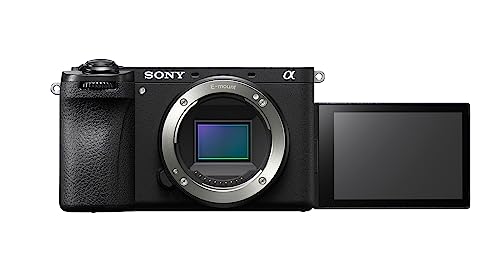
- Best for: hybrid creators and travellers who want advanced subject-recognition autofocus and serious video in a compact body.
- Sensor: 26MP APS-C Exmor R back-illuminated CMOS
- Processor: BIONZ XR with dedicated AI processing unit
- Autofocus: 759 phase-detection points, Real-time Recognition AF
- Burst: up to 11 fps with AF/AE tracking, over 1,000 JPEG frames

- Best for: stills-first photographers who print large, crop hard, and prefer physical dials to touchscreen menus.
- Sensor: 40.2MP APS-C X-Trans CMOS 5 HR
- Processor: X-Processor 5
- ISO range: native range extends down to ISO 125
- Autofocus: 425-point intelligent hybrid AF
All 5 Picks at a Glance
| Product | Specs | Action |
|---|---|---|
| Canon EOS R7 |
| Check price on Amazon |
| Sony a6700 |
| Check price on Amazon |
| Fujifilm X-T5 |
| Check price on Amazon |
 Nikon Z6 III |
| Check price on Amazon |
 Sony a7 IV |
| Check price on Amazon |
Key takeaways
- Compare five mid-range mirrorless cameras from Canon, Sony, Fujifilm and Nikon on sensor, autofocus, video and stabilization specs from each listing.
What's inside
As an Amazon Associate I earn from qualifying purchases. This post may contain affiliate links at no extra cost to you.
The hard part of buying a mid-range camera is no longer image quality. Every body in this tier produces stills that hold up to large prints and client delivery, so the real decision is commitment: which sensor size, which lens mount, and which autofocus and video behaviour you will live with for years. Lenses, batteries and accessories all follow the body you pick, so a mid-range purchase is really the moment you choose a system, not just a camera.
This guide is for enthusiasts stepping up from a first camera or a phone, hybrid shooters who split their time between stills and video, and working photographers who need a capable second or primary body without flagship bulk. Each pick below was selected from the names and specifications printed on its Amazon product page, and every model is an interchangeable-lens mirrorless camera from the same enthusiast tier.
Quick Picks
As an Amazon Associate we earn from qualifying purchases
| Product | Best for | Key spec from title |
|---|---|---|
| Canon EOS R7 | Wildlife and sports shooters who need telephoto reach | 32.5 Megapixel (APS-C) CMOS Sensor, 4K Video |
| Sony a6700 | Hybrid creators who travel light | 26 MP Sensor, 4K Video, AI-Based Subject Recognition |
| Fujifilm X-T5 | Stills-first photographers who print large | 40.2-megapixel X-Trans 5 HR CMOS sensor |
| Nikon Z6 III | Event shooters who also film seriously | 6K/60p Internal RAW Recording |
| Sony a7 IV | All-round full-frame step-up for photo and video | 33MP, 10FPS, 4K/60p |
How to Choose
Sensor Size: Reach Versus Low-Light Headroom
Sensor size shapes everything downstream. The APS-C bodies here (Canon R7, Sony a6700, Fujifilm X-T5) crop your field of view, which effectively stretches telephoto lenses for wildlife and sports, and they keep lenses smaller and lighter. Full-frame models (Nikon Z6 III, Sony a7 IV) gather more light per pixel, giving cleaner high-ISO files and shallower depth of field for portraits and events. Neither is automatically better: pick APS-C if reach and portability dominate your shooting, full frame if dim venues and subject separation do. Remember that the mount decision outlives the body, because lenses are the long-term investment.
Autofocus and Burst Speed for Moving Subjects
Raw frame rates only matter if the camera stays locked on. Look at the autofocus specification on the listing: how many points, how much of the frame they cover, and which subjects the detection system recognises. The Canon R7 tracks people, animals and vehicles across up to 651 zones; Sony’s two bodies use 759 phase-detection points with dedicated eye detection. For action, also check the burst mode details — the R7 fires 30 frames per second electronically, while the Nikon Z6 III adds pre-capture that records frames before you fully press the shutter, which changes your odds on unpredictable moments like a bird taking flight.
Video Depth: Codecs, Crops and Recording Limits
Headline video resolutions hide the details that decide whether a camera suits your filming. Check whether the top frame rate is oversampled or cropped: several bodies here record their fastest 4K modes from a reduced sensor area, which narrows your field of view. Then look at colour depth — 10-bit 4:2:2 recording, offered by the Sony bodies and the Fujifilm X-T5, grades far more gracefully than 8-bit footage. At the top of this tier, the Nikon Z6 III records internal RAW video, a flexibility no other model here matches. Finally, confirm recording limits on the listing; the Sony a7 IV specifically drops the old 29-minute cap.
Stabilization, Viewfinders and Card Slots
In-body stabilization ratings on these listings range from five-axis systems rated around five stops to the Nikon Z6 III’s eight stops, and the difference shows up in handheld shutter speeds and walking footage. Viewfinder resolution matters more than screen size for outdoor work: the Z6 III’s 5.76-million-dot finder stays readable in harsh sun, while smaller finders can feel dim by comparison. Card slots are the unglamorous deciding factor for paid work. Dual slots let you write an instant backup; the Sony a6700’s single slot cannot. Also note card type — the Nikon’s fastest modes need CFexpress Type B media, not the SD cards you already own.
The 5 Best Options
Canon EOS R7
- Best for: wildlife, bird and field-sports photographers who want maximum reach and burst speed from a compact body.
- Sensor: 32.5MP APS-C CMOS
- Processor: DIGIC X
- ISO range: 100–32,000, expandable to 51,200
- Autofocus: Dual Pixel CMOS AF II, up to 651 zones, people, animal and vehicle detection
wildlife, bird and field-sports photographers who want maximum reach and burst speed from a compact body.
this is a body-only listing with no lens in the box, and the camera has no built-in flash, so confirm your budget covers an RF-mount lens before ordering.
Canon’s R7 is the reach specialist of this group. Its 32.5-megapixel APS-C sensor turns every RF telephoto into a longer lens, and the autofocus system detects people, animals and vehicles across nearly the whole frame. A 30 fps electronic burst with RAW pre-shooting means the decisive wingbeat or finish-line moment is often already recorded before you react. Coordinated in-body and lens stabilization keeps long lenses usable handheld. For birders, sideline sports and safari travel, it delivers the most action capability per ounce here.
Sony a6700
- Best for: hybrid creators and travellers who want advanced subject-recognition autofocus and serious video in a compact body.
- Sensor: 26MP APS-C Exmor R back-illuminated CMOS
- Processor: BIONZ XR with dedicated AI processing unit
- Autofocus: 759 phase-detection points, Real-time Recognition AF
- Burst: up to 11 fps with AF/AE tracking, over 1,000 JPEG frames
hybrid creators and travellers who want advanced subject-recognition autofocus and serious video in a compact body.
the single memory card slot means no simultaneous backup copy of a shoot, and the 4K 120p mode applies an additional crop to the frame.
Sony’s a6700 packs flagship-style intelligence into the smallest body here. A dedicated AI processing unit drives subject recognition that identifies people, animals, birds, vehicles and even insects, and the autofocus holds focus through movement that defeats older systems. Video is the other headline: 4K oversampled from 6K, frame rates up to 120p, and 10-bit colour with log profiles and LUT handling for graded workflows. The large NP-FZ100 battery gives it stamina unusual for an APS-C body. Creators who shoot stills and video on the move get the most technology per gram in this roundup.
Fujifilm X-T5
- Best for: stills-first photographers who print large, crop hard, and prefer physical dials to touchscreen menus.
- Sensor: 40.2MP APS-C X-Trans CMOS 5 HR
- Processor: X-Processor 5
- ISO range: native range extends down to ISO 125
- Autofocus: 425-point intelligent hybrid AF
stills-first photographers who print large, crop hard, and prefer physical dials to touchscreen menus.
this ASIN is the black body; the silver version and the lens-kit versions are separate listings, so confirm the exact configuration in the listing title before ordering.
The X-T5 is the stills purist’s pick. Its 40.2-megapixel sensor is the highest resolution in this group, resolving fine detail for large prints and aggressive cropping, while the classic dial-based layout puts shutter speed, ISO and exposure compensation under your fingers without menu diving. Pixel Shift Multi-Shot assembles 160-megapixel files for static subjects when you need them. Video is far from an afterthought — it records up to 6.2K in 10-bit colour internally — but the design clearly prioritises photography: the rear screen tilts three ways for stills composition rather than flipping forward for presenting to camera.
Nikon Z6 III
- Best for: wedding, event and sports shooters who need dual slots, flagship-derived speed and professional video options.
- Sensor: 24.5MP full-frame partially stacked CMOS
- Processor: EXPEED 7
- ISO range: 100–64,000 native, expandable to 50–204,800
- Autofocus: 493 phase-detection points with subject detection
wedding, event and sports shooters who need dual slots, flagship-derived speed and professional video options.
the fastest burst modes and internal RAW video require CFexpress Type B cards, which are not included in the box — factor that media cost into the purchase.
Nikon’s Z6 III borrows its processor and much of its speed from the flagship Z8 and Z9, and it shows. The partially stacked full-frame sensor enables 20 fps RAW bursts and pre-capture at up to 120 fps, while internal 6K RAW video recording is a feature nothing else in this tier offers. The viewfinder deserves special mention: 5.76 million dots at very high brightness, so framing stays clear in midday sun. Dual card slots pair fast CFexpress Type B media with a UHS-II SD slot for backup or overflow, which suits paid event work where a lost card is not an option.
Sony a7 IV
- Best for: hybrid shooters stepping up to full frame who want one body that handles portraits, events, travel and video equally well.
- Sensor: 33MP full-frame Exmor R back-illuminated CMOS
- Processor: BIONZ XR
- Autofocus: 759 phase-detection points, about 94 percent frame coverage, Real-time Eye AF for humans, animals and birds
- Burst: up to 10 fps with continuous AF/AE tracking
hybrid shooters stepping up to full frame who want one body that handles portraits, events, travel and video equally well.
a Renewed version of this camera is sold under a different ASIN, so check the listing header carefully to make sure you are ordering the new body, not a refurbished one.
The a7 IV is the balanced all-rounder of the full-frame pair. Its 33-megapixel sensor splits the difference between speed and resolution, the 759-point autofocus covers roughly 94 percent of the frame, and Real-time Eye AF works for people, animals and birds in both stills and movies. Video records 4K 60p in 10-bit 4:2:2 with S-Cinetone for pleasing colour straight from the camera or S-Log3 for grading, and Sony lists no 29-minute recording cap. Dual slots accept UHS-II SD cards in both positions, one also taking CFexpress Type A. For a single body that does everything well, this is the default recommendation.
Which One Fits Your Situation
You Shoot Wildlife, Birds or Field Sports
Choose the Canon EOS R7. The APS-C crop stretches your telephoto lenses, subject detection locks onto animals and vehicles, and the 30 fps burst with pre-shooting rescues moments your reflexes would miss. Coordinated stabilization keeps long lenses steady handheld, and the compact body rides in a daypack far more easily than a full-frame action setup.
You Film as Seriously as You Photograph, and Travel Light
Choose the Sony a6700. It is the smallest body here, yet it records oversampled 4K, slow-motion 4K at 120p and 10-bit log footage, while its AI-driven autofocus tracks faces and animals reliably when you are working alone. The big battery suits long days away from power, and E-mount offers compact APS-C lenses that keep the whole kit small.
You Mostly Shoot Stills and Want Maximum Detail
Choose the Fujifilm X-T5. Its 40.2-megapixel sensor out-resolves everything else in this group, Pixel Shift mode quadruples that for static subjects, and the physical dials reward photographers who set exposure by feel. If your output is large prints, landscapes, studio work or detailed travel scenes, the resolution and handling advantages outweigh its video compromises.
You Shoot Paid Work in Dim Venues
Choose the Nikon Z6 III if speed and video flexibility lead your brief: its native ISO reaches 64,000, the dual slots protect client files, and internal RAW video covers demanding film jobs. If stills resolution matters more than frame rate, the Sony a7 IV’s 33-megapixel sensor and eye autofocus make it the alternative within the same tier.
Common Mistakes
- Choosing a body for a launch offer and ignoring the lens lineup you will be buying into for the next decade.
- Comparing megapixel counts across APS-C and full-frame sensors as though the numbers meant the same thing for noise and depth of field.
- Assuming the headline video frame rate uses the full sensor width, when several top modes on these bodies apply a crop.
- Forgetting media costs: the fastest modes on CFexpress bodies need fast, expensive cards that are never in the box.
- Ordering a body-only listing while expecting a kit lens, strap-ready setup or charged spare battery — check the “Camera Body Only” line in the item details.
Frequently Asked Questions
Is APS-C or full frame the smarter mid-range buy?
It depends on your subjects. APS-C bodies here give you telephoto reach, smaller lenses and lower system weight, which suits wildlife and travel. Full frame gives cleaner high-ISO files and shallower depth of field for events and portraits. Image quality at base ISO is close; the deciding factors are lenses and shooting conditions, not sensor bragging rights.
Can a mid-range camera handle paid professional work?
Yes, with the right model. The Nikon Z6 III and Sony a7 IV both offer dual card slots for instant backup, weather-sealed enthusiast bodies and autofocus systems derived from flagship lines, which covers weddings and events comfortably. The single-slot Sony a6700 is better kept to personal work, travel and content creation where a card failure would not end a client relationship.
How much does the lens mount matter after I buy the body?
Enormously. The body is the cheapest part of a system over time; lenses, batteries and flashes accumulate around the mount you choose. All five mounts here — Canon RF, Sony E, Fujifilm X and Nikon Z — have deep native ranges, but they differ in size, third-party support and second-hand availability. Buy the body whose lens catalogue already contains the two or three lenses you actually plan to own.
Which matters more for action: burst rate or autofocus?
Autofocus, in most real situations. A 30 fps burst of slightly soft frames is worthless, while a well-tracked 11 fps sequence delivers keepers. That said, burst features like the Canon R7’s pre-shooting and the Nikon Z6 III’s pre-capture genuinely change outcomes for unpredictable action. Prioritise subject-detection autofocus first, then burst speed, then buffer depth.
Related guides
More from Amazon
Programs that pair well with the guide above. Offers and eligibility are set by Amazon and may change.
Free shipping on eligible items, Prime Video and more. Eligible new members can start with a free trial.
Start a Prime free trialAudiobooks and podcasts to listen to on the go. Eligible new members can start with a free trial.
Try Audible freeAd-free music streaming. Eligible new subscribers can start with a free trial.
Try Music Unlimited freeA free business account with business pricing and bulk-buying tools for work, shop or home office.
Create a business accountAs an Amazon Associate we earn from qualifying purchases.










Write Your Review
No reviews yet. Be the first to share your experience!