
Our Short List of 3

- Film format: 135 film, full frame (24 x 36mm)
- Lens: 25mm f/9.5, 3-element glass
- Focus: manual 2-zone (0.5–1.5m; 1.5m to infinity)
- Shutter: 1/100 second
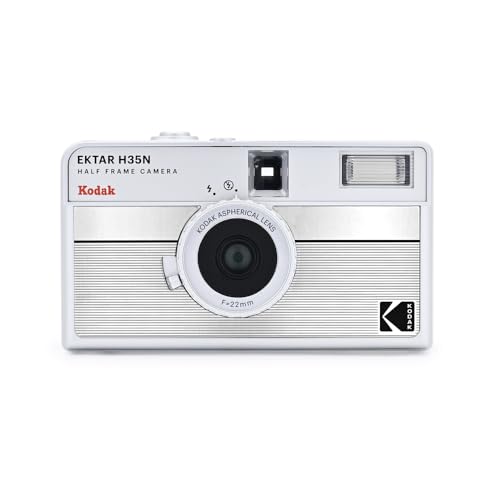
- Film format: 35mm, half-frame (24 x 18mm), up to 72 frames per 36-exposure roll
- Lens: 22mm f/8, coated, 2 elements (one glass, one acrylic)
- Focus: focus free
- Shutter: 1/100 second, plus bulb setting

- Film format: 35mm, full frame (24 x 36mm), ISO 200/400/800 films
- Lens: 31mm f/9, 1 element
- Focus: fixed focus, 1m to infinity
- Shutter: 1/120 second
All 5 Picks at a Glance
| Product | Specs | Action |
|---|---|---|
| 1. Kodak Snapic A1 — Motorised Full-Frame With a Glass Lens |
| Check price on Amazon |
| 2. Kodak Ektar H35N — Half-Frame With a Bulb Mode |
| Check price on Amazon |
| 3. AgfaPhoto Analogue 35mm — The Straightforward Snapshot Camera |
| Check price on Amazon |
 4. RETO Ultra Wide & Slim — The Pocketable 22mm |
| Check price on Amazon |
 5. Kodak i60 — Retro Styling, Pop-Up Flash |
| Check price on Amazon |
Key takeaways
- Compare five small film cameras for everyday carry — half-frame and full-frame 35mm compacts compared by lens, size, weight, flash and film format.
What's inside
- What Makes a Film Camera Genuinely Small
- 1. Kodak Snapic A1 — Motorised Full-Frame With a Glass Lens
- 2. Kodak Ektar H35N — Half-Frame With a Bulb Mode
- 3. AgfaPhoto Analogue 35mm — The Straightforward Snapshot Camera
- 4. RETO Ultra Wide & Slim — The Pocketable 22mm
- 5. Kodak i60 — Retro Styling, Pop-Up Flash
- Half-Frame or Full-Frame: Which Suits Everyday Carry?
- Loading, Batteries and Film Choice
- Frequently Asked Questions
As an Amazon Associate I earn from qualifying purchases. This post may contain affiliate links at no extra cost to you.
A small film camera earns its place by disappearing into a jacket pocket or a small bag and being ready the moment something worth photographing happens. The current crop of compact 35mm cameras splits into two camps: half-frame models that put two vertical frames on each standard frame of film, doubling the number of pictures a roll delivers, and full-frame point-and-shoot models that keep the classic 24 x 36mm frame in a slim body. All five cameras below are in current production, are sold new on Amazon US, and cover a wide spread of size, weight and control — from a fully mechanical camera that needs no battery at all to a motorised compact with a glass lens, zone focusing and automatic film transport.
Disclosure: As an Amazon Associate, we earn from qualifying purchases made through links on this page, at no extra cost to you.
What Makes a Film Camera Genuinely Small
Physical size is only part of the story. A camera that is light but bulky will still be left at home, while a slightly heavier camera with a flat profile slides into a coat pocket without complaint. Three measurements matter most: the depth of the body (which decides whether it fits a pocket), the weight with a roll loaded, and the lens arrangement. Fixed-lens compacts keep their profile slim because the lens does not need to extend or interchange, and every camera in this guide uses a fixed lens for exactly that reason.
Frame format changes the equation too. Half-frame cameras expose a 17 x 24mm or 18 x 24mm frame — half of the standard frame — so a 36-exposure roll yields up to 72 pictures, and the vertical native orientation suits the way many people now share photographs. Full-frame compacts keep the familiar horizontal 24 x 36mm frame and generally offer a wider margin for enlargement. Neither is better in absolute terms; the choice is about how many frames you want from each roll and how you like to compose.
Finally, consider the flash and the battery. Four of the five cameras here carry a built-in flash powered by AA or AAA cells. The fifth does without flash and batteries entirely, which makes it the slimmest and lightest of the group but limits it to daylight and fast film. The sections below lay out each camera’s published specifications so the trade-offs are easy to compare.
1. Kodak Snapic A1 — Motorised Full-Frame With a Glass Lens
- Film format: 135 film, full frame (24 x 36mm)
- Lens: 25mm f/9.5, 3-element glass
- Focus: manual 2-zone (0.5–1.5m; 1.5m to infinity)
- Shutter: 1/100 second
The Snapic A1, released by Reto Production under the Kodak brand in late 2025, is the most automated camera in this guide. It shoots full 24 x 36mm frames on 35mm film, and a motor handles the work the other cameras here leave to a thumb wheel: loading, advancing and rewinding are all automatic, with a forced-rewind option for finishing a roll early. The lens is a 25mm f/9.5 built from three glass elements — a rarity among simple film cameras, which usually rely on acrylic optics — and its field of view is wide enough for interiors, groups and street scenes.
Focusing is manual but simple: a ring on the lens switches between two zones, 0.5 to 1.5 metres for close subjects and 1.5 metres to infinity for everything else. The shutter is fixed at 1/100 of a second, so exposure leans on film latitude, and a small display on the top plate shows the frame count, the selected focus zone, the flash setting and the battery level. A multiple-exposure function allows up to two exposures on a single frame, and the built-in flash fires automatically when the light calls for it.
At 118mm wide, 35mm deep and 117 grams, the Snapic A1 is genuinely pocketable, and the maker quotes roughly ten 24-exposure rolls from one set of its two AAA batteries. The Ivory White finish is linked here; a Rhino Grey version is sold under a separate listing. For a shooter who wants a small film camera that behaves like the automatic compacts of the past — load the roll, pick a focus zone, and let the motor do the rest — the Snapic A1 is the closest match in current production.
2. Kodak Ektar H35N — Half-Frame With a Bulb Mode
- Film format: 35mm, half-frame (24 x 18mm), up to 72 frames per 36-exposure roll
- Lens: 22mm f/8, coated, 2 elements (one glass, one acrylic)
- Focus: focus free
- Shutter: 1/100 second, plus bulb setting
The Ektar H35N is the most fully featured of the simple half-frame cameras currently on sale. It uses the half-frame format — two vertical frames per standard frame, up to 72 pictures per 36-exposure roll — and fits a coated 22mm f/8 lens built with a glass element, where most simple film cameras use all-acrylic optics. The published specification adds two things simple cameras rarely offer: a bulb shutter setting for long exposures, and a tripod socket to hold the camera steady while using it.
The shutter button is threaded to accept a standard cable release, which pairs with the bulb setting for night work, and a filter built into the lens assembly turns bright points of light in a scene into four-point bursts — a fixed effect that suits streetlights, candles and fairground bulbs. The built-in flash runs from a single AAA battery. The Striped Silver listing linked here is one of several finishes; the maker’s model number for this finish is RK0302.
At 110 grams, the H35N stays in shirt-pocket territory while adding the bulb mode, the tripod socket and the coated lens. For everyday carry with occasional after-dark shooting in mind, it is the most complete of the simple half-frame cameras.
3. AgfaPhoto Analogue 35mm — The Straightforward Snapshot Camera
- Film format: 35mm, full frame (24 x 36mm), ISO 200/400/800 films
- Lens: 31mm f/9, 1 element
- Focus: fixed focus, 1m to infinity
- Shutter: 1/120 second
The AgfaPhoto analogue camera (maker’s model AG603003) is a reusable full-frame 35mm camera built around a single fixed specification: a 31mm f/9 lens of one element, a fixed 1/120-second shutter and focus set from one metre to infinity. There are no modes to choose and no dials to set — load a roll, wind on with the thumb wheel, and press the shutter button. The maker rates the camera for ISO 200, 400 and 800 films, and the fixed exposure leans on the latitude of those emulsions.
A built-in flash, powered by one AAA battery, covers indoor and evening pictures, and film transport is fully manual in both directions. The Beige finish linked here ships with a case and a hand strap in the box per the listing, which suits a camera meant to be carried loose in a bag. At 116mm wide and 44mm deep it is a little deeper than the slimmest cameras in this guide, but it remains an easy everyday carry.
The AgfaPhoto suits a shooter who wants the standard full-frame negative with the least possible machinery between intention and exposure — the same appeal as the simple cameras once sold alongside film at photo counters, in a body built to be reloaded rather than discarded.
4. RETO Ultra Wide & Slim — The Pocketable 22mm
- Film format: 135 film, full frame (24 x 36mm)
- Lens: 22mm f/11, 2-element optical grade acrylic
- Focus: focus free, 1m to infinity
- Shutter: 1/125 second
The RETO Ultra Wide & Slim takes a different route to smallness: it is a full-frame 35mm camera, but its body is just 28mm deep and weighs 68.8 grams, making it the slimmest and lightest camera in this guide. The design revives a classic ultra-wide compact formula — a 22mm lens is far wider than the 31mm lenses on most simple film cameras, so groups, interiors and street scenes fit into the frame without stepping back.
The specification is deliberately minimal. The two-element optical acrylic lens is fixed at f/11 and focused from one metre to infinity, the shutter fires at a single 1/125 of a second, and film transport is by manual wind and rewind. There is no flash and no battery: the camera is fully mechanical, which is why it can be this thin. The maker’s guidance is to pair it with ISO 100 or 200 film in bright sunlight and ISO 400 or faster on cloudy days, since the fixed aperture and shutter leave exposure to the film’s latitude.
The Muddy Yellow finish is linked here (maker’s reference RUW005); several other colours are sold under their own listings. For a camera that lives in a pocket every day and asks for nothing — no battery to check, no settings to make — the Ultra Wide & Slim is the purest expression of the small film camera idea.
5. Kodak i60 — Retro Styling, Pop-Up Flash
- Film format: 135 film, full frame (24 x 36mm), ISO 200/400/800 recommended
- Lens: 31mm f/10, 1 element
- Focus: focus free, 1m to infinity
- Shutter: 1/125 second
The Kodak i60 wraps a simple full-frame specification in a body styled after the classic Instamatic 100, with a leatherette-textured front panel and a press-and-pop-up flash that rises from the top plate when needed. It shoots standard 24 x 36mm frames on 35mm film through a 31mm f/10 single-element lens, with a fixed 1/125-second shutter and focus-free operation from one metre to infinity — a conventional snapshot specification aimed at daylight scenes, group pictures and travel.
The pop-up flash arrangement is the i60’s distinguishing feature among the simple cameras here: pressing the flash button raises the unit and switches it on, and pushing it back down turns it off, so the flash cannot be left draining the single AA battery by accident. The manual lists a flash recycle time of about 15 seconds and a viewfinder field of 70 percent. Film loading, winding and rewinding are all manual, and the maker recommends ISO 200, 400 or 800 film.
At 144.3 grams and 46mm deep, the i60 is chunkier than the RETO and the Ektar H35N, but it remains an easy carry in a small bag, and its full-frame negatives suit anyone who wants the standard frame size with the simplest possible controls. The Yellow finish (maker’s model DA00258) is linked here.
Half-Frame or Full-Frame: Which Suits Everyday Carry?
The one half-frame camera in this guide — the Kodak Ektar H35N — doubles the number of pictures on every roll, and its vertical frames match the orientation of phone screens and social feeds. The trade is resolution per frame: each half-frame negative holds half the information of a full-frame one, which shows in very large prints and heavy crops. For sharing online, printing at modest sizes and keeping a visual diary, half-frame gives up little in practice.
The four full-frame models — the Kodak Snapic A1, the AgfaPhoto, the RETO Ultra Wide & Slim and the Kodak i60 — keep the full 24 x 36mm negative and the horizontal composition most film shooters grew up with. Their lenses differ more than their format does: the RETO’s 22mm is dramatically wider than the 31mm lenses on the AgfaPhoto and the i60, and the Snapic A1 sits between them at 25mm with glass elements. The RETO suits architecture, interiors and crowded streets, while the 31mm pair offer the safer general-purpose view for people and places.
Size cuts across both formats. The lightest camera here (the RETO, at 68.8g) is a full-frame model, and the half-frame H35N is only a little heavier at 110g — format alone does not decide portability. Depth matters as much as weight: the RETO’s 28mm body disappears into a pocket, while the i60’s 46mm depth and pop-up flash housing ask for a jacket or a small bag.
Loading, Batteries and Film Choice
All five cameras load standard 35mm canisters and are reusable — when a roll is finished, it is rewound, sent for processing, and a fresh roll goes in. Four of them wind film on by hand; the Snapic A1 is the exception, with motorised loading, advance and rewind driven by its batteries. All five shoot at fixed shutter and aperture settings, so they depend on film latitude, and their makers recommend faster film for dull weather: ISO 400 is the sensible default across this guide, with ISO 200 reserved for bright sun in the simplest models.
Battery needs are minimal. The Ektar H35N and the AgfaPhoto each use one AAA cell for the flash, the i60 uses one AA cell, and the Snapic A1 uses two AAA cells for its motor, flash and display. The RETO needs no battery at all. None of the five includes film or batteries in the box per its listing, so a first roll and the correct cells belong on the same order.
Frequently Asked Questions
How many pictures does a half-frame camera get from one roll?
Up to twice the marked count: a 36-exposure roll yields up to 72 frames in the Kodak Ektar H35N, the one half-frame camera in this guide, because each picture uses half of a standard frame. Labs develop and scan half-frame rolls as normal 35mm film, and most scanning services can split the paired frames or deliver them as shot.
Do small film cameras need batteries?
Most need a small cell only for the flash or the motor. In this guide, the Ektar H35N and the AgfaPhoto take one AAA battery, the Kodak i60 takes one AA battery and the Kodak Snapic A1 takes two AAA batteries. The RETO Ultra Wide & Slim is fully mechanical and works with no battery at all, which is part of why it can be so thin.
What film speed suits a fixed-exposure film camera?
The makers of the simple cameras here recommend matching film speed to the light: ISO 100 or 200 in bright sun, and ISO 400 or faster on overcast days and indoors near windows. ISO 400 colour negative film is the most forgiving single choice for all five cameras here, because its latitude absorbs their fixed shutter and aperture settings.
Can these cameras be used again after finishing a roll?
Yes. Every camera in this guide is a reusable design rather than a single-use model: rewind the finished roll, remove it for processing, and load a fresh canister. The bodies are built for repeated use over many rolls, and loading follows the same steps each time.
Related guides
More from Amazon
Programs that pair well with the guide above. Offers and eligibility are set by Amazon and may change.
Free shipping on eligible items, Prime Video and more. Eligible new members can start with a free trial.
Start a Prime free trialAudiobooks and podcasts to listen to on the go. Eligible new members can start with a free trial.
Try Audible freeAd-free music streaming. Eligible new subscribers can start with a free trial.
Try Music Unlimited freeA free business account with business pricing and bulk-buying tools for work, shop or home office.
Create a business accountAs an Amazon Associate we earn from qualifying purchases.










Write Your Review
No reviews yet. Be the first to share your experience!