
Our Short List of 3
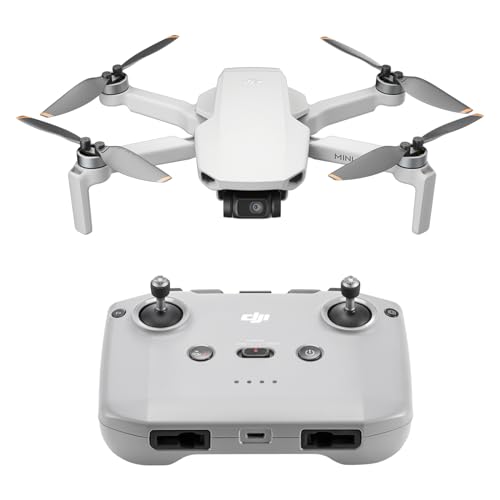
- Camera: 4K/30fps video and 12 MP photos from a 1/2.3-inch CMOS sensor, three-axis mechanical gimbal
- Weight: under 249 g takeoff weight as published by DJI
- Flight time: 31 minutes maximum per battery under DJI’s published test conditions; this listing includes one battery
- Transmission: up to 10 km HD video transmission as published, with wind resistance up to Level 5 and GPS auto return

- Camera: 4K/30fps video and 12 MP photos from a 1/2-inch sensor, single-axis mechanical gimbal with RockSteady and HorizonBalancing electronic stabilization
- Weight: 135 g takeoff weight as published by DJI
- Flight time: 18 minutes maximum per battery under DJI’s published test conditions
- Control: controller-free version with palm takeoff, AI subject tracking and QuickShots; full-coverage propeller guards fitted

- Camera: 4K/60fps HDR video and 48 MP photos from a 1/1.3-inch CMOS sensor, three-axis mechanical gimbal, 10-bit D-Log M colour profile
- Weight: under 249 g takeoff weight as published by DJI
- Flight time: 31 minutes maximum per battery under DJI’s published test conditions; this listing includes one battery and the RC-N3 controller
- Transmission: up to 13 km video transmission as published, with palm takeoff, AI subject tracking, auto return and foldable full-coverage propeller guards
All 5 Picks at a Glance
| Product | Specs | Action |
|---|---|---|
| 1. DJI Mini 4K |
| Check price on Amazon |
| 2. DJI Neo |
| Check price on Amazon |
| 3. DJI Flip (RC-N3) |
| Check price on Amazon |
 4. Potensic ATOM SE |
| Check price on Amazon |
 5. Holy Stone HS720E |
| Check price on Amazon |
Key takeaways
- The best starter drones with cameras for first-time flyers, compared on camera quality, weight, GPS return, flight time and beginner-friendly flight modes.
What's inside
As an Amazon Associate I earn from qualifying purchases. This post may contain affiliate links at no extra cost to you.
Disclosure: As an Amazon Associate, we earn from qualifying purchases made through links on this page, at no extra cost to you.
A first drone has a specific job: it has to forgive mistakes while still carrying a camera good enough that the footage is worth keeping. The five models below are the starter drones with cameras that fit that brief. Each one is positioned by its maker for new flyers, each pairs the camera with some form of stabilization, and each adds positioning help such as GPS hold or automatic return so a beginner is not fighting the aircraft and the camera at the same time.
Four of the five sit in the under-249 g class that the makers publish, which keeps them in the lightest regulatory category in many regions. The fifth is a heavier GPS model included for readers who want longer standard features and accept the registration step that comes with its weight class. Every figure in this guide comes from the manufacturer’s published specifications and the product listings, including the conditions attached to flight time and transmission range figures.
What Makes a Drone a Genuine Starter Drone
Weight and registration. Makers publish takeoff weight for every model here. Drones under 249 g, such as the DJI Mini 4K, DJI Neo, DJI Flip and Potensic ATOM SE, fall below the 250 g registration threshold the FAA applies to recreational flyers in the United States, so their listings present them as registration-free for recreational use. The Holy Stone HS720E weighs 495 g as published, so it sits above that line: its listing notes integrated Remote ID, and owners register it with the FAA before flying. Local rules differ by country, so confirm the rules where you plan to fly.
Camera stabilization. A beginner’s hands are unsteady, so the stabilization method matters as much as sensor size. Three-axis mechanical gimbals, fitted to the DJI Mini 4K and DJI Flip, physically level the camera. Electronic stabilization, used by the Potensic ATOM SE and Holy Stone HS720E, crops and steadies the image digitally. The DJI Neo combines a single-axis gimbal with electronic RockSteady and HorizonBalancing processing. All five record 4K video as published, so the differences are in smoothness and detail rather than headline resolution.
Positioning and return help. GPS hold keeps a drone parked in the air when the sticks are released, and automatic return brings it back when the battery runs low or the signal drops. The Mini 4K, Flip, ATOM SE and HS720E all publish GPS-based auto return. The Neo takes a different route: it is built around palm takeoff and AI subject tracking for close-range filming, with positioning sensors handling its short-range flights.
Flight time, stated honestly. Every flight time in this guide is the maker’s published maximum, measured in the controlled conditions the maker describes, usually with no wind. Real flights in a breeze, with climbs and turns, end sooner. Transmission ranges are likewise published maximums under interference-free conditions, and legal line-of-sight flying keeps most beginners far inside them.
1. DJI Mini 4K
- Camera: 4K/30fps video and 12 MP photos from a 1/2.3-inch CMOS sensor, three-axis mechanical gimbal
- Weight: under 249 g takeoff weight as published by DJI
- Flight time: 31 minutes maximum per battery under DJI’s published test conditions; this listing includes one battery
- Transmission: up to 10 km HD video transmission as published, with wind resistance up to Level 5 and GPS auto return
DJI presents the Mini 4K as its entry point into camera drones, and the published specification sheet supports that positioning. It folds down to palm size, weighs under 249 g at takeoff, and carries a 4K camera on a three-axis mechanical gimbal, the same stabilization layout used on larger DJI models. The listing describes QuickShots automated flight modes, panorama modes and one-tap takeoff and landing through the DJI Fly app, so a new flyer can capture planned camera moves without manual stick work.
For a beginner who wants the most conventional learning path, this is the reference point: a light airframe, a proper gimbal, GPS positioning and an automatic return function, all in the registration-light weight class for recreational flying in the US.
2. DJI Neo
- Camera: 4K/30fps video and 12 MP photos from a 1/2-inch sensor, single-axis mechanical gimbal with RockSteady and HorizonBalancing electronic stabilization
- Weight: 135 g takeoff weight as published by DJI
- Flight time: 18 minutes maximum per battery under DJI’s published test conditions
- Control: controller-free version with palm takeoff, AI subject tracking and QuickShots; full-coverage propeller guards fitted
The Neo is DJI’s smallest and lightest drone at 135 g as published, and it removes the controller from the learning curve entirely in this version. It takes off from an open palm, follows its subject using AI tracking, and flies DJI’s QuickShots patterns at the press of a button on the aircraft itself. Full-coverage propeller guards surround the rotors, which suits a first drone that will spend time near people, pets and garden furniture.
The trade-off for the tiny frame is range and endurance: the Neo is a close-range filming tool rather than a distance flyer, and DJI publishes its flight time accordingly. For vlogging, family filming and learning how a camera drone behaves, that focus is the point.
3. DJI Flip (RC-N3)
- Camera: 4K/60fps HDR video and 48 MP photos from a 1/1.3-inch CMOS sensor, three-axis mechanical gimbal, 10-bit D-Log M colour profile
- Weight: under 249 g takeoff weight as published by DJI
- Flight time: 31 minutes maximum per battery under DJI’s published test conditions; this listing includes one battery and the RC-N3 controller
- Transmission: up to 13 km video transmission as published, with palm takeoff, AI subject tracking, auto return and foldable full-coverage propeller guards
The Flip keeps the under-249 g weight of the Mini line and adds the palm takeoff and subject tracking of the Neo, plus a larger sensor and full-coverage foldable propeller guards. DJI publishes 4K/60fps HDR video and 48 MP photos from its 1/1.3-inch CMOS sensor, figures that lead this group on paper. This version ships with the RC-N3 remote controller, which gives a new pilot physical sticks and the published long-range transmission link from the first flight.
Of the five, the Flip asks the most of a beginner’s attention because it packs the longest feature list, but its automated tracking and palm launch keep the first flights simple while leaving headroom to grow into the camera settings later.
4. Potensic ATOM SE
- Camera: 4K/30fps video with ShakeVanish electronic image stabilization, Sony CMOS sensor
- Weight: under 249 g takeoff weight as published by Potensic
- Flight time: 31 minutes maximum per battery under Potensic’s published figures; this listing includes two batteries
- Transmission: up to 4 km FPV transmission as published, GPS auto return, brushless motors, maximum speed 16 m/s
Potensic positions the ATOM SE directly at adult beginners, and its published figures are competitive with the DJI models: under 249 g, a 4K camera with ShakeVanish electronic stabilization, GPS positioning with auto return, and brushless motors. The listing for this version includes two batteries, and Potensic publishes 31 minutes of flight per battery, presented in the listing as 62 minutes across both. Its SurgeFly transmission system is published at up to 4 km, with a maximum speed of 16 m/s in sport mode.
The ATOM SE is the pick for a beginner who wants GPS security and long total airtime from the box without moving up a weight class. Its electronic stabilization is a step behind a three-axis gimbal in gusty conditions, which the buying notes below cover.
5. Holy Stone HS720E
- Camera: 4K/30fps video with electronic image stabilization and a 130° field of view as published
- Weight: 495 g takeoff weight as published, above the 250 g registration threshold
- Flight time: 23 minutes per battery under Holy Stone’s published figures, 46 minutes across the two included batteries
- Transmission: 5 GHz FPV transmission as published, GPS Smart Return Home, Follow Me mode, brushless motors, integrated Remote ID
The HS720E is the largest drone here and the only one above the 249 g class. Holy Stone’s listing presents it as an easy GPS quadcopter for beginners, with a 4K camera using electronic stabilization, a wide 130-degree field of view as published, brushless motors and GPS-based Smart Return Home. Two batteries are included, published at 46 minutes of flight time combined. Because the published takeoff weight is 495 g, this model requires FAA registration for recreational use in the US, and its listing notes that the drone carries integrated Remote ID to meet FAA requirements.
The HS720E suits a beginner who expects to fly mostly in open spaces and wants a bigger, steadier-feeling airframe with GPS training wheels, and who is comfortable completing the registration step before the first flight.
Buying Notes for First-Time Flyers
Match the drone to the filming job. Close-range people filming points to the Neo or Flip, with their tracking modes and propeller guards. Landscape and travel footage points to the Mini 4K or ATOM SE, where GPS hold and longer transmission links matter more. The HS720E fits open-field flying where its size is an advantage rather than a restriction.
Count batteries, not headline minutes. Published flight times are per battery and measured in calm test conditions. The ATOM SE and HS720E listings include two batteries each, which doubles practical flying time between charges; the three DJI listings here include one battery each, so their published figures describe a single flight session.
Take the stabilization difference seriously. A three-axis gimbal (Mini 4K, Flip) keeps the horizon level mechanically in wind. Electronic stabilization (ATOM SE, HS720E) works well in light air and degrades as gusts build. The Neo’s hybrid setup is tuned for its short-range tracking work.
Check the rules before the first flight. Under-249 g models simplify recreational flying in the US, but airspace restrictions, altitude limits and local rules still apply to every drone here, and the HS720E adds FAA registration because of its weight. The makers’ apps surface local restrictions, and reading them is part of setting up any of these models.
FAQ
Do starter drones under 249 g need registration?
For recreational flying in the United States, the FAA registration threshold is 250 g, and the Mini 4K, Neo, Flip and ATOM SE all publish takeoff weights under 249 g, so their listings present them as not requiring FAA registration for recreational use. The HS720E publishes 495 g, so it does require registration. Rules vary by country and change over time, so check the current rules for where you live before flying.
How long do these drones really fly on one battery?
The published maximums run from 18 minutes for the Neo to 31 minutes for the Mini 4K, Flip and each ATOM SE battery, with the HS720E at 23 minutes per battery. Those figures come from the makers’ controlled test conditions, typically calm air and steady flight. Wind, cold weather, fast manoeuvres and older batteries all shorten real flights, so plan to land with a margin rather than at the published limit.
Is a gimbal better than electronic stabilization for a beginner?
A three-axis mechanical gimbal, as fitted to the Mini 4K and Flip, physically holds the camera steady and generally keeps footage smooth in a wider range of conditions. Electronic stabilization, used by the ATOM SE and HS720E, steadies the image digitally and performs best in lighter wind. For a first drone flown in calm weather, both approaches produce usable footage; for breezy locations, the gimbal models hold an edge.
Which of these drones is easiest for a complete beginner?
The Neo removes the most steps: it launches from a palm, tracks its subject automatically and needs no controller in this version, so the first flight is mostly pressing one button. The Flip adds palm takeoff and tracking with a proper controller included. The Mini 4K, ATOM SE and HS720E follow the traditional controller-and-app layout, which takes a little longer to learn but teaches the standard controls used across most camera drones.
Related guides
More from Amazon
Programs that pair well with the guide above. Offers and eligibility are set by Amazon and may change.
Free shipping on eligible items, Prime Video and more. Eligible new members can start with a free trial.
Start a Prime free trialAudiobooks and podcasts to listen to on the go. Eligible new members can start with a free trial.
Try Audible freeAd-free music streaming. Eligible new subscribers can start with a free trial.
Try Music Unlimited freeA free business account with business pricing and bulk-buying tools for work, shop or home office.
Create a business accountAs an Amazon Associate we earn from qualifying purchases.










Write Your Review
No reviews yet. Be the first to share your experience!