
Our Short List of 3
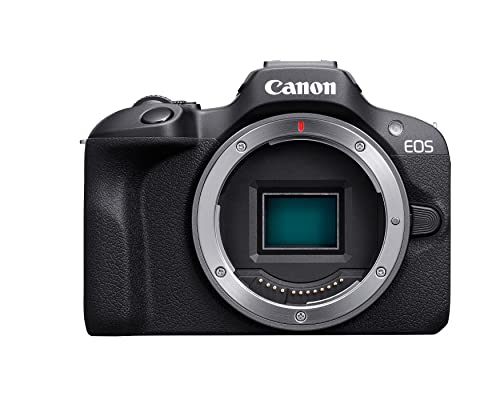
- Best for: First-time creators who want an interchangeable lens camera that grows with them.
- 24.1MP APS-C CMOS sensor
- DIGIC 8 image processor
- Dual Pixel CMOS AF with Eye Detection AF
- 4K video at 24 frames per second

- Best for: Vlogging and interviews where clear built-in audio matters as much as the picture.
- 20.3MP Micro Four Thirds sensor
- 4K video at 24 and 30 frames per second
- Full HD video up to 60 frames per second
- 5-Axis Hybrid Image Stabilization

- Best for: Handheld filming on the move where smooth footage matters more than interchangeable lenses.
- 1-inch CMOS sensor
- 4K video up to 120 frames per second
- 3-axis mechanical gimbal stabilization
- 2-inch rotatable touchscreen
All 4 Picks at a Glance
| Product | Specs | Action |
|---|---|---|
| Canon EOS R100 |
| Check price on Amazon |
| Panasonic Lumix G100 |
| Check price on Amazon |
| DJI Osmo Pocket 3 |
| Check price on Amazon |
 GoPro HERO12 Black |
| Check price on Amazon |
Key takeaways
- Find the best cameras for filming on a tight budget, from compact vlogging cameras to action cameras and mirrorless kits that record sharp 4K.
What's inside
As an Amazon Associate I earn from qualifying purchases. This post may contain affiliate links at no extra cost to you.
Starting to film on a tight budget forces a useful kind of honesty. Every camera in this range asks the buyer to choose what matters most: a bigger sensor, a flip screen, a gimbal, or a lens that can be swapped later. The good news is that the trade-offs are smaller than they used to be. Compact cameras now record sharp 4K, focus on faces reliably, and capture clean audio without extra gear, so a modest setup can produce footage that looks far more expensive than it is.
This guide is for beginners, students, and creators filming their first projects without a large equipment fund. Each camera below is listed on Amazon, chosen from the names and specifications on its product page, with the traits that matter most when funds are limited: video quality, autofocus, audio, and room to grow.
Quick Picks
As an Amazon Associate we earn from qualifying purchases
| Product | Best for | Key spec from title |
|---|---|---|
| Sony ZV-1F | Simple vlogging with a wide lens | 20.1MP 1-inch sensor vlogging camera |
| Canon EOS R100 | A first interchangeable lens camera | 24.1MP APS-C mirrorless with 4K video |
| Panasonic Lumix G100 | Vlogging with strong built-in audio | 20.3MP Micro Four Thirds 4K camera |
| DJI Osmo Pocket 3 | Steady handheld footage on the move | 1-inch sensor 4K gimbal camera |
| GoPro HERO12 Black | Action filming in any weather | 5.3K60 waterproof action camera |
How to Choose
Sensor Size on a Small Setup
Sensor size decides how much light the camera gathers and how the background looks behind a subject. A 1-inch sensor records clean footage indoors and outdoors with a fixed lens, while an APS-C sensor adds shallower depth of field and better low-light behavior when paired with a bright lens. Smaller sensors keep cameras compact and lenses affordable. For a first camera, a 1-inch or APS-C sensor is the sweet spot: large enough for quality, small enough to keep the kit portable.
Autofocus for Solo Filming
When one person films alone, autofocus does the work of a focus puller. Eye detection keeps the operator sharp while they talk, move, or gesture, and subject tracking follows them across the frame. Cameras with reliable autofocus let a beginner concentrate on the content instead of checking focus after every take. Check whether the autofocus works in video mode specifically, because some cameras focus well for stills and struggle once recording starts. A camera that holds focus in dim rooms is worth more than one that only works in bright light, since beginners film indoors most of the time.
Audio That Needs No Extra Gear
A first camera should record usable sound straight out of the box. A directional microphone, wind reduction, and a mic input each help in different situations, and together they cover most filming conditions. Built-in audio matters more when funds are limited, because an external microphone is an extra purchase. If the camera has a mic input, adding one later is easy, so the input is worth having even when the built-in mic is good. Test the audio in the actual room where filming happens, since echo and background hum show up in recordings even when the space sounds quiet.
Room to Grow Later
A camera that only does one thing becomes a dead end. Interchangeable lens cameras grow with the creator: a new lens changes the look without replacing the body. Fixed-lens cameras and action cameras suit specific jobs and stay useful as second cameras. Before buying, think about the second project as well as the first. A body that accepts better lenses or mounts on a gimbal will serve longer than one that only fits a single use. Accessories matter here too, since a camera with a standard mount and common battery type stays useful as the kit grows around it.
The 5 Best Options
Sony ZV-1F
The ZV-1F is the simplest way to start filming. Its wide fixed lens frames a person at arm’s length without a selfie stick, the flip-out screen shows the shot while recording, and the 1-inch sensor keeps indoor footage clean. Product Showcase mode shifts focus to an object held up to the lens, and background defocus softens cluttered rooms with one touch. For vlogs, tutorials, and first projects, it removes the decisions that slow beginners down.
Specs
- 20.1MP 1-inch sensor
- 4K video recording
- 20mm wide-angle fixed lens
- Fully articulating touchscreen
- Eye autofocus
- Product Showcase setting
- Background Defocus function
- USB livestreaming
Best for: Beginners filming themselves who want a simple camera that frames, focuses, and records well.
Watch out for: The fixed lens cannot zoom, so distant subjects need the operator to move closer.
Canon EOS R100
- Best for: First-time creators who want an interchangeable lens camera that grows with them.
- 24.1MP APS-C CMOS sensor
- DIGIC 8 image processor
- Dual Pixel CMOS AF with Eye Detection AF
- 4K video at 24 frames per second
First-time creators who want an interchangeable lens camera that grows with them.
The kit lens is slow in dim rooms, so indoor filming may need a brighter lens later.
The R100 is the best starting point in this group for someone who wants to learn photography and video together. Its APS-C sensor and Dual Pixel autofocus keep people sharp, and the 4K recording captures detail that holds up in the edit. The RF mount opens a growing lens range, so a brighter lens or a wider zoom can be added later without replacing the body. It is small, light, and easy to carry everywhere, which is exactly what a first camera should be.
Watch out for: The kit lens is slow in dim rooms, so indoor filming may need a brighter lens later.
Panasonic Lumix G100
- Best for: Vlogging and interviews where clear built-in audio matters as much as the picture.
- 20.3MP Micro Four Thirds sensor
- 4K video at 24 and 30 frames per second
- Full HD video up to 60 frames per second
- 5-Axis Hybrid Image Stabilization
Vlogging and interviews where clear built-in audio matters as much as the picture.
The 4K recording uses a crop, so the wide end of the lens feels narrower in video than in stills.
The Lumix G100 earns its place through audio. Its built-in microphone uses three internal capsules with tracking, so speech stays clear whether the speaker faces the camera or moves around the room. The Micro Four Thirds sensor records detailed 4K, the flip-out screen faces the operator for self-recording, and the included 12-32mm lens covers wide rooms and medium close-ups. For vloggers and interviewers who record in varied spaces, the audio advantage is the deciding feature.
Watch out for: The 4K recording uses a crop, so the wide end of the lens feels narrower in video than in stills.
DJI Osmo Pocket 3
- Best for: Handheld filming on the move where smooth footage matters more than interchangeable lenses.
- 1-inch CMOS sensor
- 4K video up to 120 frames per second
- 3-axis mechanical gimbal stabilization
- 2-inch rotatable touchscreen
Handheld filming on the move where smooth footage matters more than interchangeable lenses.
The fixed lens cannot zoom far, and the gimbal head needs care after a drop.
The Pocket 3 brings gimbal-smooth footage to a creator’s first kit. Its three-axis gimbal steadies walking shots without extra gear, and the 1-inch sensor records detailed 4K with good low-light behavior. The rotatable screen flips between horizontal and vertical framing, and subject tracking keeps a person centered while the operator moves. It fits in a pocket, so it is there for spontaneous filming in a way a larger camera is not.
Watch out for: The fixed lens cannot zoom far, and the gimbal head needs care after a drop.
GoPro HERO12 Black
- Best for: Outdoor and action filming where weather, water, and impacts are part of the shoot.
- 5.3K video at 60 frames per second
- 27MP photos
- 1/1.9-inch image sensor
- HyperSmooth 6.0 stabilization
Outdoor and action filming where weather, water, and impacts are part of the shoot.
Battery life is shorter at high resolutions, so carry a spare for long days.
The HERO12 Black covers the filming that other cameras in this group cannot: action, weather, and water. It mounts on a chest, helmet, or handlebar, records sharp 5.3K footage with strong stabilization, and keeps working in rain without a case. Dual screens help with framing, and the 10-bit color profile gives the editor room to grade. For creators who film outdoors, travel, or sports alongside their main projects, it is the most versatile second camera here.
Watch out for: Battery life is shorter at high resolutions, so carry a spare for long days.
Which One Fits Your Situation
Filming Yourself for the First Time
Choose the Sony ZV-1F. The wide lens, flip screen, and simple controls remove the barriers that stop beginners, and the 1-inch sensor keeps the footage looking clean. Product Showcase mode shifts focus to an object on cue, so tutorials and unboxings work without manual focus pulls or a second person helping.
Learning Photography and Video Together
Choose the Canon EOS R100. The interchangeable lens mount grows with the creator, and Dual Pixel autofocus keeps people sharp while the operator learns framing and exposure. The small body travels easily to classes and trips, and the RF mount means a brighter lens can be added later without replacing the camera already in hand.
Recording Interviews and Vlogs in Varied Rooms
Choose the Panasonic Lumix G100. Its tracking microphone captures clear speech from different directions, and the flip screen makes self-recording straightforward. The 12-32mm kit lens covers wide rooms and medium close-ups, so interviews and vlogs can be filmed in varied spaces without changing lenses between setups. The compact body also fits on a small tripod on a desk, which suits home recording setups.
Filming Outdoors and on the Move
Choose the DJI Osmo Pocket 3 for smooth walking footage, or the GoPro HERO12 Black for action and weather. The Pocket 3 steadies the shot, while the GoPro survives conditions the other cameras cannot. Together they cover travel, sports, and outdoor projects, and each one fits in a pocket so both can travel in the same small bag.
Common Mistakes
- Choosing a camera for its headline resolution while ignoring autofocus and audio.
- Buying the cheapest lens available and wondering why indoor footage looks dark.
- Recording long takes without checking whether the camera stops or overheats.
- Skipping a tripod or gimbal and expecting handheld footage to look steady.
- Spending the whole fund on the body and leaving nothing for memory cards, batteries, and a bag.
Frequently Asked Questions
Can a first camera record good 4K video?
Yes. Modern compact and entry-level mirrorless cameras record sharp 4K with reliable autofocus and clean audio. The results depend more on light, framing, and sound than on the camera body, so learning those basics matters more than upgrading early. A first camera with a flip screen and good autofocus will produce better footage than a more advanced body used without those basics.
Is an interchangeable lens camera better than a fixed lens camera?
It depends on the goal. Interchangeable lens cameras grow with the creator and suit varied projects, while fixed lens cameras are simpler and often better for one specific job like vlogging or action. Beginners who want flexibility should lean toward interchangeable lenses.
Do I need an external microphone to start filming?
Not always. A camera with a good directional microphone records clear speech in quiet rooms, which covers most first projects. An external microphone becomes important in noisy or echoing spaces, and a camera with a mic input makes that upgrade easy later.
How important is stabilization for a first camera?
Very important for handheld filming. Good stabilization, whether in the body, the lens, or a gimbal, keeps walking footage watchable. Without it, even sharp footage looks amateur, so prioritize stabilization when filming on the move. A tripod is the simplest fix for static shots, while a gimbal or stabilized lens handles walking footage that a tripod cannot.
Related guides
More from Amazon
Programs that pair well with the guide above. Offers and eligibility are set by Amazon and may change.
Free shipping on eligible items, Prime Video and more. Eligible new members can start with a free trial.
Start a Prime free trialAudiobooks and podcasts to listen to on the go. Eligible new members can start with a free trial.
Try Audible freeAd-free music streaming. Eligible new subscribers can start with a free trial.
Try Music Unlimited freeA free business account with business pricing and bulk-buying tools for work, shop or home office.
Create a business accountAs an Amazon Associate we earn from qualifying purchases.










Write Your Review
No reviews yet. Be the first to share your experience!