
Our Short List of 3

- Best for: Wildlife and bird photographers who crop deeply and landscape shooters who print very large.
- Sensor: 61.0 MP full-frame back-illuminated Exmor R CMOS
- Processor: BIONZ XR with dedicated AI processing unit
- Autofocus: Real-time Recognition AF, 693 AF points
- Continuous shooting: 10 fps
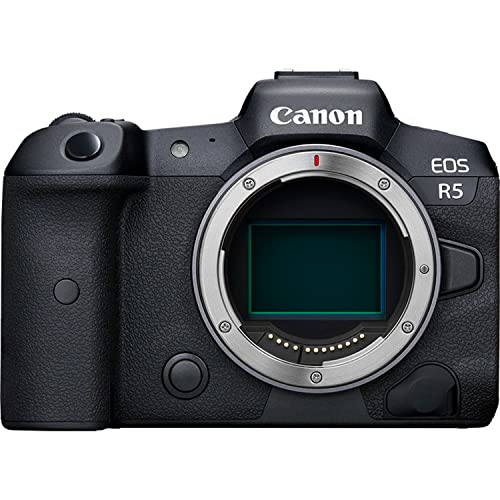
- Best for: Photographers who want one full-frame body for both high-detail landscapes and tracked wildlife.
- Sensor: 45 MP full-frame CMOS
- Processor: DIGIC X
- Autofocus: Dual Pixel CMOS AF II, 1,053 AF areas, animal subject tracking
- Continuous shooting: 12 fps mechanical, 20 fps electronic

- Best for: Landscape photographers who prioritise clean high-resolution files and occasionally shoot wildlife.
- Sensor: 45.7 MP full-frame CMOS
- Processor: Dual EXPEED 6
- Autofocus: 493-point phase-detect AF with Eye-Detection AF
- Continuous shooting: 10 fps
All 4 Picks at a Glance
| Product | Specs | Action |
|---|---|---|
| Sony a7R V |
| Check price on Amazon |
| Canon EOS R5 |
| Check price on Amazon |
| Nikon Z7 II |
| Check price on Amazon |
 OM System OM-1 Mark II with 12-40mm f/2.8 PRO II Kit |
| Check price on Amazon |
Key takeaways
- Four cameras compared: the 61 MP Sony a7R V, 45 MP Canon EOS R5, Nikon Z7 II and weather-sealed OM System OM-1 Mark II, with specs and picks by situation.
What's inside
As an Amazon Associate I earn from qualifying purchases. This post may contain affiliate links at no extra cost to you.
A nature camera has to solve two opposite problems on the same walk: enough resolution to hold feather and rock detail when you crop, and enough reach and autofocus speed to lock onto an animal that gives you three seconds. Buying on megapixels alone, or on burst rate alone, usually means compromising the half of the hobby you shoot most.
This guide is for landscape shooters who print large, bird and wildlife photographers working from hides or trails, and hikers who need one body that survives rough weather. Every pick below is a current mirrorless model sold on Amazon US, chosen from the sensor, autofocus and sealing details on its product page: the 61 MP Sony a7R V, Canon’s 45 MP EOS R5, the 45.7 MP Nikon Z7 II, and the weather-sealed OM System OM-1 Mark II kit.
Quick Picks
As an Amazon Associate we earn from qualifying purchases.
| Product | Best for | Key spec from title |
|---|---|---|
| Sony a7R V | Wildlife shooters who crop heavily | 61.0 MP full-frame sensor |
| Canon EOS R5 | Mixed landscape and wildlife trips | 45 MP full-frame CMOS sensor |
| Nikon Z7 II | Landscape detail and large prints | 45.7 MP full-frame sensor |
| OM System OM-1 Mark II with 12-40mm f/2.8 PRO II Kit | Wet-weather hiking and long-reach wildlife | Weather sealed design |
How to Choose
Sensor Size and Resolution Decide Your Cropping Room
Wildlife rarely fills the frame, so usable resolution after cropping matters more than the headline number. A 61 MP full-frame file lets you crop hard and still print, while a smaller Micro Four Thirds sensor doubles your lens reach for the same focal length, which is why the OM-1 Mark II stays competitive for birds despite its 20.4 MP count. Landscapes reward dynamic range and fine detail at base ISO. Decide which failure hurts more: a bird too small in the frame, or a landscape file that falls apart when printed big.
Subject-Detection Autofocus for Wildlife
Modern bodies detect and track animals, birds and eyes automatically, and this is now the single biggest hit-rate factor for wildlife work. The Sony a7R V adds a dedicated AI processing unit for Real-time Recognition AF, while Canon’s Dual Pixel CMOS AF II tracks animals across 1,053 AF areas. Check which subjects each system names on its product page, because a camera tuned for people will not hold a warbler’s eye the same way. Also confirm eye detection works with your telephoto lens attached.
Weather Sealing and Build for Field Use
Nature work means dew, drizzle, sea spray and dust, so sealing is a working feature, not a luxury. The OM-1 Mark II kit is sold on its weather sealed design, and the Canon EOS R5 uses a magnesium alloy body built to dissipate heat and shrug off hard use. Sealing only works as a system: the lens needs gaskets too, and no rating here makes a camera waterproof for submersion. If you shoot from kayaks or in heavy rain, budget for a rain cover regardless of body.
Burst Speed, Buffer and Card Slots
A perched bird taking off is a two-second story, and your buffer decides whether you capture it. The EOS R5 shoots 12 fps with its mechanical shutter and 20 fps electronically, the a7R V and Z7 II manage 10 fps, and all three pair that speed with two card slots so a full or failed card does not end the morning. Fast bursts fill cards quickly, so check the media each body takes: the R5 mixes CFexpress Type B with SD UHS-II, which affects what you pack.
The 4 Best Options
Sony a7R V
- Best for: Wildlife and bird photographers who crop deeply and landscape shooters who print very large.
- Sensor: 61.0 MP full-frame back-illuminated Exmor R CMOS
- Processor: BIONZ XR with dedicated AI processing unit
- Autofocus: Real-time Recognition AF, 693 AF points
- Continuous shooting: 10 fps
Wildlife and bird photographers who crop deeply and landscape shooters who print very large.
This listing states batteries are not included, so confirm exactly what is in the box before ordering; 61 MP files also demand fast cards and plenty of storage.
The a7R V is the resolution-and-autofocus pick for photographers who crop aggressively. Its 61.0 MP full-frame back-illuminated Exmor R CMOS sensor keeps feather detail intact after heavy crops, and the dedicated AI processing unit drives Real-time Recognition AF that identifies subjects beyond basic face detection. The BIONZ XR engine processes up to eight times faster than earlier generations, which supports 10 fps shooting without the camera feeling behind the action. For nature shooters who split time between perched birds and wide landscapes, it is the most flexible single body here.
Canon EOS R5
- Best for: Photographers who want one full-frame body for both high-detail landscapes and tracked wildlife.
- Sensor: 45 MP full-frame CMOS
- Processor: DIGIC X
- Autofocus: Dual Pixel CMOS AF II, 1,053 AF areas, animal subject tracking
- Continuous shooting: 12 fps mechanical, 20 fps electronic
Photographers who want one full-frame body for both high-detail landscapes and tracked wildlife.
The highest-resolution video modes and fast bursts need CFexpress Type B cards, so factor that media cost in; check stills buffer depth against your burst habits.
The EOS R5 is the balanced choice for trips where landscapes and wildlife share the same day. Its 45 MP full-frame CMOS sensor and DIGIC X processor deliver detailed files, while Dual Pixel CMOS AF II covers roughly the whole frame with 1,053 AF areas and deep-learning tracking for animals. In-body stabilization offers up to eight stops of shake correction, useful when a long lens comes out at dawn. The magnesium alloy body keeps the package robust without excessive weight, and 12 fps mechanical or 20 fps electronic shooting covers takeoff moments.
Nikon Z7 II
- Best for: Landscape photographers who prioritise clean high-resolution files and occasionally shoot wildlife.
- Sensor: 45.7 MP full-frame CMOS
- Processor: Dual EXPEED 6
- Autofocus: 493-point phase-detect AF with Eye-Detection AF
- Continuous shooting: 10 fps
Landscape photographers who prioritise clean high-resolution files and occasionally shoot wildlife.
At 10 fps with a shallower buffer than the action-focused bodies, it is not the pick for fast birds in flight; confirm your existing cards match the mixed slot types.
The Z7 II is the landscape specialist of this group, built around a 45.7 MP full-frame sensor with an ISO range starting at 64 for clean, detailed files at dawn and dusk. Dual EXPEED 6 processors keep the 493-point phase-detect AF system responsive and enable Eye-Detection AF for the wildlife moments that interrupt a landscape morning. Five-axis in-body vibration reduction helps handheld shooting at slow shutter speeds around waterfalls and streams. Two card slots and a tilting 3.2-inch touchscreen round out a body aimed at deliberate, tripod-friendly field work.
OM System OM-1 Mark II with 12-40mm f/2.8 PRO II Kit
- Best for: Hikers and travellers who want weather sealing, long effective reach and a light kit.
- Sensor: 20.4 MP stacked BSI Live MOS, Micro Four Thirds
- Kit lens: M.Zuiko Digital ED 12-40mm f/2.8 PRO II
- Build: Weather sealed design
- Video: 4K 60p
Hikers and travellers who want weather sealing, long effective reach and a light kit.
The bundled 12-40mm lens is a wide-to-standard zoom, so wildlife work means budgeting for a telephoto as well; the smaller sensor gathers less light at dusk than the full-frame bodies here.
The OM-1 Mark II suits photographers who walk far in bad weather. This kit pairs the 20.4 MP stacked BSI Live MOS Micro Four Thirds body with the M.Zuiko Digital ED 12-40mm f/2.8 PRO II lens, and the listing leads on its weather sealed design. The smaller sensor doubles effective reach, so a modest telephoto frames birds like a much longer lens on full frame, and the whole kit stays light on steep trails. Computational features and 4K 60p video add versatility for field notes and habitat clips.
Which One Fits Your Situation
You Photograph Birds and Shy Wildlife
Reach and tracking decide your keeper rate, so start with the Sony a7R V: its 61 MP files survive the deep crops distant birds demand, and the AI-driven recognition AF holds subjects that move unpredictably. If pack weight matters more than print size, the OM-1 Mark II doubles your lens reach in a far lighter kit, which keeps you mobile between hides.
You Shoot Landscapes and Print Large
Prioritise clean resolution at low ISO. The Nikon Z7 II starts at ISO 64 and resolves 45.7 MP through a mature Z-mount lens range, making it the natural tripod camera here. The Canon EOS R5 runs it close with 45 MP and stronger subject tracking, so choose it if your landscape trips regularly turn into wildlife sessions.
You Hike Long Distances in Bad Weather
Every gram and every gasket counts. The OM System OM-1 Mark II kit is the only option here sold specifically on a weather sealed design, and its compact Micro Four Thirds lenses keep a full daypack realistic. Pair it with sealed telephoto glass and you have a system built for ridgelines, coast paths and wet forests.
You Want One Camera for a Mixed Nature Trip
When the same morning covers a sunrise vista and a heron on the far bank, the Canon EOS R5 is the safest single purchase: 45 MP for the landscape, animal tracking and 20 fps electronic bursts for the heron, and stabilization that helps with a long lens handheld. It asks the fewest compromises of any body in this roundup.
Common Mistakes
- Buying on megapixels alone, then discovering your lens, not the sensor, limits wildlife reach.
- Pairing a weather-sealed body with an unsealed lens and assuming the combination is protected.
- Ignoring card formats: CFexpress and UHS-II media add real cost after the body purchase.
- Choosing a slow, landscape-first body for birds in flight, then blaming autofocus for missed shots.
- Forgetting that smaller sensors trade low-light cleanliness for reach and lighter lenses.
Frequently Asked Questions
Is full frame necessary for nature photography?
No. Full frame helps with low-light cleanliness and shallow depth of field, but the Micro Four Thirds OM-1 Mark II shows the other side of the trade: double the effective lens reach and a lighter kit. Match the format to your subjects and how far you walk, not to a hierarchy.
How many megapixels do I need for wildlife?
Enough to crop and still print at your target size. A 61 MP file like the a7R V’s tolerates aggressive cropping of distant birds, while 45 MP bodies still crop comfortably for moderate prints. Below roughly 24 MP, distant subjects leave little spare resolution, so lens reach matters more.
Does weather sealing mean I can shoot in any rain?
No. Sealing resists splashes, dew and light rain when the lens is also sealed, but it is not submersion waterproofing and seals age over time. For sustained heavy rain, add a rain cover and dry the kit afterwards, whatever body you own.
Which matters more for nature work, the body or the lens?
For wildlife, usually the lens: reach and aperture decide whether the subject fills the frame at all. For landscapes, the body’s sensor and dynamic range carry more weight. Buy the body that fits your subjects, then invest steadily in glass for the mount you chose.
Related guides
More from Amazon
Programs that pair well with the guide above. Offers and eligibility are set by Amazon and may change.
Free shipping on eligible items, Prime Video and more. Eligible new members can start with a free trial.
Start a Prime free trialAudiobooks and podcasts to listen to on the go. Eligible new members can start with a free trial.
Try Audible freeAd-free music streaming. Eligible new subscribers can start with a free trial.
Try Music Unlimited freeA free business account with business pricing and bulk-buying tools for work, shop or home office.
Create a business accountAs an Amazon Associate we earn from qualifying purchases.










Write Your Review
No reviews yet. Be the first to share your experience!