
Our Short List of 3
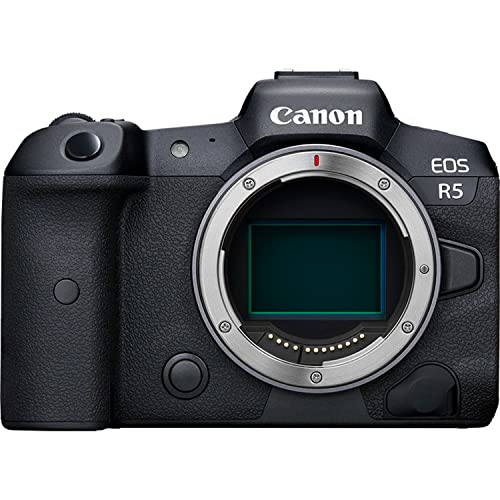
- Best for: Lead photographers shooting large weddings who crop ceremony frames and deliver large prints.
- 45MP full-frame back-illuminated CMOS sensor
- DIGIC X processor, ISO 100-51200
- Dual Pixel CMOS AF II with 1,053 AF areas
- Up to 12 fps mechanical and 20 fps electronic (silent) shutter

- Best for: Sony-system wedding photographers and second shooters who need dependable eye AF and dual SD slots.
- 33MP full-frame Exmor R back-illuminated CMOS sensor
- BIONZ XR processor
- 759 phase-detection AF points, Real-time Eye AF for humans, animals and birds
- Up to 10 fps with continuous AF/AE tracking

- Best for: Hybrid wedding shooters who deliver films alongside stills and want fast bursts for candid moments.
- 24.5MP partially stacked full-frame CMOS sensor
- EXPEED 7 processor
- 6K/60p internal RAW video, Full HD up to 240p
- Up to 120 fps continuous shooting
All 4 Picks at a Glance
| Product | Specs | Action |
|---|---|---|
| Canon EOS R5 |
| Check price on Amazon |
| Sony a7 IV |
| Check price on Amazon |
| Nikon Z6 III |
| Check price on Amazon |
 Canon EOS R6 Mark II |
| Check price on Amazon |
Key takeaways
- Four full-frame cameras for wedding photography compared on dual card slots, low-light autofocus, silent shooting and resolution for ceremonies and receptions.
What's inside
As an Amazon Associate I earn from qualifying purchases. This post may contain affiliate links at no extra cost to you.
A wedding camera is bought for the moments that cannot be repeated. The walk down the aisle, the vows and the first kiss happen once, in whatever light the venue gives you, so the real decision is not which body has the longest feature list. It is which body records every frame twice, keeps focusing when the room goes dark, and stays silent when the ceremony demands it. Resolution, card slots and autofocus behaviour matter more here than headline video modes.
This guide is for full-time wedding photographers replacing a main body, second shooters who need to match a lead photographer’s files, and established photographers adding weddings to their work. The four cameras below were picked from the specifications and features stated on their Amazon US product pages: the Canon EOS R5, Sony a7 IV, Nikon Z6 III and Canon EOS R6 Mark II, all full-frame bodies with dual card slots.
Quick Picks
As an Amazon Associate we earn from qualifying purchases.
| Product | Best for | Key spec from title |
|---|---|---|
| Canon EOS R5 | Large weddings and big album prints | 45MP full-frame sensor, 8K video |
| Sony a7 IV | Second shooters in a Sony workflow | 33MP full-frame sensor, Real-time Eye AF |
| Nikon Z6 III | Hybrid shooters covering photo and film | 24.5MP sensor, 6K/60p internal RAW video |
| Canon EOS R6 Mark II | Long reception days and fast action | 24.2MP sensor, up to 40 fps shooting |
How to Choose
Dual card slots and backup recording
A wedding file cannot be reshot, which makes the second card slot the most important line in any spec table. All four cameras here record to two cards at once, so a failed card costs you minutes of swapping, not a couple’s ceremony. Check how each body handles the pair: the EOS R5 mixes one CFexpress Type B slot with one SD UHS-II slot, the a7 IV takes SD UHS-II in both slots with CFexpress Type A in one, and the two others pair fast media with SD. Set the camera to write RAW files to both cards before the day starts, and confirm the backup mode is actually on in the menu.
Autofocus that keeps working in dark venues
Reception halls and evening ceremonies push autofocus harder than any spec sheet suggests. What matters is eye detection that stays locked while a couple moves through mixed lighting, and a system that keeps tracking when you shoot wide open at f/1.4. The a7 IV lists Real-time Eye AF for people, animals and birds with 759 phase-detection points, while the Canon bodies use Dual Pixel CMOS AF II and the Z6 III builds its focusing around the EXPEED 7 processor. Whichever system you choose, test it with your own lenses at the apertures you actually use, in light as dim as a typical evening venue.
Silent shooting for the ceremony
Many venues and officiants restrict shutter noise and flash during the ceremony itself, so a usable silent shutter is a working requirement, not a luxury. The EOS R5 reaches 20 fps on its electronic shutter, the R6 Mark II reaches 40 fps, and the Z6 III lists continuous shooting up to 120 fps, all without a mechanical click. Silent shooting also removes shutter shock at slow speeds during speeches. Do check one trade-off before the wedding: electronic shutters can band under some LED lighting, so shoot a test frame under the venue’s lights during the rehearsal or venue visit.
Resolution, file size and burst depth
The EOS R5’s 45MP files give you room to crop a loose ceremony frame into a tight album shot, but they also fill cards and drives far faster across a ten-hour day. The 24.2MP and 24.5MP files from the R6 Mark II and Z6 III are easier to store, back up and deliver, and still print well at album sizes. The a7 IV sits between the two at 33MP. Match the sensor to your delivery: if clients order large wall prints, resolution earns its keep; if you deliver mostly digital galleries, the smaller files speed up everything after the wedding.
The 4 Best Options
Canon EOS R5
- Best for: Lead photographers shooting large weddings who crop ceremony frames and deliver large prints.
- 45MP full-frame back-illuminated CMOS sensor
- DIGIC X processor, ISO 100-51200
- Dual Pixel CMOS AF II with 1,053 AF areas
- Up to 12 fps mechanical and 20 fps electronic (silent) shutter
Lead photographers shooting large weddings who crop ceremony frames and deliver large prints.
Slot 1 only accepts CFexpress Type B cards, which cost more than SD, so budget for fast media alongside the body.
The EOS R5 is the pick when the wedding is big and the deliverables are bigger. Its 45MP full-frame sensor leaves real cropping room for ceremony frames shot from the back of a church, and the dual-slot layout pairs a CFexpress Type B card with an SD UHS-II card for instant backup. Dual Pixel CMOS AF II with 1,053 AF areas tracks faces across the frame, the electronic shutter runs silently at 20 fps, and in-body stabilisation helps with handheld reception shots at slow shutter speeds.
Sony a7 IV
- Best for: Sony-system wedding photographers and second shooters who need dependable eye AF and dual SD slots.
- 33MP full-frame Exmor R back-illuminated CMOS sensor
- BIONZ XR processor
- 759 phase-detection AF points, Real-time Eye AF for humans, animals and birds
- Up to 10 fps with continuous AF/AE tracking
Sony-system wedding photographers and second shooters who need dependable eye AF and dual SD slots.
Many Amazon listings for this camera are third-party accessory bundles, so confirm you are ordering the body listing, model ILCE-7M4/B, before paying.
The a7 IV is the steady professional choice for photographers already working in Sony’s E-mount system, and the body a second shooter can pick up and trust immediately. The 33MP sensor balances detail with manageable file sizes, Real-time Eye AF holds focus on faces through a crowded dance floor, and both card slots accept UHS-II SD cards, with one also taking CFexpress Type A. Its 10 fps burst with continuous AF and AE tracking is enough for processionals and confetti exits, and the 4K 60p 10-bit video covers highlight films.
Nikon Z6 III
- Best for: Hybrid wedding shooters who deliver films alongside stills and want fast bursts for candid moments.
- 24.5MP partially stacked full-frame CMOS sensor
- EXPEED 7 processor
- 6K/60p internal RAW video, Full HD up to 240p
- Up to 120 fps continuous shooting
Hybrid wedding shooters who deliver films alongside stills and want fast bursts for candid moments.
The Amazon listing covers both the body-only version, model 1890, and a 24-70mm f/4 kit, model 1892, so check which configuration you have selected.
The Z6 III suits the wedding photographer who films as seriously as they photograph. Its partially stacked 24.5MP sensor and EXPEED 7 processor drive continuous shooting up to 120 fps and 6K/60p internal RAW video, which is far beyond what most hybrid wedding coverage needs. For stills, the dual slots pair CFexpress Type B or XQD media with SD UHS-II for backup recording, and the body carries the same dust and drip resistance Nikon lists for the Z8, with operation rated down to -10°C for winter weddings.
Canon EOS R6 Mark II
- Best for: Canon wedding photographers who shoot long days, value fast handling and deliver mainly digital galleries.
- 24.2MP full-frame CMOS sensor
- DIGIC X processor
- Dual Pixel CMOS AF II
- Up to 40 fps electronic shutter
Canon wedding photographers who shoot long days, value fast handling and deliver mainly digital galleries.
Both slots are SD only, so buy fast UHS-II cards, because the 40 fps electronic bursts write a large amount of data very quickly.
The R6 Mark II is built for the length of a wedding day rather than its peak moments. Its 24.2MP sensor produces files that move quickly through editing, the electronic shutter reaches 40 fps for the bouquet toss and dance floor, and Dual Pixel CMOS AF II keeps faces in focus as light drops. Both card slots take SD UHS-II, which keeps media simple and interchangeable with a second body. Canon also lists up to six hours of continuous Full HD recording, useful for a locked-off ceremony camera.
Which One Fits Your Situation
You shoot large weddings and deliver wall prints
Choose the Canon EOS R5. The 45MP files hold up when a wide ceremony shot is cropped for an album spread or a framed print, and the CFexpress plus SD pairing gives you fast capture with an immediate backup. It is the body here that asks the most of your storage, so it suits photographers whose delivery already includes large-format work.
You are the second shooter on a Sony team
Choose the Sony a7 IV. Your files will match the lead photographer’s colour and lens mount, Real-time Eye AF keeps your candids sharp without constant checking, and dual SD slots mean your cards can go straight into the lead’s card reader at the end of the night. Sharing batteries, chargers and lenses with the lead photographer also keeps your own backup kit simple.
You film the day as well as photograph it
Choose the Nikon Z6 III. Internal 6K RAW video, high frame-rate options and a vari-angle screen make it the strongest filming tool in this group, while the stills side keeps dual-slot backup and fast burst shooting for the moments that happen between video clips. One body covering both jobs also means one set of batteries, cards and lenses to manage through the day.
You shoot back-to-back weddings all season
Choose the Canon EOS R6 Mark II. Smaller files, simple dual SD media and a body that stays comfortable over ten-hour days make the whole workflow faster, from the last dance to the finished gallery. It is the practical choice when turnaround time matters as much as image quality. Couples notice delivery speed, and this is the camera that gets galleries finished first.
Common Mistakes
- Booking paid wedding work with a single-slot camera, leaving no backup if a card fails during the ceremony.
- Owning a dual-slot body but never enabling backup recording, so the second slot sits empty or fills with overflow only.
- Shooting an entire ceremony on the silent shutter without checking for banding under the venue’s LED lighting first.
- Testing autofocus only in bright daylight, then discovering how your lenses behave in a dim reception hall on the day itself.
- Underestimating storage: a full day of 45MP RAW files needs far more card and drive space than most photographers expect.
Frequently Asked Questions
Do I really need dual card slots for wedding photography?
Yes, for paid work. A card failure during unrepeatable moments is the one equipment risk you cannot fix afterwards. All four cameras here write to two cards at once, so set the second slot to backup rather than overflow and your files exist in two places from the moment you press the shutter.
Is 24MP enough for wedding albums and prints?
For most wedding work, yes. A 24.2MP or 24.5MP file prints well at standard album sizes and handles moderate cropping. Move up to the 33MP a7 IV or 45MP EOS R5 if you regularly crop ceremony frames heavily or sell large wall prints, because that extra resolution is what gives you room to recompose later.
Should I use the electronic shutter during the ceremony?
Usually, yes. It keeps you silent during vows and avoids disturbing the service, and these bodies shoot fast enough electronically for processionals. The exception is lighting: some LED and fluorescent fixtures cause banding with electronic shutters, so take test frames under the venue’s lights beforehand and fall back to the mechanical shutter if you see stripes.
Which lens mount should I commit to for wedding work?
Pick the system whose lenses you already own or can borrow locally, because weddings punish unfamiliar gear. Canon RF, Sony E and Nikon Z all offer the fast 24-70mm and 70-200mm zooms and bright primes wedding work depends on. The cameras here are close enough in ability that your lens collection should make the decision.
Related guides
More from Amazon
Programs that pair well with the guide above. Offers and eligibility are set by Amazon and may change.
Free shipping on eligible items, Prime Video and more. Eligible new members can start with a free trial.
Start a Prime free trialAudiobooks and podcasts to listen to on the go. Eligible new members can start with a free trial.
Try Audible freeAd-free music streaming. Eligible new subscribers can start with a free trial.
Try Music Unlimited freeA free business account with business pricing and bulk-buying tools for work, shop or home office.
Create a business accountAs an Amazon Associate we earn from qualifying purchases.










Write Your Review
No reviews yet. Be the first to share your experience!