
Our Short List of 3

- Best for: Home cooks and new food bloggers who want appetising results without manual settings.
- 24.2 MP CMOS (APS-C) sensor with DIGIC X image processor
- 4K uncropped video at up to 30 fps, oversampled from 6K
- Dual Pixel CMOS AF II with eye detection
- RF-S 18-45mm f/4.5-6.3 IS STM kit lens

- Best for: Food bloggers who want distinctive colour and physical controls for tabletop work.
- 26.1 MP APS-C X-Trans CMOS 4 sensor with X-Processor 4
- XF 18-55mm f/2.8-4 R LM OIS kit lens
- 4K video at 30 fps; Full HD at 240 fps for slow motion
- 8 fps mechanical shutter, 20 fps electronic shutter

- Best for: Food photographers who enjoy tactile controls and want a camera that looks good in behind-the-scenes shots.
- 20.9 MP DX CMOS sensor paired with EXPEED 6 processing engine
- NIKKOR Z DX 16-50mm f/3.5-6.3 VR lens
- 4K UHD video with flip-out vari-angle LCD
- Full-time autofocus with eye detection
All 5 Picks at a Glance
| Product | Specs | Action |
|---|---|---|
| Canon EOS R50 |
| Check price on Amazon |
| Fujifilm X-T30 II |
| Check price on Amazon |
| Nikon Z fc |
| Check price on Amazon |
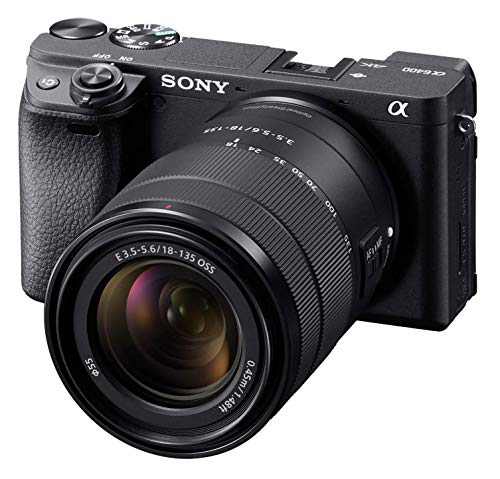 Sony a6400 |
| Check price on Amazon |
 Canon EOS R10 |
| Check price on Amazon |
Key takeaways
- Shooting food that looks as good as it tastes? Compare five cameras chosen from their Amazon US listings, with close focus, color and detail explained.
What's inside
As an Amazon Associate I earn from qualifying purchases. This post may contain affiliate links at no extra cost to you.
Food photography is a close-up discipline. The camera sits a short distance from a plate, the light is often a single window, and the difference between an appetising shot and a flat one comes down to colour, detail and how close the lens can focus. A phone can take a decent food photo, but a dedicated camera gives you control over depth of field, white balance and the exact point of focus on a garnish or a glaze.
This guide is for home cooks, food bloggers and small restaurant owners who want their dishes to look as good on screen as they do on the table. The five cameras below were chosen from the names and specifications stated on their Amazon US product pages: two Canons, a Fujifilm with a classic control layout, a retro Nikon, and a Sony with fast autofocus and a long zoom.
Quick Picks
As an Amazon Associate we earn from qualifying purchases.
| Product | Best for | Key spec from title |
|---|---|---|
| Canon EOS R50 | Everyday food shots at home with guided auto modes | 24.2 MP APS-C sensor, 4K video, RF-S 18-45mm kit lens |
| Fujifilm X-T30 II | Food bloggers who want rich colour straight from the camera | 26.1 MP APS-C sensor, 4K/30p, XF 18-55mm kit lens |
| Nikon Z fc | Tabletop shooting with a tactile, retro-styled body | 20.9 MP DX sensor, 4K UHD, 16-50mm zoom lens |
| Sony a6400 | Fast-moving kitchen work and market stalls | 24.2 MP APS-C sensor, 4K video, 18-135mm lens |
| Canon EOS R10 | Overhead and detail shots with a long, versatile zoom | 24.2 MP APS-C sensor, 4K video, RF-S 18-150mm kit lens |
How to Choose
Close focus decides whether a dish fills the frame
Food sits close to the lens, so the minimum focus distance of the kit lens matters more than its longest zoom. The Fujifilm XC 15-45mm lens focuses down to approximately 2 inches, which lets a small plate or a single pastry fill the frame without cropping. Check the listing for the kit lens minimum focus distance, because a lens that cannot focus closer than a metre forces you to shoot from further back and crop away detail. A lens that focuses close also lets you blur the background of a busy table, which makes a single dish stand out from the plates around it.
Colour rendering shapes appetite
A food photo lives or dies on colour: warm bread, green herbs and red sauces must look true. Fujifilm’s X-Trans sensor and Nikon’s EXPEED 6 processing both produce pleasing colour straight from the camera, while Canon’s DIGIC X keeps skin tones and warm dishes natural. Look at sample images from the listing and the manufacturer’s description rather than trusting a spec sheet alone, since colour science is not a number. White balance matters here too, since a camera that renders warm tones faithfully needs less correction afterwards, and that saves time when a post goes up the same evening.
A flip or tilt screen helps overhead shots
The classic food shot looks straight down at the table, and a fixed rear screen makes that angle guesswork. A vari-angle screen, listed on the R50, Z fc and R10, flips out so you can compose an overhead shot while standing, while the X-T30 II tilts for waist-level tabletop work. Check the listing for the screen type, because a screen that only tilts vertically cannot face forward for a self-recorded cooking video. Touch focus on that screen is another advantage, because tapping the garnish puts the sharpest point exactly where the eye should land first.
Low-light performance matters in restaurants
Restaurants and evening kitchens are dim, and a flash flattens food. A larger APS-C sensor, found in all five cameras here, keeps noise down at the higher ISO settings these rooms demand. A bright lens helps more than a bigger sensor alone, so note the kit lens aperture on the listing: the Fujifilm XF 18-55mm opens to f/2.8 at the wide end, which gathers noticeably more light than a typical f/3.5 kit zoom. A larger sensor also keeps colours cleaner at high ISO, so a dim restaurant shot still shows the difference between a green herb and a brown sauce.
The 5 Best Options
Canon EOS R50
- Best for: Home cooks and new food bloggers who want appetising results without manual settings.
- 24.2 MP CMOS (APS-C) sensor with DIGIC X image processor
- 4K uncropped video at up to 30 fps, oversampled from 6K
- Dual Pixel CMOS AF II with eye detection
- RF-S 18-45mm f/4.5-6.3 IS STM kit lens
Home cooks and new food bloggers who want appetising results without manual settings.
The kit lens is dim at f/4.5-6.3, so window light matters more than with a brighter lens; check whether the listing is the single-lens kit or a bundle with extra accessories.
The EOS R50 is the simplest route to good food photos. Its 24.2 megapixel APS-C sensor and DIGIC X processor render warm dishes cleanly, Dual Pixel CMOS AF II locks onto the plate rather than the table edge, and the vari-angle touchscreen lets you tap to focus on a garnish. The camera is light enough to hold overhead with one hand, and the 18-45mm kit lens covers a full table setting at the wide end.
Watch out for: The kit lens is dim at f/4.5-6.3, so window light matters more than with a brighter lens; check whether the listing is the single-lens kit or a bundle with extra accessories.
Fujifilm X-T30 II
- Best for: Food bloggers who want distinctive colour and physical controls for tabletop work.
- 26.1 MP APS-C X-Trans CMOS 4 sensor with X-Processor 4
- XF 18-55mm f/2.8-4 R LM OIS kit lens
- 4K video at 30 fps; Full HD at 240 fps for slow motion
- 8 fps mechanical shutter, 20 fps electronic shutter
Food bloggers who want distinctive colour and physical controls for tabletop work.
There is no in-body image stabilisation, so handheld overhead shots rely on the lens stabilisation; the model has been discontinued, so confirm the listing is a new kit with a full warranty before ordering.
The X-T30 II is the food blogger’s camera in this guide. Its 26.1 megapixel X-Trans CMOS 4 sensor produces the rich, film-like colour Fujifilm is known for, the physical dials put shutter speed and exposure compensation under your fingers, and the 2.36 million dot electronic viewfinder shows exposure changes live. The XF 18-55mm kit lens focuses close and opens to f/2.8 at the wide end, which helps in dim cafes.
Watch out for: There is no in-body image stabilisation, so handheld overhead shots rely on the lens stabilisation; the model has been discontinued, so confirm the listing is a new kit with a full warranty before ordering.
Nikon Z fc
- Best for: Food photographers who enjoy tactile controls and want a camera that looks good in behind-the-scenes shots.
- 20.9 MP DX CMOS sensor paired with EXPEED 6 processing engine
- NIKKOR Z DX 16-50mm f/3.5-6.3 VR lens
- 4K UHD video with flip-out vari-angle LCD
- Full-time autofocus with eye detection
Food photographers who enjoy tactile controls and want a camera that looks good in behind-the-scenes shots.
The kit lens is a slow f/3.5-6.3 zoom, so low-light restaurant work needs higher ISO; check the listing, because the 28mm prime kit version uses a different ASIN.
The Z fc brings a different pleasure to food photography: analogue dials for shutter speed, ISO and exposure compensation, set on a retro-styled body that looks at home on a cafe table. Behind the styling sits a 20.9 megapixel DX sensor with EXPEED 6 processing, 4K UHD video and a flip-out vari-angle screen that faces forward for self-recorded cooking clips. The 16-50mm kit lens is compact and covers table settings and single dishes alike.
Watch out for: The kit lens is a slow f/3.5-6.3 zoom, so low-light restaurant work needs higher ISO; check the listing, because the 28mm prime kit version uses a different ASIN.
Sony a6400
- Best for: Market visits, cooking action and any food shoot where the subject will not sit still.
- 24.2 MP APS-C Exmor CMOS sensor
- 18-135mm f/3.5-5.6 OSS lens
- 0.02 sec autofocus with Real-time Eye AF and Real-time object tracking
- 425 phase-detection and 425 contrast-detection AF points over 84 percent of the sensor
Market visits, cooking action and any food shoot where the subject will not sit still.
The screen tilts up rather than flipping fully forward, so self-recording is awkward; confirm the listing is the 18-135mm kit, since the 16-50mm kit uses a different ASIN.
The a6400 is the fastest camera in this guide, and that speed matters when food is moving: steam rising, a sauce being poured, a market stall in motion. Its 0.02 second autofocus with Real-time Eye AF and object tracking locks onto a subject and stays there, the 11 frames per second burst catches the pour at the right moment, and the 18-135mm lens covers a whole market aisle without a lens change. The 24.2 megapixel sensor keeps detail high for crops.
Watch out for: The screen tilts up rather than flipping fully forward, so self-recording is awkward; confirm the listing is the 18-135mm kit, since the 16-50mm kit uses a different ASIN.
Canon EOS R10
- Best for: Food photographers who want one lens for overhead spreads, details and short recipe videos.
- 24.2 MP APS-C CMOS sensor with DIGIC X image processor
- RF-S 18-150mm f/3.5-6.3 IS STM lens
- Dual Pixel CMOS AF II covering approx. 100 percent width and height, up to 651 zones, down to EV -4
- 15 fps mechanical shutter, 23 fps electronic shutter, RAW Burst Mode with half-second pre-shooting
Food photographers who want one lens for overhead spreads, details and short recipe videos.
The 18-150mm lens is dim at the long end, so detail shots in dark restaurants need higher ISO; check whether the listing is the 18-150mm kit, since the 18-45mm kit uses a different ASIN.
The R10 is the versatile pick for food photographers who shoot both overhead spreads and tight details. Its 24.2 megapixel APS-C sensor pairs with an 18-150mm lens that frames a whole table at the wide end and isolates a single dish at the long end, without swapping lenses mid-shoot. Dual Pixel CMOS AF II covers nearly the full frame with up to 651 zones, and 15 frames per second mechanical shooting catches garnishes being placed.
Watch out for: The 18-150mm lens is dim at the long end, so detail shots in dark restaurants need higher ISO; check whether the listing is the 18-150mm kit, since the 18-45mm kit uses a different ASIN.
Which One Fits Your Situation
You photograph meals at home for a blog or social feed
Choose the Canon EOS R50. The guided auto modes handle window light well, the vari-angle screen helps with overhead shots, and the light body is easy to hold above a table while the food is still hot. The 18-45mm kit lens frames a full table setting at the wide end, and Dual Pixel autofocus locks onto the plate rather than the table edge.
You want colour that needs little editing
Choose the Fujifilm X-T30 II. Its X-Trans sensor and physical dials give food photos a rich, finished look with minimal post-processing, and the bright XF 18-55mm lens helps in dim cafes. The dial-based controls put exposure under your fingers, and the bright kit lens gathers more light indoors than a typical slow zoom.
You shoot in markets and busy kitchens
Choose the Sony a6400. Fast autofocus and the long 18-135mm zoom let you catch moving subjects and frame a stall from a distance, while the burst mode captures the exact moment of a pour. The 18-135mm zoom frames a whole stall without a lens change, and the 24.2 megapixel sensor keeps enough detail for tight crops afterwards.
You need one camera for stills and recipe videos
Choose the Canon EOS R10. The 18-150mm lens covers every framing from table spread to single garnish, and the 4K video and vari-angle screen handle short cooking clips without a second camera. The vari-angle screen faces forward for self-recorded cooking clips, and 4K video captures the detail of a garnish being placed.
Common Mistakes
- Shooting with the overhead kitchen light on, which casts a yellow tint that no camera setting fully fixes; window light gives truer food colour.
- Using the camera’s built-in flash, which flattens texture and kills the shine on sauces and glazes.
- Placing focus on the table edge instead of the hero dish, so the food itself comes out soft.
- Cropping too tightly in camera and losing the context that makes a dish look generous.
- Forgetting a memory card or a charged battery, since food waits for no one and the light changes fast.
Frequently Asked Questions
Do I need a macro lens for food photography?
Not to start. The kit lenses in this guide focus close enough for plates and single dishes, and the Fujifilm XC 15-45mm focuses down to about 2 inches. A dedicated macro lens becomes useful later for extreme close-ups of texture, such as crumbs or a single herb leaf.
Which sensor size is best for food pictures?
An APS-C sensor, used by all five cameras here, is the sweet spot: it gathers enough light for dim restaurants, keeps noise low at higher ISO settings, and still allows a shallow depth of field that separates a dish from a busy background. Larger full-frame sensors add cost and weight without changing the look much at this scale.
How do I keep food colours true in photos?
Shoot near a window with indirect daylight and set white balance to match the light, rather than relying on mixed overhead bulbs. Cameras with good colour science, like the Fujifilm and Nikon here, also need less correction afterwards. Avoid mixing window light and warm kitchen bulbs in the same shot.
Can these cameras shoot video of cooking as well as stills?
Yes. All five record 4K video, and the R50, Z fc and R10 add vari-angle screens that face forward for self-recorded cooking clips. For recipe videos, the a6400’s fast autofocus and the R10’s long zoom are the most useful, while the X-T30 II’s slow-motion Full HD suits pouring and garnish shots.
Related guides
More from Amazon
Programs that pair well with the guide above. Offers and eligibility are set by Amazon and may change.
Free shipping on eligible items, Prime Video and more. Eligible new members can start with a free trial.
Start a Prime free trialAudiobooks and podcasts to listen to on the go. Eligible new members can start with a free trial.
Try Audible freeAd-free music streaming. Eligible new subscribers can start with a free trial.
Try Music Unlimited freeA free business account with business pricing and bulk-buying tools for work, shop or home office.
Create a business accountAs an Amazon Associate we earn from qualifying purchases.










Write Your Review
No reviews yet. Be the first to share your experience!